

- Verizon's street poster for Inception

Ben Walters (BW) & J. M. Tyree (JMT) have been talking about movies together since 1995, often amicably. They co-wrote a critical appreciation of The Big Lebowski for The British Film Institute’s Film Classics book series. They shared notes – via email, chat, and document sharing – on Christopher Nolan's Inception, in which Leonardo DiCaprio plays Dom Cobb, a corporate spy who retrieves secrets by invading targets' dreams. JMT watched it in San Francisco and BW saw it in London.

- Bath of Dreamings

JMT: Here's a mainstream picture we both looked forward to watching, Inception, Christopher Nolan’s summer hit. It's a trap to worry overly about a Hollywood blockbuster being a Hollywood blockbuster, but I feel baffled by the critical reaction. The people next to me at the multiplex were loudly oohing and ahhing over the film as though it were a display of fireworks. And since then I’ve talked to several very smart people who enjoyed the film. What did I miss?
BW: I've got to admit I'm not quite sure. Maybe people like having their legs pulled? With sumptuous production design?
JMT: The new Film Quarterly (Summer, 2010) has a thoughtful book review by Martin Fradley about the state of the contemporary film industry. It talks about Hollywood's “new auteurs” – deal-makers, producers, agents, and distributors. Maybe that's Christopher Nolan at this point, a corporate auteur, the total bundle – which is intriguing given how weird his films are.
BW: In a way I think that's the most interesting aspect of Inception – he has the clout and the industrial nous to mount a massive shaggy dog story like this. And it's certainly another exploration of his pet themes – the ways memory, identity and narrative shape our lived reality.
JMT: He doesn’t really “do” joyful moments of intimacy. Or humor.

- Undone Minds

BW: No one comes to Nolan for hugs or chuckles. His films are meant to be conventionally satisfying riddle movies, by and large, within which frame he can explore more genuinely upsetting ideas of identity. When it works, it makes you question whether you actually have any right to your opinion about yourself. When it doesn't, it comes off as dull, pretentious, over-designed guff.
JMT: My frustration watching Inception was that it barely explores the fascinating pathways opened by its own premise.
BW: Yes, I had a similar feeling…
JMT: The idea that someone could extract information from your dreams is delightfully terrifying. Tie this to corporate espionage and you have a potential minefield of cultural comment. Those levels of meaning certainly can be extracted. A critic could become an extractor, like Cobb, sent into the film on a mission to retrieve its moments of subversiveness. But on the whole the film doesn't really go very far in this direction.
BW: Not remotely. Which is a bit surprising after Batman Begins and The Dark Knight, which did have some political engagement. Nolan's always interested in the ways in which unguardedness can undo a mind, and how terrifying it can be to be confronted with a reality from which your mind has assiduously quarantined itself. And he has explored them in gripping ways elsewhere; here, not so much. But he is predominantly interested in individual identity, I think; it's rewarding when there is a political dimension but I think that's incidental rather than essential to him.

- Unicorns & Tops

JMT: Surely Inception sets itself up in comparison with Blade Runner, with the film's “totems” like the spinning top invoking the origami unicorns (and so forth) of Ridley Scott's film, as well as the ultimate puzzle about one's one interior sense of self being manufactured. But in Blade Runner it really matters whether Deckard is an android. In Inception, the only thing at stake in the ending is whether everything we've seen is just one guy helping some mogul with a business problem, or else, well, you know…
BW: But I think you might be short-selling the potential cultural heft. The idea of deepening corporate invasion of identity is a resonant one, I think. Identity theft, targeted advertising, online surrender of privacy, all these things do affect the construction and definition of identity in ways that Inception could bounce off. By which I mean that it is timely – I'm not staking great claims for the way in which it engages these subjects.
JMT: It's all there, but Inception oddly avoids sustained engagement with these “political” matters, or whatever you might call them, in favor of a personal story. Cobb has got to get back to his kids.
BW: The potential is there but not really tapped. But I think it's worth noting that by tying these things so explicitly to profiteering and careerism, Inception is a slightly different beast from other reality-benders like, say, Blade Runner or The Matrix.
JMT: Maybe if we saw profiteering and careerism as real motives – as it is, we're supposed to care more about whether Cobb makes it home than whether it's okay for minds to be invaded and ravaged.
BW: Sure, the corporatisation is more of a background. It's really a one-last-job heist movie. And the ethical implications are barely engaged with – Ellen Page having one line about it maybe being a bit questionable.
JMT: But, like, trippy fun!
BW: Right! But the fun wears thin. The story isn’t much more emotionally engaging than it is politically thoughtful. This points to a somewhat paradoxical problem for Nolan: he's fascinated by identity but not much good with character.
- Mazes & Monsters

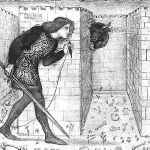
JMT: Speaking of Ellen Page as tech wiz Ariadne (she makes and unwinds mazes). It’s an untypical move not to make her role into a romantic interest. Page looks desexualized, while Cobb’s wife Mal (Marion Cotillard) is smoldering but absent/fatal. There are love interests in Nolan's films, but is there much – or any? – genuine intimacy that unfolds in the “now”? I'm hard pressed to think of examples. Again, this is a point of interest, this weird lack of something human…
BW: Well, his protagonists tend to (mis)remember and investigate rather than, um, live. We root for them because they're the narrative engine, not because we're actually invested in their welfare to any great degree. And I think this brings us to another problem with Inception – this lack of facility for the quirks and charms of actual present people result in a film basically comprised of really boring, thuddingly rational dream sequences.
JMT: They're not that dreamy. A friend pointed out that the snow level of the narrative/dream is a Bond film. And really it's also an Inception video game. Blam! I'm using the bigger gun now. Someone else I talked to reminded me, though, that since the dreams are constructed they would tend to be less weird than “real” dreams. So that can be unwound as possibly more interesting…
BW: Cop-out! Dreams should be weird and woozy and hot and fickle. Inception plays like a two-and-a-half-hour American Express ad.
JMT: It's not truly surreal or even very disjointed, apart from a few moments. In Memento the structure relentlessly compels the eye. Here, as in The Prestige, it's overly elaborate, a three-layer cake, in which each detail is perfect but…

- I know the tricks…

BW: The Prestige is the definite companion piece here – another essay on a soufflé of a subject executed with high-spec machine tooling. With The Prestige I wanted to shout “Go and watch F for Fake! That's how to make a movie about magic tricks!”
JMT: “I know the tricks,” Cobb says in Inception. The Prestige handles magic tricks and Inception handles dream tricks. Both have a notion of the world being a false appearance, a deception. This links Inception with the concerns of cinema, and also with film history. But unlike in Blade Runner, A Scanner Darkly, or F for Fake, no paranoia is induced by Inception. Why?
BW: Perhaps because Nolan's such a rationalist. There's never a feeling in his films that things are really coming off the rails – not in a fundamental way. An individual's situation, even his identity, might be under threat, but the world itself is securely moored. Dreams and magic are always at the service of The Real. Even that dream idyll Cobb and Mal indulge for 50 years – how dull is that! They could do or be anything they could conceive, and they ROUND UP ALL THE HOUSES THEY'VE LIVED IN?! Stay UNDER, do us all a favour.
JMT: Inception skirts a number of very pressing contemporary concerns, but drowns or submerges them in its bath of dreamings. To my mind the film is a parable of avoidance of some kind, not engagement, subversion, or disruption. On a tangent, the ad campaign for Inception was sponsored by Verizon, which like all the other big telecoms colluded in domestic surveillance. Funny, that! It's simultaneously “obvious” and strangely “unspoken,” rather like the film's own unexamined themes.
BW: I think you could probably say that “bath of dreamings” line of most Hollywood pictures. It's just a disappointment that the one that takes dreams as its explicit subject does so little with them. But yes, it's timeliness again – you can mine the project for all sorts of resonances, intended, incidental, frustrated; it obviously comes out of a cultural space loaded with concerns about unacknowledged surveillance of the interior self. But in some ways it could have been made at any time: it's basically concerned with anxiety about the unaccountable unconscious, which is hardly new ground for cinema, or art. On a less serious note, given all these frames in which time passes at different rates, Nolan missed a chance for a great gag – he could have had a Hollywood ticking-clock countdown with a justification for taking ten times as long as it should!
JMT: On that note, why is this film so humorless? So many of the scenes in Inception take the following form: “Please sit down at this cafe/desk/airplane seat so that you and I can have an important one-on-one conversation about a previously undisclosed aspect of the science fiction in this film.” When I saw Dileep Rao (Yusuf) enter the picture, I remembered how funny he was in Drag Me to Hell. That Wellesian sense of the con-man prestidigitator in Raimi’s film is lacking here.
BW: Nolan's con artists never have any fun.

- PR: The original “inception”

JMT: A dark comedy using the premise of Inception could be enjoyable. This has been done, but what if the protagonist was tasked with arranging the sponsorship deals on those implanted dreams? Since the whole experience is manufactured anyway, why not have the person driving a Volkswagen, listening to a JBL stereo system, drinking Diet Coke and chewing Doublemint? But that's a tangent…What's the picture's most intriguing aspect for you? For me it's probably seeing action sequences in which the characters are asleep.
BW: I was intrigued – or rather confused – by the film's starting notion that it's hard to plant ideas in people's heads. Isn't that how publicity works? Isn't that why everyone is talking about this not-very-interesting movie…?
JMT: So, what else are you watching these days? Any recommendations?
BW: I've been watching a bunch of Seinfeld and have been surprised how much of it revolves around the vagaries of landline use – competing for payphones, missing calls to your home phone – and how much of a period piece it feels because of this.
JMT: Excellent, I love seeing payphones! This reminds me of the Beeper King boyfriend in 30 Rock, who has to rely on payphones when he's out of the house. Also for online viewing, I've been compelled by clips of Douglas Gordon's “24 Hour Psycho,” a slowed-down version of Hitchcock's film that takes a day to unfold. I came to Gordon's work belatedly, after reading Don DeLillo's new novel Point Omega.
BW: That's a beautiful piece. Hypnotic and, I guess, kind of dreamlike. Certainly brings us back to the unaccountable unconscious…
*
The Owls is a site for web-type writing and art projects. Cross-posts appear here by the generosity of 3QD. Free updates from The Owls via email on the main page (Under Subscribe). The Owls site is Likeable on Facebook.