Karl Ove Knausgaard went around for many years claiming that he was sick of fiction and couldn’t stand the idea of made-up characters and invented plots. People understood this to be an explanation of why he had decided to write six long books about his own life. There was some truth in this, but the simple contrast between fiction and reality was complicated by the fact that Knausgaard referred to his autobiographical books as novels. Were they real? Was the Karl Ove of the story the same as the author? It seemed like it, but then why call them novels? The problem lay with the word “fiction.” Like a German philosopher, Knausgaard had his own definitions for words that we thought we all agreed on. Here’s how he explains his meaning of “fiction”:
At that time, I was also tired of fiction in a broader sense. It seemed to me that fiction was everywhere—TV news, newspapers, films, and books all provide a flood of stories, a continuous dramatization of the world. So what I did, naively, was to try to take the world back.
“A continuous dramatization of the world.” Fiction is not the novel, then, but the incessant urge to interpret and narrativize experience, instead of simply presenting things as they are: the truth. Of course, when one thinks they are seeing the truth they may be simply telling a different story, and they may have blind spots; but still, one can try, one can write against interpretation. This is what Peter Handke, one of Knausgaard’s favorite authors, does in The Goalie’s Anxiety at the Penalty Kick. He’ll write a sentence that goes something like, “The house seemed unoccupied because the door was open,” and then he’ll follow that sentence with, “The house seemed unoccupied even though the door was open.” Which one is it? What is the connection between an open door and the presence of someone in a house? Read more »
Smart people sometimes say not-so-smart things about freedom of speech.
Let’s start with Elon Musk, the boss at Tesla and SpaceX, and his often-quoted declaration that he is a “free-speech absolutist.” Whatever one thinks about Musk, he seems to be a smart person. But that’s a silly statement.
After he bought Twitter and then banished from the platform various people whose speech he didn’t like, critics labeled Musk a hypocrite. I’m not much interested in that, since I’ve never met anyone who didn’t have a bit of hypocrisy hiding somewhere in their lives, myself included. A more important observation is that if Musk, and all the other people who claim to be free-speech absolutists, actually meant it, they would be admitting that they are moral monsters.
No one really means it. There is no such thing as a free-speech absolutist.*
To be a true absolutist—and to endorse that as the guiding principle for First Amendment law in the United States—would mean rejecting any limits on any speech no matter what the consequences. That’s what “absolute” usually means—to do something, well, absolutely, without exceptions.
Absolutism would mean there would be no libel laws allowing people to recover damages when others deliberately lie about them. There would be no laws against the distribution or possession of child sexual abuse materials, once more commonly called child pornography. There would be no laws against speech that advances a conspiracy to murder someone. And the list goes on.
Imagine that I publish a story saying Elon Musk runs an international drug trafficking ring, that he uses those illicit profits to offset hidden losses at Tesla, and that his mismanagement of the electric car company is the result of his addiction to fentanyl. That story is, to the best of my knowledge, false on all counts. If Musk sued me for knowingly making false and defamatory statements (the kind that injure one’s reputation), he likely would recover money damages, punishing me for my speech, a rejection of an absolutist interpretation of freedom of speech. Most people would agree that libel law is justified. Read more »
“Aik Shaam,” “An Evening (By the River Neckar)” is Iqbal’s ode to silence. A short lyric poem, it describes a rare personal moment in the vast corpus of a poet who is known by such hefty honorifics as “Allama” (the “learned one”), the “national” poet, “poet-philosopher,” or “Poet of the East.” This poem is an instance where we find a poet of great stature revealing his vulnerability, seeking pause, perhaps from the overwhelming disquiet of confronting the political tensions of his times as a scholar visiting Europe, a colonized subject of the Raj in a climate of rising awareness, perhaps negotiating intense homesickness in beautiful Heidelberg, or as many suggest, being lovelorn (as an already married man) for Emma Wegenast, the German tutor who was instrumental in guiding him through a remarkable turning point in his life by introducing him to Goethe’s poetry.
Literary correspondence between Iqbal and Emma Wegenast offers clues to their attachment. Though Iqbal’s biographers are better qualified to discuss their relationship and surmise what they will from it, Emma’s role in inspiring Iqbal to gain insights into Goethe’s works is significant to anyone interested in understanding Iqbal’s poetry. Before returning to a brief annotation on the poem, here are some thoughts on how the study of Goethe’s poetry, plays and philosophy left a deep impression on Iqbal, as reflected in his masterworks following his stay in Germany.
Iqbal’s poetry, valued for its exceptional originality in both the idiom he coined and the range of topics he stretched Urdu poetics into containing— is an important example of what is classified as “World Literature.” This, in no small measure, is due to the strong influence of Goethe (who was the first to come up with the term “Weltliteratur” or “World Literature”) but also Iqbal’s inclination to dissect, balance and appreciate the radically diverse, syncretic traditions of his own South Asian culture many years prior to encountering Goethe’s work. The book (besides Faust) that made a lasting impact on Iqbal’s psyche was Goethe’s West-ostlicher Divan or West-Eastern Divan. Iqbal was to compose “Payam e Mashriq,” a great work of his own, in response to Goethe and Rumi, that other sage Iqbal held in the highest regard. Read more »
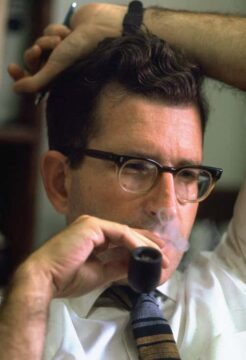
Noam Chomsky was rumoured to have left us almost a month ago, but he always told us not to trust the media!
It appears he’s still alive at time of writing, and recovering at home from a stroke. Both The New Statesman and Jacoben published obituaries. Yanis Varoufakis claims his article about his friend was inadvertently published as an obituary (despite referencing Chomsky’s passing in it). That article has since disappeared. In shows that even the best of us can be duped. Vivek Chibber’s piece morphed into a tribute in which he said,
“Noam hasn’t just pointed to injustice where he saw it, no matter how remote–he has felt it . . . as an affront to his own sensibility. . . . He doesn’t just have educated opinions on a bewildering array of topics and geographical regions–he has real expertise. This is what has made him such a towering figure.”
Absolutely.
The benefit of mistakes like this (and there have been a lot of them) is getting to see what people really think of you!
Chomsky is a different person than you or me — well, than me for sure. He has a wealth of knowledge and an astute analysis of events pretty much from the beginning of time to now all in his head and instantaneously available to him, but he’s also very down to earth, of the people. Most importantly, he gives us a framework of the world that’s necessary to understand in order to help us fight the good fight.
Out of the multitude of writings he’s produced in his 95 years, I think one of the most comprehensive places for the uninitiated to start is with Understanding Power: The Indispensable Chomsky, a collection of talks given between 1989 and 1999. Below, I’ve summarized the ideas down to ten common threads often seen elsewhere in his work, abridged without all the evidence – you have to read the full 400-paged book for that. (Page numbers are from the 2002 paperback edition.)Read more »
In his 1997 best-seller, How the Mind Works, Steven Pinker suggested that, however important art may be to humans, it is not part of our specifically biological nature:
Chocolate cake for the mind?
We enjoy strawberry cheesecake, but not because we evolved a taste for it. We evolved circuits that gave us trickles of enjoyment from the sweet taste of ripe fruit, the creamy mouth feel of fats and oils from nuts and meat, and the coolness of fresh water. Cheesecake packs a sensual wallop unlike anything in the natural world because it is a brew of megadoses of agreeable stimuli which we concocted for the purpose of pressing our pleasure buttons. Pornography is another pleasure technology. In this chapter I will suggest that the arts are a third. (p. 525)
This triggered a backlash of arguments asserting that, no, the arts are not mere mental cheesecake (nor chocolate cake either), they are an essential component of human nature, our biological nature.
State-dependent memory
I would like to offer a speculative proposal about why the arts, the literary arts in particular, are central to human life. This proposal is based on a line of thinking I began entertaining in the mid-1970s when I learned about something called state-dependent memory. I first learned about state dependence when I read about some experiments originally reported by D. W. Goodwin in Science in 1969. Subjects were first made drunk and then asked to memorize nonsense syllables. When their recall was tested while sober, they performed poorly. Their recall dramatically improved, however, if they once again became drunk. More recently, Daniel L. Schacter has written of mood-congruent memory retrieval in this 1996 book Searching for Memory: “Experiments have shown that sad moods make it easier to remember negative experiences, like failure and rejection, whereas happy moods make it easier to remember pleasant experiences, like success and acceptance” (p. 211). Recall of experience is best when the one’s brain is in the same state it was in when one had that experience. That is what is meant by state dependence.
Given that motivation and emotion are mediated by over a hundred neurotransmitters and neuromodulators the state dependent nature of memory has profound implications for our ability to recall our personal experience. As I argued in The Evolution of Narrative and the Self:
If records of personal experience are [biochemically biased], especially in the case of strongly emotionally charged experience, then how can we get a coherent view of ourselves and of our world? The world of a person who is ravenously hungry is different from the world of that same person when he or she is consumed with sexual desire. Yet it is the same person in both cases. And the apple, which was so insignificant when sexually hungry—to the point where that apple wasn’t part of the world at all—becomes a central object in the world once sexual desire has been satisfied and hunger asserts itself. Regardless of the person’s [biochemical state], it is still the same apple.
If this is how the nervous system works, then how does one achieve a state of mind in which one can as easily remember an apple as a sexual object? Generalizing, if the sexually aroused self has trouble recalling any life episodes other than those involving sexual arousal, and the vengeful self can recall only incidents of vengeance, and the thirsty self has little sense of any geography beyond that leading to water, then how can we see ourselves and our fellows whole? Such a life would seem to be one of almost constant dissociation. How does the brain achieve a biochemically “neutral” state of mind from which one can recall or imagine any kind of experience and thereby construct a coherent view of oneself in the world? Read more »
Captains back from Barbados, manor houses, sugar plantations, slavery. This is the economic backdrop of a Jane Austen novel. But New Jersey, central New Jersey, was, it turns out, a locus of this trade too. Or more accurate to say, it was a locus of the fruits of the sugar trade. A website I found written by an amateur historian talks about the huge size of a fortune by a family called Morris all made in the sugar trade. He goes on to talk about enslaved people coming from Barbados who had learned farming there and then in NJ learned iron smithing. In 1804, New Jersey law stated that the children of slaves born after July 4, 1804 would be freed on their 21st birthdays if female, 25th if male. This of course kept slavery largely in place and in fact, NJ was the last northern state to abolish slavery, the result of an amendment to the state constitution in January 1866.
The Morris estate is a short walk east from the site of the North American Phalanx (NAP), a planned community built on the ideas of a French philosopher, Charles Fourier, mentioned in earlier columns. Constructed on a 673-acre site Colts Neck, NJ in 1843, the NAP sought to provide residents with work both meaningful and pleasurable. The land had previously belonged to someone named Joseph Van Mater. One source claims that he was single and aspired to own 100 slaves, but deaths (presumably the slaves’) kept him from reaching his goal. It goes on to say that “in his will he [Van Mater] freed all his slaves and, stories handed down, tell us they wandered up and down Phalanx road for days, lost and forlorn.” The NAP wouldn’t let them stay on the land they’d worked their whole lives. Commentary on the NAP rarely mentions the site’s past or the irony that a community designed to free us of drudgery had, just a few years before its founding, been worked by slaves.
*
I know nothing about the history of slavery in neighboring Howell, the town where I grew up. In my years there, the mid-1970s-’80s–there were two distinct Black neighborhoods. One was about a quarter of a mile from my house; the other along Route 9 near a poor white neighborhood of converted summer bungalows called Freewood Acres, a portmanteau of the two adjacent towns, Freehold and Lakewood. To call these areas neighborhoods might imply a grid of streets with houses, but both were more like family compounds–one piece of land with woods on either side where maybe ten small shacks arranged in no particular order that I could discern without internal streets or walkways separating them. I’d heard classmates refer to one of the two as the Black Village; in my hearing at least, it wasn’t a pejorative but a geographic point of reference. I only knew two Black girls from the neighborhood near me, and we never talked about how our families came to live in Howell. Read more »
Before the first round of voting in the French legislative elections on June 30, the author and activist Edouard Louis posted the following on Instagram:
To those who would still be loath to vote for the Nouveau Front Populaire on Sunday because they have too many differences with one fraction or another of this union of leftwing parties: when you cast your vote, the political issue at stake is not whether you can find someone, a party, an individual, an alliance, with whom you might be perfectly in agreement on all things. Absolute agreement does not exist: we are never totally in agreement with others, including with those in our own camp, including with our closest friends, including with ourselves. Who has never come home of an evening turning over something they’ve said during the day and wondering, “Now why did I say that?” Since perfect and total agreement is an impossible fantasy, the issue at stake is rather: how can we create a space of disagreements that would render our disagreements effective, creative? How can the disagreements among La France Insoumise, the Verts and the PS be the point of departure for a more inventive, a more progressive politics?
What Louis is evoking here—the constructive interaction of differences in the name of a greater good—is in effect the basic recipe for politics: bringing together disparate actors with a common stake so that they can work on producing compromise solutions to complex problems. What is also commonly known as collaboration.
In the event, two weeks later, after the second round of voting in France on July 7, an unusually high turnout and a successful strategy of selective withdrawal of candidates have produced the potential for a situation known as cohabitation, in which the President of the French Republic represents a different party from that holding a majority (or at any rate forming the government) in the Assemblée Nationale. At least, that is what will almost inevitably be the case, unless Emmanuel Macron is able to split the left and form a centrist coalition with rightwing Socialists and the rump of the old Gaullist party. Read more »
There are only four U.S. states where white people are at least 80% of the population in every county: West Virginia, Vermont, New Hampshire, and Maine. These four are also among the five whitest states as a percentage of total state population, with Wyoming coming in second, behind West Virginia (97%) and just ahead of Vermont and New Hampshire (both 92%). But not all of Wyoming’s counties are so very white because within its state boundaries are relatively populous Indian Reservations. None of the other four have reservations, except for Maine, but those have relatively small Native populations.
There are some other similarities among these four states. Three of them are in New England, and all four can be considered part of the broader Northeast, defined as north of the South and not west of the Appalachians. All four are also all substantially mountainous. And none of them have a major city.
However, there are also notable political and economic differences among these four states. West Virginia is one of the nation’s poorest states, and now one of the reddest. Vermont and New Hampshire have very strong state economies. But while Vermont is one of the nation’s most liberal states, to the point of sending Bernie Sanders to Congress for thirty-four years and counting, New Hampshire is a purple state with a strong libertarian, anti-tax tradition. Meanwhile, Maine is also purple and its economic standing varies from rather wealthy to quite poor
Comparing and contrasting these four states can remind us of the limits that both race and wealth offer in predicting U.S. political preferences. There are certainly patterns and trends to be found, some stronger than others, such as the strong propensity of African Americans, particularly women, to vote Democratic. But ultimately, the U.S. political equation is complex with many factors in play. Read more »
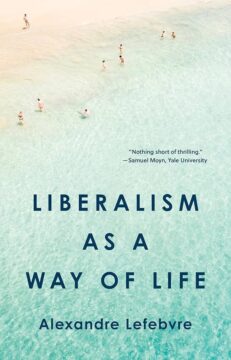
Even after discussing Daniel Chandler’s inspiring application of John Rawls in my previous column, I remain on the lookout for a book that delivers a sweeping, original and sound vision for the future of the liberal and democratic world, saves it from its social problems through policy proposals that are simultaneously transformative and unthreatening (enough for all interested parties to accept and implement them immediately), and provides a sure and painless path to undercutting popular support for illiberal and authoritarian politics. Ideally, it also solves climate change and ends factory farming, and does not require me personally to change too much. Disappointingly, Alexandre Lefebvre’s new book, Liberalism as a Way of Life, only achieves some of these things.
Lefebvre’s argument is that it is possible to be a ‘liberal all the way down’. This possibility is not obvious. First of all, we may think of our society as liberal, but it is more accurate to think of it in terms of ‘liberaldom’, in the same way European societies used to be part of Christendom: dominant cultural expressions revolve around liberal tropes and sensibilities, but that doesn’t mean our society is unfailingly producing genuine liberals who strive to produce genuinely liberal social arrangements.
Second, it is commonly claimed that a liberal society doesn’t require its citizens to have a specifically liberal conception of the good. People with diverse conceptions of the good can (and rationally ought to) support liberalism precisely because it guarantees them the freedom and resources to pursue their own conception of the good life. Lefebvre does not object to this, but he thinks something is missing. A liberal conception of the good life does in fact exist, and it is both possible and desirable for people to pursue it.
A liberal view of what is good and valuable in life is not separated from liberal political values, but integrated in it. “The right is our good”, Lefebvre writes. In so far as liberalism as a political framework seeks to organize society along the lines of fairness, liberals are people who derive meaning from bringing a fair society closer. Again, there are other legitimate conceptions of the good life that can be in harmony with liberalism; but being ‘just’ a liberal does not mean trivial conformity to the status quo. It is a full way of life, in analogy to being a committed Christian or Stoic. Read more »
For a strange five minutes in 1994, Americans were talking about caning. An American teenager named Michael Fay drew Singapore into the international spotlight when it sentenced him to six strokes of the rattan cane for vandalism and graffiti. Our nation was shocked to even learn what caning was, let alone that a 15-year-old would receive government-sanctioned, permanently scarring corporal punishment. For the first time ever, Singapore was part of the news cycle in the United States with a focus on what was perceived as the tiny Southeast Asian country’s harshness and authoritarian bent.
Bill Clinton’s intervention got Singapore to reduce the number of strokes of the cane, but not to back down from its judgment or punishment. What wasn’t covered as well at the time was that Fay was part of a group of teens who vandalized 67 cars and stole 16 items.
Thirty years later, Singapore’s economic success and role in international business have become its brand, though for many the Michael Fay incident still colors their perception of Singapore. As a result, most Western countries ignore or dismiss Singapore’s many successes because they perceive it doling out harsh punishments and constraining free speech.
That’s unfortunately throwing the baby out with the bathwater. Singapore overwhelmingly shares most of the goals of its Western friends and moreover has found innovative solutions that create higher levels of welfare and satisfaction among its citizens than most European countries, let alone North American ones.
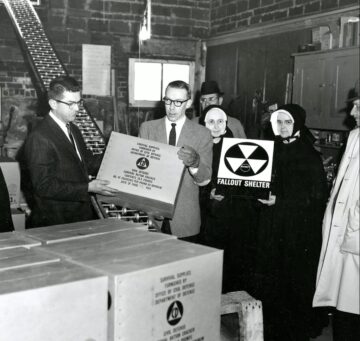
If you know more about fallout shelters than a dark TV comedy based on a video game, you probably know that people are still finding relics in basements and storerooms of old schools, hospitals, and factories: olive-drab drums of water, cartons of high-nutrition crackers, first-aid and sanitary supplies, even bicycle-driven fans to bring in filtered air through a vinyl hose. Boomers have a few snapshot memories, their children and grandchildren just the memes: “duck and cover” exercises, CONELRAD emergency warnings (their loud hum surviving in weather warning and AMBER alerts), and the yellow-and-black trefoil signs.
For me, the snapshots are frames in a private documentary: Nine Hot Weeks, with Misgivings. In 1967, I spent the summer after my first year of college in a thousand or so basements, surveying potential sites for those shelters in El Barrio, aka East Harlem, Manhattan, New York City. Two-man teams were dispatched in pairs with computer printouts listing every building in our assigned area, as other teams covered other neighborhoods. We also carried a letter of introduction in several languages, which asked building owners, superintendents, and ground-floor businesses to cooperate. Because the Big Apple was well connected, the letter was machine-signed by President Johnson as well as Mayor Lindsay. Because the Army was well connected — and 1967 was yet another long, hot urban summer — the NYPD supplied a patrol officer to accompany us and radiate yes, please cooperate vibes at the front door. (That chickenshit assignment must have gone to the least popular rookies in the precinct.) But we appreciated their presence, as neither I nor my partner Vytautas Jankauskas – an immigrants’ son a few years from Kaunas, Lithuania, with silver-blond Baltic Targaryen hair – could pass for a homie.
How did the survey come about? FDR had created an Office of Civil Defense in 1941, but it took the USSR’s first atomic bomb test to prompt Truman to reboot it in 1950 as the Federal Civil Defense Administration. In 1958 the FCDA begat Eisenhower’s Office of Civil and Defense Mobilization; in 1961 the OCDMA, moved by Kennedy from the executive into the Defense Department, became the Office of Civil Defense (tradition!), which soon launched its National Fallout Shelter Survey Program. Including those designated earlier, by 1963 the government had identified shelter spaces for 121 million people, and stocked enough of them for 24 million. Read more »
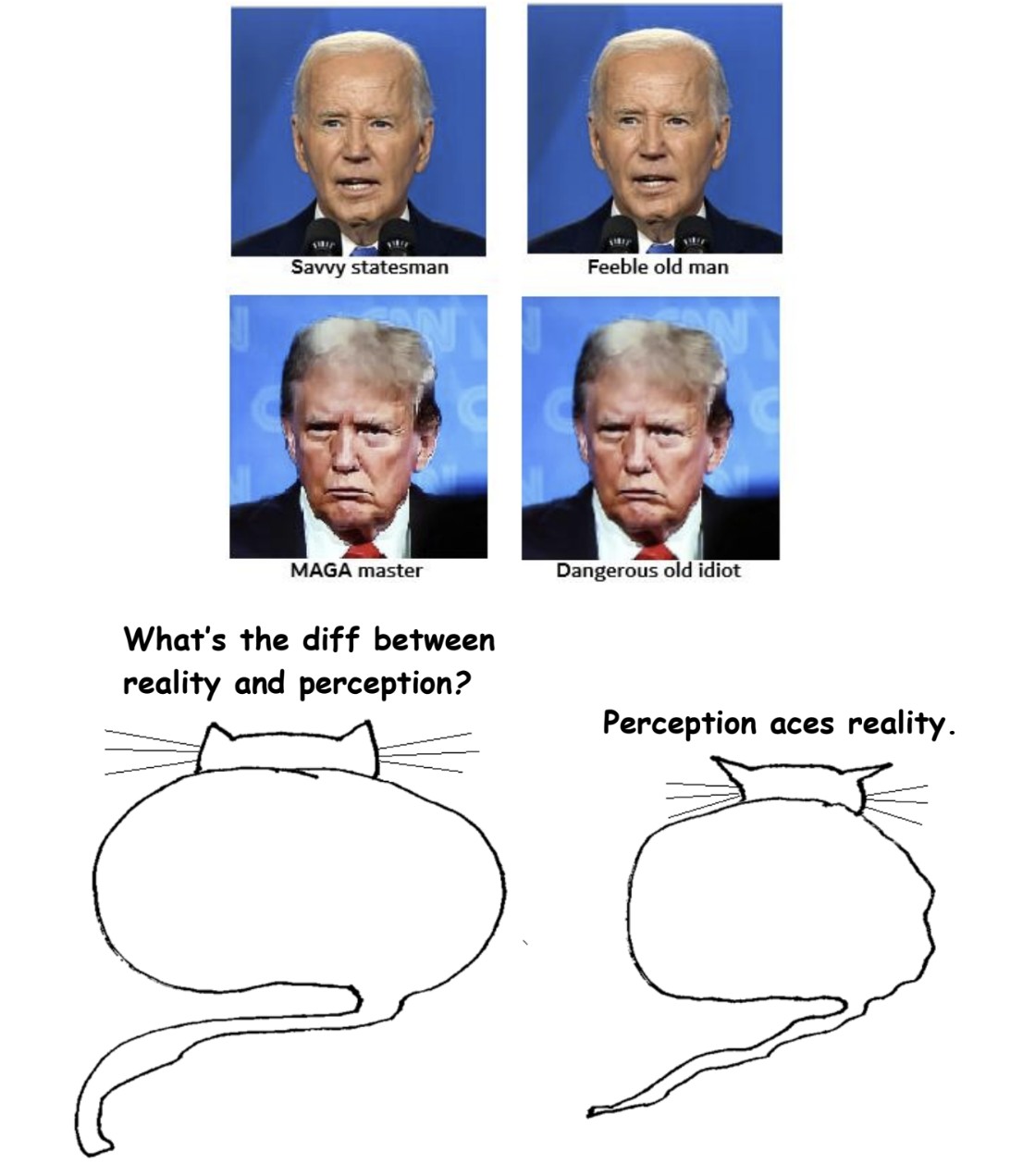
Several years ago the Nobel committee selected two economists, Thomas Schelling of the University of Maryland and Robert Aumann of Hebrew University, to receive the prize for their stellar work on game theory. Aumann has contributed many seminal ideas with real-world applications, one in particular that is especially relevant today. It concerns the notion of “common knowledge,” which is crucial in understanding many phenomena from the stock market, family dynamics, and, most topically, to the present situation with President Joe Biden.
First the terms. A bit of information is deemed “common knowledge” among a group of people if all parties know it, know that the others know it, know that the others know they know it, and so on. It is much more than “mutual knowledge,” which requires only that the parties know the particular bit of information, not that they be aware of the others’ knowledge of it
Consider now the dynamic and often mysterious relations among extended families, networks of friends, and business colleagues, the open secrets that people know while remaining ignorant of others’ knowledge of the same. This is a nice illustration, among many, of the difference between mutual knowledge and common knowledge.
Once a bit of mutual knowledge becomes common knowledge, however this transition comes about, the revelation often leads to a drastic re-evaluation of the situation and a desire for some sort of action. This is certainly true with families, friends. and colleagues who finally share a common knowledge about some previously shadowy suspicions.
The relevance of this to Joe Biden and the Democrats’ situation is clear. Many people who have met the President in recent months have come away with private doubts and concerns about his future candidacy but remained unaware that many others had a similar uneasiness. Biden’s abysmal debate performance ended that, as millions of viewers became aware of his likely vulnerability during the upcoming campaign and possible further decline over the next four years. The result of this transition from mutual knowledge to common knowledge is the widespread call for the president to bow out and allow an arguably stronger candidate to take over with a presumed better chance to defeat Donald Trump. Read more »
But they shall all sit under their own vines and under their own fig trees, and no one shall make them afraid…. (Micah 4-4)
Washington Crossing the Delaware, by Emanuel Leutze, 1851. The Metropolitan Museum of Art.
Ah, those figs and vines. George Washington liked this sentiment so much that he used it or a variant at least 50 times in his correspondence. It meant going home to Mount Vernon and staying home. It meant disengagement from whatever activities he had committed to on behalf of others. It meant emulating Cincinnatus, the Roman General who, as legend would have it, was living modestly in retirement on his four-acre farm outside of Rome until the Senate called him back to deal with a crisis and invested him with a dictator’s power. Cincinnatus went on to defeat the invading Aequians, and just 15 days after assuming the dictatorship, he resigned and returned to his plow.
Finally, it meant something immensely important to Washington himself, a man who did not lack self-esteem. Retiring to his figs and vines was a seminal display of republican virtue, an ineradicable example to all who would follow him in leadership that one must act with integrity, that power is granted by the people “in trust” and belongs only to the grantor, not the grantee. Power must be returned at the appropriate moment. Washington understood the conditions of that grant, its essentialness to the American experiment, and acted upon it.
We mythologize our great men well beyond the reality of their lives and accomplishments, but that Washington did this not just once, in resigning his commission, but also a second time, in refusing to run for a third Presidential term, seems almost superhuman. George III thought so: when told by the American artist Benjamin West that his long-time adversary was going to resign, the King said, “If he does that, he will be the greatest man in the world.”
The “Greatest Man In The World” is an impressive title. Still, there’s a strange disconnect in trying to animate this titanic figure, the Washington of monuments and marble statues and Mount Rushmore. He was nothing at all like the bouncing, voluble wrecking ball that was TR, or Jefferson’s suave, violin-playing political poet, or Lincoln’s melancholic, introspective grappler of existential questions of life or death, freedom or slavery. Washington’s eloquence was certainly not in words—instead it was in his capacity to endure and to lead. Read more »
“This guy nails it IMO.” That was the message below a Youtube link. Normally, I’d be wary of a link accompanied by such a cryptic gloss, but it came from a friend and colleague so I clicked. Destination: Rick Beato’s YouTube video posted June 25 on his “Everything Music” channel. Beato launched into his talk, his white hair combed back, hands waving like a modest conductor as he stood in what might be a 1970s living room. I could easily imagine that his jazz studies students at Ithaca College came to love his New York accent and his urgent wit.
“The Real Reason Why Music Is Getting Worse,” the video’s title, could signal a revelation of a conspiracy—the “Real Reason”—or offer another Old Man Yells At Cloud variety of crotchetiness. But by the time I finished watching, I had to agree with my guitar-playing, guitar-collecting friend: Yes, Rick Beato “nailed it.”
Beato thinks AI is corroding today’s music, lulling the human spirit and inventiveness by making it too easy to make music and too easy to consume it—of course, doing all this while stealing from musicians, too. In many ways, the story has already been told, as the replacement of skills by machine has long been a feature of the transformations of life and work over the past century and more. Beato’s complaint, however, may be more urgent than before. Maybe, as they say, this time is different.
Beato balances two aspects of today’s rapidly transforming music technology, drawing his argument into two “acts”: “Music is too easy to make” and “Music is too easy to consume”—both headings essentially framed as judgments, not as observations. Technology lies at the core of both. Read more »
For a couple of days, some things at 3QD may not work exactly as expected. We will be updating some of the pages at the site in the next few days. We appreciate your patience!
This is the most important change already in effect: We have decided to give more prominence to our own writers who used to be limited to Mondays. From now, when you come to our home page, you will only see what used to be the “Mondays posts” of original writing. And new original 3QD essays will appear a few at a time throughout the week. There is now a “Recommended Reading” link in the menu just under the banner that will take you to the curated links (what used to be the normal posts linking to articles at other websites from Tuesday through Sunday). Try it now!
We apologize for any inconvenience while we work out any kinks.
Suppose a small group of people are stranded together on a desert island. They have no fresh water or food – until they come across a stash of coconuts. They can drink the milk and eat the coconut meat to survive. But how do they divide up the coconuts fairly between them?
The coconuts are not the product of anyone’s hard work or ingenuity. They are manna-from-heaven. In such circumstances, in a sense, no one deserves anything. So, the question is how to distribute something valuable, even essential, but which no one has any prior claim upon, in an ethical way. In other words, what is the appropriate principle of distributive fairness in such a case?
The most obvious suggestion is that the coconuts should be distributed equally. And that may well be the right answer. Many people consider equality the presumptive fair distribution, especially in manna-from-heaven situations like this. Distributions that depart from strict equality, many believe, must be justified, but equality requires no justification. For example, suppose we also find buried treasure on the island. Various arguments could be made that one person made a decisive contribution to the discovery that others didn’t, but isn’t the starting place an equal distribution?
But suppose after most of the coconuts are distributed equally there is one coconut left. For the sake of argument, imagine single coconuts are not divisible or fungible for some reason and so one coconut cannot be shared. What do we do with the extra coconut?
Strict equality seems to imply that you should just throw it away to avoid making the distribution unequal. This is called the leveling-down problem. You can almost always increase the amount of equality in an unequal distribution by taking stuff from the better-off and simply throwing it away. If equality is valuable in and of itself, then any situation can be made fairer (at least in one way) by leveling down how much the better-off have so that there is less inequality – even if this makes no one better-off in absolute terms.
Maybe, for this reason, we shouldn’t care about equality in and of itself, after all. Why do we? Read more »

 Karl Ove Knausgaard went around for many years claiming that he was sick of fiction and couldn’t stand the idea of made-up characters and invented plots. People understood this to be an explanation of why he had decided to write six long books about his own life. There was some truth in this, but the simple contrast between fiction and reality was complicated by the fact that Knausgaard referred to his autobiographical books as novels. Were they real? Was the Karl Ove of the story the same as the author? It seemed like it, but then why call them novels? The problem lay with the word “fiction.” Like a German philosopher, Knausgaard had his own definitions for words that we thought we all agreed on. Here’s how he explains his meaning of “fiction”: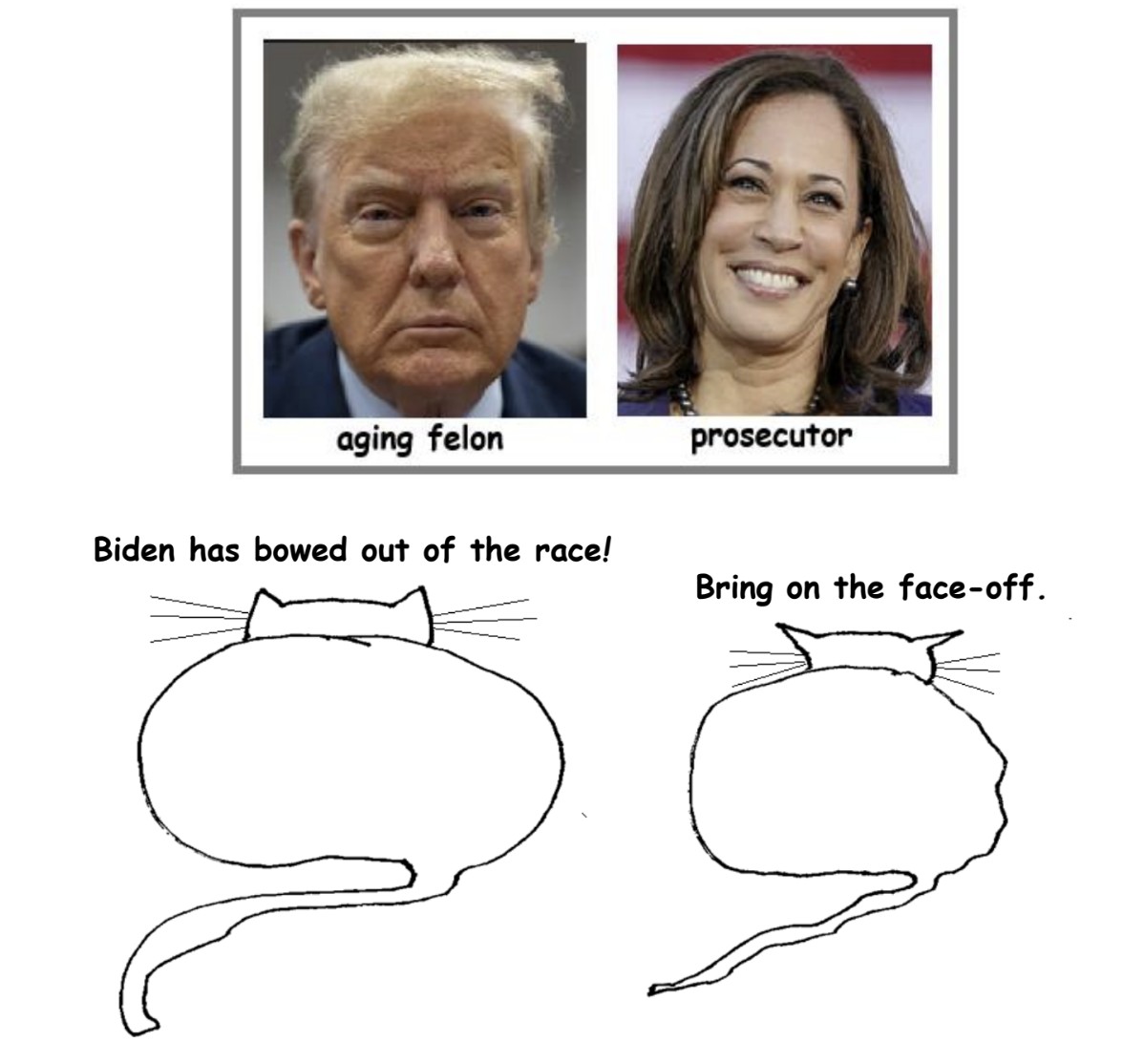
 Noam Chomsky was rumoured to have left us almost a month ago, but he always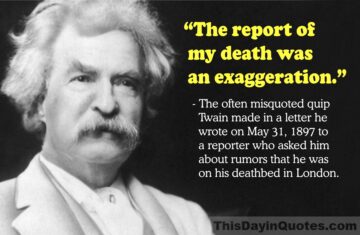


 There are only four U.S. states where white people are
 Even after discussing Daniel Chandler’s inspiring

 How did the survey come about? FDR had created an Office of Civil Defense in 1941, but it took the USSR’s first atomic bomb test to prompt Truman to reboot it in 1950 as the Federal Civil Defense Administration. In 1958 the FCDA begat Eisenhower’s Office of Civil and Defense Mobilization; in 1961 the OCDMA, moved by Kennedy from the executive into the Defense Department, became the Office of Civil Defense (tradition!), which soon launched its National Fallout Shelter Survey Program. Including those designated earlier, by 1963 the government had identified shelter spaces for 121 million people, and stocked enough of them for 24 million.


 For a couple of days, some things at 3QD may not work exactly as expected. We will be updating some of the pages at the site in the next few days. We appreciate your patience!