by Barry Goldman
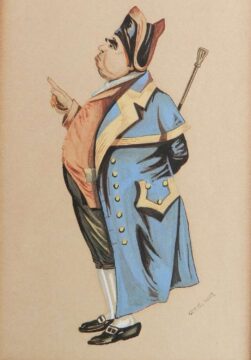 “You were present on the occasion of the destruction of these trinkets, and, indeed, are the more guilty of the two, in the eye of the law; for the law supposes that your wife acts under your direction.”
“If the law supposes that,” said Mr. Bumble, squeezing his hat emphatically in both hands, “the law is a ass — an idiot.”
―Charles Dickens, Oliver Twist
I am an arbitrator. I serve mostly in cases between labor unions and employers, but I also serve for the Financial Industry Regulatory Authority (FINRA) in cases between customers and brokerage firms. I am not a judge, but the principles that apply to judicial and arbitral decision making are essentially the same.
Unions and employers come to arbitrators with disputes about the meaning of terms in their collective bargaining agreements. The agreement might say, for example, “Employees assigned to this work shall receive premium pay until the task is complete.” Everyone agrees on what the contract says. But what does it mean? What is “the task?” And when is it “complete?”
The union says the task is the whole project. The employer says the task is the particular assignment within the project. How is the arbitrator to decide?
There are rules for this sort of thing. Some of them are very old and have Latin names. One of the rules says a term in a contract has the same meaning whenever it appears. So, if we don’t know the meaning of the term “task” in Article 7, we can look at the rest of the contract and see if the word appears somewhere that we do know the meaning. Then we just apply the rule. It means in Article 7 what it means in Article 12.
There is a corollary to this rule. Arbitrators assume if the same term is used the same meaning is intended, and we assume if a different term is used, a different meaning is intended.
There are many other rules like this. We suppose, for example, that everything in a contract is there for a reason. Collective bargaining agreements contain “no mere surplusage.” We also assume the contract, read as a whole, makes sense. If there are two possible readings of a provision, one of which conflicts with another provision elsewhere in the contract and one which does not, we construe the contract according to the internally consistent meaning.
There is a fiction at work here. The law supposes the drafters of the contract combed through it painstakingly, searched out all the inconsistent usages, ambiguities, vaguenesses and infelicities, and rooted them out. The drafters, we assume, knew precisely what they were doing, and went about it with scrupulous care. Anything that remains is intentional.
No one who has ever been in the room where a labor negotiation was taking place believes a word of this. Read more »
 I was recently subjected to an hour of the “All In” Podcast while on a long car ride. This podcast is not the sort I normally listen to. I prefer sports podcasts—primarily European soccer—and that’s about the extent of my consumption. I like my podcasts to be background noise and idle chatter, something to listen to while I do the dishes or sweep the floor, just something to fill the void of silence. On the way to work this morning I had sports talk radio on—the pre-podcast way to fill silence—and they were discussing the physical differences between two football wide receivers—Calvin Johnson and DK Metcalfe—before switching to two running backs—Derrick Henry and Mark Ingram.
 Sughra Raza. Being In the Airplane Movie. Dec 4, 2024.


 1.
1. 2.
2.
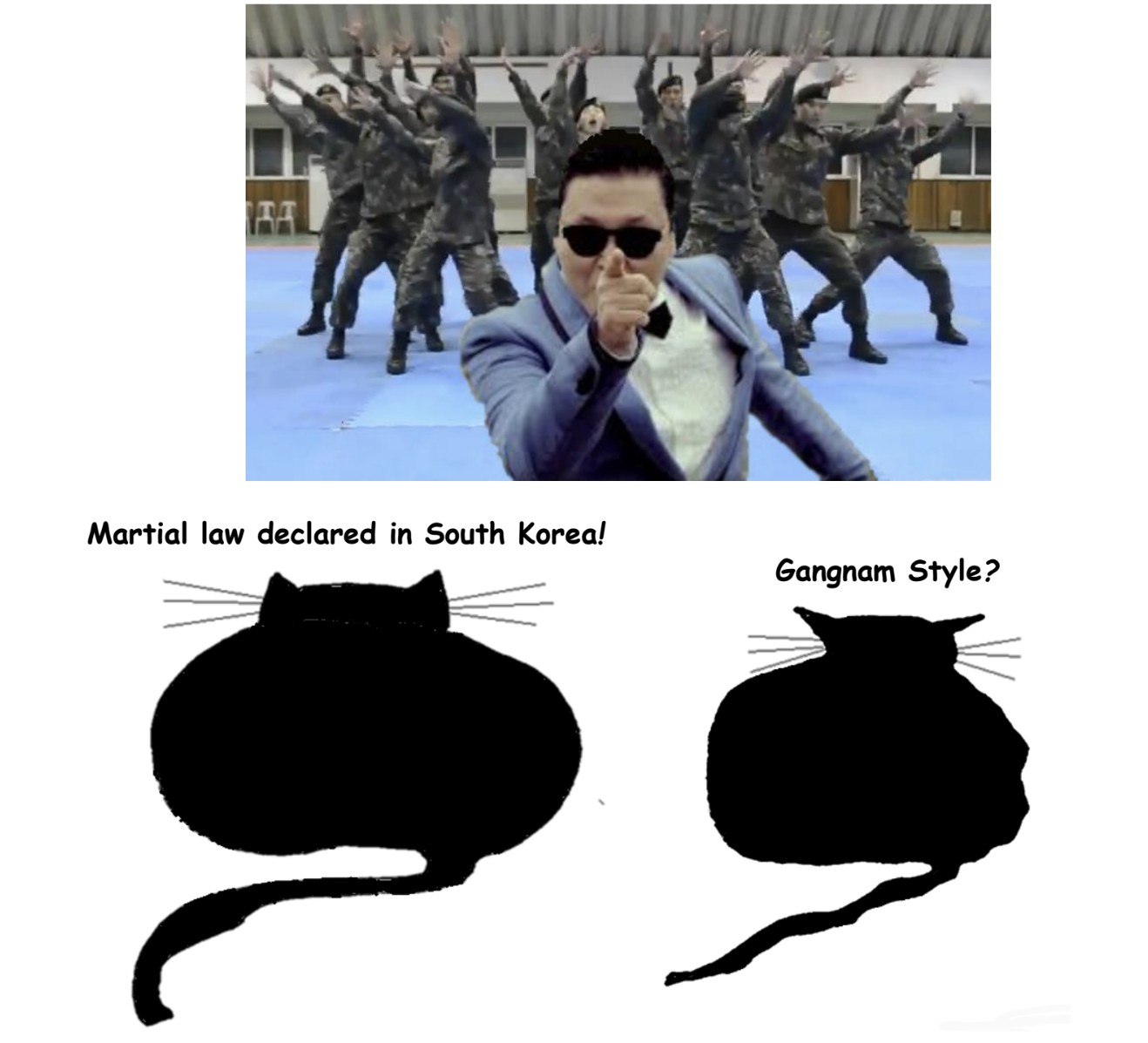
 There’s a lot going on right now. Lowlights include racism, misogyny, and transphobia; xenophobia amid undulating waves of global migrations; democratic state capture by right wing authoritarians; and secular state capture by fundamentalist Christian, Jewish, Muslim, and Hindu nationalists.

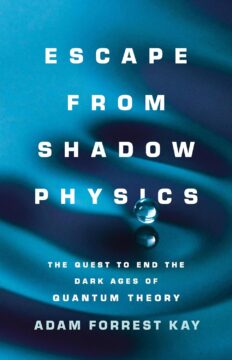 There’s an old story, popularized by the mathematician Augustus De Morgan (1806-1871) in A Budget of Paradoxes, about a visit of Denis Diderot to the court of Catherine the Great. In the story, the Empress’s circle had heard enough of Diderot’s atheism, and came up with a plan to shut him up. De Morgan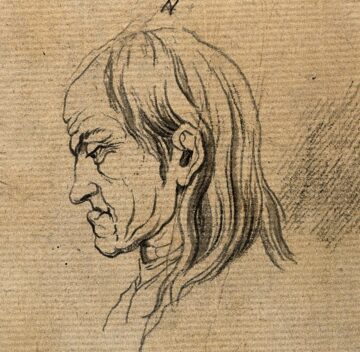
 Sughra Raza. Science Experiment as Painting. April, 2017.