by Ashutosh Jogalekar
 When people hear that we should empathize with our adversaries, the reaction is often uneasy. Empathy sounds like softness. It sounds like moral compromise, even capitulation. Why should we try to understand those who compete with us, oppose us, or even threaten us?
The confusion lies in a simple mistake. Empathy is not sympathy. To empathize with someone is not to agree with them, excuse them, or endorse their actions. It is only to attempt to see the world as they see it, to understand what they fear, what they value, and what they believe they must defend. As Ralph White of the United States Information Agency put it, it’s the ability to step into someone else’s skin and experience the world through their eyes. We rarely need to exert ourselves to empathize with friends; shared assumptions do most of the work. It is with adversaries that empathy becomes difficult, and therefore essential. When trust is low and stakes are high, misunderstanding becomes dangerous. Two Cold War episodes make the point, in opposite ways.
The Cuban Missile Crisis in October 1962 brought the United States and the Soviet Union to the brink of nuclear war. We now know that the Soviet missile deployment in Cuba was larger and more advanced than American officials understood at the time. A small miscalculation could have triggered catastrophe and the deaths of hundreds of millions. During those tense days, Nikita Khrushchev sent President Kennedy two communications. One was public and defiant. The other was private and conciliatory in tone. The instinctive response that Kennedy was considering was to answer the public challenge directly, to demonstrate strength.
At that moment, one man in the room possessed something rare: lived familiarity with the adversary. Read more »





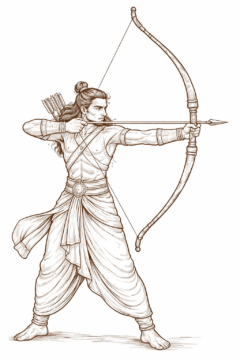 My friend Arjuna is an archer in the army. He has been on several campaigns, always victorious. His bow is as tall as he is. It is made of wood but strengthened with sinews. The combination makes it firm, supple and elastic. I say that, and marvel at the expert ease with which he handles it, and I know I – man of letters and numbers as I am – would never be able to pull the string back as he does.