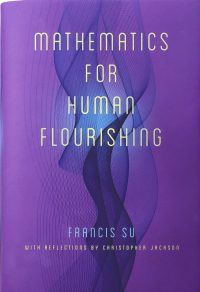
As I’ve tried to convey over the years here at 3QD, mathematics is the bee’s knees. Like most apologias for mathematics, many of my essays tend to fall into one of two categories.
The extrinsic: on math’s usefulness in real-world applications like internet searches, GPS technology, compression and recovery of images, encryption, the handling of large data, and the like. This is the reason my relatives (and most of my students) think math is worth learning.
The intrinsic: on math’s beauty, universality, timelessness, ability to amaze and inspire awe, its endless depth and richness, and its ability to spark joy and fun. This is what drew me (and some of my students) to study math and still motivates me today to teach and do research.
But there is a third quality of mathematics which I’ve never quite been able to articulate. I’ve only managed to sneak up on it from time-to-time. This is the humanity of mathematics. For some, humanity may seem more the purview of literature, music, art, psychology, sociology, or philosophy. Not mathematics. They would be wrong, though. Read more »
flames are the feathers of this bird but I’m not calling the fire brigade —life burns life
this is a particular bird whose flame is multitudinous red with flamboyant nuance: high-frequency colorwheels thrown in and well-played purple notes of a bass line in its wings
—but “multitudinous” fails to tell the tale of this bonfire bird, a bird blown by algorithmic winds at the keystrokes of a friend lands blazing on my screen and sits —this birdblaze with redgold beak sharper than human wit
what do you say when a thing like this comes to light which exceeds sunshine acid visions? makes them lame
how to state the spectral luxury of this bird, to see it, out on a limb, its satiating color which some pure mind has wrought?
I could say, “Rufous-Backed Kingfisher” or “Ceyx rufidorsa”
but how to really say it? how to paint it? how to see it? how to hold it in mind’s eye?
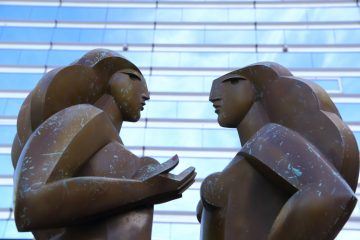
One way to think about argument is to think of it as a fight. In fact, it’s the default interpretation of how things went if someone reports that they’d had an argument with a neighbor or a colleague. If it’s an argument, that means things got sideways.
In logic, though, arguments are distinguished from fights and quarrels. Arguments, as collections of claims, have a functional feature of being divisible into premises and conclusions (with the former supporting the latter), and they have consequent functional features of being exchanges of reasons for the sake of identifying outcomes acceptable to all. So arguments play both pragmatic and epistemic roles – they aim to resolve disagreements and identify what’s true. The hope is that with good argument, we get both.
If argument has that resolution-aspiring and truth-seeking core, is there any room for adversariality in it? There are two reasons to think it has to. One has to do with the pragmatic background for argument – if it’s going to be in the service of establishing a resolution, then the resolved sides must have had fair and complete representation in the process. Otherwise, it’s resolution in name only. That seems clear.
The second reason has to do with how reasons work in general. Read more »
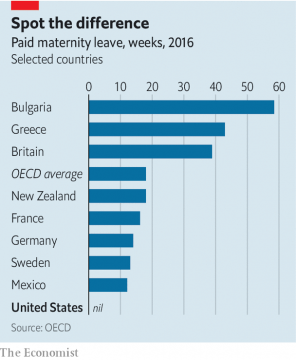
The United States continues to be virtually the only developed country which does not guarantee any paid time off work to new parents. A study recently released by the New America think tank explores the “complicated, confusing, and uneven leave landscape for workers,” and the behaviors that result. The federal Family and Medical Leave Act entitles workers only to unpaid time off, and many employers and workers do not fall even within that mandate. While some employers, and public insurance programs in some states, do offer paid family leave, such benefits were found less likely to be available to lower-income households and to workers without college degrees.
According to the New America researchers, nearly half of the parents they surveyed reported taking no leave after the birth or adoption of a child. The weight of this finding is underscored by the definition the researchers used for “leave” – namely, anything “more than a day or two off work,” paid or unpaid. The mothers and fathers who reported taking no leave had not, in other words, taken even three days off work.
As documented in a previous report from New America, job-protected paid family leaves are associated with improved physical and mental health for both children and parents. This new research could therefore serve as yet another reminder of the deleterious effects of the family leave policies we have had, and continue to have, in the United States.
What a shame then, to see the study treated as if its primary contribution was to have turned up a previously unappreciated form of gender discrimination. The headline in HuffPostwas this: “Even When Men Take Parental Leave, They’re Paid More, New Study Finds.” Great click-bait, and also completely misleading. Read more »
My experience is what I agree to attend to. —William James
While you might not break into a neighbor’s house to log onto your Facebook account if your internet were down, a case can be made that many of us are victims of at least a moderate behavioral addiction when it comes to our smartphones. At the playground with our kids, we’re on our phones. At dinner with friends, we’re on our phones. In the middle of the night. At the movies. At a concert. At a funeral. (I was recently at a memorial service for my friend’s mother, and someone’s cell phone rang during my friend’s reminiscence.)
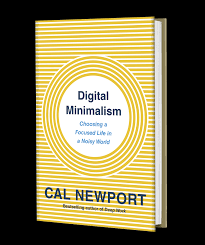
In his recent book Digital Minimalism [1], Cal Newport argues that we need a philosophy for how to approach the use of digital technology. Ad-hoc measures such as disabling notifications and installing apps that monitor our screen time are missing the point. Instead of working backward from an immersion, Newport says, we should examine our lives without technology first and figure out how technology can serve our values and interests in the least intrusive way. Unlike digital maximalists, who try every new app and gadget and try to shoehorn them into their lives, digital minimalists ruthlessly screen each new tool before using it. Newport portrays maximalism as the technology philosophy that “most people deploy by default–a mind-set in which any potential for benefit is enough to start using a technology that catches your attention.” Read more »
Michelle M. Le Beau, Arthur and Marian Edelstein Professor of Medicine, is a leading authority in hematologic malignancies. Her groundbreaking research led to the identification of the recurring cytogenetic abnormalities in hematological malignant diseases, in defining the clinical, morphological, and cytogenetic subsets of leukemias and lymphomas, and in identifying the genetic pathways that lead to myeloid leukemias. She is currently a member of the Board of Directors of the American Association for Cancer Research, the Leukemia and Lymphoma Society and the American Society of Hematology. Her current research focus is on therapy-related acute myeloid leukemia.
Azra Raza, author of The First Cell: And the Human Costs of Pursuing Cancer to the Last, oncologist and professor of medicine at Columbia University, and 3QD editor, decided to speak to more than 20 leading cancer investigators and ask each of them the same five questions listed below. She videotaped the interviews and over the next months we will be posting them here one at a time each Monday. Please keep in mind that Azra and the rest of us at 3QD neither endorse nor oppose any of the answers given by the researchers as part of this project. Their views are their own. One can browse all previous interviews here.
1. We were treating acute myeloid leukemia (AML) with 7+3 (7 days of the drug cytosine arabinoside and 3 days of daunomycin) in 1977. We are still doing the same in 2019. What is the best way forward to change it by 2028?
2. There are 3.5 million papers on cancer, 135,000 in 2017 alone. There is a staggering disconnect between great scientific insights and translation to improved therapy. What are we doing wrong?
3. The fact that children respond to the same treatment better than adults seems to suggest that the cancer biology is different and also that the host is different. Since most cancers increase with age, even having good therapy may not matter as the host is decrepit. Solution?
4. You have great knowledge and experience in the field. If you were given limitless resources to plan a cure for cancer, what will you do?
5. Offering patients with advanced stage non-curable cancer, palliative but toxic treatments is a service or disservice in the current therapeutic landscape?
What if most speech is worthless? Or, rather, what if most speech that purports to count as a contribution to “free expression” is mostly worthless? Take the internet. What’s on it? Lots of great information and great journalism and even art. But, also, pornography. Lots of pornography. Between 15% and 80% of net traffic is porn, depending on which study you believe. But if you count semi-nude pictures, it’s got to be at least…well, a lot. Lots of cat pictures, too. Then there are the blogs and comment threads and likes and dislikes. Even where these are about significant topics, most of opinions expressed are repetitive assertions of a fairly narrow range of already well-known opinions. And then there’s the insults, the invectives, and general nastiness. I am not against porn. I am not even against insults per se. What I wonder though is, whatever value porn, for example, has for you, or whatever expressive relief you get from typing insults, should we think that these things ought to count as worthy the high value and high level of protection we ordinarily afford free speech? Maybe. Maybe, not.
There seems to be a lot of agreement that “free speech” is in crisis – on campuses, on the web, or on social media. But not a lot of agreement about what the crisis is supposed to be. There seems to be a lot of agreement that regulating, or interfering in any way, with free speech is bad. But not a lot of discussion of exactly what is bad about it. It sometimes seems that “freedom of speech” is just an empty phrase to be filled in by whatever you happen to think that it would be good not to have interfered with. (Maybe, you’ve encountered the internet joke that suggest you can now argue for anything by saying “what you want to argue for” and then asserting “Because freedom!”) And so, the “crisis” sometimes seems to be just people you don’t like interfering with something you do like. (Have you ever heard of a conservative pundit complaining about a liberal speaker being “de-platformed” or vice-versa?) My point is, unless we engage with what is good or bad about freedom of speech, it’s going to be hard to evaluate what the crisis is and whether we can regulate our way out of it. So, let’s start there. Or, rather, here: What is free(dom of) speech? Read more »
When Vienna‘s Albertina Museum exhibition of works by Albrecht Dürer ended in January 2020, it seemed quite possible that several of the masterpieces on display might never again be seen by the public, among them TheGreat Piece of Turf. This may sound like a dire prediction for a fragile work that is routinely exhibited every decade or so, but as the UN announced recently, we may already have passed the tipping point in the race to save our world and ourselves. A decade from now we may be too engaged in the struggle to survive to focus our attention on a small, exquisite watercolor created 500 years ago.
Up to now, Dürer has been one of the many diversions that have lured me away from thinking about the climate crisis. At this moment in history, when focusing on the future of the planet is required, we are deluged by distractions than didn’t exist 30 years ago when the climate warnings began to escalate. We cram our free time with clickbait high and low, binges of movies and TV shows on streaming platforms, all-you-can-hear on Spotify, endless slide shows, political sideshows, not to mention all the other interests we may have that are accessible via Google or Wikipedia. Online shopping diverts us further, feeding desires ahead of needs. The outcry of scientists and the activism of Time magazine Person of the Year Greta Thunberg have done little to pry us from our pleasures.
The climate crisis will not wait for us to put down our devices and devote serious thought or action to the issue. As a species, we react more to major events than to chronic conditions. The climate crisis is not an event, it’s a slow-rolling inevitability that will play out in differing catastrophic scenarios, to be labeled events only when they occur. Meanwhile, this gathering storm hums along in the background of our lives as we go about business as usual—not unlike death, another inevitability whose faint background noise accompanies us throughout our lives. Read more »
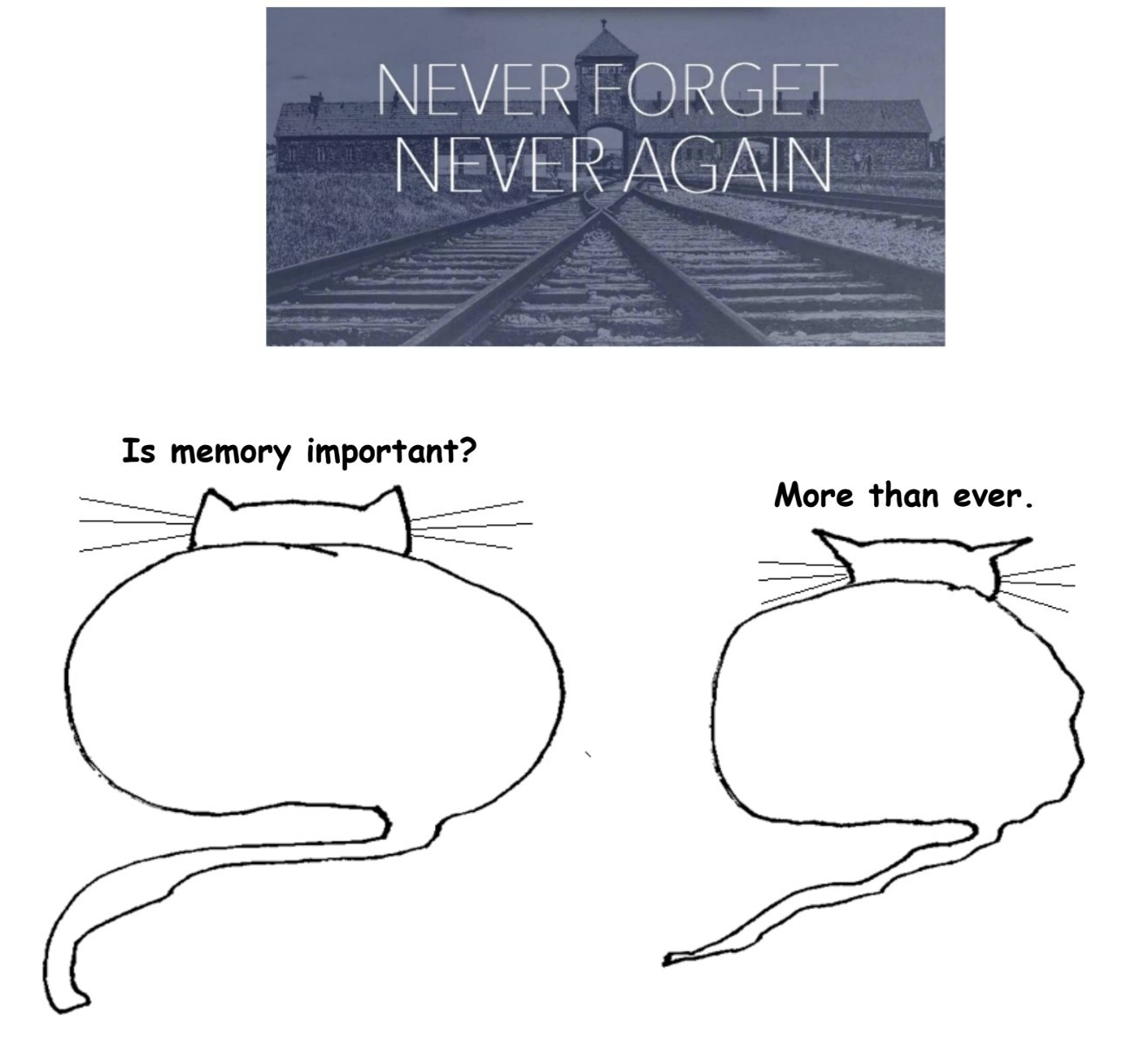
In May 1919 the remains of a woman were fished from the Landwehr canal in Berlin. The three doctors available must have suspected the identity of the corpse, as they refused to perform a post mortem on it. Identification was in any case made by examination of the clothes on the body. This had been Rosa Luxemburg.She had perished essentially because the leftist uprising in Berlin, initiated by her fellow Sparticist leader Karl Liebknecht without her agreement, had failed. Luxemburg, who had fiercely criticised the Bolshevik approach to revolution as dangerously authoritarian was clubbed and then shot to death by members of the Freikorps, whose repressive violence makes them fitting antecedents to the Nazis.
The great revolutions in ‘The West’ are often seen as turning points, thresholds, new stages in history, and their very dates have a kind of resonance: 1776, 1789 (or 1794), 1917, and so on. History, of course, may make us change our minds about the degree of success, the meaning, the import of those events, but they remain potent as symbols, whatever posterity’s judgment may be. And there is a second sequence, of course, that of the failed revolutions: 1796, 1821, 1848, 1871, 1905, 1918, and 1956. These are the abortive revolutions and uprisings. This second list is the longer one, but like the successful ones, judgment about ultimate meaning, including the meaning of ‘success’ and ‘failure’, remain open to revision and reconsideration.
Of the revolutions that never were, it is the one that began in Germany in 1918 that is most relevant to Hannah Arendt. Arendt, born in 1906, married to Heinrich Blucher (an ex Sparticist) has a biography and a set of concerns defined by the fate of Germany after 1918. Rosa Luxemburg’s life and death – including the nature of the regime that connived in her murder – was the subject of an eloquent and moving essay by Arendt and published in Men in Dark Times in 1966. For all her criticism of Rosa Luxemburg’s mistakes, it is clear that she stands as a kind of exemplar for Arendt. If it had succeeded, if some kind of ‘Red’ government has seized and kept hold of power in the 1918-9 period, the effect on Germany, the nascent Soviet State in Russia, and the rest of the world would have been, one assumes, huge. But it failed, and Hitler and Stalin were the successors to that non-event. Read more »
Stuck is a weekly serial appearing at 3QD every Monday through early April. The Prologue is here. The table of contents with links to previous chapters is here.
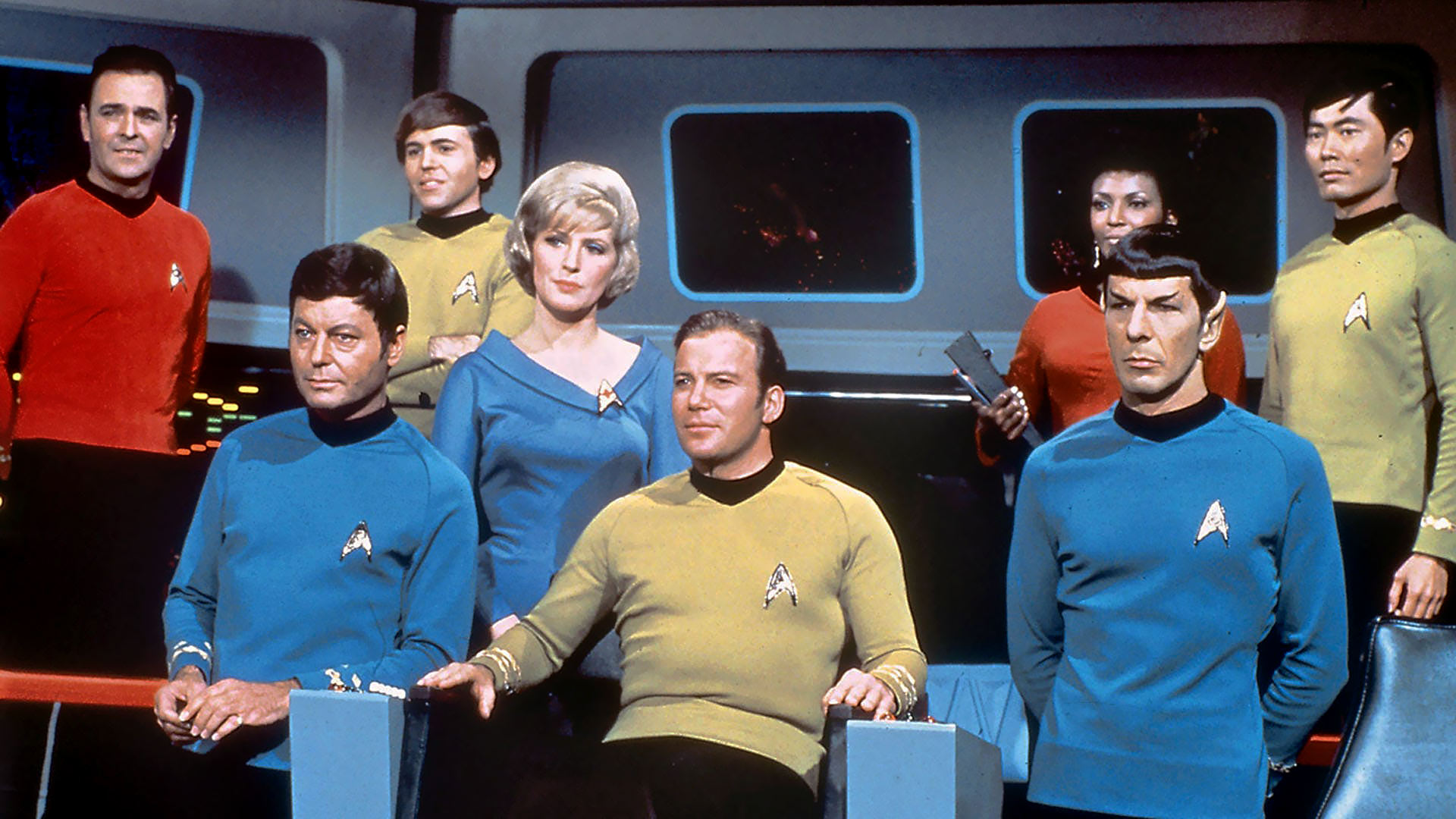
During my late 1970s New York City childhood, repeats of Star Trek aired every weeknight on channel 11, WPIX. The original 79 episodes ran about three times per year, which means that, allowing for the occasional miss, I’d seen each episode about 10 – 12 times before reaching high school.
And so when I was 14 years old and my friend Erik suggested we attend a Star Trek convention at the Penta Hotel across the street from Madison Square Garden, I jumped at the opportunity. Shit, Leonard Nimoy was gonna be there.
I didn’t really know what to expect as Erik and I rode the bus downtown. But after a half-day traipsing through the convention, I realized there was something going on. It was more than just a bunch of people who really liked Star Trek. Throngs of hardcore fans obsessed over the show’s minutiae, and some even wore Star Trek costumes. I loved the show too, but I felt no sense of kinship with these super fans; in fact, it all made me uneasy.
This was the early 1980s, and the clichés about “Trekkies” were just beginning to develop: men who lacked social skills, couldn’t get a date, and lived in their parents’ basement back when a grown man living with his parents was considered a spectacular failing at adulthood. Today they are derided as geeks or maybe nerds. Back then they were simply losers. Read more »
For the last three years, I have struggled with a dilemma: As a reasonable, quite liberal person, what should I think of my 60 million fellow Americans who voted for Donald Trump in 2016, and the vast majority of whom continue to support him today? Normally, a personal dilemma is a private thing, not a topic for public airing, but I feel that this particular problem is one the vexes many others – perhaps even a majority of Americans, as more of us voted for Hillary Clinton and many did not vote at all. Since that bleak day in November 2016, an unspoken – and sometimes loudly spoken – question hangs in the air: What kind of “deplorable” person would vote for Donald Trump?
In November 1918, a 17-year-student from Rome sat for the entrance examination of the Scuola Normale Superiore in Pisa, Italy’s most prestigious science institution. Students applying to the institute had to write an essay on a topic that the examiners picked. The topics were usually quite general, so the students had considerable leeway. Most students wrote about well-known subjects that they had already learnt about in high school. But this student was different. The title of the topic he had been given was “Characteristics of Sound”, and instead of stating basic facts about sound, he “set forth the partial differential equation of a vibrating rod and solved it using Fourier analysis, finding the eigenvalues and eigenfrequencies. The entire essay continued on this level which would have been creditable for a doctoral examination.” The man writing these words was the 17-year-old’s future student, friend and Nobel laureate, Emilio Segre. The student was Enrico Fermi. The examiner was so startled by the originality and sophistication of Fermi’s analysis that he broke precedent and invited the boy to meet him in his office, partly to make sure that the essay had not been plagiarized. After convincing himself that Enrico had done the work himself, the examiner congratulated him and predicted that he would become an important scientist.
Twenty five years later Fermi was indeed an important scientist, so important in fact that J. Robert Oppenheimer had created an entire division called F-Division under his name at Los Alamos, New Mexico to harness his unique talents for the Manhattan Project. By that time the Italian emigre was the world’s foremost nuclear physicist as well as perhaps the only universalist in physics – in the words of a recent admiring biographer, “the last man who knew everything”. He had led the creation of the world’s first nuclear reactor in a squash court at the University of Chicago in 1942 and had won a Nobel Prize in 1938 for his work on using neutrons to breed new elements, laying the foundations of the atomic age. Read more »
The radio music is smooth now, sentimental, semi-classic in the popular vein…music something like a golden bell, promising that tomorrow will be better. Jazz, good jazz, tells no such lies. —Charles Wright, The Messenger
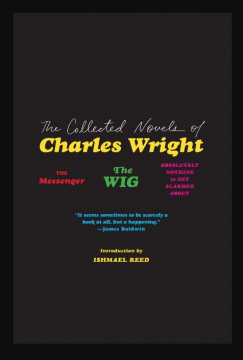
Recently, in an independent bookstore in a city I was visiting, one of the books I randomly scooped up to weigh down my luggage on the way home was The Collected Novels of Charles Wright, with an introduction by Ishmael Reed. The confusing thing was, had I heard of him? It seemed to me that of course I had, but there is a famous American poet named Charles Wright and this is not that man. There was also of course Richard Wright; the first novel in this collection is dedicated in part to him. There’s Charles White, the artist, whose work I happened to see on this same trip. But the Charles Wright of these novels is Charles Stevenson Wright (1932-2008). I later looked this collection up on Amazon. There are zero reader reviews of this edition. The last copyright before this was 1993. And yet he’s back in print, or still in print; there are editions of the novels separately. Very little has been written about him. Yet Wright’s writing felt familiar, as if he were an old friend.
The collection contains Wright’s three novels. The first, The Messenger, is from 1963, The Wig from 1966, and Absolutely Nothing to Get Alarmed About from 1973. The Wig is satirical and fictional; Reed cites it as an influence. Some think it is a better book than the other two, which are mostly made of vignettes of Wright’s direct experience. I prefer the more autobiographical books that bookend the satire. In Absolutely Nothing Wright mentions having a drink with Langston Hughes in the Cedar Tavern just before Hughes died. Wright remembers Hughes saying, “The Wig disturbed me, and it’s a pity you can’t write another one like it. But don’t. Write another little book like The Messenger” (278). Although The Wig is a scathing and often brilliant satire, I think Hughes was right. Read more »
I have some very simple New Year’s resolutions, and some that require an entire column to spell out. One example of the latter is that I want to make a subtle but meaningful change in how I talk to my (middle and high school) math students about proofs.
First, I need to be open about the fact that talking about proof in mathematics comes with an especially strong impostor syndrome: as a secondary school teacher, who am I to talk about the nature and limits of deductive reasoning in a discipline of which I have barely scratched the surface? I know high school proofs of high school mathematical concepts; I am vaguely aware that people much cleverer than I have tried to reduce all mathematical claims to analytical (logical) truths, or at least to a limited set of axioms; and I believe that after having mentioned this, I have to name-drop Gödel as the person who has supposedly put a stop to these projects, even though I have never studied his incompleteness theorem and doubt I would be able accurately to judge its relevance and meaning. That’s about it.
Usually, doubts like these are something to keep hidden in a light-hearted column like this, because they waste space and look self-absorbed. In this case, however, I think they are relevant, because I suspect I will not be the only one who (1) is by no means an expert on mathematical logic, and (2) still has some intuitive convictions about the special relation between mathematics and provability. Most of us, when we think about mathematics and proof, think of high school or undergraduate mathematics. I think it is fair to say that this is the most culturally prominent face of mathematics: the concepts almost all of us have been taught, or at least heard about, and the discourses surrounding the teaching of those concepts.
These discourses will depend in part on the teachers you have encountered, but I’ll go out on a limb here and speculate that most mathematics teachers will have told most of their classes, at some point, that “in mathematics we believe things because we can prove them”. I know I have made comments in that spirit. I have also come to feel a bit uncomfortable about them. Let me tell you why. Read more »
Stavroula Kousteni, is the Associate Professor of Medicine in Physiology and Cellular Biophysics at Columbia University Medical Center. The goal of her research is to understand the influence of the skeleton on various physiological processes, to uncover the pathogenesis of degenerative diseases and to suggest therapies for them. She is currently examining the role of osteoblasts in hematopoiesis with particular emphasis in myelodysplasia (MDS) and acute myeloid leukemia (AML). Her lab has discovered the skeletons role as an inducer of leukemogenesis, identifying a mutation in osteoblasts that disrupts hematopoiesis leading to leukemogenic transformation of hematopoietic stem cells (HSCs) and establishment of MDS progressing to AML. Additionally, she has helped establish the role of osteoblasts in the engraftment of leukemia blasts. She is currently characterizing the signaling pathway that mediates these actions to manipulate osteoblasts to make the hematopoietic niche hostile to residual leukemia cells.
Azra Raza, author of The First Cell: And the Human Costs of Pursuing Cancer to the Last, oncologist and professor of medicine at Columbia University, and 3QD editor, decided to speak to more than 20 leading cancer investigators and ask each of them the same five questions listed below. She videotaped the interviews and over the next months we will be posting them here one at a time each Monday. Please keep in mind that Azra and the rest of us at 3QD neither endorse nor oppose any of the answers given by the researchers as part of this project. Their views are their own. One can browse all previous interviews here.
1. We were treating acute myeloid leukemia (AML) with 7+3 (7 days of the drug cytosine arabinoside and 3 days of daunomycin) in 1977. We are still doing the same in 2019. What is the best way forward to change it by 2028?
2. There are 3.5 million papers on cancer, 135,000 in 2017 alone. There is a staggering disconnect between great scientific insights and translation to improved therapy. What are we doing wrong?
3. The fact that children respond to the same treatment better than adults seems to suggest that the cancer biology is different and also that the host is different. Since most cancers increase with age, even having good therapy may not matter as the host is decrepit. Solution?
4. You have great knowledge and experience in the field. If you were given limitless resources to plan a cure for cancer, what will you do?
5. Offering patients with advanced stage non-curable cancer, palliative but toxic treatments is a service or disservice in the current therapeutic landscape?


 The United States continues to be virtually the
  Sughra Raza. Rorschach on the River Li. Yangshuo, China, January, 2020.
 While you might not break into a neighbor’s house to log onto your Facebook account if your internet were down, a case can be made that many of us are victims of at least a moderate behavioral addiction when it comes to our smartphones. At the playground with our kids, we’re on our phones. At dinner with friends, we’re on our phones. In the middle of the night. At the movies. At a concert. At a funeral. (I was recently at a memorial service for my friend’s mother, and someone’s cell phone rang during my friend’s reminiscence.)
 When Vienna‘s Albertina Museum exhibition of works by Albrecht Dürer ended in January 2020, it seemed quite possible that several of the masterpieces on display might never again be seen by the public, among them The Great Piece of Turf. This may sound like a dire prediction for a fragile work that is routinely exhibited every decade or so, but as the UN announced recently, we may already have passed the tipping point in the race to save our world and ourselves. A decade from now we may be too engaged in the struggle to survive to focus our attention on a small, exquisite watercolor created 500 years ago.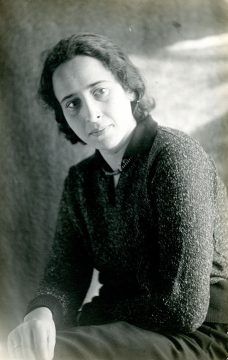

 During my late 1970s New York City childhood, repeats of Star Trek aired every weeknight on channel 11, WPIX. The original 79 episodes ran about three times per year, which means that, allowing for the occasional miss, I’d seen each episode about 10 – 12 times before reaching high school.
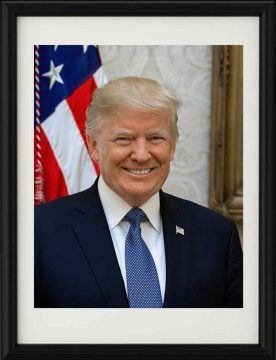 For the last three years, I have struggled with a dilemma: As a reasonable, quite liberal person, what should I think of my 60 million fellow Americans who voted for Donald Trump in 2016, and the vast majority of whom continue to support him today? Normally, a personal dilemma is a private thing, not a topic for public airing, but I feel that this particular problem is one the vexes many others – perhaps even a majority of Americans, as more of us voted for Hillary Clinton and many did not vote at all. Since that bleak day in November 2016, an unspoken – and sometimes loudly spoken – question hangs in the air: What kind of “
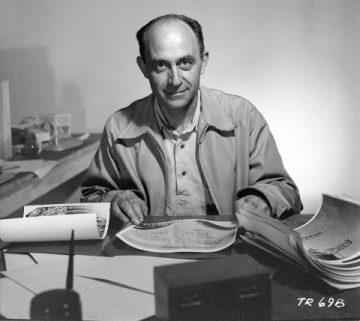 In November 1918, a 17-year-student from Rome sat for the entrance examination of the Scuola Normale Superiore in Pisa, Italy’s most prestigious science institution. Students applying to the institute had to write an essay on a topic that the examiners picked. The topics were usually quite general, so the students had considerable leeway. Most students wrote about well-known subjects that they had already learnt about in high school. But this student was different. The title of the topic he had been given was “Characteristics of Sound”, and instead of stating basic facts about sound, he “set forth the partial differential equation of a vibrating rod and solved it using Fourier analysis, finding the eigenvalues and eigenfrequencies. The entire essay continued on this level which would have been creditable for a doctoral examination.” The man writing these words was the 17-year-old’s future student, friend and Nobel laureate, Emilio Segre. The student was Enrico Fermi. The examiner was so startled by the originality and sophistication of Fermi’s analysis that he broke precedent and invited the boy to meet him in his office, partly to make sure that the essay had not been plagiarized. After convincing himself that Enrico had done the work himself, the examiner congratulated him and predicted that he would become an important scientist.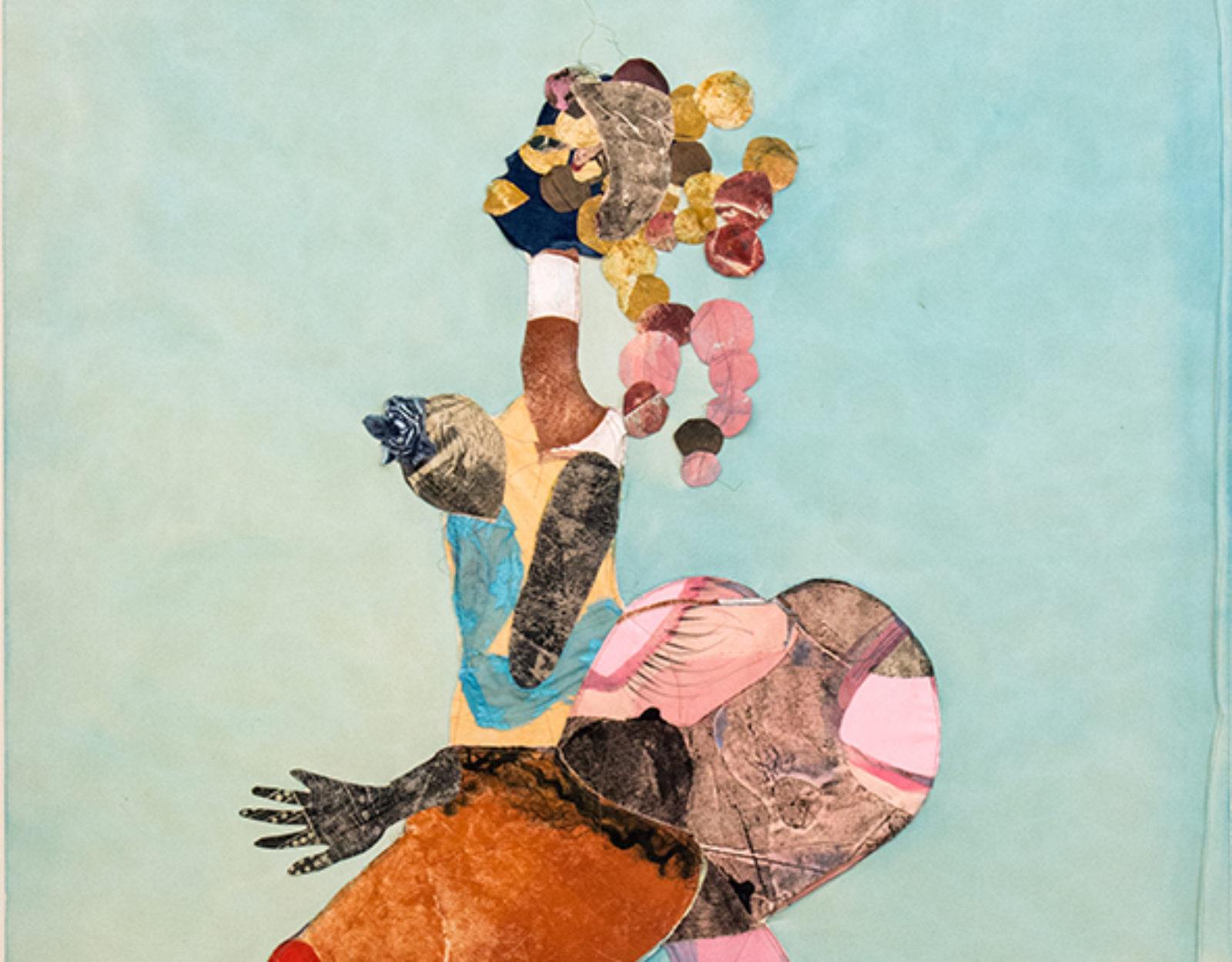
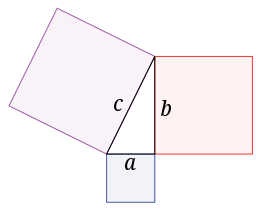 I have some very simple New Year’s resolutions, and some that require an entire column to spell out. One example of the latter is that I want to make a subtle but meaningful change in how I talk to my (middle and high school) math students about proofs.