by Brooks Riley


by Brooks Riley
by Joseph Shieber
Imagine a party planner, let’s call him “Mark”. Mark offers his services in party planning to all of the citizens of the town of Happyville.
Now, Mark’s party planning service has an interesting twist.
He begins by throwing a party for a group defined by some close connection — say, a family reunion, or a work party — but then he does something unexpected. He’ll invite some high school friends of the partygoers to the family reunion, or some people with a shared connection to church groups to the work party. What happens then is that people make new connections by getting increased exposure to their friends’ friends — or even to their friends’ friends’ friends.
Almost fifty years ago, the sociologist Mark Granovetter coined the term “weak ties” for these more attenuated connections. There is now a wealth of research tracing the ways that weak ties can affect our lives, from helping us get a job to improving our overall well-being.
Sounds great, right? Mark the party planner is bringing people together, exposing them to new people, and allowing them to harness the strength of their weak ties. What could go wrong? Read more »

Frederica Krüger in October of 2009 in Brixen in the South Tyrol.
by Katie Poore
 American writer Rebecca Solnit laments that few writers have had quite as much scrutiny directed toward their laundry habits as Transcendentalist writer Henry David Thoreau, best known for his 1854 memoir Walden. “Only Henry David Thoreau,” she claims in Orion Magazine’s article “Mysteries of Thoreau, Unsolved,” “has been tried in the popular imagination and found wanting for his cleaning arrangements.”
It is ostensibly a non-sequitur of sorts, to seek of such a prominent and canonical literary figure an account of laundry done and not done, of clothing cleaned by Thoreau or, as so many of Solnit’s Facebook friends viciously claim, by “‘his sister every week who came to take his dirty laundry.’” How could shirts washed, and by which hands, become such a point of interest for critics of Thoreau?
The answers are probably manifold, but such social media behavior—by which I mean the vilification of someone based off the mundane details of their quotidian behavior—is a practice typically reserved for the denunciation of those who both enrage and perplex us, who seem to have stepped past boundaries we have established and lead us into uncharted (and often contentious) ideological, rhetorical, or political territory. Read more »
by Dwight Furrow
 Among the best books I’ve read about wine are the two by wine importer Terry Theise. Reading Between the Wines is a thoroughly enjoyable account of his life in wine and a passionate defense of artisanality. But it’s his most recent book What Makes a Wine Worth Drinking: In Praise of the Sublime that really gets my philosophical juices flowing.
Long celebrated for his portfolio of mostly German and Austrian wines as well as grower Champagne, in these two books he articulates a sophisticated, yet non-theoretical philosophy of wine and introduces a badly needed corrective to our fatally constrained and often vulgar approach to wine that confuses marketing with aesthetics. But like any work of philosophy, this book raises profound questions. Here are a few quotes that I think raise the most important questions we need to answer.
Great wine can induce reverie; I imagine most of us would concur. But the cultivation of reverie is also the best approach to understanding fine wine.
What is it about us and what is it about wine that induces a dream-like state, that sets the imagination in motion? Why does wine’s capacity to induce reverie help us understand fine wine?
If wine had turned out to be merely sensual I think for me its joys would have been transitory. I’d have done the “wine thing” for a certain number of years and gone on to something else. What continued to drive me, and what drives many of us, is curiosity, pleasure in surprise, and those elusive, incandescent moments of meaning—the sense that some truth, normally obscure, was being revealed.
How can a beverage reveal truths? What kind of truth is this and how would we know we have it? Read more »
by Michael Liss

The Iceberg has broken off from the ice sheet, and it’s a whopper. It groaned and teetered and shook, hanging on maybe longer than science said it should have, and, then, with a mighty roar, it slid into the ocean. It’s been floating about ever since, banging into things.
Last week, I attended the 17th annual conference of Columbia University’s Center on Capitalism and Society: “Progressivism, Socialism, and Nationalism.” Everyone talked about the Iceberg—where it came from, what it might hit next, what could stop it.
It was a full day, with over two dozen speakers from a variety of backgrounds and outlooks. Two Nobel Prize winners, Joseph Stiglitz and Edmund Phelps, were joined by panelists from across the political spectrum, from the (real) Socialist Bhaskar Sunkara, Founding Editor and Publisher of Jacobin magazine, to Douglas Holtz-Eakin, President of the American Action Forum, and Ryan Streeter of the American Enterprise Institute. Add a variety of luminaries, including Richard Sennett of the London School of Economics and the ubiquitous (and engagingly scary) Jonathan Haidt, and there were a lot of perspectives.
I don’t have the space to cover everything (I will post links to the sessions when available from the Center), but the issues raised were important and worth examining. Read more »
by John Schwenkler
This is the first in a planned series of posts discussing different ways of pursuing philosophical understanding.
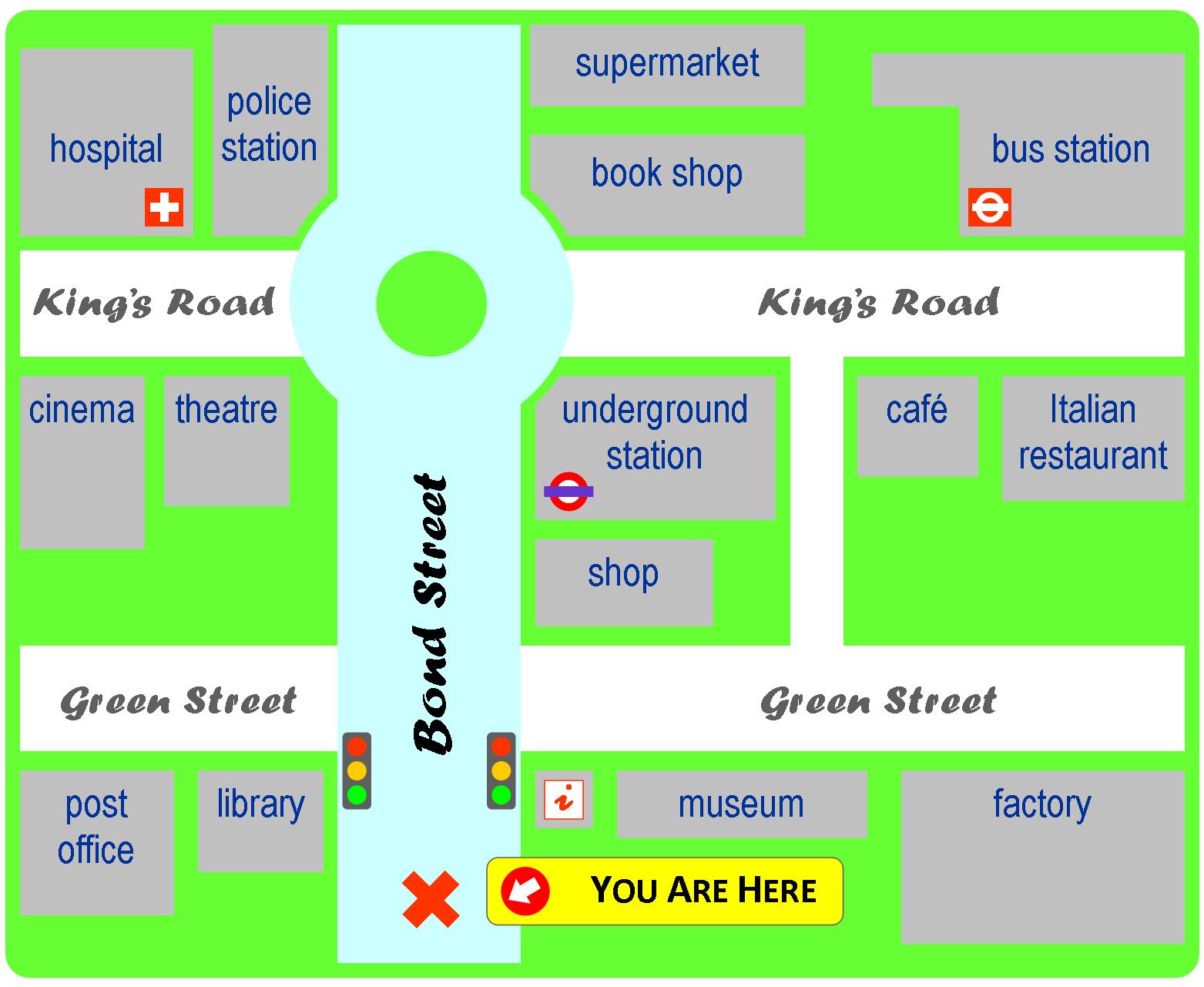
I am the sort of person who can be very good at finding my way around a place, while having almost no ability to translate that capacity into a realistic map of the place that I am able to find my way around.
This place could be a building, a neighborhood, a city, or a more distant set of locations that are connected by major roads. In each case what allows me to get around is the knowledge of what I can do at various landmarks that will take me from one location to another: for example, turn left at the Exxon station to get to the supermarket; walk past the bathrooms and then up the stairs to the right to reach the department office; take the interstate south to exit 53A, then follow the highway over the bridge and take the first left to get to the beach.
My mastery of these landmark-based strategies means that sometimes I am able to give good directions concerning how to get from here to there in places that I know my way around, though doing this requires me to simulate in my imagination what the next relevant landmark will be after taking a given step—and this sort of remembering is something else that I am not always good at doing. Still, when I do manage to remember, or am reminded of, a given landmark along my memorized route, then what I remember is something I already knew: for example, that the road out of the neighborhood goes past an Exxon station, at which one needs to turn left to get to the supermarket.
With maps, things are different. Even if I am extremely adept at getting around a place, often I will have had no idea that the place I am able to get around has the layout that a map displays it as having: no idea, that is, that the locations I know how to get between are located with respect to one another in the ways that the map displays. In knowing how to find my way around, all I knew was what to do, upon seeing a certain landmark, in order to continue on the way to a given place. And I knew all of this very well without knowing much of anything about the spatial structure of the place I was able to navigate, or the spatial relationships between the landmarks I could find my way between.
Based on conversations with other people about these matters, my sense is that I may be a sort of person who is peculiarly bad at aligning my knowledge of how to get around a place with a representation of that place in the form of a map—though there is some experimental evidence suggesting that landmark-based navigation is the default human strategy for getting around an environment. My present interest, however, is not in these questions, but in a wider phenomenon that this is only a single example of, and which I believe provides a common impetus for philosophical inquiry. Read more »

Agnes Denes. Model for Teardrop—Monument to Being Earthbound. The Shed, New York, October 2019 – March 2020.
“The artist’s original Teardrop depicted a monumental teardrop-shaped sculpture “levitat[ing] above the center of the base afloat on an elastic cushion of magnetic flux.” Impossible then and now, a scale version magically floats on a table top in the middle of the gallery.
At the far end of the gallery is the only splash of color in the exhibition design by New Affiliates; a glowing blue-purple wall hints at something special out of sight.”
(Congratulations New Affiliates!)
by Leanne Ogasawara

Imagine finding out that intelligent life had been discovered in our galaxy. To learn that across the endless ocean of intergalactic space there exists a planet filled with new forms of life –and riches unimagined: this was how it must have felt for the people of the Renaissance, when Christopher Columbus discovered the New World. After all, there was a reason why the people of the time called it the New World, instead of just the new continent. For this was a revelation; not just of new land, but of sought-after minerals, like gold and silver. It was a new world of tastes. From potatoes to tomatoes and chocolate to corn, the dinner tables of Europe would be transformed in the wake of Columbus’ trip. There were animals never seen in Europe, like the turkey and bison. And there were wondrous new plants and flowers. There was even a new shade of red. Made from the female cochineal insect, this new dye became– after gold– the second largest import from the New World.
Perhaps most astonishing were the people. At a time when Europe was itself organizing into nation-states, often under all-powerful monarchs, Columbus found in the Americas, what seemed to his eyes, to be free and egalitarian societies. Not only did the people not use money, but even more remarkable was their lack of private property. Private property was, after all, the bedrock of the new banking system back home.
And theologically, how were the Europeans to explain a population of people who could not be descended from Noah’s three sons; of human beings ignorant of the New Testament for over a thousand years? Read more »
by Akim Reinhardt
 I saw Joker last week. I think it’s an excellent film. But the two friends I was with, whose tastes often overlap with my own, really hated it, and we spent the ensuing 90 minutes examining and debating the film. Critics are likewise fiercely divided. Towards the end of our conversation, one friend admitted that, love it or hate it, the film evokes strong reactions; it’s difficult to ignore.
One reason Joker is so divisive and controversial is that several issues have dogged the film.
Any serious discussion of the film must deal with these and other issues. Let’s start with the bookends of Phillips’ intentions and possible audience interpretations.
Director Todd Phillips, he of the massively popular and progressively redundant Hangover film franchise, has recently joined the chorus of spoiled Gen X comedians whining about “cancel culture,” and opined quite stupidly that “woke culture” has made it impossible to do comedy, and thus, feeling cornered, he has turned to drama.
Phillips’ sentiments are moronic, fragile, self-absorbed, and immature. In the real world, “cancel culture” is called “business decisions.” If Saturday Night Live fires a new writer because some of his prior comedy amounted to little more than tired old racism, they have done so because they’re worried about their bottom line, not your feelings. But if you really want to put the lie to “woke culture” ruining comedy, just watch the raunchy comedy of a talented, young, boundary-pushing comic like Nikki Glaser. In that context, Phillips just sounds like another middle-aged, straight white guy angrily bitching that no one laughs at his dumb locker room jokes anymore. Rat tail!
So is it fair then to ask about Phillips’ artistic and political intentions in making this film? Yes and no. Read more »
by Robert Fay
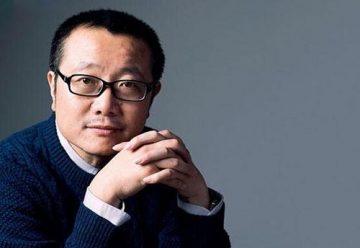
In The Three Body Problem by Cixin Liu, China has made contact with a technologically-advanced alien civilization called Trisolaris. The aliens plan to invade earth and are cultivating a cadre of earthling collaborators, most of whom are Chinese nationals. The Trisolarians accomplished this, not by using sex or blackmail to recruit agents a la the FSB or CIA, but by creating a seductive computer game designed to both introduce the nuances of Trisolarian civilization, as well as to weed out unworthy recruits. As recruits progress in the game, they proceed through evolutionary epochs of Trisolarian history, which curiously enough, includes historical personages from earth. In one early stage of Trisolarian development, the great Chinese Emperor Qin Shin Huang supervises the successful creation of a massive human computer, involving the recording of endless semaphore signals conducted by tens of thousands of Trisolarian soldiers raising up and down flags.
The emperor is filled with pride: “Each individual’s behavior is so simple, yet together, they can produce such a complex, great whole!” he says. “Europeans criticize me for my tyrannical rule, claiming that I suppress creativity. But in reality, a large number of men yoked by severe discipline can also produce great wisdom when bound together as one.”
It’s not impossible to imagine Chinese President Xi Jinping saying this in a moment of candor. If China continues to skillfully counterbalance all of its many contradictions, why wouldn’t Xi stand before the U.N. General Assembly and proclaim the singular superiority of his one-party, authoritarian model of capitalism? For the Chinese today are no longer content with praise, they believe the world should begin studying and imitating China. Read more »
Dr. David Steensma specializes in care and research for myelodysplastic syndromes and leukemia. He and colleagues were the first to identify and understand the clinical implications of the clonal hematopoiesis of indeterminate potential (CHIP). He is an Associate Editor of the Journal of Clinical Oncology responsible for the “Art of Oncology” section and has more than 150 publications in peer-reviewed journals. Dr. Steensma currently serves as an Associate Professor of Medicine at Harvard Medical School, consulting physician at Brigham & Women’s Hospital, and a faculty member in the Adult Leukemia Program at Dana-Farber Cancer Institute in Boston.
Azra Raza, author of the forthcoming book The First Cell: And the Human Costs of Pursuing Cancer to the Last, oncologist and professor of medicine at Columbia University, and 3QD editor, decided to speak to more than 20 leading cancer investigators and ask each of them the same five questions listed below. She videotaped the interviews and over the next months we will be posting them here one at a time each Monday. Please keep in mind that Azra and the rest of us at 3QD neither endorse nor oppose any of the answers given by the researchers as part of this project. Their views are their own. One can browse all previous interviews here.
1. We were treating acute myeloid leukemia (AML) with 7+3 (7 days of the drug cytosine arabinoside and 3 days of daunomycin) in 1977. We are still doing the same in 2019. What is the best way forward to change it by 2028?
2. There are 3.5 million papers on cancer, 135,000 in 2017 alone. There is a staggering disconnect between great scientific insights and translation to improved therapy. What are we doing wrong?
3. The fact that children respond to the same treatment better than adults seems to suggest that the cancer biology is different and also that the host is different. Since most cancers increase with age, even having good therapy may not matter as the host is decrepit. Solution?
4. You have great knowledge and experience in the field. If you were given limitless resources to plan a cure for cancer, what will you do?
5. Offering patients with advanced stage non-curable cancer, palliative but toxic treatments is a service or disservice in the current therapeutic landscape?
by Eric J. Weiner
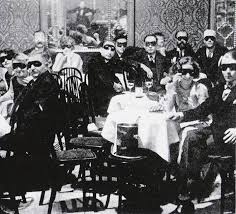 The terror of the unforeseen is what the science of history hides, turning a disaster into an epic. —Philip Roth, The Plot Against America
The only clue to what man can do is what man has done. The value of history, then, is that it teaches us what man has done and thus what man is. —R. G. Collingwood
When he was seventeen years-old, my late father-in-law, Mario Gartenkraut, escaped from Poland two days ahead of the Third Reich’s invasion of his town. His family did not believe him when he warned them of the terror that he saw coming. They sent him off to Bolivia in South America, but stayed behind. By the end of the war, all of his sisters and his parents had been exterminated by the Nazis in the death camps. A few of his brothers survived. Mario foresaw the terror of fascism and it saved his life. Most of his family did not and they were murdered. The memory of the kind of fascism that he survived is both a tool for resistance and, ironically, can blind us to things we must resist and overcome. As a tool for resistance, the mantra that we should “never forget” is a powerful way to keep the memories of those we lost alive as well as remember the conditions as they have been represented in official history that led to the systematic murder of millions. But the phrase also plants the seeds of our undoing. The representations of fascism that construct these memories become indelible and as such make it difficult to imagine what fascism might look like in our current times.
Peering at the horizon of our withering democracy for jack-booted soldiers, transport trains, and smoke rising from the ashes of crematoriums makes memory a liability. If we are looking out for one kind of threat based upon the science of historical memory, then we are sure to miss threats to our freedom from other forms of fascism that may be hiding in plain sight. As was true for Mario’s sisters and parents, what we don’t see, won’t see, can’t see, or refuse to see might be the most terrifying thing of all.
The Terror of the Unforeseen, Henry Giroux’s latest salvo against what he calls neoliberal fascism is, first and foremost, a history book. It is, of course, also a cogent critical analysis of current events, particularly as they unfold in the story of Donald Trump’s presidency. But at its core is a deep respect for History’s pedagogical power to teach us as Collingwood writes “what man has done and thus what man is.” Like Collingwood, Giroux sees in History shadows cast beyond the present that reveal in hazy and sometimes horrifying outline what humans might become by taking a complex account of what they have done. Hiding in these late afternoon shadows is the terror of unforeseen advances toward negative freedom, dehumanizing technologies, and state-sanctioned violence against those who have been classified as disposable. Read more »
by Rafaël Newman
For Fred Weinstein
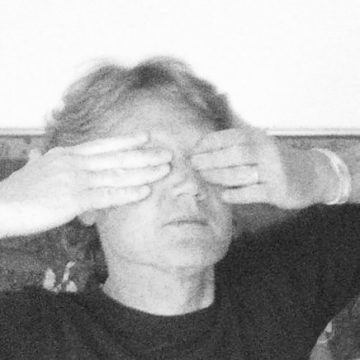 “What is hidden is for us Westerners more ‘true’ than what is visible,” Roland Barthes proposed, in Camera Lucida, his phenomenology of the photograph, almost forty years ago. In the decades since, the internet, nanotechnology, and viral marketing have challenged his privileging of the unseen over the seen by developing a culture of total exposure, heralding the death of interiority and celebrating the cult of instant celebrity. The icon of this movement, the selfie, is now produced and displayed, in endless daily iterations, in a ritual staging of eyewitness testimony to the festival of self-fashioning.
This same period has also seen a parallel, related but in some senses opposed development: the use of photographic documents – occasionally, indeed, self-portraits, though fragmentary or denatured, and/or amateur photographs of their subject taken by the authors themselves – to illuminate non-fictional works, primarily literary memoirs, (pseudo-)biographies, or historical reconstructions; beginning in 2001 with W.G. Sebald’s epochal Austerlitz and continuing in books overtly or implicitly inspired by the Anglo-German’s peripatetic, omnivorous, documentary style. Orhan Pamuk’s Istanbul (2003), Daniel Mendelsohn’s The Lost (2006), Teju Cole’s Every Day Is For The Thief (2007), Aleksandar Hemon’s The Lazarus Project (2008), Gary Shteyngart’s Little Failure (2013), and Patti Smith’s Year of the Monkey (2019) all deploy photographic material obliquely, frequently quite bereft of deictic apparatus and often only remotely or tangentially associated with the adjacent narrative, as if to shadow the work’s textual body, to propose a secondary or paratextual level, or to serve as a form of punctuation (implicitly echoing Barthes’s polysemous term “punctum”, the ineffably affecting element in a photograph) in the rebus that is the written account of a life. These various, recent non-fictional works at once coopt a visual medium for the literary project and mount a subtle protest against the ongoing debasement of the (human, autoerotic) image in selfie culture by restoring to that image some of its Barthesian mystery, even as they borrow from the new idiom its demystification of the art of photography by placing it in the hands of non-professionals. Read more »
by Bill Murray
 Late morning heat rises in waves over tall grass. It’s an hour and a half drive, sand flies buzzing, to Luwi bush camp, a seasonal camp with just four huts of thatch and grass on a still lagoon, far out into Zambia’s South Luangwa National Park, about 300 miles north of Lusaka.
Perched on a cliff above the Luwi River, today the little camp is empty, but for the permanent staff of six – permanent, that is, for the five months each year camp is open. When the rains come in November they tear down Luwi camp and in late April a work crew of twenty rebuilds it top to bottom in order to have it open by June first. We’re first in, a little early at the end of May.
No other guests, just the staff, our guide Aubrey and a European named Grete, who will manage Luwi camp this season. Six months a year Grete is a translator in Brussels (English, French, Dutch and Spanish) and she spends the other six in the bush. Aubrey has a literate streak himself, framing sentences conditionally, starting like “Whereas, with the puku….” Read more »
by Brooks Riley
by Holly A. Case (Interviewer) and Tom J. W. Case (Hermit)
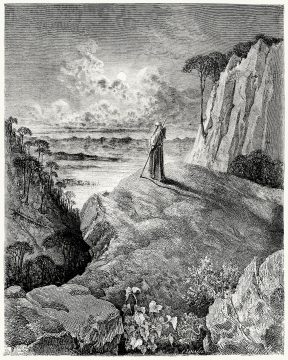
The following is part of a written interview with Tom, a pilot who has largely withdrawn to a small piece of land in rural South Dakota.
Interviewer: So first of all, thanks for agreeing to this interview. I know a lot of readers are interested to learn more about hermit life, but are probably thinking: “How can I find a hermit?” or “Would a hermit even want to talk with me?” or “If I were a hermit, probably the last thing I’d want is to be pestered with questions. Isn’t that what hermits are trying to avoid?” As you can see, people (not me, of course, but other people) tend to make a lot of assumptions about hermits without really knowing what they’re about. So it’s especially great to have this opportunity. Thank you so much! [pause—awkward silence] Right, so my first question is: How did you become a hermit?
Hermit: I think the relevance is in the “becoming,” more so than the arrival at some particular state—the state of being a hermit in this case. The word hermit puts a bit of a full-stop at the end of what might otherwise be a transcendent experience. In my case, however, if indeed I have become a hermit, it goes something like this: I think we all have an inner hermit living in our minds, very much alone, and each person’s internal processes of hermit-thinking and rationalization are adapted and transmuted into the ways they ultimately interact with the outside world. To put into practice the being of a hermit, then, all I have done is allow the inner hermit to exist on its own terms outside of my mind and body. Subsequently I act a hermit in the outside world in much the same, solitary way as one might behave inside their own mind. The full release of said inner hermit, however, is ripe with responsibility. At least it seems so. In much the same way one cannot just decide one day that stop signs are not to their liking, disregard them without consequence, it only seems fair to fully act oneself in relative solitude so as to not conflict with crossing traffic.
Interviewer: Do hermits brush their teeth?
Hermit: The short answer is yes. Certainly not for vanity, certainly not after every meal, but because teeth are critical and easy to reach. It is possible to tell when teeth need a good brushing, and that is when they get it. Perhaps once per week, sometimes more, sometimes less. In the meantime, chewing on things like twigs and coarse grass stems, consuming apple cider vinegar (followed by clean water), does an amazing job. I imagine every hermit has their own routine. Read more »
by Dave Maier
A while back, when I lived in Philly, my housemates and I got into a memorable discussion. It probably started off innocently enough, with someone wondering what it would be worth to you to lose a limb or something. But since I was involved, the conversation soon got weird, and soon we were thinking of more and more involved and downright bizarre contracts. I’ve forgotten most of them, but I’ve thought up a few more since then.
When someone came up with a good one, we’d each say how much money it would take for us to agree to the deal. It soon became clear that there were forces pulling in opposite directions. On the one hand, you didn’t want to look like a wuss. I shouldn’t need a billion dollars to spend my life in a wheelchair; plenty of people do that out of necessity, with no financial compensation, and they live perfectly fulfilling lives. Such people might be pretty offended to learn that you’d need vast sums of money to put up with the horror of living like they do. Keeping the number down would help to show that you regard such a thing as only a minor inconvenience.
On the other hand, you didn’t want to look like some guy on a Japanese game show, making a fool of himself seemingly for the sole purpose of appearing on TV (or earning a nominal sum). If I’m going to change my life in any real way, I’m not going to do it for a pittance. Some things, we often say, are priceless, and it’s easy to think of things I wouldn’t agree to for any amount of money. But what about things which aren’t quite so uniquely valuable? Everyone’s got his price. Make it high enough and I’m listening. If you really want me to give up nuts, berries and legumes, or agree never to visit South America, surely nine figures can get that done.
At the extremes, it seems that ethical considerations can come into play. Read more »

Just some wild berries outside my house in October of 2014.
by Sarah Firisen
 This morning I rode an Uber to JFK from my apartment in Queens. I do this regularly and normally don’t worry too much about it, but this morning, there was just something about the driver that concerned me, though I couldn’t put my finger on what. But every time his, very loud, GPS gave him a direction, in a language I couldn’t pin down, I just had this sense that he truly had no idea where he was going. And in case you’re not familiar with NYC, if you drive a car for a living, you’ve probably driven from the city to JFK more than a few times and do know where you’re going. Anyway, we arrived at JFK, I reminded him I wanted terminal 2 and I thought, “I guess my worries were for nothing”. And almost as soon as I thought that, he missed the sign for terminal 2. I mean, I guess it can happen, but it’s never happened to me before in all my many years of flying out of that airport. The signs don’t exactly creep up on you. I tell him he’s missed it; we start on a loop back around the airport and I say, “the green sign’s for terminal 2”, then he misses it again. And it turns out, the reason he kept missing it was because his GPS was telling him something contrary. I pointed out to him that I hadn’t put terminal 2 in Uber, so how would its GPS know that? The third time around the airport, I rather lost my temper and told him to stop listening to his phone and to listen to me. And third time lucky, we reached terminal 2.
On reflection, apart from thinking that maybe he couldn’t read and definitely didn’t speak great English, it occurred to me that a large part of the problem was his total and utter faith in his technology, over his own eyes and ears (as I kept yelling, “not that way!!!!”). Of course, he’s not alone. Read more »