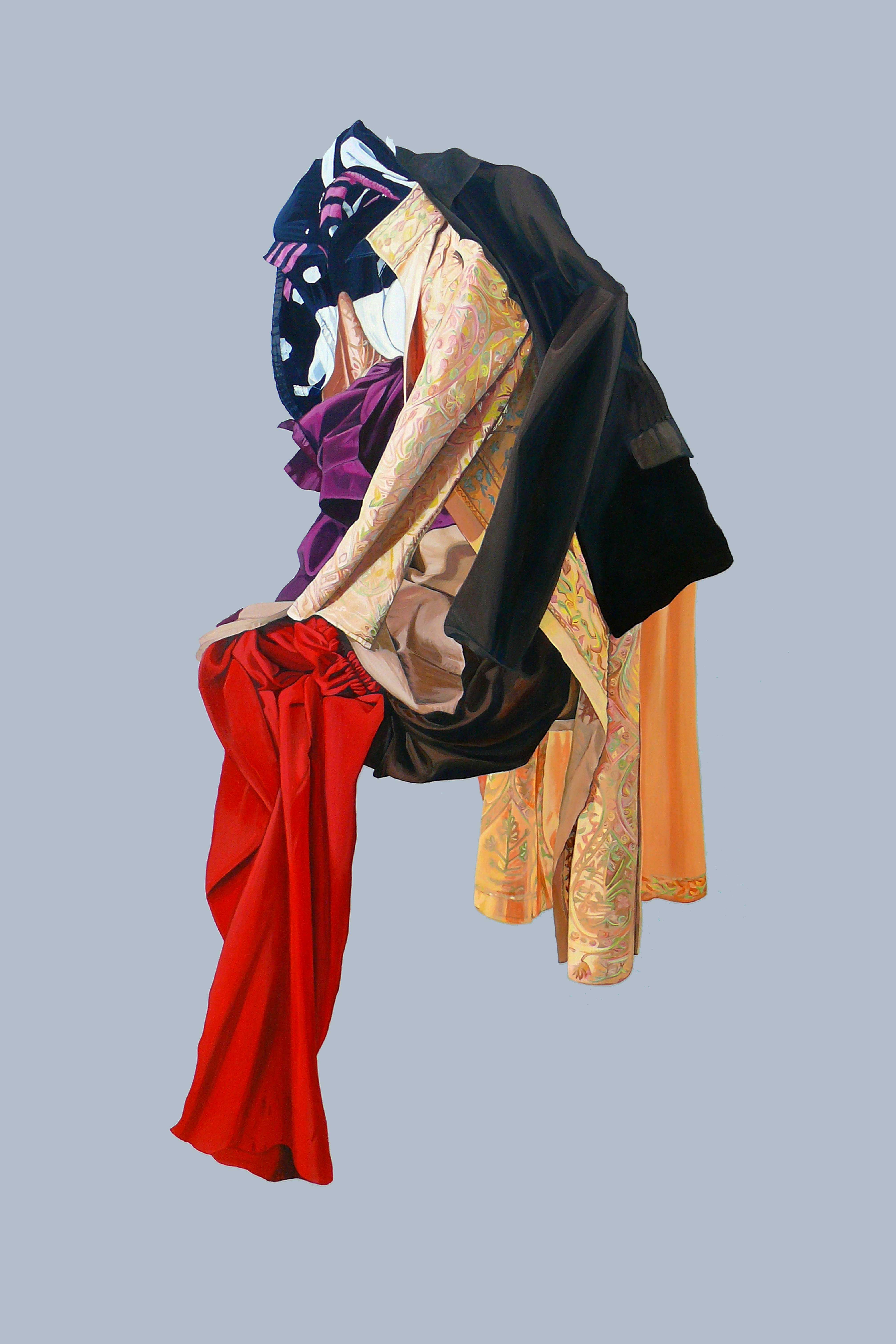
Saba Qizilbash. Weight, 2012.
Acrylic on canvas.
Thanks to Beena Sarwar.

by Jochen Szangolies
Aristotle characterized humans as zoon logon echon, the rational animal. In general, we like to believe that our opinions are formed through reason—that we have arrived at them by means of a process of weighing the alternatives, selecting that which we deem most appropriate. This implies a certain mutual intelligibility—I might not share your opinion, but I should be able to appreciate why you hold it.
Yet, with—it seems—increasing frequency, we find ourselves baffled by others’ opinions. Who could, in this day and age, earnestly believe that the Earth is flat? How can a president hold a nearly steady approval rating of over 40%, despite an unprecedented record of lies, scandals, and incompetence?
One might thus conclude that Aristotle somewhat overstated his case. But the issue is more complex: those holding odd beliefs are not typically less intelligent. An answer may be found in the way modern communication media have restructured society, leading to the process of opinion-formation no longer chiefly taking place at the individual, but at the collective level, largely unmoored from concerns of factuality and appropriateness. This is best understood by studying the physics of phase transitions. Read more »
by Jackson Arn
You are waiting for me to do something.
I can tell because your eyes have the look cheap mirrors get
when the edges rust and curl and there is nothing
to do but throw them out. You’re powerless,
yes, but at least not alone, if that makes
it better. In fact your rusted tilt
is kind of sexy in the stray antlered way
I’d thought improper, but I need to think more.
As soon as I can hear my voice I’ll use it
to make a paragraph, a soft one
to rest on, or a shield. That is my
defense, like spitting or a blowfish-ball—
can you blame me? The house was an oven
that night. Guests were planted
around each vase, yellow jackets for yellow flowers.
I thought I saw your eyes reply, so I pushed
until you heard the scenery collapse, and me.
And finding you here now,
the delay is tasteful and not too ironic.
Regret is for people who haven’t found a place
for everything—did you take me
for one of them? Me? My thighs are swollen
with the hibernation, my back is a red
canyon of dust and grooves
remembered to the ground that nursed me, and still
we repel daintily, like ruined magnets
whose squirming is a kind of family.
Even when you go away you follow me.
Your going’s written upside-down on me,
predictably, which is a type of comfort. I will stagger
through roped-off run-down hallways
I’ll bluff my way through mirrors
and find graffiti-less brick walls,
and enjoy the possibilities: number one,
somewhere you’re seeing the same
and building something clever with it,
or plain in the gruff Shaker way
I never understood—building, anyway,
with the same junk I’ve got. And two,
you never went back, never climbed through
the frame, never remembered anything, or remembered
you’d forgotten a thing that weighed something,
and are still waiting for me to do something.
by Eric Miller
1.
My grandmother’s last dwelling smelled especially of aerosol hairspray and black currant preserves, a pair of odours that could epitomize, in a pinch, the domestic fragrance of provincial Ontario in the twentieth century. Toward the end of her independent life, she lived in a little box, a suburban tract house, and there I often sat plying a pencil on newsprint sheets cheap enough they threatened to flake and almost to burn up under my hands, so responsive was their yellow to the acidifying suggestion of time. Bending at her table, holding a ruler in hands revealed by this act to be minutely tremulous, I drew legions of little boxes—myself shut, the whole while, inside her own mere carton of a house. My diagrams, however, were simpler far than the design of her bungalow, for—remotely affected by some concept of modern architecture—I was going through a siege of trying to draw cubes and other parallelepipeds. I aimed for perspectival accuracy, exercised persuasively from many vantages on an attractive visual problem: the hexahedron. It happened the paper tore under the stiff pink frustration of an ageing eraser, or (after I had pared my implement’s tip) the lance-like point of sharpened graphite poked right through and broke on the grain of the tabletop. Now and then, a tear smudged my straight lines: a humble mammal dab, expressed helpless from brim glands to blur the incorruptible angles.
2.
In labouring thus over these basic solids, I must have had in mind the precedent of a particular architect. Although at last my grandmother’s house and my ideal drawings embodied the same repertoire of forms, I sought after a great elegance missing from her address. It was surely Mies van der Rohe, evangel of glass and the perpendicular, who inspired me, since his structures, for all their glistening giganticism, stood within range of even my representational ability. In fact, the new Toronto-Dominion Centre, downtown, provided a model. Fifty-six storeys tall! Just think, what is a Mies van der Rohe building?
It is a box.
A box of what?
Of windows, and therefore of light.
But does the box contain anything else?
According to its herald and conceiver, it is supposed to exemplify, not to contain, the truth. Read more »
by Brooks Riley
by Alexander C. Kafka
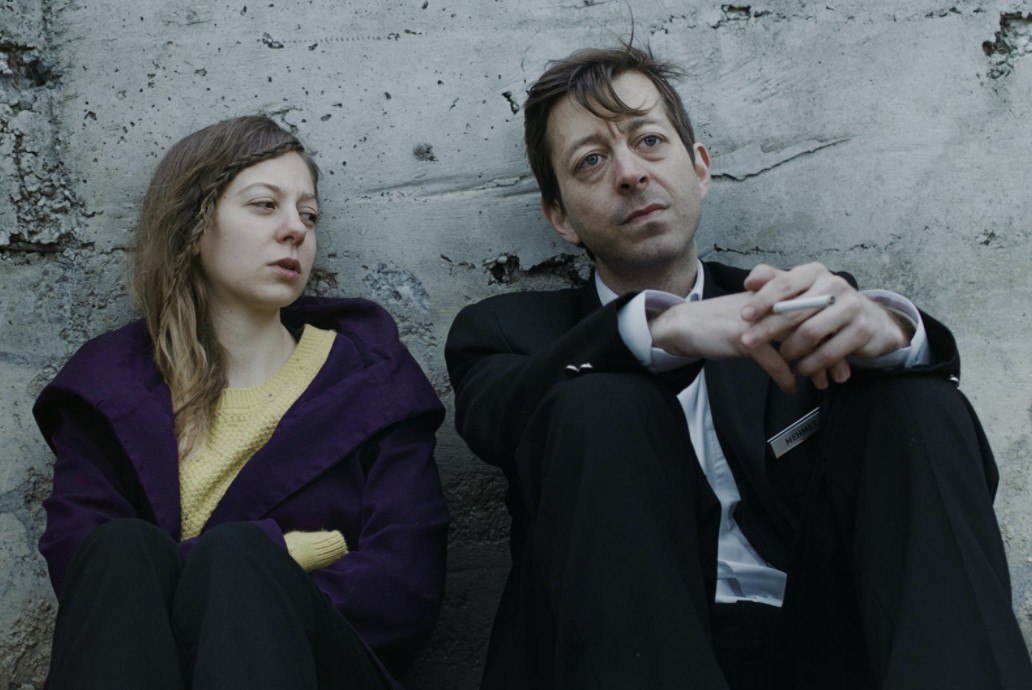
What do you get when you combine unrelenting nihilism with art-school swagger? The Antenna, the first feature film of Turkish writer-director Orçun Behram, a 2011 graduate of Columbia College Chicago who until now has worked on music videos, short films, and documentaries.
Ihsan Önal plays a heavy lidded, bug-eyed building superintendent named Mehmet. A dour insomniac prone to work-shift napping, he looks like Paul McCartney fused with Peter Lorre and Mr. Bean. Mehmet oversees, or rather undersees from a ground-floor observation booth, a towering apartment building on a windy tundra during an unspecified but late 70s/early 80s looking era. Mehmet is resigned to a pitiful life — “One also gets used to rotting,” he says to his teenage confidante, Yasemin (Gül Arici). He gives her a ticket to escape, though. In a stultified world, she has a wall of Post-it notes and push pins with strings attached — ideas, we deduce, that could take her places.
Mehmet’s bully of a boss, Cihan (Levent Ünsal), informs him that a government worker will install a mandatory dish antenna atop the building to carry a station that issues directives and bulletins. The insidiousness of the Orwellian project is clear from early on — not just an installation mishap but a dark sludgy goo that seeps supernaturally from the device into the structure below. It is, we learn, part of a wider multimedia takeover that encompasses radio and print as well. Read more »

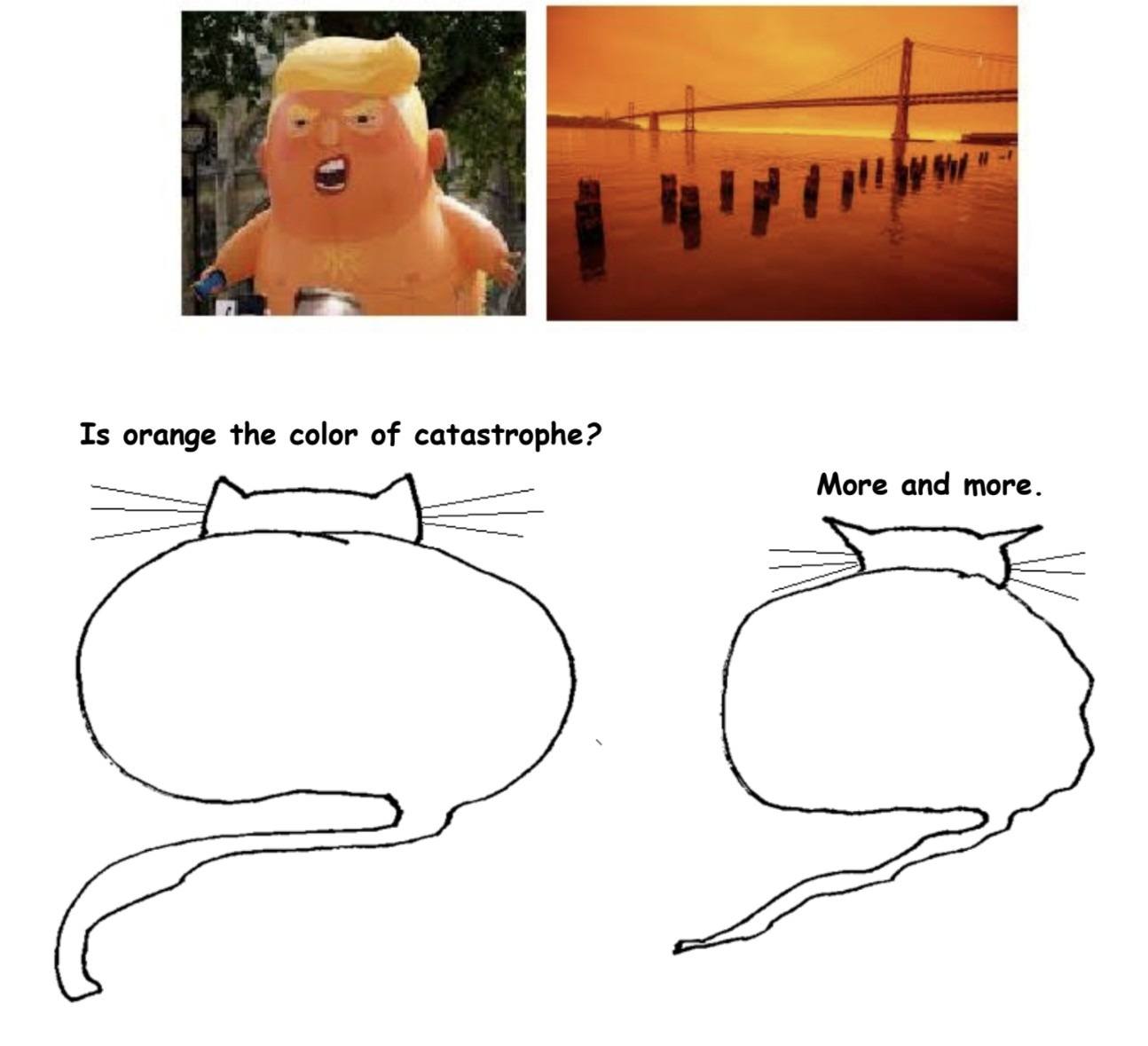
This is a mountain called Gaisjoch seen from Brixen, South Tyrol, through a mild haze of smoke particles in the air which have arrived in Europe from the California wildfires. Photo taken on September 15, 2020.
by Dwight Furrow
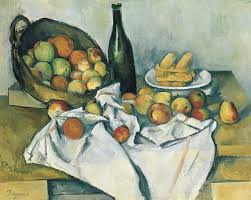 A life in which the pleasures of food and drink are not important is missing a crucial dimension of a good life. Food and drink are a constant presence in our lives. They can be a constant source of pleasure if we nurture our connection to them and don’t take them for granted.
Because food and drink are an easily accessible source of pleasure, barring poverty or disease, to care little for them is a moral failure with consequences not only for the self but for others around us. However, to nurture that connection to everyday pleasure requires thought and restraint. Pleasure can be dangerous when pursued without reason and self-control. Addictive pleasures damage us and everyone around us. Addicts, in fact, cannot feel pleasure as readily as the non-addicted and require increasing levels of stimulation to find satisfaction. Addictions and compulsions are pathological and are no model for the genuine pursuit of pleasure. Thus, we need to make a distinction between pleasure that we get from thoughtless, compulsive consumption, and pleasure that is freely chosen. Pleasure freely chosen is actually a good guide to what is good for us and what should matter to us.
This emphasis on freely chosen pleasure is important not only for keeping us healthy but because certain kinds of pleasures are deeply connected to our sense of control and independence. Some of the pleasures in life come from the satisfaction of needs. When we are cold, warm air feels good. When we are hungry even very ordinary food will taste good. But such enjoyment tends to be unfocused and passive. We don’t have to bring our attention or knowledge to the table to enjoy experiences that satisfy basic needs. We are hard-wired to care about them and our response is compelled.
However, many pleasures are not a response to need or deprivation. We have to eat several times a day, but we don’t have to eat well several times a day. Pleasure freely chosen is essential to a good life because it expresses our independence from need. Read more »
by Usha Alexander
[This is the third in a series of essays, On Climate Truth and Fiction, in which I raise questions about environmental distress, the human experience, and storytelling. All the articles in this series can be read here.]
 At the beginning of our story—paraphrased from an origin story remembered by a Cree elder—two figures are walking along the clouds. They’ve been walking long and far. Looking down through the spaces between the clouds, they spy a beautiful, green landscape, rich and inviting. They long to go down to this land, but they don’t know how to get down from the clouds. So the two keep walking. When at last they see a speck on the horizon, in the far distance, they walk toward it. The speck grows, looming larger than they are as they get nearer. When the two look up at it, it looks back down at them—it’s Great Spider.
The people tell Great Spider how much they wish to climb down from the clouds and inhabit the land below, and they ask him for his help. So Great Spider begins to weave a web. He weaves and weaves and weaves, until he’s woven a boat. The two climb into the boat with Great Spider’s web still attached, and Great Spider lowers it down from the clouds. Despite his care, the boat rocks and sways precariously. After a long and harrowing downward journey, the boat ends up stuck in the top of a huge tree.
Now the Earth is almost within reach, but the people don’t know how to get down from the top of the tree. Below them they can see Caribou and other animals walking around. They call out for help, but none of the animals is able to help them. Finally, they ask Fisher-weasel, who scampers up the tree and carries each of them safely to the ground. Once they’re on the ground, Brother Bear befriends the people and teaches them everything they need to know as they make their way in this world. Read more »
by Akim Reinhardt
 There is a minor American myth about shame and regret. It goes like this.
In the years following Richard Nixon’s 1974 resignation amid scandal and disgrace, polls found that fewer Americans admitted to having voted for him than actually did. Apparently many former Nixon voters now realized the error of their ways and were embarrassed to admit ever having pulled the lever for him.
Everything about this story is false, and the truth of it is worse. Nixon’s loyal supporters stood by him the entire way, despite his crimes. His popularity did not retreat behind a wave of shame; it was merely muted by the national embarrassment of his resignation.
What does this tell us about today’s Trump supporters? Partisan divisions are much worse now than they were during the mid-1970s, so Trump voters’ fierce loyalty to this sexist, racist charlatan is unsurprising. But in explaining why, we tend to focus on the Cult of Trump, as if he has special qualities that give him some magical hold over his supporters. True, in many ways Trump is a unique politician in American history. Yet given our history, it seems likelier that his supporters’ undying devotion is less about the spells Trump casts, and more about the constancy of American political partisanship.
Indeed, the difference between Trump’s and Nixon’s loyal supporters might be more about decibel count than sentiment. And so by looking back at the steadfast support Richard Nixon maintained right through his resignation, we can better understand the misguided loyalty keeping Trump’s reelection campaign afloat. Read more »
by Jeroen Bouterse
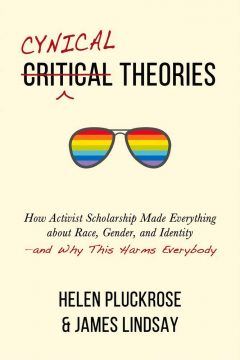 The most charitable, forward-looking take on the science wars of the 90s is Stephen Jay Gould’s, in The Hedgehog, the Fox, and the Magister’s Pox (2003), a delightful book about dichotomies between the sciences and humanities. His diagnosis is primarily that scientists have taken too literally or too seriously some fashionable nonsense, and overreacted; and if everybody can just calm down already, things will be alright and both sides could “break bread together” (108). Gould saw the science wars themselves as a marginal and slightly comical skirmish, almost a mere misunderstanding. “Some of my colleagues”, he said,
“have become legitimately disturbed by a few truly silly and extreme statements from the ‘relativist’ camp, largely made by poseurs rather than genuine scholars, and have mistaken these infrequent sound bites of pure nonsense for the center of a serious and useful critique. Then, falsely believing that the entire field of ‘science studies’ has launched a crazed attack upon science and the concept of truth itself, they fight back by searching out the rare inane statements of a few irresponsible relativists […] and then presenting a polemic defense of science, ultimately helpful to no one”. (99)
Gould saw an example of such “windmill-bashing” in P.R. Gross and N. Levitt’s Higher Superstition: The Academic Left and Its Quarrels with Science (1994). He also saw it in Alan Sokal’s famous hoax: a brilliant and funny parody, which Gould thought did not really prove much beyond the laziness of the editors that he hoodwinked.
I thought a lot of these 1990s events when I bumped into their 21st-century descendants: first, the ‘Sokal squared’ hoax two years ago, which insisted on taking all the fun out of Sokal’s joke by multiplying it twentyfold. And now Cynical Theories, the equivalent of Higher Superstition, in which two of the same three authors aim their lance at what they perceive to be the heart of intellectual evil: postmodernism. Postmodernism denies reality and universal truth, and thinks that all categories and concepts are therefore functions of group power. These core postmodern motifs have developed (like a “fast-evolving virus”) into actionable left-wing ideas, in the form of a proliferation of cynical, pessimistic and anti-enlightened theories in fields such as gender studies and queer studies. Read more »
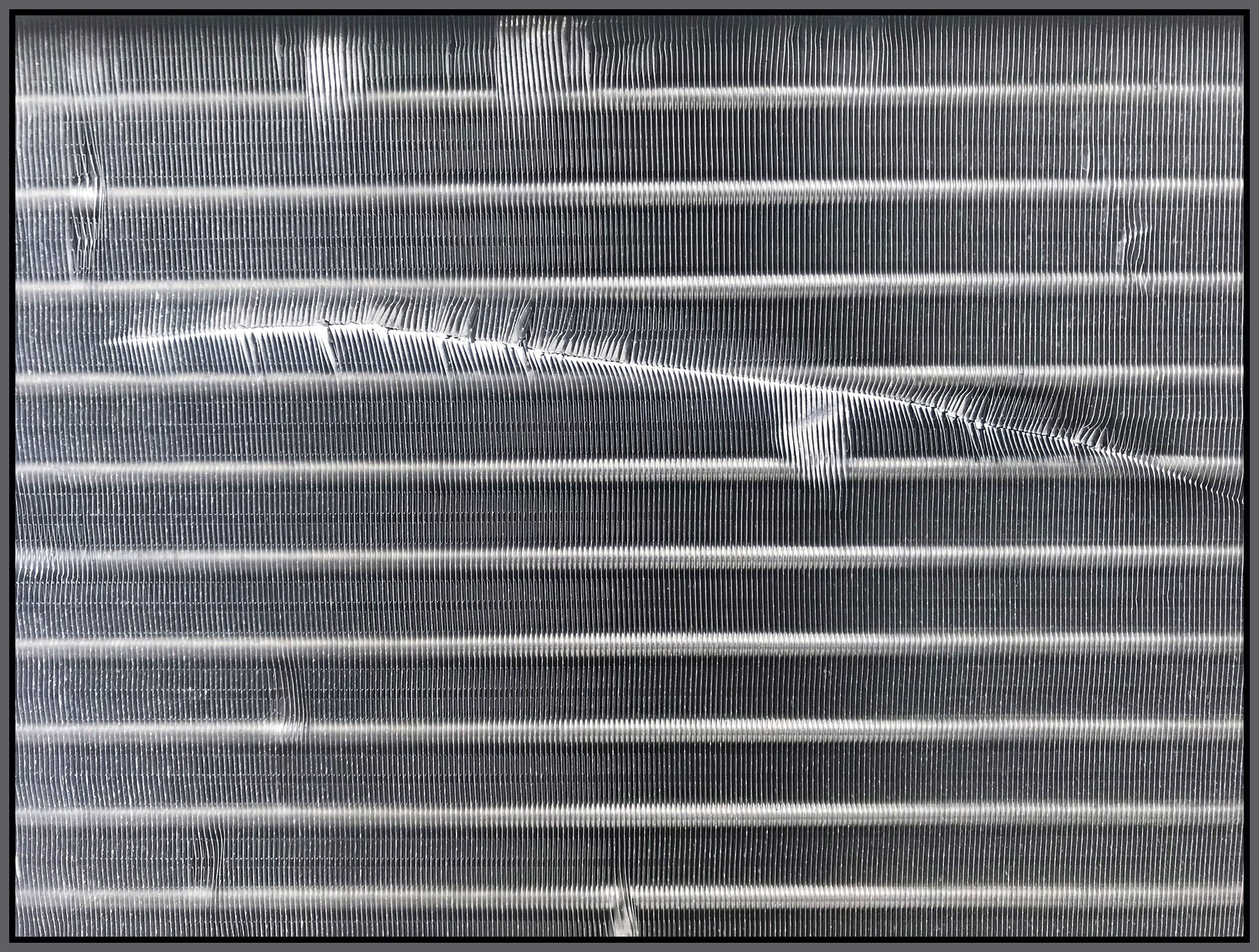 Sughra Raza. Light As a Feather. Boston, Sept 2020.
Digital photograph.
by David Oates

In my preceding post, I reflected on the poetry of the eighth-century Chinese master Tu Fu, which has nourished me for decades (in translation, of course). Tu Fu found a way to place himself both inside and outside the whirling political disorder of his times. I drew strength from the quiet inwardness he captured even in unquiet times. I have taken it as my model.
Yet Tu Fu lived under an entrenched monarchy. There was no hope of influencing or reforming it. So he maintained a joyous, half-brokenhearted inwardness instead. But the stance of “inward exile” (as Russian poets and dissidents named it during the Soviet regime) – isn’t it more problematic when you’re living in an actual (if deeply compromised) democracy?
Isn’t more required of me – more courage, more participation? Especially when the struggle for democracy is playing out so vividly and courageously in my own town of Portland, Oregon, just a half-hour stroll downtown from my house. Why am I not showing up?
* * *
I always think of Henry David Thoreau when I get to this point in the meditation. Read more »
by Dave Maier
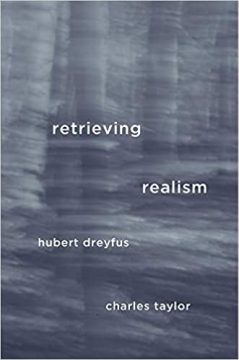 By the beginning of the 20th century, it had become clear to an influential minority of philosophers that something was badly amiss with modern philosophy. (There had been gripes of innumerable sorts since the beginning of modernity in the 17th century; but our subject today is the present.) “Modern” here means something like “Lockean and/or Cartesian,” where this means … well, it’s not immediately clear what exactly this means, nor what exactly is wrong with it, and therein lies the tale of a good deal of 20th-century philosophy. As with every broken thing, we have two choices: fix it, or throw it out and get a new one; and many philosophers have advertised their projects as doing one or the other. However, as we might expect, unclarity about the old results in corresponding unclarity about the supposedly better new. What’s the actual difference, philosophically speaking, between rehabilitation and replacement?
Let’s start with what two important groups of contemporary anti-modern philosophers (again, let’s leave pre-moderns out of it for today) say about what they’re doing. We can all agree that (in Wittgenstein’s words, but quoted by all and sundry) “a picture held us captive,” and even, in his continuation, that the way it did this was that “it lay in our language and language seemed to repeat it to us endlessly.” That is, it’s not simply a philosophical theory, the conclusion of an argument we have come to regard as unsound. Even in such relatively straightforward cases, of course, there may be plenty of disagreement about how to continue; but here part of our task is not simply to outline a better view, but also to diagnose and escape this characteristic feature of the old one. Such a treatment would explain how such captivity was possible, and how our very language could turn against us, as well as (naturally) what to do about it. Read more »
by Eric J. Weiner
If it looks like a duck, swims like a duck, and quacks like a duck,
then it’s probably a duck.
 Over the course of two days in early September, the Trump administration quietly formalized its commitment to the ideology of white supremacy within the context of schooling and public education. In two separate but parallel moves, both of which would have made Senator Joe McCarthy proud, Trump announced that the Department of Education (DOE) would investigate public schools to determine if they were using the Pulitzer-Prize winning curriculum, The New York Times’ “1619 Project” while also decreeing that federal employees would no longer receive professional development education about white privilege from the perspective of Critical Race Theory (CRT).[1] If the DOE discovers that schools are using the 1619 Project, Trump has promised, regardless of whether he has the authority to do so, to defund those schools. In spite of the enormous support the 1619 Project has received from educators, intellectuals, and many (but not all) historians, Trump has declared the curriculum “un-American” and a form of anti-American propaganda.[2] The 1619 Project’s goal “to reframe American history by considering what it would mean to regard 1619 as our nation’s birth year [thereby placing] the consequences of slavery and the contributions of black Americans at the very center of the story we tell ourselves about who we are as a country” could only be considered “un-American” by those refusing to acknowledge the historical record: The culture and ideology of white supremacy was foundational and fundamental to the Nation’s birth and history. There is nothing more American than the ideology of white supremacy and Trump’s attempt to declare the 1619 Project “un-American” shows that it is not going away without a fight. With Trump as white supremacist cheerleader, America’s historic connection to the culture and ideology of white supremacy is front and center for the world to see. Read more »
by Brooks Riley
by Rafaël Newman
For the staff of Flussbad Oberer Letten
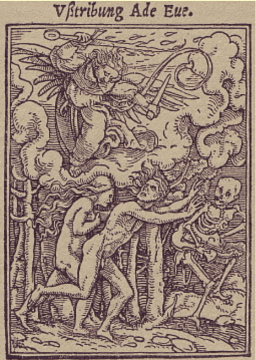
On a warm evening in late August I was basking by the Limmat, the river that runs through downtown Zurich, alongside substantially fewer than the 400 permitted in the public bathing area in the past several weeks: school holidays had just ended and work had begun to pick up again, so the crowd of bathers that had recently thronged the city’s riverside and lakeshore beach sites was diminished. Many of my companions had the dazed appearance of people lately freed from the fluorescent confines of the office – as had I – and were blinking warily in the natural light as they prepared for a dip in the pleasantly cool stream.
Three acquaintances, each from a separate area of my life – a client from my freelancing days, a former neighbor, and a waiter from a favorite restaurant – all stopped by, one after the other, to greet me where I reclined on my towel, paperback at the ready, resting my eyes on the soothing vista of parkland and wooden boardwalk across the river. Each of them rejoiced briefly in the pleasures of outdoor semi-nudity in the middle of a busy city, before cautioning me that it would rain the next day:
“Morn chunnts go schiffä.”
The remark is stylized, virtually a cliché, and I have heard it on various occasions, typically as summer draws to a close, since I moved to Switzerland over two decades ago. It has never been entirely clear to me in what spirit it is offered: conspiratorial – upbraiding – mocking? Am I to feel ashamed of the challenge to the weather gods (a certain Petrus is charged with meteorology in Germanic-Christian syncretic folklore) implicitly issued by my brazenly bare limbs? Is it an expression of sympathetic embarrassment – what is known in German as Fremdschämen or “vicarious shame”, AKA cringeworthiness – at the spectacle of me whistling in the dark, closing my eyes to the encroachment of frost on my balmy idyll? Read more »
by Sarah Firisen
 I’ve telecommuted from home for many years now. Before COVID-19, I would rarely turn my camera on when I was on video chats. And if I did, I’d make sure to put makeup on and look somewhat professional and put together from at least the waist up. But since lockdown started in March, I now turn my camera on for almost every video call and I don’t bother to put makeup on or to change my clothes from whatever ratty t-shirt I happen to be wearing. And I don’t care. I sit in my armchair au natural, secure in the knowledge that everyone I’m on calls with is likely dressed casually and taking the call from some room in their home. We’ve seen each other badly in need of haircuts. Then, in some cases, with bad haircuts that we did ourselves or let family members do to us. And we’ve grown familiar with each other’s living spaces, pets, and sometimes family members. I know the view outside of one colleague’s window, the clock on the wall behind another and I always admire the piece of art behind my colleague in Austin. Except for the occasional vacation house rental for a week or two, we’ve all been working out of our homes, living a more lockdown, limited version of the work-life we lived before. It made sense to stay put while lockdown was at its peak. But as it eases up, at least in some places, and while its clear that office life isn’t going back to normal anytime soon, is there a different, new way to live and work? Read more »
by Philip Graham
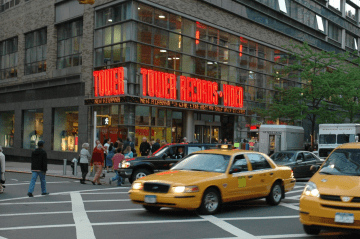
I had never before wandered through Tower Records in downtown Chicago, yet it felt familiar. Why not? Every store in the corporate chain was a similar gleaming cathedral of CD and vinyl excess, multistoried with escalators and elevators, and brimfuls of such a wide selection that, once you entered, you’d find it near impossible not to discover something to love. The behemoth in New York on 66th and Broadway had always been a favorite of mine, the outlet where I’d found the music of Madredeus, that great Portuguese fado-chamber ensemble; the world-electronica of Banco de Gaia’s Last Train to Lhasa; and Vanessa Daou’s masterpiece, Zipless, her slick brooding songs set to poems by Erica Jong.
But the Chicago store could have been proud of its own promising immensity.
I was hanging out with the writer and book critic John Blades—we were two fellow music lovers on a Tower Records hunt on an idle afternoon. But John also wanted to show me this particular store because it served as the setting for one of the most powerful chapters in a novel manuscript he’d recently completed and shown me. In a way, this outing was like a return to the scene of a crime. Read more »
Video of unidentified blue spider on the tennis court in Vahrn, South Tyrol, made in September of 2020.