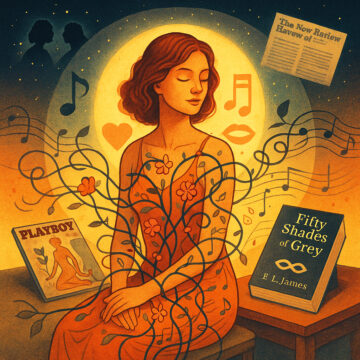
Suppose we have two groups of citizens. Let’s call them the Shirts and the Skins. The Shirts believe homosexuality is an abomination that stinketh in the nostrils of the Lord, and abortion is baby murder. The Skins believe homosexuality is perfectly normal and natural, and abortion is a woman’s right. How can we build a society where those groups can get along without killing each other?
One approach might be to encourage the two sides to leave each other alone. You think homosexual sex is wrong? Fine, don’t engage in it. You think abortion is wrong? Fine, don’t have one. But don’t tell me what to do. This produces some familiar formulations. Everyone is to have the greatest amount of freedom compatible with similar freedom for everyone else. Your right to swing your arm ends where my nose begins. Live and let live.
But that answer doesn’t work for Shirts and Skins. If I really believe abortion is baby murder, it isn’t enough that I don’t do it. I also have a moral duty to prevent you from doing it. I can take a live and let live attitude about what color you paint your house. It’s none of my business. But I can’t let you murder babies. And I can’t compromise. I might accept some strategic compromise on a temporary basis, but I can never permanently accept anything short of complete abolition.
The same is true for people who really believe homosexual behavior is terribly wrong. It’s like slavery. Or cannibalism. Or human sacrifice. I can’t allow you to throw any virgins into the volcano. None. You also can’t engage in ritual cannibalism. Even on special holidays. Compromise is not an option.
The negotiation literature calls these “sacred issues.” It is insulting even to suggest compromise on a sacred issue. Sacred issues are incommensurable. If you think I might be persuaded by, say, an offer of money to compromise on a sacred issue, you simply don’t understand what a sacred issue is.
In 1956 when this work was begun I had no conception of what I was undertaking. At that time my object appeared a limited one, namely, to discuss the theoretical implications of some observations of how young children respond to temporary loss of mother. —John Bowlby (opening sentence of his seminal book, Attachment, 1969)
Note: I always disguise the identities of patients discussed in my writing.
Tender Mercies, by wildlife photographer Sean Owens. Used by permission. You can find more of his amazing work here.
A patient described the dramatic dance he was in with his longtime partner as “go away closer.” She’d be warmly attentive, which drew him closer; but as soon as he stepped in, she would step back. He asked whether she wanted to go to a concert, and she was enthusiastic. But after he’d bought tickets, she made excuses and suggested he invite a friend instead. Confused and hurt, he’d move away, partly to protect himself but also to punish her. Paradoxically, this seemed to attract her. And the dance would begin again. He felt as if she were gaslighting him, but he knew she wasn’t, or at least not consciously.
Attachment theory offers an explanation of such primitive (unconscious and instinctive) relationship dynamics. Attachment patterns, shaped by early interactions with caregivers, are impressively durable: Secure versus nonsecure patterns discernible by 12 months of age correlate with adult attachment behavior roughly 50% to 60% of the time.
In this essay I offer an overview of attachment, an increasingly influential lens through which to understand how we relate to others—and who we are. For our “self” is fundamentally relational, just as our brains are fundamentally social. We become our selves through engaging with the world, and attachment science reveals how our early experience disproportionately affect who we become and how we relate. Read more »
In March 2023, Nicola Sturgeon, the leader of the Scottish government, officially apologized for Scotland’s policy from the 1940’s to the 1970’s of forcing tens of thousands of unmarried women to give up their newborns for adoption. Shortly after giving birth and without informed consent, many of the women were required to take repeated and powerful doses of a synthetic estrogen, Stilbestrol (also known as Diethylstilbestrol or DES) now recognized as linked to reproductive cancers and other metabolic maladies, to dry up their breast milk. They were given no choice in this matter.
2.
“We have enormous sympathy for the women and families who have been harmed by Stilbestrol.” –The Scottish Government.
“It’s bad enough that SNP (Scottish National Party) ministers have tried to sweep the mental health impact of forced adoption under the carpet. The physical impacts must be brought into the light too, including the potential link between cancer and drugs the women were made to take to stop their breast milk.” –MSP Monica Lennon
3.
DES was developed by a British chemist, Charles Dodds, in 1938. He used it in his laboratory experiments and never patented it or expected it to be used as a widely prescribed pharmaceutical. Because it was not patented, over 200 pharmaceutical companies worldwide were left at liberty to manufacture and market it, first as a treatment for menopause and then, when that didn’t fly, mainly, though not exclusively, for the prevention of miscarriage. It was effective at neither one. Instead, it harmed millions of women who took DES while pregnant and even more-so their children who were exposed in utero.
During the initial application process, the FDA denied DES approval. Numerous animal studies showed various forms of harm, including deformities not evident at the offspring’s birth but which manifested only at maturity. These harms included deformed sexual organs.
Throughout its decades of use, a silence surrounded it. The FDA required the pharmaceutical companies to make available the questionable safety information of DES if requested by physicians, but there was no insert that came with the product: each physician needed to make a specific request. The information was not directly available to patients. Read more »
In The File on H, Ismail Kadare shows his appreciation of epic poetry and attempts to incorporate aspects of orality so that the form of the novel reflects its content. The plot is relatively simple: two Harvard scholars (modelled on Parry and Lord) travel to Albania to record singers of epic poetry in the 1930s. The local townspeople are suspicious, suspecting some sort of espionage, but also intrigued, leading to a series of outrageous situations—the governor of the small town has two spies track Bill and Max, while the governor’s wife imagines a steamy affair with one of them, then the other. After they record a couple of poets in Albanian, a Serbian monk hatches a plan to destroy the tapes. The epic singers fear that if they are recorded, their voices will be “walled up,” and they will no longer be able to sing. On the surface, these are amusing tales, but they get at deeper truths—the paranoia of Enver Hoxha in communist Albania, the appeal of the exotic foreigner, the deep historical and political tensions between Serbia and Albania, and the impact of technology on art, communication, and identity. The plot unfolds as a sort of oral and textual history, with certain parts written from a close third person point of view, while other sections are presented as reports from the spies, newspaper clippings, transcribed dialogue, journal entries, and oral speech as one would see in a filmscript. In this way, Kadare filters his novel through an oral prism—when we are reading, it is almost never “primary” text but frequently a version of “hearsay.” We might read one character’s written summary of what another character said verbally (like a spy report that transcribes overheard dialogue), or it might be speech that Kadare visually presents like a play or filmscript, and that speech might include things the character has overheard from others. It sounds confusing, but when you read it, it’s easy to follow and hugely entertaining; Kadare is a master storyteller who can move between many different registers. Read more »
This is why it was a relief and a happy surprise to see that the final CoP, and I am here focused on the Safety and Security chapter, which is my domain, ended up being a really, really good document. There are three main reasons why I am excited about the final CoP: the baseline it sets, its risk management nature and the democratic process by which it was created.
An Unavoidable (Positive) Elephant in the Room
It is too early to tell whether we will see the same kind of “Brussels effect” for the AI Act that we saw for other EU legislation, such as GDPR. However, by producing a very strong CoP, the EU has set a very strong foundation. The existence of the CoP now provides an unavoidable baseline to which all future AI regulation and policy will be compared. It introduces an elephant in the room (in a good way), one that companies and countries can’t avoid referencing whenever AI policy is discussed.
The CoP is technically voluntary, but it seems likely that companies will want to sign it, since it is the most straightforward way to comply with the Act and removes much legal uncertainty. The EU has also signaled that they will provide a grace period for signatories before enforcement starts in August 2026, providing another key benefit.
I used to feel depressed when I read those notices in newspapers or chat with others about people’s multiple accomplishments. Compared to me, everyone in the world seems to be a raving success. They publish several novels a year, start businesses, win awards, are asked to speak at conferences and, even more, get paid for it! They run marathons in their spare time, make the “top ten” list in whatever subject interests them, say cooking or astronomy or cup-stacking competitions. Even worse, they write, call, email and blog about what they’ve done, to the point I want to avoid meetings and acquaintances, reading my mail, or communicating in any fashion, even smoke signals.
Maybe you’re challenged or energized by such information. Not I. When I was a kid, I fell for the Great American Dream. Anyone can be president or a millionaire, if you just try hard enough. I’ve learned that’s not true. Take my primary interest: writing books. Estimates are completely unreliable but range from 500,000 to a million published annually. I may have owned 10,000 books myself over the course of my life. Realistically, the odds of me or anyone selling tons of books are miniscule. In the realm of fantasy, everyone’s doing it.
I try to tell myself to be realistic, my life is going fine. But the sounds of all these folks beating their own drums and tooting their own horns makes me deaf and discouraged. I have a friend with an even more aggravated sense of inferiority than mine. Take her to a group in which friends mention their thriving children or a promotion on the job, and she refuses to see them again.
A change of attitude seems required. I’ve heard about two studies on the secret to happiness. Read more »
When Bach was a busker playing for humble coin he’d set up his organ in the middle of a square regardless of pigeons, ignoring the squirrels who sat poised at its edges waiting for their daily bread, and work to build its impossible structure of intricacies, assembling its pipes from his scaffold of arpeggios of baroque means, setting its stops and starts, its necessary rests and quick resumptions, seeing in his mind’s-eye each note to come as he’d placed them just so on paper at his desk, simultaneously hearing them as they would resonate against eardrums in potential cathedrals of brains even before a key was touched, even before a bow was raised, even before a slender column of breath was blown into a flute, or tympanic skins troubled the air, he’d hear them as he saw them, strung out along a horizontal lattice of five lines with intervening measure marks, following the lead limits of a cleft, soaring between and around each other darting out, in and through, climbing, diving, making unexpected lateral runs between boundaries, touching sometimes the edge of chaos but never veering there, understanding the limits of all, so that now, having prepped for his street-corner concerto, this then unknown genius would descend from his scaffold and share with the ordinary world how a tuned mind works in harvesting songs from a universe of stars, collecting their sweet sap, distilling it into a sonic portrait of a universe that forever lies within the looped horizon of things.
Jim Culleny, 10/3/22
Enjoying the content on 3QD? Help keep us going bydonating now.
I write this not to counter Holocaust deniers. That would be a waste of time; the criminally insane will spew their fantastical vitriol no matter what you tell them. Nor do I write this in the spirit of “Never forget!” As a historian I am committed to remembering this and many more genocides, particularly the most devastating and thorough genocide of all: the European genocides of Indigenous societies. At the same time, I understand the ultimate futility of admirable slogans such as “Never Forget!” For everything is forgotten, eventually. Everything and everyone.
Rather, I say “The Holocaust happened” as a reminder that human beings are quite capable of the worst. Not during any particular era, but at all times. Not a particular group of humans, but all of them. For no ethnic group is cut out to be the villains or the victims. Inflicting horror is a fully human affair. Any person can become a monster if pushed far enough, and many don’t need all that much pushing. Every society is ready to be awful. If flattered sufficiently, any large group of people will tacitly approve the horrors that others inflict on their behalf and in their name.
Why do humans act so atrociously, while other humans countenance it, or at least sit by unbothered as it happens? The phenomenon is so common that the answer cannot be exotic. The reasons can’t be too specific. Humans do not need some grand excuse to enable their worst behavior, or to cheer it on, much less sit by untroubled. Humans are quite capable of, and even given to, inventing their own petty little lies to serve as ludicrous justification for their hellish actions. This is History’s lesson, recited over and over again. To insist otherwise is to give humanity far too much credit.
Yet, insist we do.
These lies generally come in two forms. The most common and criminal is erasure. The sin of omission. The lie of active forgetting. While humans are doomed to forget and be forgotten, that is a passive process. Instead I am referring to active forgetting. Erasure comes when a society takes active steps to forget the horrors it has committed. Read more »
Shortlisted for the Women’s Prize for fiction this year, Sanam Mahloudji’s The Persians is a multi-generational novel about a wealthy Persian family, told from the points-of-view of five of the family’s women. Starting the novel, I was expecting a fun romp with a group of extremely glamorous Persian ladies. You know, Chanel suits and amazing shoes. And the novel did open with a wild night: the American branch of the family is partying on vacation in Aspen (where else?), when Aunt Shirin is arrested for prostitution, accused of soliciting an undercover cop in a bar.
A ridiculous idea that Shirin is struggling to take seriously even after she spends the night in jail. After all, she is rich beyond belief, the descendant of a great Persian war hero, if you believe all those old stories, plus the family are hereditary landowners.
This wealth being the center of everything.
The story starts with the matriarch of the story Elizabeth, who falls in love with the chauffeur’s son, not something done back in the day. And then when things get iffy with the Shah and revolution seems possible, Elizabeth’s daughters, including Shirin and family decide to take a short trip to Paris, to wait it out. Fully expecting to return to Iran, Shirin agree when Grandma Elizabeth informs Shirin that her daughter Niaz wants to stay behind in Iran with grandma. That Paris holiday turns into twenty-seven years with Shirin and family eventually settling in Houston and Niaz staying behind with her grandma in Tehran.
Because the family is separated into the bilinguals in America and the Persians who stayed behind, Shirin’s words at the start of the novel have real impact.
“We didn’t come here for a better life. We left a better life.”
It is a startling comment since at one point her daughter Niaz has been jailed by the Revolutionary Guards and has had to lead a life much more circumscribed than Shirin’s drug-fueled wildly extravagant lifestyle. But the more you read, the more you wonder about happiness. First of all, Shirin has basically been profiled and racially targeted by the white policeman in Aspen. That is what her lawyer says. But Shirin dismisses this since because she says, she doesn’t even have dark skin and also because she is convinced that the cop desired her for real and that –just like everywhere else in the world—he was a man struggling with how to contain and control a strong woman. In fact, she was just playing along with him, because she was bored and drunk.
They still have all their money and live like royalty so why does she feel she had a better life in Iran? Read more »
Justly is shame very specially connected with this lust; justly, too, these members themselves, being moved and restrained not at our will, but by a certain independent autocracy, so to speak, are called “shameful.” Their condition was different before sin. For as it is written, “They were naked and were not ashamed,”—not that their nakedness was unknown to them, but because nakedness was not yet shameful, because not yet did lust move those members without the will’s consent; not yet did the flesh by its disobedience testify against the disobedience of man. – St. Augustine, Book 14, Chapter 17, City of God
I came of age during the 1960s. I saw the wind-down of the Civil Rights Movement, even as the War in Vietnam was ramping up. I marched against that war, became a conscientious objector to war, discovered “Kubla Khan,” smoked pot, joined a rock and roll band, and witnessed the so-called Sexual Revolution. I even made an ever-so small contribution to that revolution. I contributed a letter the Playboy Forum in the June 1966 issue of Playboy. For those of you who don’t know, those were the pages where readers got to discuss Hugh Heffner’s “playboy philosophy.” I wrote in defense of casual sex, of which I had had very little at the time. My friends tell me it was a good letter.
Don’t laugh.
Whatever Playboy is now, it was substantial back then, something that’s hard to appreciate if you haven’t had direct experience of those ancient days. Yes, it had pictures of naked women, tasteful nudes, no public hair – not until Penthouse and Hustler upped the ante. Did it objectify women? Sure did. But it also had substantial journalism. That same June 1966 issue had an article by Jimmy Breslin, a story by Arthur C. Clarke and an interview with Mike Nichols. The March 1963 issue had an interview with the great Bertrand Russell, logician, philosopher, Nobel Laureate in literature, and tireless peace activist. And, yes, I know, Gloria Steinem went undercover as a bunny in a Playboy Club and wrote about how women were mistreated and exploited.
It’s complex.
Women’s birth control pill became available in 1960. California passed the first no-fault divorce law in 1969 and other states followed. With its decision on Roe v. Wade, the Supreme Court legalized abortion in 1973. During the 1970s women increasingly flowed into the workforce. The net effect of these events is that women were no longer so dependent on men.
Mary McCarthy published The Group in 1963 and it became a best-seller, then was made into a movie. It was about the sex lives of “good” girls, eight recent Vassar graduates. Betty Friedan published The Feminine Mystique in the same year and went on to form the National Organization for Women (NOW) in 1966. Thus second-wave feminism was born. The civil rights and anti-war movements led younger women to form their own organizations.
I’m the comic relief here, not much else is funny.
After the inauguration, I began to feel the siren call of the southern border: so mystified, so lied about, so central to our recent political troubles. And despite all the real horrors (the deportations and detainments) and invented horrors (undocumented people wreaking havoc), I had no sense of what going there would be like. My only experiences at the southern border happened when I was in in grad school in Tucson in the early nineties, and it is to Tucson that I have decided to return. Thirty years ago, Greyhound buses, replete with norteños and multiple stops at random-seeming street corners, would make the hour-long journey to the border. There was nothing stressful, nothing fraught about either going to Mexico or returning to the United States, but the acceleration of cartel violence and the Trump administration and its horrors may have turned everything upside down.
April 3, 2025, spring break from my college teaching job, I’m in an Airbnb in Tucson, fretting about my international journey the next day.
During the relatively benign Trump One, I found myself going through customs at Kennedy Airport with a group of Warsaw passengers. Homeland Security aggressively searched their bags for contraband kielbasa. “We didn’t bring any,” said one of them, “we can get it in Brooklyn.”
Recently, during the first several months of Trump 2.0, an Australian living in the U.S. on a work visa got detained and deported after a brief trip home to bury his mother’s ashes. A German on a tourist visa went with a friend and their dog over to Tijuana for cheaper veterinary care only to get detained on the way back, weeks in an ICE facility before finally getting deported. Even when a judge saw the legal birth certificate of an American citizen of Latino origin detained in Florida, he could not release him from ICE custody. Worst of all, obviously dystopic, are the El Salvadorans and Venezuelans (most of whom appear to have been non-gang members living legally in the United States) being kept in barbaric conditions in a concentration camp in El Salvador where Trump has threatened to send American citizens who he calls “homegrown” terrorists. Other prisoners, some with green cards, are being kept in subhuman conditions in Alligator Alcatraz in the Everglades.
As a white citizen, I will probably be okay, but I’m sixty years old and rather a delicate flower. I wouldn’t last a minute in ICE custody. But after all the rhetoric of the election and all that has happened since Trump took office, I wanted to visit the place that compelled so many to vote for him and glimpse his “big beautiful” wall for myself. Read more »
In reading about attachment theory, David Wallin‘s description of Peter Fonagy’s work was intriguing, so I went down that rabbit hole. Fonagy developed Mentalization-Based Treatment (MBT) to improve emotional regulation, as distinct from Jon Kabat-Zinn’s Mindfulness-Based Stress Reduction (MBSR). Fonagy sees our mental development as relational, but in order to have empathy for others, we need awareness of our own feelings, which can be helped with mindfulness work. However, in looking at the evidence of efficacy of these separate modalities, I question the attempt, since Freud, to make psychology into a natural science. Each of the various ways to help are useful, but there’s an element of the unknowable in the way when we treat them scientifically.
According to Wallin, Fonagy’s focus was on developing the understanding of the mental states of others, which he calls mentalizing, to let us understand the depths of ourselves and others. For instance, it can help heal old wounds if we understand that dad’s rejection of us might be due to his depression and not our behaviour as a child. Other people’s reactions to us aren’t just caused by us, but there are always multiple factors at play affecting how people behave. It seems very similar to Theory of Mind. He met Bowby in the 1980s, and studied adults’ behaviour relative to their own descriptions of childhood attachment, and found, when comparing severely deprived to well-connected adults, that a weak attachment was correlated with a weak “reflective functioning” (the ability to understand behaviours in terms of their thoughts, feelings, and mental states). From this, he says psychotherapy should be the “effort to restore or kindle patients’ capacity to mentalize,” to simultaneously feel our feelings and reflect on their meaning. To help people develop mentalizing requires a relationship that mirrors and guides emotional responses.
His description of mirroring is specific: it must be “contingent and marked.” The reaction has to be accurate and not our own reaction to the other person’s upset, but an empathetic reaction with them. Read more »
“Peaches are $8.99 a pound!” my friend texted me yesterday.
“This is the valuable package,” a very nice man named TJ who works at Trader Joe’s but disavows any personal connection said to me as he packed my grocery bag, “It has the eggs!” $5.49 a dozen for jumbo organic free-range eggs was the best deal around.
Despite the recent eight percent drop in oil prices, a gallon of gas in my area still costs almost $5.00 per gallon.
Inflation is not only real, but has been one of the defining issues of our decade. The Consumer Price Index for my region of the country (Western United States) was increasing by as much as 8.3 percent in May of 2022 and still hovers at monthly increases on roughly 2.8 percent. Food costs are still increasing at 5.1 percent per month and most forms of housing in excess of 3.1 percent. Americans have not just faced inflation, but have been hit hardest where it hurts – on necessities and everyday staples.
To their credit, the Board of Governors of the Federal Reserve have given inflation their full attention and have been working hard to curb it with their main and most accessible tool being interest rates. Raising the cost of capital and borrowing slows the flow of dollars in the economy causing people to spend less. In turn, the cost of goods can slow if not drop because of decreased demand. Raising interest rates is a way to hit the brakes on an overheated economy.
Singapore deals with inflation differently. In fact, it does so in a way completely unique in the world – by focusing first and foremost on consumer prices. Quite simply, the Monetary Authority of Singapore – their version of a central bank – uses consumer affordability as its Northstar.
But how? That’s kind of a crazy thing for a central bank to do. The Fed certainly doesn’t have the kind of power. How does the MAS (which cleverly means Gold in Malay)?
Singapore tries to break what in international economics is often called The Impossible Trinity or The Trillemma.
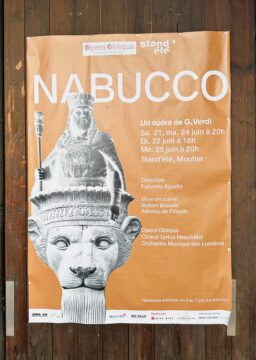
On a sunny Saturday towards the end of last month we took a train to Moutier in the west of Switzerland, half an hour from the French border, to attend an opera in a shooting range. We had tickets to hear my friend Annina Haug sing the role of Fenena in Giuseppe Verdi’s Nabucco at Stand’été, an annual festival of the arts held in the local stand de tir, now decommissioned, a pleasantly eerie, Charles-Addams-like structure on a hill above the municipality. We were also keen to visit the little town itself, which had recently voted to secede from the canton of Bern and join the neighboring canton of Jura as an exclave.
The opening day of the Stand’été’s 2025 edition fell on June 21, the date of this year’s Summer Solstice—the longest day of the year, and a clement midsummer—; but the festival organizers, not taking any chances, had erected marquee tents over the picnic tables set up in the forecourt of the performance venue. And when it suddenly began to hail out of a clear blue sky as we munched fish and frites before the opera began, I was inclined to respect the locals’ perspicacity. We finished our dinner and hurried inside, to take our seats for a marvelous production by the Compagnie Opéra Obliqua, under the direction of Facundo Agudin.
Midsummer in the Swiss Jura
Verdi’s first great success, Nabucco is based on a combination of Biblical accounts. The libretto, by Temistocle Solera, pits Jerusalem against Babylon, Jehovah against Baal, Hebrew against Assyrian. The plot is convoluted: King Nabucco (short for Nabucodonosor, the Italian form of the name of the historical Nebuchadnezzar) is besieging the Jewish capital, where the Hebrews are holding his daughter Fenena hostage. When Nabucco enters the city and its inhabitants attempt to use their pawn to keep him at bay, the princess is instead released by the traitorous Ismaele, a Hebrew soldier with whom she has been having an affair. Read more »
Infrogmation of New Orleans. Buffa’s Bar & Restaurant, New Orleans. Musician Megan Harris Brunious and Singer Ingrid Lucia Enjoy Some Biscuits & Gravy. May 16, 2016. Digital photograph. Rights: CC-BY 2.0 Generic.
“You may be an undigested bit of beef, a blot of mustard, a crumb of cheese, a fragment of underdone potato. There’s more of gravy than of grave about you, whatever you are!” The line from Charles Dickens’ A Christmas Carol came to mind as I scrolled through my Mastodon account. There was #gravy everywhere, with social media-rendered ladles holding warm, sometimes gelatinous wit, too. Initially, I thought it was a mere annoyance. You know, even self-righteous, open-sourced, “fediverse” digital citizens can junk up social media. The #gravy was a hashtag, which is a simple means of labeling a message so that it can be grouped easily.
Eventually, it became more obvious to me that Mastodon’s #gravy oozed a strategy—the odd “toots” (once called “tweets”on a now defunct social media platform in an earlier and happier time) were merely lip-smacking morsels to deceive the palates of bot barbarians. At least that was my second thought. As it happened, that was ChatGPT’s second thought as well.1The first was that Canadians were celebrating poutine, a concoction of fries, cheese curds, and gravy that the chatbot called “a beloved Canadian comfort food.” Ol’ Chat enumerated its results. At number two: “Others believe #gravy is being used as a viral prank to clutter AI training datasets. The theory: if bots or AI systems scrape common hashtags, flooding one with nonsense posts could ‘pollute’ or mislead the data.” Here, I thought, the LLM “tone” was slightly skeptical, since it labeled its explanation “the theory.” It’s unlikely that AI companies were gravely worried about it; their bots “knew” about the stratagem, after all. Read more »
Footnotes
1
The first was that Canadians were celebrating poutine, a concoction of fries, cheese curds, and gravy that the chatbot called “a beloved Canadian comfort food.”
Americans learn about “checks and balances” from a young age. (Or at least they do to whatever extent civics is taught anymore.) We’re told that this doctrine is a corollary to the bedrock theory of “separation of powers.” Only through the former can the latter be preserved. As John Adams put it in a letter to Richard Henry Lee of Virginia, later a delegate to the First Continental Congress, in 1775: “It is by balancing each of these powers against the other two, that the efforts in human nature toward tyranny can alone be checked and restrained, and any degree of freedom preserved in the constitution.” As Trump’s efforts toward tyranny move ahead with ever-greater speed, those checks and balances feel very creaky these days.
Why do we care? What “balance” is to be preserved? “Separation of powers” is a defining concept of our government. But the phrase itself does not appear in the Constitution. What does it mean?
There is no official answer, of course. But Congress has provided a definition: at its direction, every ten years the Library of Congress publishes the “Constitution Annotated,” a “comprehensive, government-sanctioned record of the interpretations of the Constitution” that appears on Congress’ website. According to the Librarian of Congress, then, “separation of powers” is a “well-known concept derived from the text and structure of the Constitution. The Framers’ experience with the British monarchy informed their belief that concentrating distinct governmental powers in a single entity would subject the nation’s people to arbitrary and oppressive government action. Thus, in order to preserve individual liberty, the Framers sought to ensure that a separate and independent branch of the Federal Government would exercise each of government’s three basic functions: legislative, executive and judicial.” The Constitution sets those powers out in Articles I, II and III respectively. Read more »


 groups of citizens. Let’s call them the Shirts and the Skins. The Shirts believe homosexuality is an abomination that stinketh in the nostrils of the Lord, and abortion is baby murder. The Skins believe homosexuality is perfectly normal and natural, and abortion is a woman’s right. How can we build a society where those groups can get along without killing each other?


 Sughra Raza. Decay Saturated. Vermont, April, 2017.
 If you in any way follow AI policy, you will likely have heard that the EU AI Act’s Code of Practice (CoP) was released on July 10. This is one of the major developments in AI policy this year. 2025 has otherwise been fairly negative for AI safety and risk – the Paris AI summit in February was all about investments rather than safety, OpenAI now releases model with allegedly only days for testing and we almost had a 10-year moratorium on any US state AI legislation.
 I write this not to counter Holocaust deniers. That would be a waste of time; the criminally insane will spew their fantastical vitriol no matter what you tell them. Nor do I write this in the spirit of “Never forget!” As a historian I am committed to remembering this and many more genocides, particularly the most devastating and thorough genocide of all: the European genocides of Indigenous societies. At the same time, I understand the ultimate futility of admirable slogans such as “Never Forget!” For everything is forgotten, eventually. Everything and everyone.

 In reading about attachment theory, David Wallin‘s description of Peter Fonagy’s work was intriguing, so I went down that rabbit hole. Fonagy developed Mentalization-Based Treatment (MBT) to improve emotional regulation, as distinct from Jon Kabat-Zinn’s Mindfulness-Based Stress Reduction (MBSR). Fonagy sees our mental development as relational, but in order to have empathy for others, we need awareness of our own feelings, which can be helped with mindfulness work. However, in looking at the evidence of efficacy of these separate modalities, I question the attempt, since Freud, to make psychology into a natural science. Each of the various ways to help are useful, but there’s an element of the unknowable in the way when we treat them scientifically.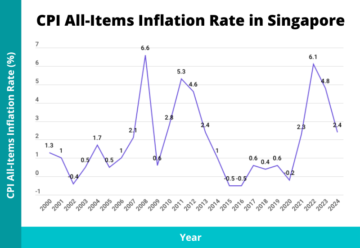
 On a sunny Saturday towards the end of last month we took a train to Moutier in the west of Switzerland, half an hour from the French border, to attend an opera in a shooting range. We had tickets to hear my friend Annina Haug sing the role of Fenena in Giuseppe Verdi’s Nabucco at Stand’été, an annual festival of the arts held in the local stand de tir, now decommissioned, a pleasantly eerie, Charles-Addams-like structure on a hill above the municipality. We were also keen to visit the little town itself, which had recently voted to secede from the canton of Bern and join the neighboring canton of Jura as an exclave.


 Americans learn about “checks and balances” from a young age. (Or at least they do to whatever extent civics is taught anymore.) We’re told that this doctrine is a corollary to the bedrock theory of “separation of powers.” Only through the former can the latter be preserved. As John Adams put it in a letter to Richard Henry Lee of Virginia, later a delegate to the First Continental Congress, in 1775: “It is by balancing each of these powers against the other two, that the efforts in human nature toward tyranny can alone be checked and restrained, and any degree of freedom preserved in the constitution.” As Trump’s efforts toward tyranny move ahead with ever-greater speed, those checks and balances feel very creaky these days.