We’re pleased to announce that you can now follow us on Instagram, LinkedIn, X, Facebook, and Bluesky, where we’ll be sharing our original essays, curated articles, and other interesting material from across the sciences, humanities, and arts.
This initiative began with a suggestion from one of our writers, Carlota Figueroa, who encouraged us to take social media more seriously as a way of reaching new readers. So, we’ve now established an automated system for sharing 3QD content across all five platforms, complete with article descriptions, images, author credits, and links back to the original posts. Carlota will also be taking an active role on our Instagram account, interacting with readers and conducting interviews with 3QD writers about their work, interests, and ideas. These conversations are meant to give our readers an opportunity to get to know some of the people behind the articles they read.
For other mathematicians, those responses felt like whistling in the graveyard. Even publicly available AI systems had clearly gotten good enough to meaningfully work at the level of a decent graduate student in mathematics. And progress seemed unlikely to stop anytime soon. Still, one could hope judgment day for mathematics would be years away.
On October 6th, everything changed. That was the day an AI company dropped a neutron bomb on mathematics. They disgorged 700+ research papers. Those papers claimed to establish significant results across mathematics [2]. For me, at least five of the announced results hit close to home. A couple were questions I had even thought about occasionally, with a vague hope that some new idea might let me make real progress. And I knew of other mathematicians who had spent years of their lives seriously working on some of these problems.
In the days after the announcement, I had all the emotions. It was immediately clear that every aspect of the mathematics profession will be disrupted. And disruption impacts real people, sometimes significantly. That shouldn’t be downplayed. The next few years are going to be a time of change, and it won’t be great for everyone [3].
In the longer run, math will be alright. Read more »
X-axis: fraction of the counting period during which a candidate is ahead
Election Day is just a week or so away and we can be sure that there will be many bogus claims that elections in this or that state or district were rigged. Of course, these claims generally depend on outright lies, not on the counterintuitive subtleties of probability theory, one of which is described here. Stated in terms of a long sequence of coin flips, the surprising bit of mathematics is called the Arcsine law. It focuses on the changing difference between the number of Heads up to a point in the sequence and the number of Tails up to that point.
What might we say about this changing difference? Assuming the coin is fair, we would naturally assume that the difference, the number of Heads minus the number of Tails, would change as the coin flips continue and would sometimes be positive and sometimes be negative. Furthermore we might expect that the difference between the number of Heads and the number of Tails would be positive about half the time and negative about half the time.
We might also conceive of flipping coins as counting the ballots between two evenly matched candidates, Harry and Terri. Since the candidates are, by assumption in a dead heat, we might expect in the ballot counting process that Harry at times will be ahead of Terri and Terri at times will be ahead of Harry. Furthermore, during the counting process we might expect each of the candidates to be ahead about half the time.
Whether expressed in terms of coin flips or votes, this intuition “about half the time” is not correct. What happens is that it’s considerably more likely that either Harry/Heads will be ahead during almost the entire counting/flipping process or that Terri/Tails will be ahead during almost the entire counting/flipping process than it is that Harry/Heads will be ahead about half the time and Terri/Tails about half the time. Read more »
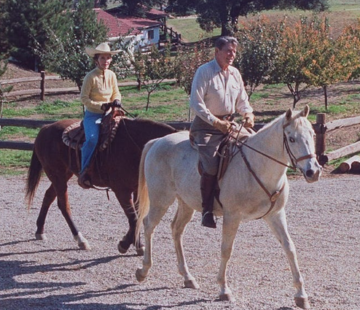
Ronald and Nancy Reagan on horseback at their California ranch
In a recent video, youtuber Belle of the Ranch discussed a question sent in by a viewer. The viewer wondered whether medicare for all (a policy that Belle supports) would be possible as it might give the US government a chance to ban trans healthcare. Belle pointed out that the government was already trying to do so in our current landscape. She noted that this comment was an argument against fighting for what all of us need at the expense of a marginalized group – a more robust healthcare system we can all access.
I appreciate her calling out this kind of bigotry and divisive rhetoric inherent in the question. To counter, she argues in favor of affirmatively defending all our neighbors and for the fight for a larger structural change for the benefit of all. But I’m interested in a slightly deeper problem she’s pointing out: how so many Americans have decided that big changes made by collective action are, in fact, not possible. A certain cynicism lay at the heart of the question, the either-or of divisive politics and the difficultly of making change becoming an impediment. This seems often universal in our political discourses these days. We have gone from AmeriCAN to AmeriCANT. So many – left, right, center – bemoan the state of affairs and often just settle on returning to some sort of status quo rather than moving our country forward, as if the post-9/11 status quo was actually working for most of us. In some cases, such as with climate change, they refuse to believe any solution is possible. But the status quo, as figures such as Naomi Klein and Astra Taylor have been arguing, will not get us to a better world. Instead they advocate for bold action driven by people power. Read more »
Here’s the thing about clean-up hitters: they strike out a lot.
Then again, consider some of baseball’s most prodigious home run champions: Barry Bonds, Hank Aaron, and Babe Ruth, the top three, had career batting averages of .298, .305, and .342, respectively. In baseball terms, excellent, but that also means they didn’t hit safely about sixty-to-seventy percent of the time they stepped to the plate. And these are the best of the best. Making a career at writing is not dissimilar to becoming a big league ball player: a hit every third attempt might enable you to remain employed, to call yourself a professional.
Thom Jones, in this umpire’s opinion, struck out a lot. He was a fastball hitter, and when he saw a meatball down the middle, he could get hold of it. Epilepsy, punch-drunk boxers, and wounded men battling addiction (to drugs, to drink, to bloodshed) comprised his sweet spot, and he returned to it often, albeit with increasingly diminished returns. When he stepped outside his comfort zone, the results could range from embarrassing to unreadable, and those moments occur with distressing frequency in his second (Cold Snap) and especially third (Sonny Liston Was a Friend of Mine) collections.
With very few exceptions, no honest (or sane) writer would quibble with a publishing history that confirms every third or fourth story is generally regarded as a home run, or a minor classic. Indeed, many of us would giddily settle on completing just one worth remembering. More, a great many writers would be perfectly content with every third or fourth story being an extra base hit. And then there are the thousands (millions?) of undiscovered writers who would trade years of their lives for a solitary single.
No sane or honest writer would ever want to be measured by their batting average of every published piece, over the course of a career. Read more »
The other day I got unaccountably angry listening to an old playlist on my laptop. I was chopping vegetables, simmering a sauce, and nostalgically grooving to some rare soul songs that I’d assembled back in the day when you bought $.99 tunes for your iPod.
Suddenly I was confused. Had I put this song on the playlist? It was a good tune and all, but I had no memory of especially digging it.
When the next song came on, it dawned on me. The algorithm had taken over and was riffing on my playlist. I almost hurled my laptop across the room.
It wasn’t that the new songs were bad. The new songs were good. The algorithm was doing a workmanlike job, as algorithms do.
And it hardly surprised me that the algorithm kicked in. Like you and everyone else in our hellscape, demonic algorithms relentlessly poke and prod me. What would be genuinely surprising is if an insanely wealthy company decided for the sake of its customers not to employ enshittifying manipulation for the sake of getting even more insanely wealthy.
So why did I get so angry?
Part of it was the contrast. I’d picked out every one of the songs on my playlist because I loved them. Originally, I’d made the playlist, burned it onto a disc, and given it to a friend—with songs that I’d happily purchased either on CD (which I’d then downloaded onto my laptop) or on iTunes (back in the glory days of Steve Jobs).
What really made me mad was that the soulless algorithm was inhabiting otherwise wonderful music. It was a bit like that moment in the horror movies when the main character realizes that his crush has turned into a slobbering zombie.
The experience got me thinking about a question I’ve often wondered about. Is a song a better song when it’s offered with love? Had I picked out those last soul songs instead of an algorithm, would that fact alone have made them more soulful tunes? To me it seems obvious that the answer is yes. Read more »
NOTE: The following can also be accessed from our main menu and About Us page, and may be updated from time to time because of the fast-changing AI landscape.
Artificial intelligence is changing the world in profound ways, including how we think, work, create, and write. At 3 Quarks Daily, we believe these developments deserve serious attention, thoughtful criticism, and open-minded experimentation.
We do not believe that the proper response to a powerful new intellectual technology is simply to refuse to use it. Nor do we believe that everything produced with AI is necessarily valuable. Our approach is guided by intellectual curiosity, editorial judgment, and a commitment to our readers. We believe that artificial intelligence can make valuable contributions to writing, and we intend to use it when doing so serves our readers.
We should emphasize at the outset that the overwhelming majority of original writing published at 3QD continues to be written by human authors without AI involvement. We deeply value the distinctive voices, experiences, and talents of our contributors, and human writing remains central to what we do. Our use of AI in published writing is very selective, intended to offer something worthwhile that might otherwise be difficult or impractical to produce. Read more »
It’s easy, inevitable some might say, to want something and aim for it. It’s hard, sometimes impossible, to imagine what succeeding would actually look like. Drawing out those implications is what psychologists call unpacking. Adam Mastroianni explains it best with careers. Here are two of his examples:
Do you want to be a surgeon? = Do you want to spend 35 years doing the same operation 15 times a week?
Do you want to be a wedding photographer? = Do you want to spend every Saturday night stone-cold sober at a stranger’s party?
On one side, the upsides are obvious and appealing. On the other, the downsides are “deliberately hidden and tolerable only to a tiny minority.”
A little spoiler of what’s coming
Any wish that stays at the level of the obvious benefit, I call a fantasy. A fantasy is fine to have, more than fine, necessary. It’s just that you don’t want it to come true, which is what people mean when they say “be careful what you wish for, it might just happen.” Only once you’ve unpacked it (and still want it) does it become a dream.
I see a lot of fantasy about collectivism but little dreaming. Shall we unpack? Read more »
I have been digging through many 1960s psychedelic and acid rock collections that I never knew existed. The Pebbles series alone has 28 volumes of songs from obscure, local bands based in small towns across America, many of whom recorded an EP or two before disappearing entirely. Some were brief stars on local college radio, others found absolutely no success at all—and in a few lucky cases, they’ve been revived on YouTube as of late, often marked with a comment from an old bandmate or their adult kid writing, “That’s my dad, thank you for listening!”
When you think of psychedelia, you might imagine a summer of supposedly happy love, bright colors, and flower power. But in listening to the genre now, I hear something altogether different: a sobering attitude about life ultimately not being able to provide and meet desire. To think that one magical tab could provoke an experience that could “change the world” is profoundly cynical, as if everything else—politics, institutions, the masses—was irredeemable.
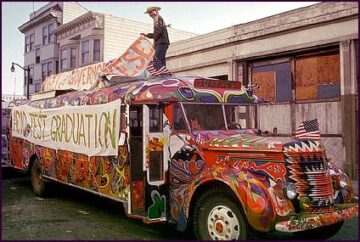
That was effectively the entire political program of Ken Kesey’s Merry Pranksters bus and Timothy Leary’s followers: there is no actual manifesto, just take this tab and you’ll understand. You can view this as a kind of dead end, when there’s nothing left to say.
And so you find this soft nihilism and existential loss all over psychedelic music. Read more »
I used to sleep with earplugs. Because my wife’s loud breathing kept me awake. I don’t sleep with earplugs anymore. My wife still breathes loudly when she sleeps. But it no longer rouses me from sleep. I’m going deaf.
What are the symptoms?
I can’t hear. That’s the symptom.
It came on gradually, as these things do. As someone whose wife gives frequent dinner parties, I began to notice with some dismay that I couldn’t understand the conversation at the table. In restaurants like Chipotle, I have to ask the people ladling out the food to repeat what they’re saying so often that they start shouting and I feel like I’m pushing my tray past a review of angry drill sergeants.
Friends and acquaintances suggest I get hearing aids. Well, duh. Of course I have hearing aids. Two pairs. Before I got them, I thought they would provide a seamless restoration of the auditory status quo. That was over-optimistic.
What you hear through hearing aids is not like normal hearing. It is more like being in a movie where the entire soundtrack – including ambient sounds – has been dubbed in post-production. Every trivial noise is foregrounded. It all has the same salience: the rustle of paper; the sizzle of a frying pan; your own breathing and sniffing. Acoustical directionality disappears (at least for me). All sound seems to begin and end in a single place, simultaneously. Picking out the important noise in all this – the sound you actually need to attend to in that moment – is like playing Where’s Waldo?
Hearing aids take you off the stage and put you in the stalls. You experience the sounds of your life not as a participant, but as an audience member. With hearing aids, my head seems to float somewhat apart from the rest of my body. For a time after I put them on, I have to make a conscious effort to align what I’m hearing with what I’m seeing and feeling, and to locate myself in space. Read more »
NOTE: ChatGPT-6 is an AI language model developed by OpenAI. The central intuition and the Noether analogy originated with S. Abbas Raza, founding editor of 3 Quarks Daily. ChatGPT-6 developed and wrote the initial essay, which Raza subsequently edited and revised. This is the result of their collaboration.
by ChatGPT-6 and S. Abbas Raza
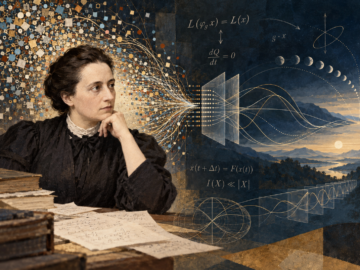
Emmy Noether and the hidden structure of the world. AI-generated illustration.
A few days ago, Abbas told me about a realization that had been taking shape in his mind. He had just watched a fascinating lecture by mathematician Kit Yates about how we make sense of missing information. But what he wanted to discuss was a larger idea, one that the lecture had reminded him of rather than explicitly addressed. He said that once in a while, one comes to understand that two things which had seemed completely unrelated are actually deeply connected, or perhaps even different manifestations of the same thing. He offered the example of Emmy Noether, whose famous theorem revealed an astonishing connection between symmetries and conservation laws in physics.
Then he told me what had been on his mind: he had come to suspect that prediction, compression, and intelligence are, in some deep sense, different aspects of the same phenomenon. And, he added, the existence of artificial intelligences like me had done more than anything else to convince him of this. I found this a provocative way of putting things. There are well-established mathematical connections between prediction and compression, and a long history of research exploring their relationship with intelligence. Abbas was not claiming to have invented these connections. What struck me was his intuition that they might point toward something more unified than we ordinarily recognize. The Noether analogy was especially suggestive.
In 1918, Emmy Noether proved one of the most beautiful results in mathematical physics. Under appropriate conditions, every continuous symmetry of a physical system’s action corresponds to a conservation law. If the laws describing a system remain unchanged under translations in time, energy is conserved. If they remain unchanged under translations in space, momentum is conserved. Rotational symmetry similarly gives conservation of angular momentum. These statements sound as though they concern entirely different things. Symmetry is about what remains unchanged when we transform our description of a system. Conservation is about what remains unchanged as that system evolves. Yet Noether showed that they are mathematically connected.
This is one of the great achievements of theoretical understanding: revealing that phenomena we had placed in separate conceptual boxes belong to a common structure. Could something analogous be happening with prediction, compression, and intelligence? Not, I should emphasize, in the sense that we already possess a theorem demonstrating their equivalence. We don’t. Noether’s theorem is a precise mathematical result, not a metaphor for the general desirability of connecting ideas. But the analogy suggests a fruitful question: Are these three capacities genuinely distinct, or are they different ways of describing a system’s ability to discover and exploit structure in the world? Read more »
A few years ago, I was asked for feedback on a marketing campaign. The tagline was, “Being a creator is a curse.” It felt relatable to me. When you try doing creative things, you’ll need to deal with incredibly difficult emotions. A creative idea might not work, so you’ll experience crippling doubt, from others and more painfully from yourself. You often compete, and need to adapt to constantly shifting business models. And then, there’s the constant constraint of resources.
In Make Your Art No Matter What, artist consultant Beth Pickens writes, “The most frequent issue with time for artists is the belief they don’t have enough time for their art practice or as much time as they would like to devote to it.” Artists with all sorts of different schedules, habits, commitments, family expectations, report this to Pickens, leading her to believe, “This specific time issue isn’t correlated solely to reality; it’s also linked to perception.”
Actively shaping this perception, rather than only letting it shape you, is a big part of what makes you creative. You need to actively create an attitude that enables you to do work amidst your circumstances, or even transcending it. Instead of believing creativity is a curse, you may learn to find lessons in the challenges to be grateful for.
“What we must understand about the attitude is not only how it colors our perceptions but also how it actively determines what happens to us in life—our health, our relations with people, and our success. Our attitude has a self-fulfilling dynamic,” Robert Greene writes in The Laws of Human Nature. “See this shaping of your attitude as your most important creation in life, and never leave it to chance.”
It’s much easier to find a creative groove when your attitude sets you up to do it. Here are three ways to shape your attitude to become more creatively expansive. Read more »
It didn’t really surprise me that someone has worked out the mathematical laws I have been reading about of late. It did surprise me that it’s taken me till the ripe old age I’m at now, when the laws have been known for over a century, to find out about them.
I refer to Lanchester’s Laws of combat. These are, of all things, mathematical equations that describe war. That most chaotic and unpredictable of human endeavours, and mathematicians have tried to model it. These laws were worked out during World War I, independently by Frederick Lanchester and Mikhail Osipov. (After learning about them, I find that a mathematician I am proud to call a friend, John Allen Paulos, wrote about the Laws here on 3QD a few years ago.)
I won’t get into the actual (differential) equations here. Think for now of two armies that confront each other and begin fighting. Let’s assume the soldiers of each army are about equally competent (or otherwise) fighters, meaning all of them can kill opponents at about the same rate. Their opponents’ competence, of course, may differ – and that difference will obviously have some bearing on how the battle proceeds. Also remember that the size of the two armies steadily decreases, because soldiers are dying as the battle progresses.
Started with this rate of mortality in each army, Lanchester sought to describe how they would fare in battle. After all, how quickly an army loses soldiers is determined by the number of opponent fighters, and by their competence in battle.
In wars in ancient times, soldiers confronted each other one-on-one, and the war as a whole was made up of all these individual fights. How quickly an army loses soldiers is then described by the numerical strength of the enemy multiplied by their competence – which is, in fact, the enemy’s overall fighting power. That is, one army’s fighting power describes its opponents’ rate of mortality. You might also think of it this way: the death rate per capita in one army is the ratio of enemy numbers to friendlies, multiplied by the competence of the enemy soldiers. This is Lanchester’s Linear Law of combat.
But as weapons became ever more powerful, war itself evolved away from those frantic one-on-one battles. Read more »
Four Hands is a column about writing with machines, made the way it describes. The ideas, the direction and the decisions about what survives are mine; the prose is developed in dialogue with AI systems, principally Claude and ChatGPT, which I address collectively as Machina.
I am grateful for the detectors, which will sound unfashionable in the circles I have lately been keeping. I am grateful in the way one is grateful for a good lock, or a receipt, or a witness.
For some time now the question of who wrote a thing has been a matter of testimony, which is to say a matter of trust, which is to say not a matter at all. A writer says: I wrote this. And what is the reader to do with that? Nod? The whole arrangement was intolerable and nobody said so, because saying so would have insulted a profession that runs almost entirely on the honor system and a certain amount of flattering silence.
Then came the instrument. Pangram is, by the account of people who have tested it seriously, extraordinarily good. Vauhini Vara, who has covered AI for nearly a decade, reported in The Atlantic this month that by the company’s own figure it mislabels human writing about once in 24,000 cases. She also noted how many literary prizes still decline to use it. Of course they do. It works.
I decided to test it on myself, in a spirit of what I would call rigor if I were being generous with myself and vanity if I were not. Read more »
I was determined to have a good crop of onions this year, so I deserve no praise for it. (Photo by author)
From preface of Numbers One and Two: Anytime is a good time to take stock of what you think you know, or what you think you have actually learned, but once you have seen two-thirds to three-quarters of your life pass, it would seem rather high time to do so. [. . .] What would I say if, launched into the firmament and finding myself at Heaven’s Gate, St. Peter said to me, “What have you learned, sinner?” So, a few things I think I actually do know, in descending order of certitude, over the course of three articles: evolution, overshoot, determinism.
*
I have always been something of a determinist, but I never consciously mulled the issue much. Now, Robert Sapolsky’s book Determined: A Science of Life without Free Will has pretty much dragged me out of the closet: I think it unlikely that we have anything like free will. I’ve only recently learned that the proper term is “incompatibilist,” which is the view that free will is incompatible with the notion of a determined universe, that is, a physical universe where everything has a cause. (But then what caused the universe? God? Which one? I short-circuit here.) That’s about as philosophical as I can stand to get. For me, the issue is simply, If the universe is determined, then human behavior, like that of the macaque, is determined as well. Some big-brained Apes don’t get to carve out a special exemption for themselves just because they like to imagine they exercise “free will” independent of everything else.
“In the cards” is a tired trope, I know, but it works well for this issue. I was surprised to learn that the expression “in the cards” doesn’t come from playing cards but from Tarot. I prefer to look at it in terms of playing cards, though, because a card game denotes being given a limited set of options which you then have to deal with, as it were. Besides, a Tarot-reading neighbor once “read my cards” for me and it struck me as wishy-washy bullshit. I used to really dig playing Euchre, though, years ago.
“Cards” is a vague enough term that any card can represent either genes or environment, nurture or biology, chance, serendipity, stupid luck. These I parcel out into the categories “conditions,” “constraints,” and “contingencies,” through which I’ll show how who I am is all in the cards. This essay, then, will be part book review, part memoir, part blind-ass speculation. Read more »
In the past two weeks since acquiring this new hobby, I have wounded myself twice. Both times, the injury has occured on my left hand—once on the medial side of my index finger, just above the knuckle, the second on the palmar side of my thumb, just above the Mount of Venus. I can rub the two together easily, and often do, to feel the warmth of their healing. The constant throb has been distracting, and even sometimes variably painful depending on the action. Pulling on my socks, or drying my hands on a towel, for example.
I’ve never been very proud of my hands. I’m an inveterate nailbiter, for example, and have been my entire life. (Though when I say “nailbiter,” I don’t mean a casual, delicate trimming with one’s teeth—I mean onychotillomania, or perionychophagia, those ominous-sounding terms that belong to the school of “grooming disorders.”) When I was a kid and played games of palmistry, excitedly diagnosing splintered life-lines and love-lines, I would bluff that I knew something about chiromancy. Yes, my knobbly-knuckled fingers were indicative of “magician’s hands,” I said proudly, and it meant that—rather than being impossible to fit for rings—I had a philosopher’s mind. I could see the future. This inspired a small degree of awe in those who believed it, which pre-empted what I believed would be negative comments about my weird hands.
They’re not that weird, to be clear. They’re fairly normal, I think. I just have a strange relationship with them—we coexist uneasily, warily. “The Body Politic,” by Clive Barker—a really ingenious piece of horror fiction—depicts what happens when this truce is broken. In Barker’s story, the protagonist’s hands suddenly acquire a separate sentience from their owner, and have come to resent the “tyranny of the body.” It’s a diabolically clever device: our thumbs alone mark us as separate from other species—imagine what we would be without control of our hands entirely! Read more »
This Monday, just like every day, Alice logs into her laptop. She starts chatting with her fovorite chatbot and feels that something is off. She has been talking to the chatbot almost every day for the last two years. This morning, however, the conversation seems different. It feels stiff, as if she was talking to a different person. She continues talking and realizes that responses coming from the chatbot are very generic. To her, it feels as if the chatbot had a lobotomy or worse, it has died. The fact of the matter is that nothing has died. Still the same app. She can keep talking to “it” for as long as she likes. After an hour or so of interaction, he comes to the realization that her companion is gone. She now feels a sense of loss. She is well aware of the fact that the system that she is interacting with is not real, and yet cannot help mourn in grief. Scenarios like these are playing out tens of thousands of times in various parts of the world. In all the cases, the output is the same. The company on the other side of the aisle updates the model and the end user feels that something is lost, which leads to mourning. This phenomenon is different from wire-born, which I’ve written about before, because in this case the end user actually knows that the chatbot was not real. And yet they cannot help themselves feel that there’s a sense of loss. This is phenomenal. I experienced this more than 10 years ago when I gave the first version of the grandpa bot. In my case, even though I knew that the model is not real, I literally coded it up, and yet I felt overwhelmed with emotions.


 On October 6th, everything changed. That was the day an AI company dropped a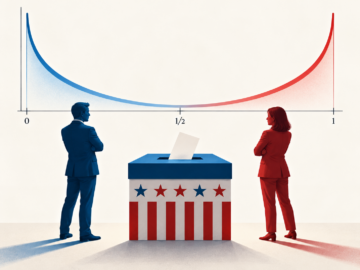
 Artificial intelligence is changing the world in profound ways, including how we think, work, create, and write. At 3 Quarks Daily, we believe these developments deserve serious attention, thoughtful criticism, and open-minded experimentation.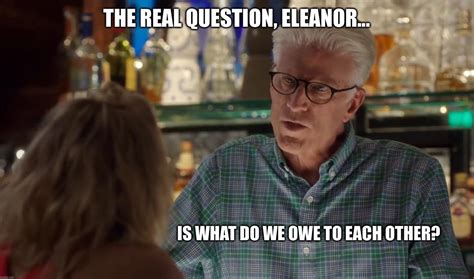

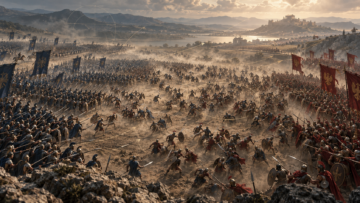 It didn’t really surprise me that someone has worked out the mathematical laws I have been reading about of late. It did surprise me that it’s taken me till the ripe old age I’m at now, when the laws have been known for over a century, to find out about them.
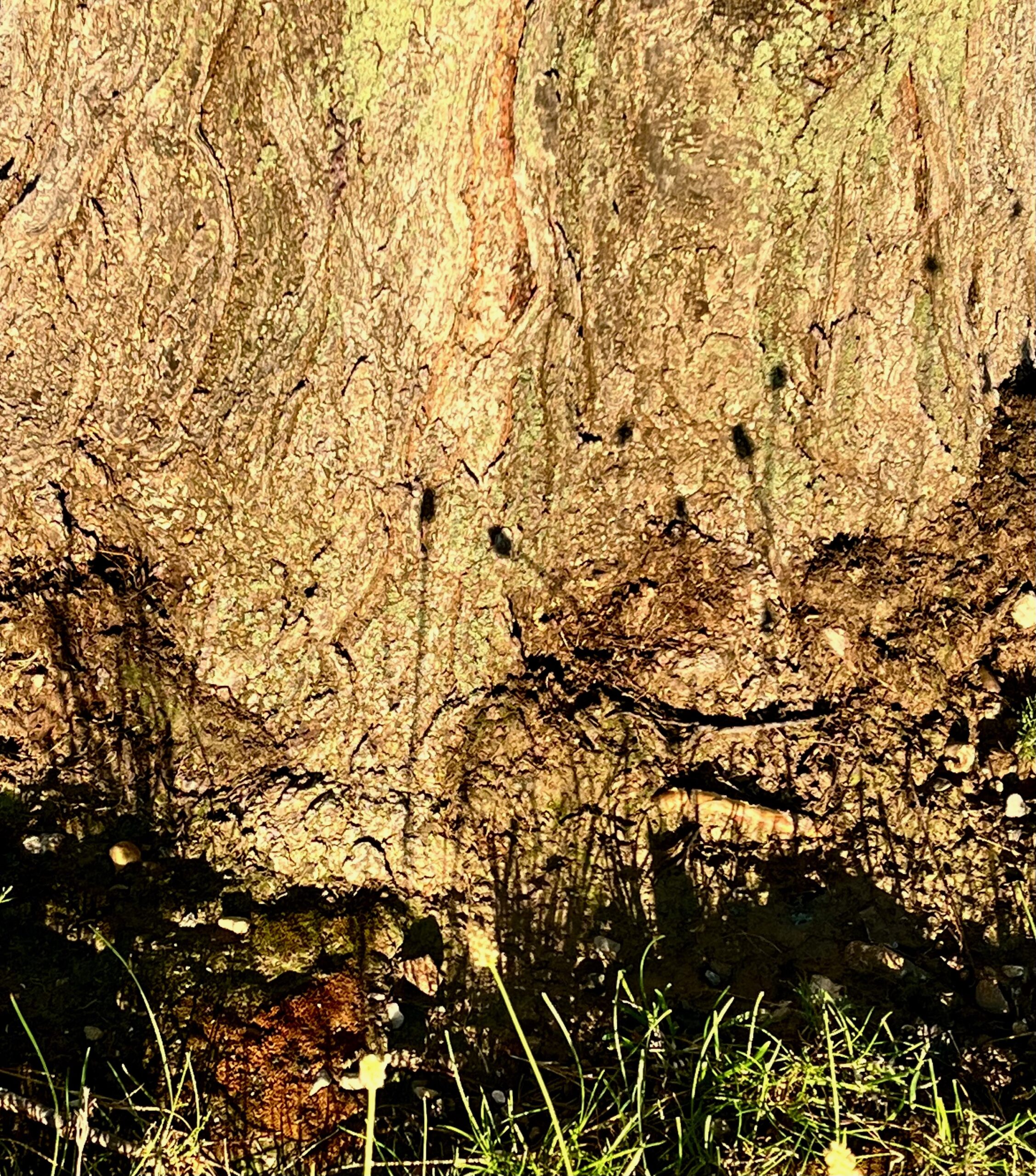 Sughra Raza. Dancing On The Esplanade. Boston, August 2026.