
by Ken MacVey
The Supreme Court’s power does not rest on brute force but on the power of authority. This power of authority heavily rests upon public perception of the Supreme Court’s legitimacy as a fair and impartial arbiter of the law. That perception has seriously eroded. With its current case docket that will address the breadth and limits of presidential power, the Supreme Court is at a crossroads on how it will be perceived by the American people. The country in turn is at a crossroads as a constitutional republic and democracy depending on how the Supreme Court rules and is perceived.
The Supreme Court’s Public Approval Rating is at a Historic Low
Polling by a variety of pollsters shows approval of the Supreme Court is at an all-time low. For example, the court’s Gallup poll approval rating was 39% in 2025–the lowest in Gallup’s years of polling on the question. The Economist in 2025 had the court’s approval rating even lower at 35%.
This cannot be attributed simply to political party divisions. The Supreme Court has for decades been dominated by justices appointed by Republican presidents. Since 1910 there have been 11 chief justices. Nine of those were appointed by Republican presidents. Appointed for life, Republican appointed chief justices since 1910 have served for a total of a little over 100 years—Democratic appointed chief justices in turn have served for about 12. Since 1970, that is for more than half a century, the Supreme Court has continuously consisted of a majority of Republican appointed justices. Yet, despite this one-sided dominance, the Supreme Court received for several years favorable poll ratings and was afforded respect, sometimes even reverence, by the public. This has drastically changed.
The Supreme Court’s Declining Public Image is Due to Itself but also to Political Changes in the Supreme Court Justice Nomination Process
This erosion of public confidence in the Supreme Court was a long time in coming. A starting point is the Supreme Court’s 5 to 4 decision in Bush v. Gore –with the majority consisting solely of Republican appointed justices—that guaranteed Republican candidate Bush would become president. Republican appointed Justice Stevens in his dissent said the decision “can only lend credence to the most cynical appraisal of judges throughout the land.” Justice Sandra Day O’Connor, who was in the majority, years later publicly declared the court’s decision was in retrospect probably a regrettable mistake that “stirred up the public” and “gave the court less than a perfect reputation.” Read more »
 Dear Reader,



 We sometimes say that someone is living in the past, but it seems to me that the past lives in us. It lives in our houses; it lies all around us. As I write this, I’m sitting on the couch under two blankets crocheted by my grandmother, who was born around the turn of the 20th century. The laptop sits on a folded blanket that came from Mexico via a friend years ago. And that’s just the surface layer. My closets and file cabinets are also full of the past.




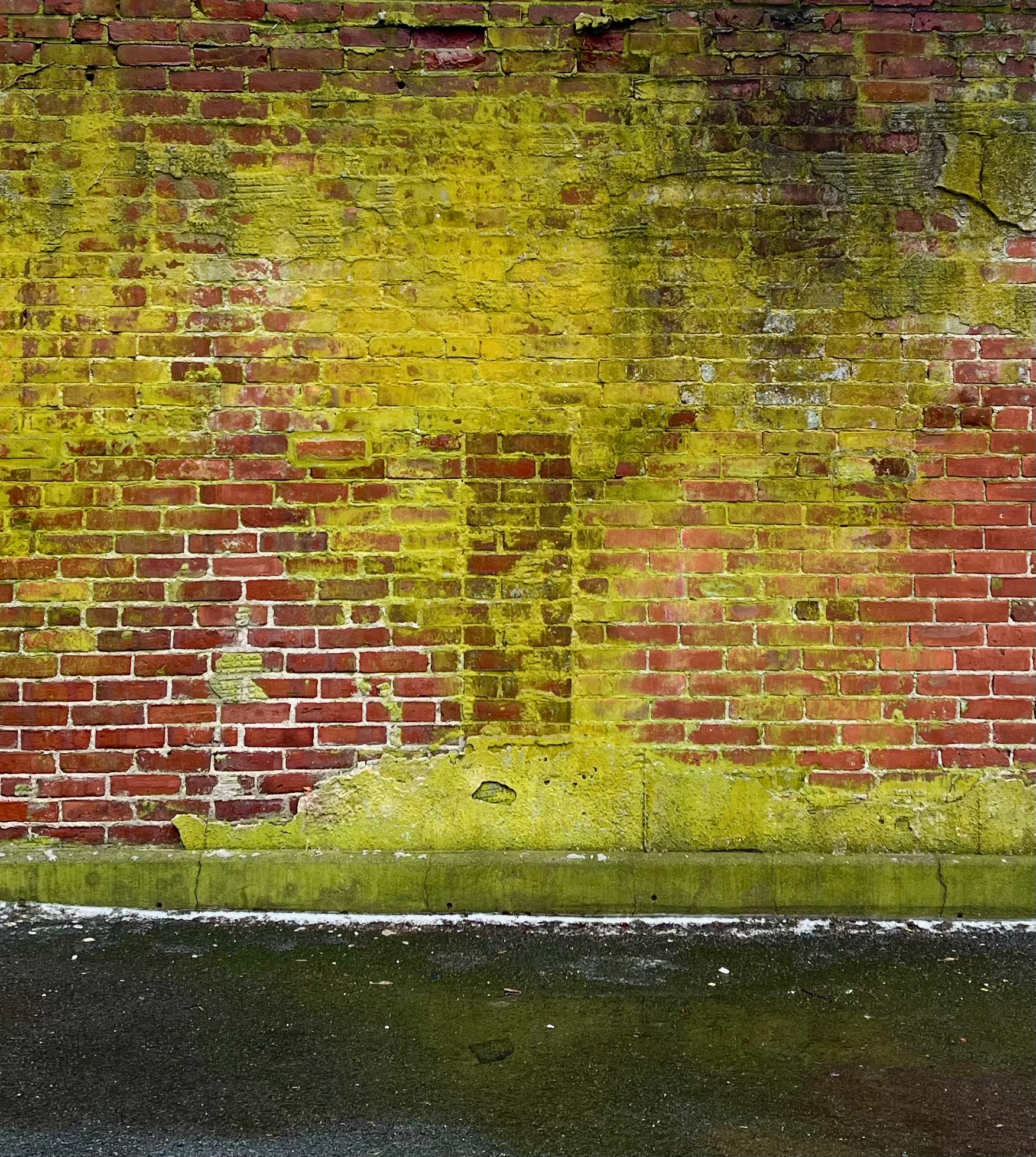 Sughra Raza. Bey Unvaan. January, 2026.
 Oy. Where to start? Let me begin with a recent abuse involving percentages. Trump’s absurd claims about price declines of more than 100% have elicited a lot of well-deserved derision. How could someone with an undergraduate degree in business from Wharton make these mathematically impossible claims?