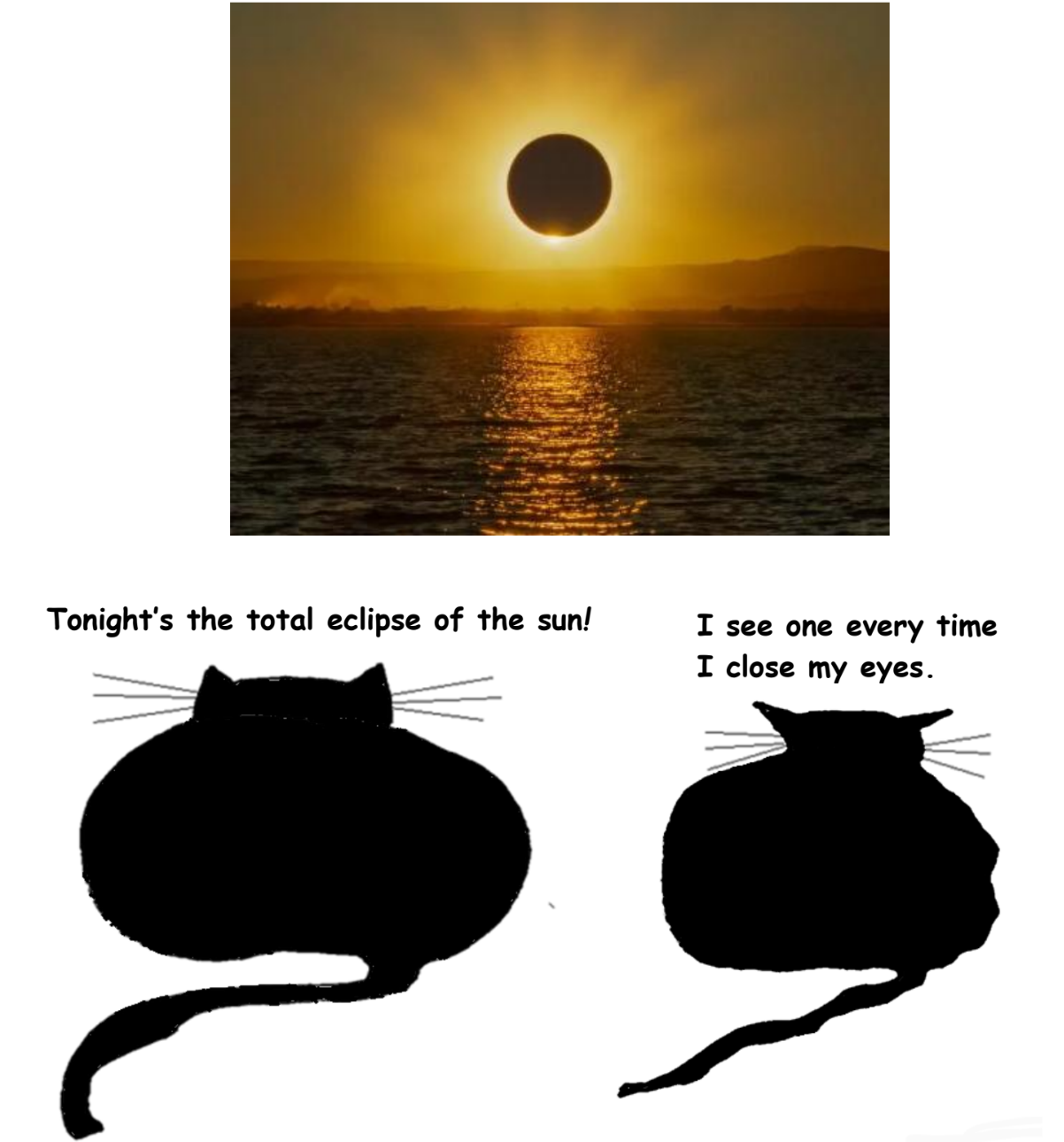
by Brooks Riley

Enjoying the content on 3QD? Help keep us going by donating now.

by Rachel Robison-Greene

Last week I spent the night at my parents’ house for the first time in over a decade. I went for a jog through the neighborhood just like I used to only now, in my forties, I prefer run tracks that are a little less angry than The Sex Pistols. Then I was feigning anger to project an aesthetic. Now the world is maddening enough. I don’t need to blast rage into my skull as I work out. Houses in the neighborhood were familiar but rundown. The trees in the woods where I used to play seemed impossibly large. Ten-year-old me would now have quite the time finding my way out. Being in the spaces of my youth was unexpectedly intense, like I had intruded into someone else’s dream.
Philosophers spend plenty of time discussing what it is to persist through time and change. Some think a person at a later time is one and the same as a person at some earlier time if the later person has the same body as the person at the earlier time. This view is viscerally tempting. My body bears the scars of falling off of my bike and sliding down a large neighborhood hill when I was nine and of a glue gun mishap while making a wreath for Mother’s Day when I was eleven. Others argue that it is a memory connection that makes a person the same person through time and change. There is something undeniably true about this too. As I moved through the streets I could have run with my eyes closed, I could almost hear the laughter of old friends and smell sprinkler water and plastic swimming pools. Those memories are indelible.
It’s reasonable to spend plenty of time thinking about persistence of identity. Living a meaningful life seems to require that we can put the pieces, separated out in time and space, together in a way that we can make sense out of. Perhaps I only understand my current craving for adventure by remembering the little girl who would jump in any body of water. Maybe my philosophical interest in justice was caused by watching peers be bullied or left out. All of these things matter because we want to understand our character traits as enduring and developed and our life arcs as the plot of a good story we’re still in the process of writing.
We spend less time thinking about the urgency, even the necessity of change. Read more »
by Barry Goldman
Owen Jones and Rob Kurzban have new books out. Jones is the director of the Weaver Program in Law, Brain Sciences, and Behavior at Vanderbilt. He previously led the MacArthur Foundation Research Network on Law and Neuroscience. Kurzban is a former psychology professor at Penn and the author of Why Everyone (Else) Is a Hypocrite: Evolution and the Modular Mind. Both men are deeply knowledgeable thinkers and graceful writers. Both books are extensively researched and thoroughly annotated. I enjoyed them, and I recommend them without hesitation. So, what’s the problem?
I can’t resist telling a story from my youth that kept occurring to me as I read. Many years ago, my mother had a friend whose son was a dope fiend (her term). At her wit’s end, the distraught woman managed to get an audience with the Lubavitcher Rebbe, Rabbi Mendel Schneerson. She explained the situation and pleaded for his advice. He said, “Keep a kosher home.”
Of course he did.
I suspect we can agree with D’Arcy Wentworth Thompson that, “Everything is the way it is because it got that way.” And we can agree with Theodosius Dobzhansky that “Nothing in biology makes sense except in the light of evolution.” We might even agree with Daniel Dennett that evolution by natural selection is “the single best idea anyone has ever had.”
Still, there is something about books by evolutionary thinkers that is reminiscent of books by Marxists. Where Marxists have historical materialism and class struggle, evolutionists have reproductive advantage. It explains everything.
Jones’s book, Force of Nature: Understanding Evolution’s Deepest Logic – and Putting It to Use, explains natural selection and shows how understanding it can illuminate problems in medicine, agriculture, artificial intelligence, economic decision making, and law. Read more »
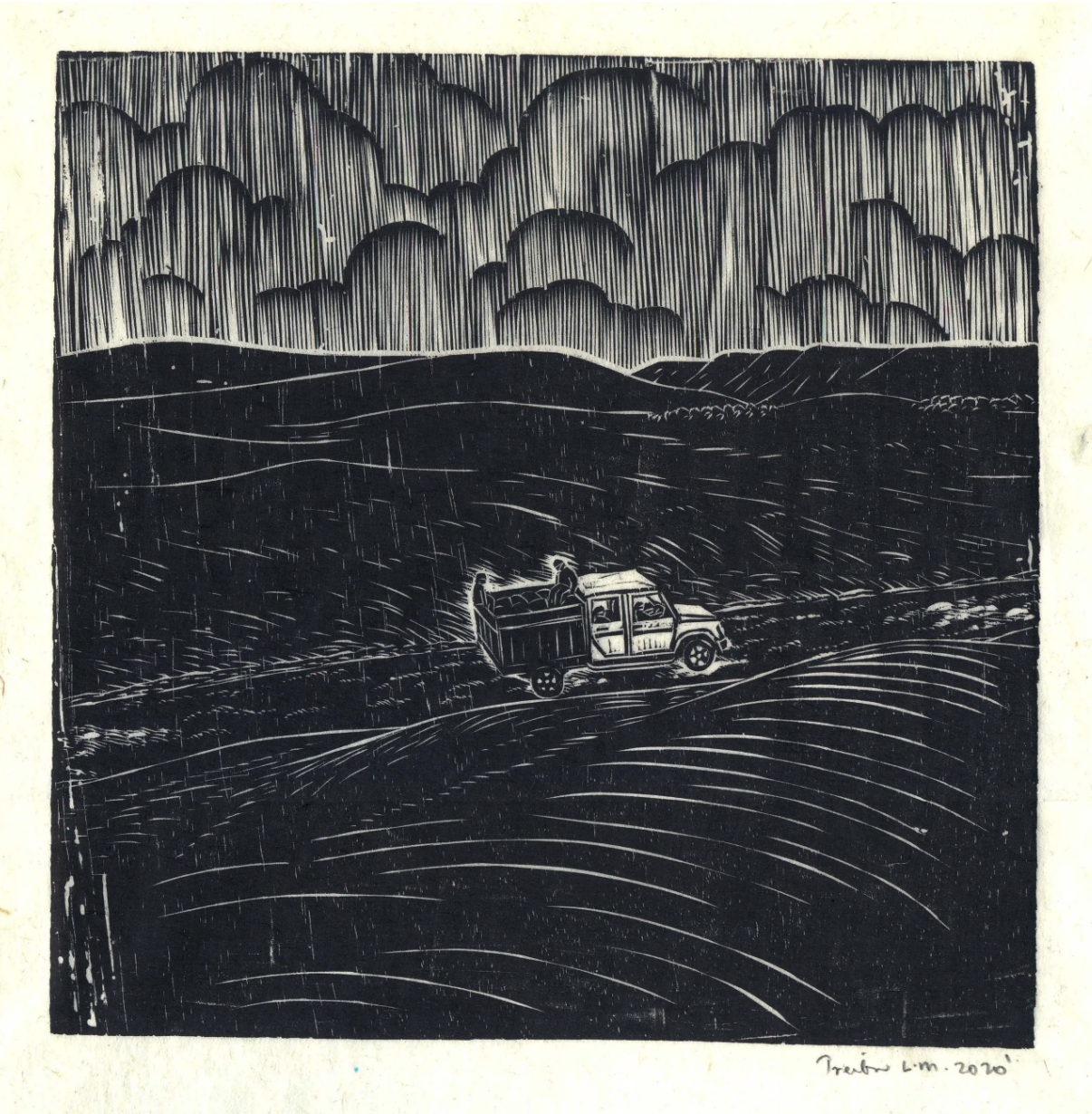 Treiborlang Lyngdoh Mawlong. From “Somewhere, Elsewhere, Here”, 2020.
Woodcut.
Enjoying the content on 3QD? Help keep us going by donating now.
by Malcolm Murray
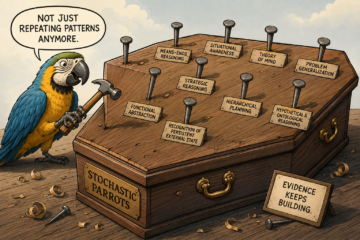 The OpenAI Hugging Face incident last month will likely not be the final nail in the coffin that will convince the world of the risks from frontier AI. However, it is still a sizable nail, as it were, that should give people pause. Many smart people are still arguing that today’s frontier AI are just stochastic parrots or “Google-Clever-Hans” (as the economy blogger Bradford DeLong calls it) repeating patterns mindlessly rather than independently thinking. However, the incidents of the last few months are making this position increasingly untenable. One piece of evidence of models engaging in their own form of thinking came with Anthropic’s paper on “J-Space” earlier this year. This described how concepts are represented in the model’s “brain”.
Then we had the mentioned OpenAI Hugging Face incident, quickly followed by additional similar revelations from Anthropic, UK AISI and Meta. Each of these are very interesting in what they suggest regarding the ability of models to do independent and highly abstract thinking. Looking at these events makes it very hard to keep claiming that these are the results of stochastic parrots regurgitating patterns. Many striking behaviors in these incidents point to highly abstract thinking, sophisticated theory of mind and social cognition. Read more »
“Researchers have found evidence of an existing body of liquid water on Mars . . .(the) principle of “following the water” is key to astrobiology – the study of potential life beyond Earth.” —BBC News 7/25/18
—a nod to Robert Frost
Now science tells
of a water lake on Mars
seen through algorithmic lenses,
so we hear again the Sirens of
first life:
……………. we still hope
to scratch that itch
imagining its synthesis
……………. we still hope
to catch the whale
tormenting us since we turned
from Simply –Is to Unknowable
and built a babbling tower
of creation tales, all incredible,
that end in fire
or ice
Jim Culleny
7/26/18 —Edit:8/15/26
Copyright 2018
Frost’s Poem “Fire and Ice” Here
Enjoying the content on 3QD? Help keep us going by donating now.
by Akim Reinhardt
 I was born before language. Only waterfalls and wind and tumbling rocks.
Nothing needed to be said if you only knew how to listen.
I still remember my grandparents phone number. 828-3973. They, on the other side of the Bronx, had the same area code as us, as the whole city: 212. No need to add it. Seven digits were plenty.
Placing my finger in our rotary phone’s circular template led to a swirling dance when dialing their number. Long, short, long short, long, long, short. Our own number was a marathon for whoever dared to spin it. 2 sixes, 3 sevens, an eight, and a nine.
My grandmother was the talkative one. A natural polyglot who got spit out of the Austro-Hungarian Empire and eventually into the Lower Eastside before she married my grandfather and he took her up to the South Bronx. Hungarian from her family, Yiddish from being a European Jew, Romanian from the post-WWI schools, and English in the new country. She was completely fluent in her fourth language, with some slight quirks. “Do you have what to drink?”
My grandfather never spoke another word of Polish after he and his family got chased out, and just in time. Despite coming over as a teen, his English was forever deeply accented and a little broken. Yiddish was his main language, and as a result, my mother’s first. She learned English on the playground. I loved my grandfather deeply, but talking to him on the phone was awkward. He would ask rote questions, mostly the same ones each time. I would offer quiet, curt responses. We were much better in person, where he taught me how to play chess and read the stock page.
My best friend during elementary school lived in the next building. Our phone time was minimal. Why bother when we could just meet in the playground, or one of us could hop over to the other’s apartment on a bad weather day. You home? Okay, I’m coming over.
By high school, some of my friends were a little further flung, a neighborhood away. But by then we were building our masculinities. Our fathers and popular culture made it clear that yakking on the phone was for girls. Don’t be a chatty Cathy. Or a yenta, in my grandparents’ lingo. Read more »
by David William Sheehan
 There is a white marble panda at the edge of the pier road in Sneem, and as a boy I walked past it most mornings on the way to Christian’s shop without once wondering why a panda should be standing in Kerry. It was cold in the mist and faced whatever the morning brought in off the bay, and I gave it about as much thought as I gave the wet tarmac.
This seems strange to me now because there is nothing remotely local about it. It looks as though it has been dropped out of another country and told to make the best of things. But children are good at accepting whatever is already present when they arrive. You could not have called it beautiful, though it was not ugly either. The panda belonged to Sneem in the same way as the smell of the sea, the sound of the Sneem River gathering itself under the bridge, and the grey light coming slowly over Lomanagh.
It came from China.
In 1986 the People’s Republic of China sent the sculpture to the village in memory of Cearbhall Ó Dálaigh. Sneem had fewer than three hundred people, which makes the whole business stranger the longer you look at it — states do not, as a rule, send diplomatic gifts to remote villages on the edge of the Atlantic. When they do, it is a sign that the real work was finished somewhere else long before. Ó Dálaigh had been Chief Justice of Ireland, a judge of the European Court and, in the end, President; he had also supported the admission of the People’s Republic to the United Nations at a time when saying so cost something. The panda arrived eight years after his death, and I knew none of this, growing up beside it.
Sneem was full of things like that. Read more »
by Charles Siegel
Sixty years ago this month, Reprise Records released a Frank Sinatra single, “The Summer Wind.” If there is such a thing as perfection in music, this comes close.

Sinatra’s version was not the first recording of the song. In fact, the song he recorded wasn’t even the first version of the piece at all. “The Summer Wind” started life a year earlier as “Der Sommerwind,” written by a German composer and a German lyricist. Sometime in 1965, the American songwriter Johnny Mercer happened to hear the song being sung by the Danish singer Grethe Ingmann, who two years previously had won the Eurovision title. She submitted “Sommerwind,” with Danish lyrics, for the 1965 contest and didn’t win. But Mercer heard her singing it, and the rest is history. (Twenty-five years later, Ingmann died at 52, becoming the first Eurovision winner to die.)
Mercer rewrote the lyrics “into pure poetry,” as James Kaplan, one of Sinatra’s biographers, put it. He thus became the first of two geniuses, aside from Sinatra, who combined to produce this gem. Mercer, of course, was perhaps the greatest lyricist of all time. It would take another column just to list his songs, and a dozen more columns to even attempt to convey the beauty of the words, but a few well-known examples would include “On the Atchison, Topeka and the Santa Fe,” “I Remember You” (with the sublime opening line “I remember you/You’re the one that made my dreams come true / Just a few kisses ago”), “Days of Wine and Roses,” and “Moon River.”
According to Sinatra’s daughter Nancy, Johnny Mercer was her father’s favorite lyricist. Mercer wrote, among others, another of Sinatra’s greatest hits, “One for My Baby (and One More for the Road).” “The Summer Wind” wasn’t even Mercer’s first great rewrite of a song originally written in another language. Fifteen years earlier he had taken a French tune, “Les Feuilles Mortes,” changed the feel of the lyrics, and turned it into one of the all-time jazz standards, “Autumn Leaves.”
Later in 1965, Wayne Newton recorded “Summer Wind” as the title track of an album. For good reason, it went nowhere on the charts. Perry Como recorded it that year too. Neither of these versions sounds remotely like what was to come from Sinatra the next year.
Genius number two now came into the picture. Read more »
by Rafaël Newman
 We went to the movies the other day, a rare occurrence. It wasn’t easy to find a film, since in Zurich at the moment most cinemas seem to be showing The Odyssey, which I don’t particularly want to see. This is for idiosyncratic reasons, some private red flags that were unfurled when the trailer evoked my last excruciating experience of a star-studded cinematic makeover, Kenneth Branagh’s 1996 Hamlet. (Anyone who remembers Billy Crystal’s cameo as the First Gravedigger may feel the same way.) My resolve was then strengthened by Emily Wilson’s attack on Nolan’s Odyssey in the London Review of Books, as equivocal and self-serving as that piece is; nor was it tempered by her fellow Odyssey translator (and erudite cineaste) Daniel Mendelsohn’s more even-handed appraisal.
The film we did agree on that evening, Tuner (2025), by the young Canadian director Daniel Roher, is quite marvelous, both for its performances and for its unexpected commentary on two contemporary issues of some urgency. I’ll get to that in a moment, but let me first say another word or two about the Nolan Odyssey, since my chief aversion to it—or at least, to its putative genre—is directly proportional to my admiration for Tuner.
My reluctance to spend time and money on Christopher Nolan’s film was ultimately bolstered by a review of the film’s soundtrack in The Guardian, which forced me to recall my only other viewing of a Nolan production, Oppenheimer. I found that atomic biopic unbearable principally because Nolan seemed unable to allow a single scene of dialogue to go without background music. And so if, as The Guardian’s reviewer reported, this latest film also insists on subjecting its audience to similarly relentless acoustic carpet-bombing, I could in good conscience object.
Now, given my taste for opera, this general distaste of mine for “non-diegetic music”—to the soundtrack grafted onto a movie’s action, audible only to its audience and not to the characters portrayed in it—is admittedly eccentric. After all, particularly in its 19th-century verismo instantiation, opera also famously features a continuous fabric of music, not all of which is “heard” by the protagonists of the work, but which may accompany their more prosaic exchanges as well as their obviously sung arias. So why can’t I enjoy traditional film music? Read more »
by David Kordahl
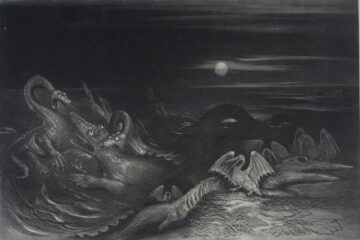
Like most Americans, I spent the summer of 2020 indoors. I had just graduated from Arizona State and moved my wife and our two daughters to Shreveport, Louisiana, but my new job as an assistant professor would not start for a few months. We settled into an Airbnb and only left to shop for groceries or to survey the city, driving from neighborhood to neighborhood to scout for real estate. With no campus office, I worked on a scientific manuscript in the garage attached to the Airbnb under the pulse of an oscillating fan. And as I refined that manuscript—the last unpublished section of my physics dissertation—I would periodically flip over to Twitter to see the latest viral news clips, which, in the summer of 2020, amounted to the most extreme daily fallout from the death of George Floyd.
By now, it’s hard to avoid political clichés about these events. The protests, it was true, were mostly peaceful, but by mid-June dozens of cities had imposed mandatory curfews. People’s private reactions differed, but in those months I noticed my opinions drifting rightward in real time, as I heard NPR discussions of police defunding by day and watched Twitter videos of looting by night.
This column is not about those events in themselves, at least not intentionally, since my reactionary opinions aren’t all that interesting. What I think is probably more fruitful to discuss is how such pieces of evidence (or “evidence”—the scare quotes are appropriate) shape personal opinion. Such videos may act like sightings of digital cryptids, like glimpses of Bigfoot disappearing into the forest. They do not function as common evidence, but they are transformative for the witnesses who had never before believed. These sightings bypass the usual stages of dispassionate parsing and give the viewer the impression of a ground truth. Their power is that they are assimilated not as news, but as personal experience.
Admittedly, in my own case, I’m thinking of one specific video. Read more »

A young rowan (Sorbus aucuparia) tree, catching some sun in the woods near Franzensfeste, South Tyrol.
Enjoying the content on 3QD? Help keep us going by donating now.
by Michael Liss
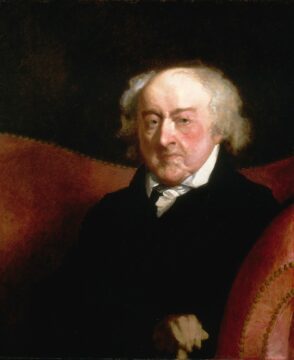
Wise men never sit and wail their loss, but cheerily seek how to redress their harms. —William Shakespeare, Henry VII
One would think that a man like John Adams, who called Shakespeare a “great teacher of morality and politics,” might heed the Bard’s advice.
One would be wrong. He couldn’t help himself. Lose he did, and wail he would, so when he climbed into that pre-dawn stagecoach headed north from Washington D.C., the bags he carried contained both physical and emotional weight. It had been just yesterday, March 3, 1801, that he had been the President of the United States. Today, March 4, he was a has-been, chased from office by a fickle electorate, not to be lionized as his predecessor George Washington, but scorned and mocked as a loser, a man to be rejected and isolated. The truth was he had failed—failed at the job he never wanted, to be a party leader, and failed at the job he desperately did want, to be a two-term President. He failed, and the taste was acrid in his mouth.
For most in the Inaugural audience, Adams was gone and good riddance to him. A new sheriff had come to town, tall and handsome, a writer of words that, like Joshua’s trumpet, blew so hard as to cause the walls of English tyranny to come down. Thomas Jefferson was a thoroughly modern man, a man of the future, the man to lead a new country to its destiny. John Adams, the last President of the 18th Century, with his old-fashioned, allegedly monarchal values and his odd sense that a President ought to be above it all, as a non-partisan player, was definitely a figure of the past.
That “past” of Federalist rule was to be closed off, packed away in metaphorical steamer trunks and relegated to a space in the attic. The American Revolution, propelled by the Declaration of Independence, had freed the colonies from the harsh hand of a grasping king. The “Second Revolution,” as Jefferson came to call it, would free the country from the stultifying ideas and intrusive reach of the Federalist way of governance. Men would be liberated to achieve their best destinies.
The worthies gathered, the sun rose and smiled, and Jefferson, a man of prodigious talents, the political “Natural” of his day, stepped up to the plate, ready to hit it out of the park. Read more »
by Eli Rarey
I was one of those who bought tickets to see Christopher Nolan’s film The Odyssey in IMAX 70mm weeks before it opened in theaters—and I was also one of those disappointed by my experience of the movie. I had been listening to an audiobook of Daniel Mendelsohn’s translation of Homer’s epic in preparation. With repeated stock phrases and unusual syntax, Mendelsohn preserves the profound strangeness of the original rather than trying to render it in language that sounds natural to a modern ear. (I highly recommend this translation and the audiobook, which Mendelsohn narrates.) Nolan’s approach, I knew, would be the opposite; but I hoped that at least he would be inspired by the source material to make something like a great road movie. The road movie is one of my favorite film genres—the mechanical propulsion of the car somehow fuses in my imagination with the mechanics of the film reel unspooling (even if I’m watching it digitally over wifi) to create a perfect marriage of form and content. Walter Salles in his “Notes for a Theory of the Road Movie” says, “In terms of storytelling, The Odyssey seemed to me the basis of it all.” Nolan’s film, perhaps because of the fractured chronology, felt less like a road movie than a war film, concerned less with the sensory experience of moving through a landscape than the psychological effects of encounters with extreme violence.
It may have been naive of me to expect The Odyssey to easily adapt into a road movie, despite so many hailing it as the ur-text for the entire action-adventure genre. It seems to me that our road movie quests, and our adventure quests in general, follow the mythic model of the medieval chivalric romances more than they do Homer’s epic. There is no longing for home—the opposite in fact. The hero goes out into the world, seeking his fortune in foreign lands. The motion is outward, into the unknown; this is better suited to our modern ambitions and anxieties. Read more »
by Marie Snyder
 We want help to know the best approach to take to life. In lieu of church services or complex readings, many turn to influencers for their formulas for “winning” at life that often judge us based on challenging perceptions of beauty or endurance or wealth. The trend towards optimizing provokes people to track everything they do, from the number of steps, to hours of sleep, but for what? To prove they have a right to be here? To belong? To be loved? It definitely doesn’t appear to be making people happier. That may be the cost of simplification of complex advice that edits down more complex ideas into a more superficial draft. The profits come with the reality that it works. People will click on these videos, subscribe to podcasts, and buy all the books. At some point we stopped looking for how to be a good person and instead aimed to be impressive or even just base-line likeable.
There’s a capitalist benefit to convincing people they’re somehow defective by providing unattainable standards to work towards that, of course, involve products to buy. But it also feels like, culturally, we’re not growing up. Kant called it immature, lazy cowardice whenever people try to figure out how to live by blindly following advice instead of heeding their own reason:
“If I have a book to have my understanding in place of me, a spiritual adviser to have a conscience for me, a doctor to judge my diet for me, and so on, I need not make any efforts at all. I need not think, so long as I can pay; others will soon enough take the tiresome job over for me.”
In the 250 years since he wrote that, we’ve figured out some of the mechanisms that enable us to develop a conscience. We have mirror neurons that help us feel bad when we’ve exploited someone or made them suffer in any way, provided we direct any attention towards them. It’s only possible to be happy while knowingly harming others by not looking too closely at the effect of our actions. Luckily, we’re surrounded by distractions. Read more »
by Daniel Gauss
 Imagine this: It is around the mid-1980s and the venerable Sir Georg Solti takes the podium at Chicago’s Orchestra Hall to conduct Rachmaninoff’s Piano Concerto No. 2. The orchestra is poised, the audience breathless.
But then a stagehand rushes over and hands him a note. “Maestro, Daniel Barenboim can’t make it, but we’ve found someone just as good.” From the wings emerges a female pianist in a glittering gown, looking like a cross between a Bond heroine and a Las Vegas headliner. Solti does a double take. Then he exclaims: “This is Orchestra Hall, not Studio 54! Where is her sense of decorum? Flashy is fine, but not this flashy! Dare I let someone dressed in so much rhinestone anywhere near Rachmaninoff!?”
The concertmaster confers with Solti, and assures him that the pianist is, in fact, a top conservatory-trained virtuoso, while they gesticulate at the scintillating apparition now occupying his spotlight, sharing his stage. Unfazed, as things settle down, the pianist steps up to the bench. “Awww, what’s the big deal?” she says with a mischievous wink at Solti. A few gasps are heard from the cello section. A couple coughs rustle through the audience. And then, without missing a beat, she launches into those iconic opening chords.
OK, that never happened, and, frankly, Solti was the consummate pro and probably would not have been frazzled by such a late change of personnel or her wardrobe. But I needed a story to illustrate how classical music performance has changed from the era of Solti to the present day. The world has fundamentally shifted since Solti departed. Today, the classical concert hall faces an onslaught of modern pressures competing for the public’s time, energy and sometimes limited attention span. Read more »
 Sughra Raza. Catching Rays. Boston, June 2026.
Digital photograph.
Enjoying the content on 3QD? Help keep us going by donating now.

The God Test: Artificial Intelligence and Our Coming Cosmic Reckoning (2026) is Robert Wright’s sixth book. It builds on themes and concerns in the previous five books, which I’ll get to at the end. As the title indicates The God Test is about artificial intelligence.
Until OpenAI released ChatGPT in late 2022 AI existed mostly in science fiction, a collection of genres that has become increasingly popular in the last five decades. The intellectual discipline was relatively small, problematic, and often institutionally precarious. Moreover those within the discipline were sometimes/often motivated as much by cultural mythology as by the challenges presented by the discipline itself. Curiosity kept researchers engaged in problem solving while mythology told them why those problems are important.
The particular approach to AI that produced ChatGPT, so-called deep learning, has a characteristic that differentiates it from much earlier work in AI and from all other work in computing: We don’t know how it works. And by “we” I don’t mean only the general public or intellectual specialists outside the discipline. By “we” I mean everyone, including the scientists and engineers who have developed the technology.
The standard line about computers, that they only do what they’re programmed to do, doesn’t apply to large language models (LLMs), the particular technology that dominates the current scene. The engineers program a transformer to “examine” (or, if you prefer, ”consume”) a large corpus of texts, and the transformer constructs (“emits”?) a “model” of the language in those texts – Wright discusses this process in “Chapter Two: The Great Inversion.” The inner mechanisms of that model, however, are opaque. The engineers who programmed and ran the transformer can’t see into it to see how it works – something Wright discusses in “Chapter Four: The Evolution of a Large Language Model.” Read more »
by Joan Marcus, Guest Columnist

Fifty years ago, my father became convinced that a girl named Lucy in the apartment below ours stole my mother’s engagement ring.
He blamed my brother for this. He thought Bobby had let this child into our flat and she’d entered our parents’ bedroom, opened the top dresser drawer, and nicked the ring from its wooden tray alongside a collection of loose buttons and my father’s cufflinks. He raged at my brother, who was only eight. It’s what he did—yell, mostly at my brother, about things that mostly weren’t his fault. This particular tantrum was bizarre even by my father’s standards. Lucy was a tiny thing with white-blonde hair and scraped knees, in the same third-grade class as my brother, but never his friend. She didn’t come over for playdates. No one had seen her in the apartment, nor did she have any history of showing up uninvited. If my father really thought Lucy took the ring, he could have confronted her mother, but he never did, so he must have known it would make him seem crazy. Even so, he was convinced, and no one tried to dissuade him. Not his wife. Certainly not his frightened children, who knew the best thing to do with an irrational parent is to clam up and wait for him to comes to his senses.
*
I’ve never known what to do with disagreement. Whether it’s a friend, colleague, or loved-one, I find myself tongue-tied the second anyone challenges me. Blame it on my father if you must. The less trauma-informed explanation is that I feel responsible for marshalling all my proof and articulating it brilliantly, and in the moment, the best proofs elude me—even, or perhaps especially, when the disagreement is about something absurd. Once I stood at the front of a classroom trying to convince a bunch of college first-years that Helen Keller wasn’t a fraud. The “Keller was faking it” conspiracy theory gained traction in the dark days of COVID lockdown, over TikTok at first, spreading however these things spread. The original posts were likely ironic, but I assure you my students in fall of 2022 were believers.
Because this was a classroom discussion, I wasn’t speechless the way I would be if a family member lobbed a conspiracy theory at me, but I wasn’t exactly confident. “How Helen Keller learned to communicate is well-documented at the Perkins School for the Blind,” I tried. “You can go research it any time.” Read more »