
March 12, 2013
Of Flies and Philosophers: Wittgenstein and Philosophy
Michael P. Lynch in the New York Times:
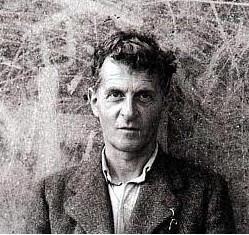
“To show the fly the way out of the fly bottle ”— that, Wittgenstein once said, was the aim of his philosophy. While it is perhaps unclear whether anyone — philosopher or fly — should be flattered by this comparison, his overall point is clear enough, as Paul Horwich notes in his recent piece, “Was Wittgenstein Right?” When we get curious about philosophical problems we are drawn into puzzles by the promise of sweet enlightenment, only to find ourselves caught in frustration (and banging our heads against the same wall over and over again). What we need, Wittgenstein thinks, is liberation — liberation from the prison of pseudo-problems we have brought upon ourselves; liberation from traditional philosophy.
Horwich’s analysis is penetrating and important. Doubtless some will quarrel with it as a reading of Wittgenstein; but I will not — not only because I think it is largely right, but because I’m more interested in whether it is true. Not surprisingly, I have my doubts.
According to HW (Horwich’s Wittgenstein), we get trapped in our glass cages because we philosophers fetishize science’s success in giving reductive explanations. A reductive explanation of X is one that tells us the underlying essence of X – that says what all and only X’s have in common. As HW points out, the concepts philosophers are interested in seem highly resistant to this sort of analysis. And this is something we could appreciate if we just paid attention to the role such concepts really play in our thought and language. Once we do so, we’ll see that traditional philosophical answers to its traditional questions are “mistakes of perverse overgeneralization.”
More here. [Photo of Wittgenstein from Wikipedia.]
Posted by S. Abbas Raza at 04:45 AM | Permalink


Comments
What I like about Wittgenstein is his determination to dispel the enchantment of language philosophers had wrapped themselves in.
The English philosophers he encountered were still labouring under the delusion that the word "I" actually refers to a thing. W sought to remove this most fundamental of glass cages.
Posted by: jacob | Mar 12, 2013 5:21:03 AM
—a hawk who can’t imagine
the ontological argument,
who just wheels like
Gump’s feather rising
and falling on whims
of wind scanning for lunch
without thinking I think,
therefore I am ...
http://jimculleny.wordpress.com/does-philosophy-matter/
Posted by: Jim | Mar 12, 2013 7:40:36 AM
Post a comment