
| ABOUT US | ARCHIVES | LINKS | RSS FEED | MONDAYS | |

3quarksdaily

An Eclectic Digest of Science, Art and Literature

« Happy birthday, Albert! | Main | Did Neil deGrasse Tyson Blow It Big Time? »

March 14, 2013

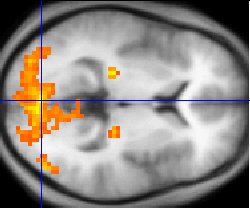
Communication and the brain – Don’t Worry, It’s Science: There’s A Brain Scan

FMRI

Via Jennifer Ouellette, Melanie B. Tannenbaum over at Nature's SpotOn NYC:

When writing about anything pertaining to psychology or human nature, people love nothing more than a brain image lit up like a Christmas tree. These omnipresent images have been mockingly termed “brain porn”, defined by journalist Alissa Quart as a “willingness to accept seemingly neuroscientific explanations for nearly everything.” According to a team of British scientists led by Cliodhna O’Connor, many popular science articles will include “logically irrelevant neuroscience information” intended to “imbue an argument with authoritative, scientific credibility” (McCabe & Castel, 2008; O’Connor et al., 2012). You might see scientists or science writers displaying neuroimaging data as proof that their claims are objective or real.

Neuroscience is frequently used to discuss psychopathology in particular, with 36% of “neuroscience” mentions in mainstream articles referring to it (O’Connor et al., 2012). Psychopathology can include anything from dementia, ADHD, and schizophrenia to eating disorders, personality disorders, addiction, depression, and anxiety. Every time you see an article mentioning a study about how “neural correlates,” “brain structures” or “neurological functioning” can explain the above conditions, you should be on high alert for brain porn in action.

On one hand, attributing things like addiction or depression to the brain imbues these disorders with legitimacy. It’s not a choice, it’s not a shortcoming – it’s a disease. Yet this very blessing can also become a sufferer’s curse. Portraying certain brains as homogeneously “different” implies something about what those brains are not: normal. As O’Connor and colleagues note, searching for group-level brain differences implies that there is some sort of fundamentally unalterable contrast between “those” brains and “normal” brains. Although no one ever actually explains what a normal, healthy brain should look like, we do get a very clear picture from these articles of what the people possessing these brains are not – “criminal, overweight, homosexual, or mentally ill” (O’Connor et al., 2012).  By drawing a line between “normal” and “abnormal” and pinning any individual differences on presumably unalterable brain structures, this logic reinforces social group divisions and perpetuates essentialist stereotypes.

Describing something like alcoholism as a disease can be a helpful practice in some regards. It legitimizes the need for beneficial social services and attempts to convince non-alcoholics that the disorder does not simply result from some kind of personal failure. However, it can also cause a great deal of harm by reinforcing the idea that there is something fundamentally wrong with alcoholics’ brains, and that they are somehow biologically different from “normal people.”

This idea that things only seem “legitimate” once they have a biological correlate raises another point about the worrisome nature of neuroscience portrayals in the media.

Posted by Robin Varghese at 02:12 PM | Permalink

Comments

I think I mentioned this here a while back:

"People who think that criminals have fundamentally different brains than non-criminals are actually more likely to let criminals “off the hook” for their actions, even though a) there is relatively little empirical evidence showing any genetic basis for criminal behavior, and b) they don’t show the same leniency when told about relevant environmental factors (like familial abuse or neglect) in the criminal’s past, even though those factors actually are linked to criminal behavior. This applies to mental illness, too. In fact, a core argument of the eugenics movement was the idea that mental illness is biological, so it only makes sense to remove the “broken brains” from the gene pool. Even today, people who consider individuals with mental disorders to be somehow “diseased” are actually more likely to engage in dehumanization and see those individuals as less competent (Mehta & Farina, 1997). Yikes, indeed."

Mainstream psychiatry still believes in the broken brain theory of mental disorders. So they pile on toxic medication that leave the sufferer worse off than before.

www.madinamerica.com

Posted by: Louise Gordon | Mar 14, 2013 5:01:59 PM

Post a comment


Subscribe to this blog's feed  

PayAnywhere with iphone credit card swiper

Android Tablet

Bluetooth Headset

2013 New Style Dresses

Compare Car Rental Prices

DHgate.com Wholesale

3QD on Facebook

3QD on Kindle

3QD by Daily Email

Receive all blogposts at the same time every day.

Enter your Email:


Preview 3QD Email

3QD on Twitter

Miscellany

Lijit Search

AddThis Social Bookmark Button

Add to Google

Recent Comments

Kyle on Syria: Inventing a Religious War

Peter John on Gezi Park

dthoko on The History of Typography - Animated Short

Richard on John Gray’s Godless Mysticism

Abbas Raza on Why Steven Pinker Is Wrong

nogodrod on Syria: Inventing a Religious War

Lusine on Quest for 'Genius Babies'?

Bill on Syria: Inventing a Religious War

j_93 on Gezi Park

j_93 on Syria: Inventing a Religious War

Norman Costa on The Insanity Virus

Dave Ranning on Political Ideology and the Avoidance of Dissonance-Arousing Situations

Sundar on Quest for 'Genius Babies'?

Sundar on Syria: Inventing a Religious War

gaddeswarup on What is ‘smart’ and how does it fit our consciousness?

gaddeswarup on What is ‘smart’ and how does it fit our consciousness?

musafir on Syria: Inventing a Religious War

Lusine on Syria: Inventing a Religious War

Brad Wilson on Gezi Park

Raza Husain on Syria: Inventing a Religious War

Brad Wilson on The Insanity Virus

billy on Syria: Inventing a Religious War

rafiq on The Insanity Virus

Ben Schwartz on Here He Goes Again: Sam Harris’s Falsehoods

JonJ on Moving books

Acclaim For 3QD


"I couldn't tear myself away from 3 Quarks Daily, to the point of neglecting my work. Congratulations on this superb site."—Steven Pinker, Johnstone Professor of Psychology, Harvard University.

"I have placed 3 Quarks Daily at the head of my list of web bookmarks."—Richard Dawkins, Charles Simonyi Professor of the Public Understanding of Science at Oxford University.

"Just wanted you to know I’m one of many who reads and enjoys 3 Quarks....almost daily."—David Byrne, musician, former lead-singer of the Talking Heads, artist, intellectual.

Read more here.

The 3QD Prizes

Subscribe to this blog's feed