
| ABOUT US | ARCHIVES | LINKS | RSS FEED | MONDAYS | |

3quarksdaily

An Eclectic Digest of Science, Art and Literature

« Letter from Jaipur | Main | 'Kill Anything That Moves' »

February 10, 2013

The Other Side of Noam Chomsky's Brilliant Mind

An excerpt from the new book "Power Systems" explore's Chomsky's contributions to the raging academic debate on linguistics and how children learn to speak.

David Barsamian and Noam Chomsky in AlterNet:

DB: It’s been more than five decades since you first wrote about universal grammar, the idea of an inborn capacity in every human brain that allows a child to learn language. What are some of the more recent developments in the field?
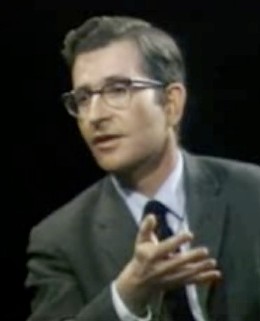
ScreenHunter_95 Feb. 10 18.25NC: Well, that gets technical, but there’s very exciting work going on refining the proposed principles of universal grammar. The concept is widely misunderstood in the media and in public discussions. Universal grammar is something different: it is not a set of universal observations about language. In fact, there are interesting generalizations about language that are worth studying, but universal grammar is the study of the genetic basis for language, the genetic basis of the language faculty. There can’t be any serious doubt that something like that exists. Otherwise an infant couldn’t reflexively acquire language from whatever complex data is around. So that’s not controversial. The only question is what the genetic basis of the language faculty is.

Here there are some things that we can be pretty confident about. For one thing, it doesn’t appear that there’s any detectable variation among humans. They all seem to have the same capacity. There are individual differences, as there are with everything, but no real group differences—except maybe way at the margins. So that means, for example, if an infant from a Papua New Guinea tribe that hasn’t had contact with other humans for thirty thousand years comes to Boulder, Colorado, it will speak like any kid in Colorado, because all children have the same language capacity. And the converse is true. This is distinctly human. There is nothing remotely like it among other organisms. What explains this?

More here.

Posted by S. Abbas Raza at 12:25 PM | Permalink

Comments

Great interview with some surprises.

Posted by: Dredd | Feb 10, 2013 4:56:57 PM

I guess there really are two types of people in the world: those who think language has a particular "genetic basis" (regardless of whether or not it is specifiable), and those who don't.

The most basic thing to recognize is these discussions is that the potentiality/actuality distinction does not hold, as Chomsky implies, between actual language and the "capacity for language." That distinction only holds for the distinction between actual experience and the capacity for experience---which *may* indeed have something like a dispositive genetic ground.

Posted by: Matt G. | Feb 10, 2013 5:13:09 PM

Post a comment


Subscribe to this blog's feed  

PayAnywhere with iphone credit card swiper

Android Tablet

Bluetooth Headset

2013 New Style Dresses

Compare Car Rental Prices

DHgate.com Wholesale

3QD on Facebook

3QD on Kindle

3QD by Daily Email

Receive all blogposts at the same time every day.

Enter your Email:


Preview 3QD Email

3QD on Twitter

Miscellany

Lijit Search

AddThis Social Bookmark Button

Add to Google

Recent Comments

Dredd on NORTH KOREA’S NERVE WAR

Dredd on Unknown Mathematician Proves Elusive Property of Prime Numbers

Raza Husain on Is the Brain No Different From a Light Switch? The Uncomfortable Ideas of the Philosopher Daniel Dennett

Dana on germ houses

musafir on Tuesday Poem

soubriquet on Tuesday Poem

Eli on Unknown Mathematician Proves Elusive Property of Prime Numbers

Jim on Tuesday Poem

Josef Stern on Unknown Mathematician Proves Elusive Property of Prime Numbers

Shelley on Is the Brain No Different From a Light Switch? The Uncomfortable Ideas of the Philosopher Daniel Dennett

Bill on The Beautiful German Language

Eleutheria on The Bystander Effect in Medical Care. Why Do I Have So Many Doctors Not Taking Care of Me?

Eleutheria on Tuesday Poem

Raza Husain on the culture animal

musafir on The Bystander Effect in Medical Care. Why Do I Have So Many Doctors Not Taking Care of Me?

KRS on Tuesday Poem

Félix E. F. Larocca, MD on Tuesday Poem

LWR on Tuesday Poem

Joss on Tuesday Poem

LWR on POETRY IN TRANSLATION: CORDOBA

Rashid on Aftermath: Pakistan Elections 2013

Yoann on The Bystander Effect in Medical Care. Why Do I Have So Many Doctors Not Taking Care of Me?

Dave Ranning on Aftermath: Pakistan Elections 2013

sadhana on Aftermath: Pakistan Elections 2013

Carol Westbrook on The Bystander Effect in Medical Care. Why Do I Have So Many Doctors Not Taking Care of Me?

Acclaim For 3QD


"I couldn't tear myself away from 3 Quarks Daily, to the point of neglecting my work. Congratulations on this superb site."—Steven Pinker, Johnstone Professor of Psychology, Harvard University.

"I have placed 3 Quarks Daily at the head of my list of web bookmarks."—Richard Dawkins, Charles Simonyi Professor of the Public Understanding of Science at Oxford University.

"Just wanted you to know I’m one of many who reads and enjoys 3 Quarks....almost daily."—David Byrne, musician, former lead-singer of the Talking Heads, artist, intellectual.

Read more here.

The 3QD Prizes

Subscribe to this blog's feed