Carl Zimmer in The New York Times:
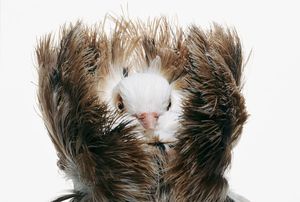 In 1855, Charles Darwin took up a new hobby. He started raising pigeons. In the garden of his country estate, Darwin built a dovecote. He filled it with birds he bought in London from pigeon breeders. He favored the fanciest breeds — pouters, carriers, barbs, fantails, short-faced tumblers and many more. “The diversity of the breeds is something astonishing,” he wrote a few years later in “On the Origin of Species” — a work greatly informed by his experiments with the birds. Pigeon breeding, Darwin argued, was an analogy for what happened in the wild. Nature played the part of the fancier, selecting which individuals would be able to reproduce. Natural selection might work more slowly than human breeders, but it had far more time to produce the diversity of life around us. Yet to later generations of biologists, pigeons were of little more interest than they are to, say, New Yorkers. Attention shifted to other species, like fruit flies and E. coli.
…Archaeologists have speculated that rock pigeons flocked to the first farms in the Fertile Crescent in the Middle East, where they pecked at loose grain. Farmers then domesticated them for food. Later, humans bred the birds to carry messages. By the eighth century B.C., Greeks were using pigeons to send the results of Olympic Games from town to town. Genghis Khan used pigeons to create a communication network across his empire in 12th century A.D. Eventually, people began breeding pigeons simply for pleasure. Akbar the Great, a 16th-century Mughal emperor, always traveled with his personal colony of 10,000 pigeons. He bred some of the birds for their ability to tumble through the air, and others for their extravagant beauty.
More here.
