
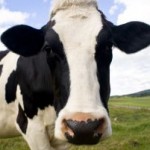
February 26, 2013
his kine Drop milky udders
The white liquid sold in jugs across America is not, in the truest and fullest sense of the term, milk. It is pasteurized milk, and often pasteurized milk that has been homogenized and adulterated with various chemicals; referring to it as real milk is an act of ontological promiscuity. This beverage is a dairy product, to be sure, and one that bears a striking resemblance to real milk, but it is quite different from the milk that nourished farmers around the world for millennia. Pasteurization breaks apart the enzyme lactase, which is crucial for the digestion of lactose. Pasteurized milk also lacks lacto-bacilli and other “good” bacteria that help preserve milk, slowly souring it and producing yogurt. These probiotic bacteria exist in harmonious ratios in milk from healthy cows. Because of the presence of lactase and probiotics, many have concluded that real milk is much healthier than pasteurized milk. However, I will not hold forth on the debate over milk’s healthfulness because, like the Senator from Florida, I’m not a scientist, man.more from Skyler Reidy at Front Porch Republic here.
Posted by Morgan Meis at 08:07 AM | Permalink


Comments
"ontological promiscuity"
Great way to describe "doublespeak" and other techniques of propaganda.
Posted by: Dredd | Feb 26, 2013 9:01:57 AM
That home town production of real milk sounds great, but is it scalable to my desire -and all my friends- to drink a gallon of milk a week at low prices? God may have designed cows to have the right enzymes, but he also invented supply and demand.
Posted by: Stopher | Feb 26, 2013 7:29:32 PM
Yeah, and that's not all it lacks.Posted by: Ken Pidcock | Feb 26, 2013 7:50:14 PM
I read until I came across the phrase "ontological promiscuity" and thought "this is just too pretentious". "Inaccurate" or even "a lie" would be fine.
Posted by: Brian Mulligan | Feb 27, 2013 3:45:34 AM
I think it might be better to leave the discussion of individual enzymes out of this type of article. The digestion of Lactose, also known as milk sugar, takes place mostly in the small intestine. The Lactase present in cow's milk would already have been denatured, and inactivated, at stomach pH.
Posted by: Dan Newton | Feb 27, 2013 9:04:10 AM
Post a comment