
February 04, 2013
Ecology’s Image Problem
“There are tories in science who regard imagination as a faculty to be avoided rather than employed. They observe its actions in weak vessels and are unduly impressed by its disasters” —John Tyndall, 1870
In his 1881 essay on Mental
Imagery, Francis Galton noted that few Fellows of the Royal Society or
members of the French Institute, when asked to do so, could imagine themselves
sitting at the breakfast-table from which presumably they had only recently
arisen. Members of the general public, women especially, fared much better,
being able to conjure up vivid images of themselves enjoying their morning
meal. From this Galton, an anthropologist, noted polymath, and eugenicist,
concluded that learned men, bookish men, relying as they do on abstract
thought, depend on mental images little, if at all.
In this rejection of the scientific role for the imagination Galton was in disagreement with Irish physicist John Tyndall who in a 1870 address to the British Association in Liverpool entitled The Scientific Use of the Imagination claimed that in explaining sensible phenomena, scientists habitually form mental images of that which is beyond the immediately sensible. "Newton’s passage from a falling apple to a falling moon”, Tyndall wrote, “was, at the outset, a leap of the prepared imagination.” The imagination, Tyndall claimed, is both the source of poetic genius and an instrument of discovery in science.
The role of the imagination is chemistry, is well enough known. In 1890 the German Chemical Society celebrated the discovery by Friedrich August Kekulé von Stradonitz of the structure of benzene, a ring-shaped aromatic hydrocarbon. At this meeting Kekulé related that the structure of benzene came to him as a reverie of a snake seizing its own tail (the ancient symbol called the Ouroboros).
Since this is quite a celebrated case of the scientific use of the imagination I quote Kekule’s account of the events in full:
“During my stay in Ghent, Belgium, I occupied pleasant bachelor quarters in the main street. My study, however, was in a narrow alleyway and had during the day time no light. For a chemist who spends the hours of daylight in the laboratory this was no disadvantage. I was sitting there engaged in writing my text-book; but it wasn't going very well; my mind was on other things. I turned my chair toward the fireplace and sank into a doze. Again the atoms were flitting before my eyes. Smaller groups now kept modestly in the background. My mind's eye, sharpened by repeated visions of a similar sort, now distinguished larger structures of varying forms. Long rows frequently close together, all, in movement, winding and turning like serpents! And see! What was that? One of the serpents seized its own tail and the form whirled mockingly before my eyes. I came awake like a flash of lightning. This time also [he had had fruitful dreams before] I spent the remainder of the night working out the consequences of the hypothesis. If we learn to dream, gentlemen, then we shall perhaps find truth…” Berichte der deutschen chemischen Gesellsehaft, 1890, 1305-1307 (in Libby 1922).
In supporting his argument about the positive role of the imagination John Tyndall quoted Sir Benjamin Brodie, the chemist, who wrote that the imagination (”that wondrous faculty”) when it is “properly controlled by experience and reflection, becomes the noblest attribute of man”. Brodie cautioned, however, that the imagination when “left to ramble uncontrolled, leads us astray into a wilderness of perplexities and errors…”
The philosopher Vigil Aldrich provided an interesting example of how imagination could be a hindrance to science. Sir Arthur Stanley Eddington, the English astrophysicist, referred frequently, according to Aldrich, to “the world outside us”. Consciousness, in contrast, can be described as being “inside of us.” Using such images Eddington was, said Aldrich, “under the spell of the telephone-exchange analogy.” Where the nerve ending leave off the world beyond us takes over. If the telephone exchange image seems ill-chosen, the image, after all, could be worse. One might imagine inner consciousness as a submarine and from our berth within it we come to know the outside world by means of a periscope! Now, Eddington did not use this image (others did) but when we try to make sense of it we can do so only by saying that inner consciousness is like a submarine only when one supposes that it is nothing at all like a submarine. One must “tone down the analogy” to make it useful. If you do otherwise “the lively imagination begins to protest”. Aldrich speculated that theorists persists with inept picture-making because when toned down, it often appeared as if the image is illuminating even when it is not. Moreover, a flashy image is entertaining. Thus one can easily make the “pleasant mistake” of identifying the image with the “real meaning” of an assertion.
***
A strength of environmental disciplines is that they bring into proximity bodies of knowledge that are often set apart. Though some quibble with him on this, historian of ecology Donald Worster places both Charles Darwin, the philosophical scientist and Henry David Thoreau the scientific philosopher at the ground of ecology as a natural scientific discipline. And though it is fair to say that ecology has maintained an identity largely separate from the environmentalisms it has inspired, nevertheless ecology and environmentalisms have been good conversation partners. Both have listened to an admirable degree to its poets, artists and philosophers. A good thing this may be in many ways, but my contention here is that the environmental sciences and the practices associated with them — environmentalisms like sustainability — are prone of taking their most arresting images too literally. I wonder if there is not in environmental thought a pathology of the imagination? Too readily, it seems, we transform a provocative image into a proven hypothesis; we smuggle ancient and baffling worldviews into contemporary conceptions of nature.
I sketch a few examples here to illustrate the case. Perhaps you will have ones that you can add.
Nature as an Organism
You are justified in calling Nature your Mother if you have a mother who wants you dead. A Mother who inculcated both your limitations and your accomplishments. Nature: A Mother who birthed a world equipped with tooth and nail and hungry eye; whose family tie is the ripping of flesh. Why, I wonder, are we quick to demand of God an explanation of evil but incline less to asking that question of Mother Nature?
To call Nature our mother is just one manifestation of the image of the Earth as organism. It is enduring, compelling and surely wrong-footing.
University of Wisconsin historian Frank N. Egerton traces the myth of cosmos as organism back to Plato. Timaeus asked “In the likeness of what animal did the Creator make the world?” He then speculated as follows: “For the Deity, intending to make this world like the fairest and most perfect of intelligible beings, framed one visible animal comprehending within itself all other animals of a kindred nature.” Because of Plato’s fateful influence on the history of western thought, Egerton noted that the implications of this myth have been enduring. According to Egerton the myth is the source of two related concepts “the supraorganismic balance-of-nature concept and the microcosm-macrocosm concept.” The supraorganismic concept views the cosmos as having the attributes of a living thing whereas the microcosm-macrocosm concept takes different parts of the universe to correspond with an organismal body.
Both flavors of the organismal concept get expressed in ecosystem ecology. Natural ecosystems, the influential University of Georgia ecology Eugene Odum asserted, are integrated wholes, and developed in a manner that parallels the development of individual organisms or human societies. The development of the natural systems, ecological succession in other words, is orderly, predictable, and directional. It leads, in Odum’s view of things, to a stabilized ecosystem with predictable ratios of biomass, productivity, respiration and so forth. The “strategy” of ecosystem development, as Odum called it, corresponds to the “strategy” for long-term evolutionary development of the biosphere – “namely, increased control of, or homeostasis with, the physical environment in the sense of achieving maximum protection from its perturbations.” Homeostasis etymologically derives from the Greek “standing-still” and in the sense that Odum meant to imply, indicates a dynamic and regulated stability. In other words, the stability of the organism.
Odum does not stand here accused of covertly importing the organismal image into his work; he was quite explicit about it. There is much to admire in Odum’s work and the ecology that he inspired, but the sense of design and purpose that it implied in nature (what philosophers call teleology) put Odum's ecosystem ecology at loggerheads with contemporary evolutionary theory which insists on the purposelessness of nature. It has taken quite some time to reconcile ecosystem thought with evolutionary theory.
Another example of the superorganism’s baleful influence can be found in the Gaia hypothesis. In his preface to Gaia: A New Look at Life on Earth (1979) Lovelock wrote:
“The concept of Mother Earth or, as the Greeks called her long ago, Gaia, has been widely held throughout history and has been the basis of a belief which still coexists with the great religions."
If the development of James Lovelock and Lynn Margulis’s Gaia hypothesis is anything to go by, hypotheses about the workings of nature derived from the organismal image of nature have a shelf life of a decade or so. Lovelock’s Gaia: A New Look at Life on Earth was published in 1979 and he rescinded the teleological claims of the Gaia hypothesis by 1988 in his book Ages of Gaia — or at least he became attentive to the problems that the superorganism concept created. He still maintains that the Earth’s atmosphere is homeostatically regulated but he admitted to not having been led astray by the sirens of the superorganism.
Everything Connected
It is a banality of the ecological sciences to state that everything is connected. That ebullient Scot, and eventual stalwart of the American wilderness movement, John Muir, provided the image. He wrote, "When we try to pick out anything by itself, we find it hitched to everything else in the universe."
And if such statements are employed to sponsor a notion that individual organisms cannot be regarded in isolation from those that they consume, and those that can consume them, or furthermore, that as a consequence of the deep intersections of the living and the never-alive, that there can been unforeseen consequences flowing from species additions or removals from ecosystems, then few may argue with this. However, just as the ripples of a stone dropped in a still pond propagate successfully only to its edges (though they may entrain delightful patterns in the finest of its marginal sands), not every ecological event has intolerably large costs to exact. True, if the dominoes line-up and the circumstances are just so, a butterfly’s wing beat over the Pacific may hurl a typhoon against its shores, but more often than not such lepidopterous catastrophes do not come to pass.
Ecosystems, energized so that matter cycles and conjoins the living with the dead, have their lines of demarcation, borders defined by their internal interactions being more powerful than their external ones. They are therefore buffered against many potentially contagious disasters. This, of course, is the essence of resilience - the capacity of a system to absorb disturbance without disruption to habitual structure and function. Ecology is as much the science investigating the limits of connections as it is the thought that everything is connected.
The Community Concept
Is there a greater 20th Century American environmental thinker than Aldo Leopold? Certainly there few that provided as many genuinely poetic images: in the eyes of a dying wolf he saw “a fierce green fire”, he exhorted us to “think like a mountain”, he depicted the crane as “wilderness incarnate”. For all of that, has Leopold not led us astray, with images associated with of the “ethical sequence”? Leopold’s influential land ethic “enlarges the boundaries of the community concept.” The ethical sequence that he proposed progresses stutteringly from free men, to women, to slaves, to animals, plants, rocks and land. It has a compelling lucidity. Leopold admitted, however, that it seems a little too simple. The ethic invites us into community with the land. A person’s self-image will change under a land ethic: “In short,” Leopold writes “a land ethic changes the role of Homo sapiens from conqueror plain member and citizen of it.”
Now, Leopold is a subtle thinker and knows not to confuse the image with the thing. Certainly he expected this transformation to take quite some time. The land ethic would not emerge without “an internal change in our intellectual emphases, loyalties, affections, and convictions.” Now I have little problem with the image of extending the ethical circle other than noting that it makes it seem easier than it has proven to be. My more serious objection concerns the rather thin notion of community that seems to be implied in Leopold image of the plain citizen. As environmental philosopher William Jordan III has illustrated in his book The Sunflower Forest (2003), missing from Leopold’s account is any acknowledgment of the negative elements of the human experience of community: envy, selfishness, fear, hatred, and shame. As Jordan pointed out this leads Leopold and others to “a sentimental, moralizing philosophy that…insists on the naturalness of humans…but that neglects or downplays the radical difficulty of achieving such a sense of self, and also downplays the role of culture and cultural institutions in carrying out this work.” If Leopold’s image of the community and our place within it is an impoverished one, the work of extending the circle becomes impossible.
There are other images that we might have discussed here. Ones that have had, at times at least, unfortunate implications for environmental thinking. For instance, in 1864 George Perkins Marsh wrote that mankind is disruptive, not just occasionally, mind you, but “is everywhere a disturbing agent.” One hundred years later the Wilderness Act renews the image in the definition of wilderness as an area “untrammeled by man.” We might have considered contemporary accounts of social-ecological systems where these systems are posited as a compound substance, but that in depicting them, we tease the components apart again.
So, if environmental thought and ecological science has been susceptible to what my colleague and friend Professor David Wise of University of Illinois, Chicago, has called “malicious metaphors”, is there a more productive way to think about the role of the image in developing environmental thought?
***
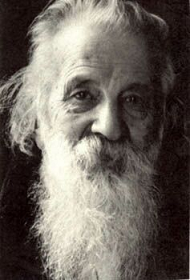
The work of French philosopher
Gaston Bachelard (1884 - 1862) — one of the more lovable of the French
phenomenologists, certainly the hairiest — is helpful in sorting out of a
productive role for the imagination in science. He was renowned for his work on
epistemological issues in science as well as for his phenomenological account
of the poetic image, and his philosophical meditation on reverie. As much as he
was a materialist in his approach to science, he was subjective and personal
(as a matter of theoretical orientation) in his philosophical work on the
imagination.
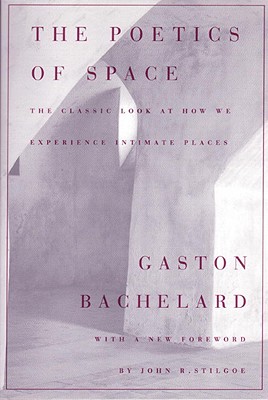
Bachelard’s work on first glance is so inviting. Chapters in his book The Poetics of Space (1958) have enticing titles like The House from Cellar to Garret, Nests, Shells. Perhaps this is why the book is a philosophic bestseller. My copy claims “more than 80,000 copies sold”. And though indeed opening a Bachelard book is like relaxing into a warm bath, nevertheless there is an astringent in those waters. The thought is somewhat obscure as Bachelard ransacks the lexicon of the various disciplines he brings together in his work: Kantian philosophy, Husserlian phenomenology, Jungian psychoanalysis etc. Oftentimes his use of technical terms was novel; reinterpreting them, Bachelard pushed them into new service. Because of this density, I wonder how many of those 80,000 copies have languished on bookshelves? Mine certainly did until the past few weeks.
To enjoy the fruits of Bachelard’s insights we should do at least some of the work of appreciating how he produced them. In the hope that this will embolden you to return to your copy of The Poetics of Space, or other works by Bachelard on the imagination, or pick them up for the first time, I will give a summary, as best I understand it, of what his phenomenology of the image is all about. I am, I should tell you, strictly an amateur Bachelardian.
The poetic image is eruptive for both poet and reader. Bachelard say that for its creation “the flicker of the soul is all that is needed.” So, every great image is its own origin. Famously, Bachelard maintained that the imagination, contrary to view of many philosophical accounts, is “the faculty of deforming images offered by perception.” The poetic image emerges into the consciousness as a direct product of “the heart, soul and being of man.” Elsewhere Bachelard claims “the imagination [is] a major power of the human nature.”
The poetic image is therefore not caught up in a network of causalities. Our first recourse should not be to ask what archetypes an image represents, or what aspects of the poet’s psycho-biography explains it away. In this assertion Bachelard remains true to phenomenology’s maxim of going “back to the things themselves.” In as much as such things are possible, one approaches the poetic image freed from all presuppositions.
So it is of secondary importance to ask where an artistic image comes from; what matters more is to explore what opportunities for freedom an image creates. Instead of cause and effect, at the center point of which we traditionally ask the image to stand, rather we might speak of the “resonances and reverberations” of the image. This is not, I think, just some fanciful softening of language, it is a necessary acknowledgment of the way in which an image does not simply reflect a memory, but rather revives an absent one and the way in which an image explodes into images. When we read the poetic image it resonates, when we communicate it it reverberates. The repercussions of the image, said Bachelard, “invite us to give greater depth to our own existence.” What bearing does an image have on our freedom? A great piece of art, Bachelard says “awakens images that have been effaced, at the same time that it confirms the unforeseeable nature of speech. And if we render speech unforeseeable, is this not an apprenticeship to freedom?”
***
I propose that Gaston Bachelard’s phenomenological account of the poetic image, despite its somewhat unpromising obscurity, is helpful in addressing environmental thought’s special porousness to striking images. In this short sketch I cannot fully substantiate the claim. I will end, however, with an example where an approach such as Bachelard’s seems to have been fruitful.
Tim Morton is one of the most widely read and exciting environmental writers of recent years. As far as I know has not cited Bachelard as a methodological inspiration, although his work is phenomenological and existential. [Added: One of Morton's earlier books on the representation of the spice trade in Romantc Literature was entitled Poetics of Spice (2006) - making him, it would seem, an explicit Bachelardian after all!]. Morton is so concerned about the potential of sedimented ideas leading us into Sir Benjamin Brodie’s “wilderness of perplexities and errors”, that he elected to drop the term “Nature” altogether. In his book Ecology Without Nature (2007) he explained the problem: “…the idea of nature is getting in the way of properly ecological forms of culture, philosophy, politics, and art.”
The results of Morton’s analysis lead us to strange, perplexing, though ultimately interesting places. Out of this natureless ecology comes a suite of insights on “dark ecology”, an ecology reminding us that we are always already implicated in the ecological. There is no outside from which we get a guilt-free view of the fantastic mess. Deriving also from an ecology developed without a sentimental view of nature comes a fresh analysis of connectedness. Morton revives Muir’s hitching image but this time its resonances are weirder than the oceanic feeling that we are all blissfully in this together. His analysis gives us the queer bestiary of “strange strangers” with which we are stickily intimate, and yet we can never fully get to know. Morton develops this account in The Ecological Thought (2010) which I recommend to you. I am not supposing that this is an adequate summary of Morton’s recent books, but I think that Tim is converging on the idea of resonances and reverberations that Bachelard has written about.
The image, and the imagination, can play a positive role in environmental thinking. Darwin’s image of the “tangled bank” is both a pretty and useful way of thinking about the way in which the organismal profusion developed from a common ancestor. But a misapplied image can be a disaster. Understanding our responsibilities with respect to the image is the work of the future, it is the work that will birth the future.
Reference`
Walter Libby The Scientific Imagination The Scientific Monthly, Vol. 15, No. 3 (Sep., 1922), pp. 263-270
Follow me on Twitter @DublinSoil for 140 character updates on my columns. Links to previous 3QD columns here.
Posted by Liam Heneghan at 12:30 AM | Permalink


Comments
Brilliantly done, Liam. I have always been wary of Lovelock and Margulis's work and you have made explicit why. When I wasn't learning something new reading this, I was nodding in agreement with you. And you write a damn felicitous prose! Thanks, man!
Posted by: Abbas Raza | Feb 4, 2013 5:56:56 AM
I enjoyed thinking through this piece, thanks. A few disconnected points -
1) The opening makes a connection between thinking in images and imagination - trained scientists supposedly find it harder to visualize their breakfast tables etc. I wonder if this is mere punning, or if there's something more to it. I suppose we're strongly visual creatures, so we're going to impose visual metaphors on most things. But the things that seem characteristic of imagination - startling connections between things previously thought separate, intellectual structures built upon relatively small foundations, working hypotheticals or counterfactuals etc - don't sound to me like they have anything distinctive to do with pictures. My instinctive attitude is that of course these things aren't the same, or even very related. I guess this skepticism also applies to the definition of imagination you offer later (“the faculty of deforming images offered by perception.”) But maybe that's an unimaginative view of things? Though I can't imagine what images would help me reject that in favor of a more imaginative perspective. Okay I will stop making silly jokes now.
2) "I wonder if there is not in environmental thought a pathology of the imagination?"
My attitude is that most environmental thought *isn't* very imaginative, for better or for worse. Mother nature imagery for example is age old; nature gods and river and wood spirits and such are ubiquitous. People have been one-with-nature for as long as they have been people. Quite generally I want to ask what it means to call a viewpoint 'imaginative' that's such a constant of human sentiment across the ages and cultures. Nature worship is imaginative the way belief in an afterlife is, I want to say: it may well take imagination to first think up, but it needs littke to none to propagate. (Quite generally, bad ideas to propagate should not call strongly upon imaginative or any other resources - they should rather be such things that fall upon a fertile soil…)
Instead, what I'd say is distinctive of the ethos is a certain romantic conservatism. What's good and proper is the way things once were, before bad stuff happened. Even this is an extremely common mode of thought (as is its contrary), and I don't see it as calling for any hyperactivity of imagination either. Maybe you see the role of imagination in the beautiful picture drawn of the pre-industrial utopia? Okay that's one more thought taken to facetiousness.
3) "And if such statements are employed to sponsor a notion that individual organisms cannot be regarded in isolation"
I am resolved immediately to acquire this use of the word 'sponsor' so as to deploy it upon the unwary. I also loved "lepidopterous catastrophes" :)
4) I basically agree with you about the mistake of seeing man as apart from nature, as a despoiling pollutant of a pristine state. Still, I wonder if there's something too easy about this. There's nature_1, which is the full thing including man, and there's nature_2, which comes from filtering out man from nature_1. And given our remarkable powers and impact, this filtration is far from being unmotivated. Which nature concept is appropriate will depend on the topic of discussion, and on the intended rhetorical purpose. And I've seen lots of stridently anti-environmental perspectives from interested parties which invoke nature_1. As such I wonder if we should be somewhat suspicious of both "nature" concepts, pausing to figure out what exactly the point of invoking one rather than the other idea is.
Posted by: prasad | Feb 4, 2013 7:11:30 AM
Abbas, thanks. It is always great to gets the Pope of 3QD's Nihil Obstat! I must say that I still find the Gaia hypothesis useful, once it is freed from its teleology. For instance, I admire what my friend Tyler Volk in NYU has done with it. His book Gaia's Body is worth looking at.
Prasad, thanks so much for your kind engagement with what I have written here. The essay is a sketch, rather than a fuller attempt to disentangle all of the issues, primarily because the sort of things you point out are difficult and need more extensive work. I concentrate on the image, but really the whole apparatus of the imagination needs examination. I was interested in Galton's account, which seems a little implausible for the reasons you state, because it describes well the inductive view of science. Science as an accumulation of the facts by humorless men done without resort to picture-thinking. But there is a lot to be said on this...
It's certainly true that environmental thought has latched onto some fairly perennial themes. But there are others floating around there...for ease I just chose the more obvious ones. Your concerns here seem to stem from my saying more about image rather than imagination - something, as I say, I hope to work on in revising this piece.
The pathology of the imagination (or perhaps more fairly of "the image") is that environmental thought has never, it seems, known what to do with potent and enduring images.
Yes, I agree that the part and apart of nature is resistant to easy analysis. Though I don't think it is useful to see us a always disruptive, always outside (Marsh's view), but I don't think we can be readily compounded. It's this difficult that has made work on social ecological systems difficult I think. It's here that we need the most imagination.
For better of worse, this is a draft of a small piece from a book I am working on. The book covers what I see as being the main problematic fault lines in environmental thought. Hopefully by the time I am done I will have a more ample account of the imagination etc.
Posted by: Liam | Feb 4, 2013 10:13:39 AM
P.S.: I'm reminded of comment of William F. (Jack) Fry,one of the most impressive scientists I've been priveleged to know. Jack was a high energy physicist at the University of Wisconsin-Madison, but he also had a parallel career devoted to research on the acoustics of the violin. His aim was to elucidate, and then replicate, the techniques that account for the remarkable qualities of instruments made by the great violin makers of the 17th and 18th centuries, and in this he succeeded, I believe, where others have failed. He did so not by exhaustive analysis of data on the response of instruments, but, like Watson and Crick in their early work on DNA, by the development and testing of conceptual models. Jack, however, called these models (or images) "dirty rotten lies...but sometimes useful ones."
Posted by: William R. Jordan III | Feb 4, 2013 1:11:03 PM
You should get a prize for this one, Liam!
Posted by: Elatia Harris | Feb 4, 2013 1:13:29 PM
A nice parallel to Kekule's realization of the structure of benzene is Pasteur's realization of the idea of vaccination, which Arthur Koestler recounts in his book "The Act of Creation," p. 112 in my (Dell paperback) edition.
Posted by: William R. Jordan III | Feb 4, 2013 1:13:53 PM
In grad schooI loved Bachelard, espcially his "Psychoanalysis of Fire." But after a long tour of duty with the phenomenologists I found the work of the American founder of Pragmatcism, C.S. Peirce. In his work one doesn't have to eschew aesthetics or maths. Here's a short bit relating imaging to graphing.
We form in the imagination some sort of diagrammatic, that is, iconic, representation of the facts, as skeletonized as possible. The impression of the present writer is that with ordinary persons this is always a visual image, or mixed visual and muscular... This diagram, which has been constructed to represent intuitively or semi-intuitively the same relations which are abstractly expressed in the premisses, is then observed, and a hypothesis suggests itself that there is a certain relation between some of its parts--or perhaps this hypothesis had already been suggested. In order to test this, various experiments are made upon the diagram, which is changed in various ways... This is called "diagrammatic, or schematic, reasoning." Peirce: CP 2.778
By the time we can examine our ideas at all, we find the process of combining them into sets has begun. But we seem to be able to discriminate roughly between a matter of cognition, as Kant calls it, forced upon us by the mysterious power without and within, and a skeleton of a set, in providing which we feel as if we have had a comparative freedom, which skeleton is nearly what Kant means by the form of cognition. For example, I hear at this moment a bird calling. I think he is on a lilac-tree close by the verandah. Every time he calls, I seem to see the bird. It is not much like seeing, but still it is a visual idea. Now that visual idea I think of as the bird itself, and the call I think of as something appertaining to that idea. Though the association is quite involuntary, I could banish the visual idea if I chose. Yet that, I recognize as forced upon my belief by experience. I cannot help believing there is a bird there, that would look something as I imagine it to look. But I have besides the visual idea of the bird and the sound of the call, a skeleton idea of connection between two things. It is a dim idea in itself; but if I want to think about it, I have a visual idea
O----O
of two dots connected by a line, or of a knot in a string. However, when I just think of the bird calling, I do not think the idea of connection so distinctly. Nevertheless, I do think it, and think of the call and the visual bird as belonging to it. Under ordinary circumstances, I might not remark the idea of connection; but potentially it would be there, that is, it would be all ready to be called into existence, as soon as there should be need of it. Peirce: CP 7.426
Posted by: Gene | Feb 4, 2013 4:59:47 PM
Wow, a thumbs up from Abbas AND Elatia for the one post - a little slice of 3QD heaven.
Bill, I love the Jack Fry anecdote. You and I, I suspect, will talk some more about these themes.
Gene, thanks so very much for pulling out these Peirce references. I do not know his work the way I should....knowing him more from what is written about him. (There is also at least one Peircean around DePaul where I work, but he is off the beaten path for our continentally oriented philosophy department). Anyway, I excited to follow up on this.
I am interested I should say in a much broader inspection of some of these question - so will be reading around.
Thanks all.
Posted by: Liam | Feb 4, 2013 6:08:04 PM
Wonderful essay, Liam!
I have a somewhat ignorant question about science and imagination. Do you think that we are less likely to be misled by runaway imagination and imagery in the realm of "distant" (I am purposely not using the term "hard science") sciences like physics and chemistry than we are in the more "personal" (closer to the human condition) sciences such as biology, ecology and of course, psychology?
Good luck with the book!
Posted by: Ruchira | Feb 5, 2013 1:03:37 AM
Nice essay. Reminds me of some of Dijkstra's thoughts on mathematics and computer science.
E.g. "Why Johnny can't understand" amongst other 'EWDs'. Quote:
"we are actually encouraged to make these interpretations to convince ourselves that the new formalism "makes sense". They fail, however, to warn us that such interpretations tend to be misleading because the models are overspecific, that such habits of understanding are utterly confusing when the accompanying visualizations baffle the imagination and that the mental burden of translating back and forth between formula and interpretation had better be avoided"
From http://www.cs.utexas.edu/~EWD/transcriptions/EWD09xx/EWD991.html
Posted by: hjk | Feb 5, 2013 4:42:39 AM
Liam, pretty good article. I am a great admirer of Margulis and as such would differ with your opinion on her. I am reminded of a joke that was going around in the late 1980's it goes like this: "Did you hear of the mathematician that drowned crossing a river with an average depth of three feet?" I relate this to what seems to be the goal of any theory - to have a simple and cohesive explanation of everything. There may be no one answer to all of our queries. Perhaps reality lies only in its own context. Imagination is a coping mechanism to that. The butterfly effect is an act of imagination that is not hat far out from the truth. Plato's simile of the cave is not that different than the call to praxis - taking responsibility. We are wired to communicate through story telling, this does not diminish scientific thought. Einstein's work could be described as imaginative as that of Jules Verne's. Our mind is also a place where we live and may not be in secondary order to the physical one. Of course if a bullet is heading your way you cannot imagine it out of existence. The environment is changing, we are partially responsible, it will require a great deal of imagination as well as skill and scientific grounding to resolve. The dicotomy imposed is a weak ledge.
Posted by: Domenico D'Alessandro | Feb 5, 2013 12:47:53 PM
Ruchira - this is a great question I think, one that I'll leave pretty open as it needs some figuring out. Perhaps, though, the way in which different disciplines define themselves (hard, soft/distant personal - I *love* this) that determines the way in which they employ the imagination. One thing is sure, (I may not have stated it strongly above) that the role of the harnessed imagination is pretty much accepted by everyone these days (Galton may always have been something of an exception) but certainly the role of mental models differs....
Thanks HJK, the link is great.
Domenico, I think we are probably roughly on the same page on many things. I actually have a lot of time for Mugulis' work (and for modified versions of the Gaia hypothesis). What I was pointing out, of course, is the way in which Lovelock had to backtrack on the image of an organismic Mother Earth. Even Lovelock knew that it was exactly like a mother as long as you realize it is nothing like a mother (at least organismally)!
But I will restate my case - unless we get away from too literal a conviction about our images and rather think about them in the Barchelarian way (or something like it, if Bachelard is not your cuppa tea) then we are in trouble.
As I am fonding of saying to my students - if environmentalisms were going to work we'd know about it by now. (Sure, a bit of hyperbole, but we need to do better).
Posted by: Liam | Feb 5, 2013 1:15:31 PM
Oh, what timing! Thank you, Liam AND the commenters herein. This is wonderful for hitting all my current hot buttons.
Amateur philosopher and ecologist that I am, here are some comments.
1. If teleology only means progress towards one inevitable homeostatic point, then I'm inclined to look elsewhere. But if it means earth's biosphere might reach one of many possible homeostatic points -- well, that's maybe okay. (I'd like to hear more about Lovelock's revision.)
2. Rather than ditch the Mother Earth terminology completely, I'm inclined to let it connote a less idealistic kind of mother (as you've indicated) -- one that spontaneously aborts when food is hard to come by, kicks nestlings out when the time comes, etc.
3. That walking away and/or sleeping on it trick: It's my experience (and imagination!) that doing so flushes the buffer; or, another way of putting it, backs up through the search tree. I picture the leaves on this tree as loosely attached to multiple branches, like balls being juggled. For instance: At some node with branches A, B and C, exploring path A might lead to discovering that leaf/ball 18 can be thrown away, while 6 must be kept -- which could eliminate B, leading directly to C. Know what I mean? Kind of? (Okay, this image needs work . . . but it's fun to play with, and I've got a thing for Hamiltonian circuits and search trees, etc.)
4. A lecture by Stephen C. Stearnes at Yale, especially, primed me for this article. He's apparently as cautious about environmentalisms as you are. I haven't looked at the reading list for his course, but I'd not be surprised (now) to see included material you've referenced. Nor would I be surprised if, naturally, you're already a compatriot of his.
http://www.academicearth.org/lectures/factors-affecting-biodiversity
5. Bachelard: Wonderful intro. The other reason I was primed for your article is that I've been returning to existentialist readings and warming up for phenomenology. Now I know just where I want to go next. And thank you, Gene, for the intro to Peirce. I want more of him, too.
6. Language and DNA: I posit that the underlying structure of language and DNA are mathematically similar, in that they are logically indeterminable. Is that the right word? I'm thinking of Kurt Goedel, here.
Posted by: LWP | Feb 7, 2013 2:56:50 AM
LWP - great stuff! I love the tree/leaf/ball riff, and let's hear more on it as you digest it.
I know Stearns work mainly on life history strategies, so I'll be interested in his thoughts on environmentalisms.
Oh, on the Lovelock front: he developed a little model - the Daisyworld model, to show how plants can be involved in the homeostatic regulation of global temperature in a manner that is not inconsistent with "blind" evolutionary processes. There has been some skepticism about it, but I find it intuitively appealing.
Posted by: Liam | Feb 7, 2013 8:34:30 AM
THE Science Problem:
People Believe-Accept American "Science-Church"-Culture...:
State Of Science 2013
My Don Quixotic mission:
Un-theosophize religious Science of trade-union-church AAAS.
It takes a change of culture, of the mode of reactions to circumstances, to effect a change of habit. Genetics is the progeny of culture, not vice versa. This applies in ALL fields of human activities, including economy, to ALL personal and social behavioral aspects.
Since the early 1900’s ALL “science” has been taken over by the Technology Culture of the religious Americans, represented by the trade-union-church AAAS. Plain and simple. There has not been any science in the world since then except “religious-American-science”.
On the blissful religious science ignorance…:
USA-World Science Hegemony Is Science Blind
Since the early 2000s I have been posting many articles on science items surveyed and analyzed by me, without religious background-concepts. I have been doing this because I was deeply disturbed by the religiosity of the 1848-founded AAAS trade-union and by the consequent religious background-tint of its extensive “scientific” publications and activities.
On my next birthday I’ll be 88-yrs old. I know that I’m deeply engaged in a Don Quixotic mission-war to extricate-free the USA and world Science from the clutches and consequences of the religious-trade-union-church AAAS, adopted strangely by the majority of scientifically ignorant religious god-trusting Americans and by their most other humanity following flocks…
But I am sincerely confident that only thus it is feasible and possible to embark on a new, rational, Human culture (Scientism) and on new more beneficial and effective technology courses for humanity…
Dov Henis (comments from 22nd century)
http://universe-life.com/
Energy-Mass Poles Of The Universe
http://universe-life.com/2012/11/14/701/
============================
Decide Humanity: Scientism Or Natural Selection
http://www.sciencemag.org/site/special/conflict/index.xhtml http://news.sciencemag.org/sciencenow/2012/05/roots-of-racism.html?ref=em
Scientism:
A doctrine and method characteristic of scientists, and the proposition that scientific doctrine and methods of studying natural sciences should be used in all areas of investigation and in conduct of politics-social-cultural-civil affairs in pursuit of an efficient practical, as fair as possible, civics framework.
Natural Selection:
All mass formats, inanimate and animate, follow natural selection, i.e. intake of energy or their energy taken in by other mass formats.
All politics and economics, local, national and international, are about evolutionary biology, about Darwinian evolution, about survival, about obtaining and maintaining and distributing energy.
Religion:
is a virtual factor-component in human’s natural selection. Its target-function is to preserve-proliferate specific cultural phenotypes.
Natural selection-religion are compatible with technology-capitalism but are obviously incompatible with science-scientism, that targets preservation-proliferation of the genotype.
Science-scientism is an obvious threat to the survival of a cultural phenotype.
Dov Henis (comments from 22nd century)
Universe-Energy-Mass-Life Compilation
http://universe-life.com/2012/02/03/universe-energy-mass-life-compilation/
For A Scientism Culture
http://universe-life.com/2011/06/11/for-a-scientism-culture/
==================================
On religion-accommodating AAAS science: How can science be more theosophized than by regarding life-brain-mind-spirituality as being mysteriously apart-different from other mass formats?
Life is just another mass format. Self-replicating.
Most phenomena attributed (erroneously) to life only are ubiquitous, including culture, natural selection and (apparent) intelligence…
Why RNA genes are the heart of medicine…
Life underneath the academEnglish verbiage…
Intelliget Life
Life:
self-replicating mass format of evolving naturally selected RNA nucleotide(s), which is life’s primal organism.
Natural selection:
ubiquitous phenomenon of material, a mass format, that augments its energy constraint.
Mass-Energy:
inert-moving graviton(s), the fundamental particle of the universe, inert extremely briefly at the pre-big-bang singularity .
Intelligence:
learning from experience.
Intelligent Life
Life is an evolving system continuously undergoing natural selection i.e. continuously selecting, intelligently, opportunities to augment its energy constraint in order to survive i.e. in order to avoid its own mass format being re-converted to energy.
Dov Henis
(comments from 22nd century)
http://universe-life.com/
PS:
Genome is a base organism evolved, and continuously modified, by the genes of its higher organism as its functional template.
DH
Posted by: Dov Henis | Apr 28, 2013 11:25:37 AM
Ecologists may have a problem with images, but this pales into insignificance in comparison with the failure of governments and corporations to visualise a near future planet ruined by their policies.
Posted by: Catherder | Apr 28, 2013 11:57:07 AM
Post a comment