
| ABOUT US | ARCHIVES | LINKS | RSS FEED | MONDAYS | |

3quarksdaily

An Eclectic Digest of Science, Art and Literature

« A Farewell to Worms | Main | Perceptions »

January 21, 2013

Cancer Research Today

by Carol Westbrook

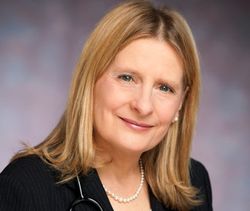
CW HEadshot copyThe Golden Age of cancer research is here. The Human Genome program provided rapid sequencing tools and large databases to be mined, computers are larger and faster than ever, advances in equipment and robotics make high-throughput experiments possible, the info web permits quick literature searches.... and so on. Cancer patients are out there, digitally connected and eager to participate in clinical trials. An increasing amount of private and public monies are going into the research effort. We are poised to make great discoveries at a rapid pace, and bring them rapidly to the clinics.

So then, why are these anticipated advances in cancer treatment so slow in coming? What is wrong with cancer research today? Well, pretty much everything.

Cancer research has two sides to it: the basic science laboratory at the university, where ideas are generated and potential new treatments are designed, and the clinical research program, where these new drugs are tested on patients and developed into bona fide treatments which are then brought to the FDA and eventually the marketplace and clinic. There are inefficiencies and major barriers to productivity in both the basic and clinical arenas.

Laboratory research is terribly expensive, and relies primarily on government funding, though an increasing amount comes from private donations and foundations. Yet only a fraction of these research dollars are truly used for researc, as the university is permitted to keep a large share as "overhead" for its own use. Admittedly, these dollars support the teaching mission of the university and contribute to our country's education, but that's fewer dollars spent on cancer research.

There is intense competition for these research dollars, and the competition itself is costly, requiring large infrastructures merely to submit and review grants. One's success in academics relies on getting the most grant money, rather than on the productivity that results from the grant.

Grant funds tend to be controlled by a select few of the "old boys," with the result that creativity is stifled and innovation is not rewarded. Young energetic people with good ideas have increasingly less opportunity to contribute to cancer research and are not attracted to the field.

In a similar vein, most of the federal research dollars available for clinical trials to test these new drugs are controlled by a few organizations, the national cooperative groups. Most of the clinical trials in this country are developed and conducted by these groups. The Cooperative Groups are run by a small group of academics who are more interested in their own career development than they are in advancing medical knowledge. Developing new clinical trials is overlain by academic politics and compromises, and takes an inordinately long time--often years--and tends to favor conservative unimaginative studies Young, innovative clinical investigators have little opportunity to participate and bring new concepts. Very little of these funds actually get to the clinics that treat patients, and even fewer to the small community hospital. What is worse, the few innovative trials testing new drugs are often available only in the academic, university hospital, further restricting access to the small community practices which care for most of the cancer patients in the US.

In summary, there is a shortage of new talent going in the field, inefficiency and waste in using research funds, and little opportunity for innovation. The research funding system in academics is broken, and cancer research will be stifled until it is fixed.

The problems with clinical research are even more extreme, and make it difficult to get new treatments evaluated by testing them on cancer patients. Although none of us would want to do away with FDA regulation or IRB review, these processes are time-consuming and expensive, and could be simplified so they benefit the patient as well as the investigator. There should be streamlined mechanisms to get drugs into clinical trials. The IRB structure, in particular, is wasteful and outmoded; initially set up to protect patient safety during trial design, IRBs often see their role as one of preventing trials from going forward; although central and national IRBs are starting to gain acceptance, most private hospitals still rely on their own internal boards, which are slow and often unreasonable. Add to that the fact that each institution sets up its own regulations that make it difficult and expensive to open a new cancer drug trial. Enrolling patients, chart abstraction and data collection are often prohibitively expensive, particularly for the small institution, who often opt to do without clinical research, thus depriving patients of the opportunity to access the newest treatments.

In this day and age of instant communications, it would make more sense for every physician to have access to any and all clinical trials on a national level rather than on an institutional level. New cancer treatment drugs should be available to everyone. A uniform electronic medical record (EMR) would greatly facilitate a model like this as it would enable most of the chart abstraction and data collection at low cost to the institution. Although there is a lot of resistance to a uniform national EMS, it is necessary if we want to maintain our strengths in cancer clinical research.

But the greatest barrier to clinical trials is the clinic itself. It takes time for a doctor to evaluate, consent, and enroll a patient on a clinical trial--even if that activity is delegated to another professional, it still takes dollars away from the practice, and some of the doctor's time. And the structure of today's clinical practice--as mandated by Medicare and Obamacare insurance dictates--provide no additional reimbursement for this activity. In fact, there are disincentives to enrolling patients on trials. Physicians should be allowed to bill an extra half hour of time (which is quite realistic) when caring for cancer patients who are enrolling or enrolled on a clinical trial.

It should be a national goal of our health care system for every cancer patient to be enrolled on at least one clinical trial, including tissue banks, registries, quality of life, as well as treatment trials. Achieving this goal will not only improve our cancer research, it will also improve the health of our nation.

Carol A Westbrook, MD, PhD, is a medical oncologist at the Henry Cancer Center in Wilkes-Barre, PA. She is a former cancer scientist, and author of the book, "Ask An Ocologist: Honest Answers to Your Cancer Questions."

Posted by S. Abbas Raza at 12:10 AM | Permalink

Comments

Dear Carol,
Thanks for providing this comprehensive summary of the state of Cancer Research today and your thoughtful answers to some of the glaring deficiencies. Every single oncologist I speak to has expressed similar frustrations with the outmoded systems but even the sporadic changes implemented by the Government continue to serve the Haves. It is time that like-minded individuals band together to become a forceful voice demanding change. This article is an excellent eye-opener for both the medical and the non-medical cognoscenti and hopefully will garner the attention it deserves. Hopefully, this is the first step in the journey that may be a thousand miles long. Thanks again and love, Azra.

Posted by: Azra Raza | Jan 21, 2013 7:46:09 AM

Dr. Westbrook, your discussion about the challenges, obstacles, and inefficiencies of medical research today is spot-on. Given the advances in genetic sequencing and molecular imaging, we are on the precipice of a golden era of medical and cancer research. At least we should be. For all of the reasons you do eloquently described, millions of patients will have to wait for the fruits of these discoveries and many will never receive potentially life saving treatments.

Last year, my wife was diagnosed with breast cancer at the young age of 32. As an anesthesiologist, I had cared for many women with this diagnosis before, some of which were as young or even younger than my wife. But when it was my wife, my world was turned upside down. As she bravely endured surgery and chemotherapy, I became more attuned to this research revolution and all of the obstacles that were preventing rapid forward progress with the goal of improved patient care at the forefront.

After she recovered from her treatment, my wife wanted to directly support specific research projects that might benefit her or our two young daughters who now have a 2-3x increased risk of developing breast cancer themselves. But she couldn't find any way to directly donate to the project level. So she decided to start a new nonprofit platform that would allow other patients to donate to specific medical research projects (not just related to cancer) that matter to them. This is how Consano (www.consano.org) was born. With a planned launch in February, Consano will permit directed donation to various high quality projects from several research institutions (internally vetted by the institution and by Consano's scientific advisory board). Patients can browse the various projects, donate to the one(s) that matter to them, and then receive regular updates from the researcher over the life cycle of the project. All of these directed donations (minus unavoidable PayPal processing fees) will go directly to the project and will be used exactly how the researcher indicated on their project page. With transparency, visibility, and "directability" as guiding principles, we hope that Consano will offer a novel solution to the funding difficulties facing researchers today.

Posted by: Scott Finkelstein | Jan 21, 2013 4:06:46 PM

Dear Dr. Finkelstein,
I am very sorry to hear about the ordeal your wife had to go throughat at such a youthful age, and glad to know it is behind her. What she has decided to do for breast cancer research is noble, inspiring and greatly needed. Bravo! I am writing to suggest that if Consano really wants the research dollars to go to deserving projects, Dr. Carol Westbrook should go on its Advisory team. She is a first rate clinician and an outstanding researcher who is now in private practice because of the frustrations of acedemia. I do not know anyone who understands the intricacies of both clinical and basic research better than Dr. Westbrook. She is one of the smartest women I know and she can judge a good project appropriately and with absolutely no bias. She has also served on the coveted Study Sections of NIH multiple times as a grant reviewer and is one of the most accomplished molecular geneticists of the day. This is my sincere advice to you as a cancer researcher. Sending you and your family best wishes and thanks for the comment you made on Dr. Westbrook's article. This is exactly why 3quarksdaily is such a special site...readers like you make our efforts worth everything...and more.
Azra.

Posted by: Azra Raza | Jan 22, 2013 9:29:25 AM

Post a comment


Subscribe to this blog's feed  

PayAnywhere with iphone credit card swiper

Android Tablet

Bluetooth Headset

2013 New Style Dresses

Compare Car Rental Prices

DHgate.com Wholesale

3QD on Facebook

3QD on Kindle

3QD by Daily Email

Receive all blogposts at the same time every day.

Enter your Email:


Preview 3QD Email

3QD on Twitter

Miscellany

Lijit Search

AddThis Social Bookmark Button

Add to Google

Recent Comments

Norman Costa on Race Is Not Biology

Geoff on REFLECTIONS ON WOOLWICH

Kai Matthews on Why Rational People Buy Into Conspiracy Theories

fallensparks on REFLECTIONS ON WOOLWICH

jon s on Race Is Not Biology

musafir on REFLECTIONS ON WOOLWICH

musafir on Faith Healing

Dave Ranning on REFLECTIONS ON WOOLWICH

Geoff on REFLECTIONS ON WOOLWICH

Luke Lea on Race Is Not Biology

fallensparks on REFLECTIONS ON WOOLWICH

Luke Lea on Race Is Not Biology

jo smith on REFLECTIONS ON WOOLWICH

jo smith on Guy de Maupassant

Geoff on Jeremy Scahill & Noam Chomsky on Secret U.S. Dirty Wars From Yemen to Pakistan to Laos

Jim on Friday Poem

JF on REFLECTIONS ON WOOLWICH

Jesse on REFLECTIONS ON WOOLWICH

Kenan Malik on REFLECTIONS ON WOOLWICH

Pierre on REFLECTIONS ON WOOLWICH

chris on Race Is Not Biology

Dave Ranning on REFLECTIONS ON WOOLWICH

Sumiran on Friday Poem

prasad on Race Is Not Biology

omar on REFLECTIONS ON WOOLWICH

Acclaim For 3QD


"I couldn't tear myself away from 3 Quarks Daily, to the point of neglecting my work. Congratulations on this superb site."—Steven Pinker, Johnstone Professor of Psychology, Harvard University.

"I have placed 3 Quarks Daily at the head of my list of web bookmarks."—Richard Dawkins, Charles Simonyi Professor of the Public Understanding of Science at Oxford University.

"Just wanted you to know I’m one of many who reads and enjoys 3 Quarks....almost daily."—David Byrne, musician, former lead-singer of the Talking Heads, artist, intellectual.

Read more here.

The 3QD Prizes

Subscribe to this blog's feed