
| ABOUT US | ARCHIVES | LINKS | RSS FEED | MONDAYS | |

3quarksdaily

An Eclectic Digest of Science, Art and Literature

« MLK's vehement condemnations of US militarism are more relevant than ever | Main | The Orphans of '56 »

January 22, 2013

Awaiting a New Darwin

H. Allen Orr reviews Thomas Nagel's new book in the New York Review of Books:
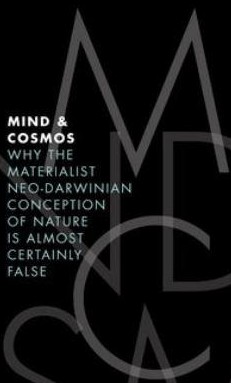
ScreenHunter_107 Jan. 23 00.16The history of science is partly the history of an idea that is by now so familiar that it no longer astounds: the universe, including our own existence, can be explained by the interactions of little bits of matter. We scientists are in the business of discovering the laws that characterize this matter. We do so, to some extent at least, by a kind of reduction. The stuff of biology, for instance, can be reduced to chemistry and the stuff of chemistry can be reduced to physics.

Thomas Nagel has never been at ease with this view. Nagel, University Professor of Philosophy and Law at New York University, is one of our most distinguished philosophers. He is perhaps best known for his 1974 paper, “What Is It Like to Be a Bat?,” a modern classic in the philosophy of mind. In that paper, Nagel argued that reductionist, materialist accounts of the mind leave some things unexplained. And one of those things is what it would actually feel like to be, say, a bat, a creature that navigates its environment via the odd (to us) sense of echolocation. To Nagel, then, reductionist attempts to ground everything in matter fail partly for a reason that couldn’t be any nearer to us: subjective experience. While not denying that our conscious experiences have everything to do with brains, neurons, and matter, Nagel finds it hard to see how these experiences can be fully reduced with the conceptual tools of physical science.

In Mind and Cosmos, Nagel continues his attacks on reductionism. Though the book is brief its claims are big. Nagel insists that the mind-body problem “is not just a local problem” but “invades our understanding of the entire cosmos and its history.” If what he calls “materialist naturalism” or just “materialism” can’t explain consciousness, then it can’t fully account for life since consciousness is a feature of life. And if it can’t explain life, then it can’t fully account for the chemical and physical universe since life is a feature of that universe. Subjective experience is not, to Nagel, some detail that materialist science can hand-wave away. It’s a deal breaker. Nagel believes that any future science that grapples seriously with the mind-body problem will be one that is radically reconceived.

More here.

Posted by S. Abbas Raza at 06:18 PM | Permalink

Comments

"Nagel never explains why his intuition should count for so much here."

This is something I have never understood: the prestige of intuition for philosophers.

Posted by: Dave Hammer | Jan 22, 2013 8:52:09 PM

Approaches that appear teleological are not new to science. The Principle of Least Action in physics is a famous example. In fact, many natural processes can be readily formulated as mini-max or extremum problems whose goal is the optimization of some kind of cost-function.

Posted by: Bill | Jan 23, 2013 8:38:13 AM

"This is something I have never understood: the prestige of intuition for philosophers."

It boils down to assuming the conclusion, which is certainly one way to get the desired answer.

Posted by: Anderson | Jan 23, 2013 9:38:46 AM

@Dave Hammer, @Anderson:

Mr. Orr mistakenly calls Nagel's unacceptance of current evolutionary consensus an appeal to his intuition, but it is not. It isn't that Nagel is incredulous of the apparent nonintuitive explanations of neo-darwinism, it is his insistence in satisfying Leibniz' principle of sufficient reason, in asking the 'why' questions all the way down. Why is it possible that we find ourselves here, evolved organisms endowed with consciousness, instead of unconscious mechanical bacteria or, rather, nothing at all? The answer to this is usually Gould's dismissal of directionality and purpose by showing it is all statistical drift forced into apparent complexification, or to hash out the observation-selection effect and anthropic reasoning, but I think there is a compelling case to be made along the lines of Nagel's thinking.

I haven't read the book yet, but I ask the same questions and have concluded, similarly, that a teleological (or teleonomic) explanation must play a larger part than is currently allowed for. I'm an atheist and adhere to naturalism, given the evidence we have, but that should not discount the possibility that life and consciousness are written into the script of the universe and unfold in a certain direction, with certain inevitable features,

Posted by: haig | Jan 24, 2013 1:14:49 AM

haig: Orr quotes Nagel as follows: "In the available geological time since the first life forms appeared on earth, what is the likelihood that, as a result of physical accident, a sequence of viable genetic mutations should have occurred that was sufficient to permit natural selection to produce the organisms that actually exist?"

This I take it is the familiar argument that the evolution of a complex organ, such as the eye, would take more time than has passed since the Big Bang were it simply a product of random mutations whose results are limited by natural selection. Its a very common argument in the anti-Darwinian literature, where it often appears as an analogy to the improbability that a series of tornados passing through a junkyard could assemble a jetliner. But what is the basis for contending that natural selection alone is incapable of assembling complex systems from random mutations? Just Nagel's intuition. I think Orr is spot on in asserting that this should count for very little. For one thing, Nagel's intuition has developed in the course of his own life, a life spent observing events that develop over weeks, or months or decades. Nagel has no experience in determining what ten billion mutations over the course of 500 million years can produce, so why should we care what his (or anyone else's) gut feelings are on this subject?

Posted by: Dave Hammer | Jan 24, 2013 1:45:24 AM

@dave hammer:

I'm going to have to read his book to understand his entire argument, but, from that unfortunate quote, it does look like he was saying what you elaborated upon, and I definitely don't agree with him in that case.

If I may, however, offer an alternative interpretation of that quote, as much as it is possible by taking liberties and speculating on his exact thoughts without actually having read his full argument. The thrust of his critique, to me, doesn't lie in disputing the fact that biological evolution occurred at geological timescales, but has more to do with the fact that it occurred at all, that abiogenesis and then natural selection sprang up as a fluke occurrence by chance instead of being the natural development cycle of suitable planets such as ours. He's saying that, given the two arguments of life being a fluke chance vs life being a natural developmental process, that the latter is improbable given the ~4 billion year age of the earth. This is a core tenant of teleological arguments, that the final cause of life matters just as much as the material and efficient causes that science has been preoccupied with.

Posted by: haig | Jan 24, 2013 3:22:13 AM

Correction: I meant the 'former', not the 'latter' in my previous comment.

Posted by: haig | Jan 24, 2013 3:23:44 AM

Post a comment


Subscribe to this blog's feed  

PayAnywhere with iphone credit card swiper

Android Tablet

Bluetooth Headset

2013 New Style Dresses

Compare Car Rental Prices

DHgate.com Wholesale

3QD on Facebook

3QD on Kindle

3QD by Daily Email

Receive all blogposts at the same time every day.

Enter your Email:


Preview 3QD Email

3QD on Twitter

Miscellany

Lijit Search

AddThis Social Bookmark Button

Add to Google

Recent Comments

Colette on POETRY IN TRANSLATION: CORDOBA

Dana on A young Houston couple is planning to give away $4 billion—but only to projects that prove they are worth it. Can they redefine the world of philanthropy?

omar on REFLECTIONS ON WOOLWICH

Dredd on REFLECTIONS ON WOOLWICH

omar on Race Is Not Biology

prasad on Race Is Not Biology

JF on REFLECTIONS ON WOOLWICH

Sundar on REFLECTIONS ON WOOLWICH

omar on REFLECTIONS ON WOOLWICH

musafir on Loneliness, isolation and desperate yearning

carlos on The Gut-Wrenching Science Behind the World’s Hottest Peppers

Dredd on A young Houston couple is planning to give away $4 billion—but only to projects that prove they are worth it. Can they redefine the world of philanthropy?

Dredd on Why Rational People Buy Into Conspiracy Theories

JonJ on Daniel Dennett's seven tools for thinking

JonJ on Race Is Not Biology

omar on Race Is Not Biology

omar on Race Is Not Biology

Dredd on Race Is Not Biology

Dredd on Race Is Not Biology

allsmiles on A Mother, a Son and a Wife

sverson on Race Is Not Biology

carlos on Daniel Dennett's seven tools for thinking

araldo on Race Is Not Biology

jo smith on Daniel Dennett's seven tools for thinking

Louise Gordon on Why race as a biological construct matters

Acclaim For 3QD


"I couldn't tear myself away from 3 Quarks Daily, to the point of neglecting my work. Congratulations on this superb site."—Steven Pinker, Johnstone Professor of Psychology, Harvard University.

"I have placed 3 Quarks Daily at the head of my list of web bookmarks."—Richard Dawkins, Charles Simonyi Professor of the Public Understanding of Science at Oxford University.

"Just wanted you to know I’m one of many who reads and enjoys 3 Quarks....almost daily."—David Byrne, musician, former lead-singer of the Talking Heads, artist, intellectual.

Read more here.

The 3QD Prizes

Subscribe to this blog's feed