
by Akim Reinhardt

From the outset, it is a story of conflict and compromise, of disparate and increasingly antagonistic regions that somehow formed the wealthiest and most powerful empire in human history. For even as North and South grew further apart, their yawning divide was bridged by a dynamic symbiosis that fed U.S. independence, enrichment, and expansion. The new empire at once grew rapaciously and tore itself apart. It strode from ocean to ocean and nearly consumed itself completely in the Civil War, which all these years later, remains the deadliest chapter in American history by far, two world wars not withstanding.
After the bloody crucible, a series of historical forces began to homogenize the American people, slowly drawing them together and developing a more cohesive national culture. As has been pointed out before, Americans began to say “the United States is” instead of “the United States are.”
But now, in the second decade of the 21st century, America is possibly coming apart once more. That hard won but ever tenuous inclusion and oneness is beginning to disintegrate. Yet there is no fear of returning to a bygone era of balkanized sectional divides, of North versus South. Instead, the increasingly polarized nation now seems to be fracturing along ideological lines.
In this essay I would like to briefly explore the history of how Americans came together under a common definition “America,” and how they may be coming apart again. I don’t wish to examine the rise and fall of an empire, but rather its citizens’ ever-shifting sense of who they are and what their nation should be.
**
The earliest European colonies dotting the North American coast were born amid rural isolation and international competition. Commerce may have kept the new French, Dutch, Spanish, and British outposts tenuously connected to the larger Atlantic world, but imperial rivalries, mercantile restrictions, and the sheer expanse of North America fostered barriers as well.
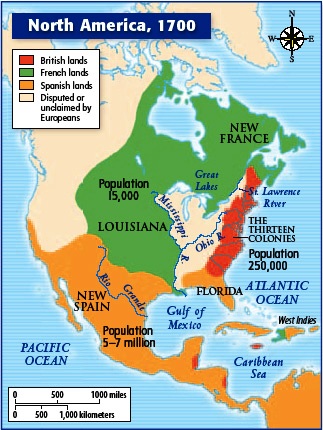
That the thirteen of them south of Canada came together to launch a revolution was not because of a natural affinity among them, but despite the differences between them. It took years and considerable begging, wrangling, and finagling before largest of them (Virginia) found the resolve to support the upstart problem-child among them (Massachusetts) in its dispute with the crown. And at that, the rebellious colonies were less interested in permanently coming together than in simply helping each other escape the royal yoke.
After achieving independence, these thirteen new states did not rush to throw their lots in with one another. Rather, they kept a safe distance by constructing a threadbare confederacy. It was something akin to a political friends-with-benefits arrangements. Mutual obligations were minimal.
But like so many intimate relationships among commitment-phobes with guarded expectations, it wasn’t long before what was once casual began to buckle under the pressure of inevitable complications and entanglements.
Will you be my date to my sister’s wedding? Will the new national government take on the thirteen states’ aggregate war debt?
It’s a slippery slope.
Not long thereafter, the founders popped the question. On bended knee, they offered a new constitution that would create a stronger central government. But there was considerable resistance, trepidation, and debate about whether this would be more like a marriage or simply a case of moving in together to save on the rent.
The degree of commitment would remain a fundamentally unsettled question until the Civil War. Along the way, the United States continued to expand. And in doing so, it continued replicating older regional divisions.
As settlers made their was across the Appalachian mountains, into the Old Southwest (the deep South) and Old Northwest (the Midwest), rural isolation remained the dominant pattern. Throuhgo
The most obvious divide was between North and South, with slavery phasing out in the former and metastasizing in the latter, particularly with the rise of the cotton economy. But beyond that, each of the larger regions was sub-divided into various sub-regions. The North featured not just small farmers but also nascent cities and industry. And more than large slave plantations, the South was also home to small yeoman homesteads, and a mass of impoverished whites, particularly in those areas not suited for large scale agriculture.
The disparity of wealth that slave plantations created in the South was mirrored to some degree in the North as urbanization and industry steadily emerged. Semi- and unskilled labor was on the rise, and more and more independent skilled craftsman were losing out The new cities boasted slums, and excess farm labor was siphoned off into mind-numbing, back-breaking factory work.
By the 1840s, new waves of European immigrants were coming by the millions, especially Irish and Germans. Most of them avoided the South, not wishing to compete with unpaid labor. Instead, they crowded into the new Northern cities, contributing to new cultural diversity and spurring a nativist, anti-immigrant, anti-catholic backlash. And for its part, the South expanded its quasi-feudal socio/economic order of rigid hierarchies and resource extraction.
As the American population grew, demands for resource-rich Indian lands increased. The rate of imperial expansion, at expense of Indian nations, sped up. And the new farms, forests, and mines fed the growing industrial sector of the booming cities.
However, imperial expansion could not ameliorate the ongoing regional tensions. Rather, it only exacerbated them.
Would the new western territories purchased from France, ransacked from Mexico, and all of it stolen in one way or another from Indians, be a staging ground to replicate the Northern or Southern models of development?
Competition in and over the West only worsened regional tensions and was arguably the biggest factor leading to the Civil War. Southern agitators did not orchestrate secession and form the Confederacy because they feared the North was going to change the South. They did so because they feared the North would prevent them from expanding their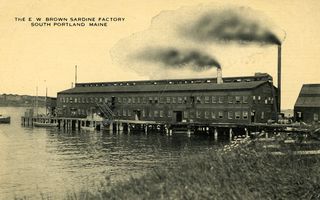
The North's victory ended Southern political secession. But cultural cohesion and a unified American identity would take another century.
After the war, Northern efforts to reconstruct the South were mixed and temporary. Early efforts by Radical Republicans to ensure legal and political equality for African Americans faced stiff resistence. By the mid-1870s, Northern will was teetering, and by decade’s end, blacks had been forced back into a state of coerced labor, political exclusion, social persecution, and abject poverty. Sharecroppers and tenant farmers instead of slaves, they were routinely denied basic political rights and economic opportunities. The old Southern elite was able to re-establish itself and the old aristocratic social order. More and more white small farmers lost their land and voting rights as well. Northern industrialists were happy to keep cotton and other resources flowing.
Amid these conditions, the first step-towards building a unified American identity after the Civil War came at the expense of African Americans and other minorities. By the latter part of the 19th century, Northern and Southern whites found common ground in a new brand of virulent, pseudo-scientific racism. It infected American culture as whites put aside their former differences, elevated themselves above all of the “colored races,” and defined themselves as the true Americans.
While regional differences remained sharp, the turn-of-the-century emphasis on a racialized whiteness allowed white Americans to cast a new national identity, often at the expense of minorities.
In the South, African Americans remained extremely marginalized. In the North, “non-white” Jewish, Catholic, and Eastern Orthodox immigrants, whose numbers swelled beginning in 1900, were labeled as the Other. In the West, a kaleidoscope of bigotry proliferated across the vast region. Hatred of blacks, Latinos, Asians, and Indians each grabbed the spotlight in various locales from the Great Plains to the Pacific Coast.
Those groups thought to be redeemable, such as Indians and some European immigrants, were pressured to assimilate, to adopt White Anglo Saxon Protestant norms. At the same time, groups marked irreconcilably foreign or inferior, such as blacks and Asians, were completely shunned. Asian immigration was banned in the 1880s. Shortly thereafter, blacks were subjected to Jim Crow apartheid in the South and parts of the West, and more de facto form but still very strict forms of segregation elsewhere.
But other, more neutral forces also helped smooth out regional differences and establish a unified sense of what it meant to be “American.” Developments in transportation, particularly the railroad, increased contact. So too did the new communications infrastructure such as the telephone. Also important was the new mass media. First national magazines and then radio and movies presented people all across the American empire with consistent cultural messages.
Homogenization was underway.
The pivotal event that began to move the United States past a racialized conception of what it means to be American was World War II.
The war's exigencies demanded sacrifices from the whole of society. Under this pressure, racial institutions and programs began to crack. For example, black and white often worked side by side in defense plants. And there was almost instant blowback.
In the summer of 1943, approximately 250 race riots erupted in 47 cities across America.
But there was no turning back. You couldn’t put the genie back in the bottle. After the war, the Civil Rights movements waged by blacks, Latinos, Indians, women, gays, and others, challenged the exclusivist definition of “American.”
At the same time, mass communication and popular culture furthered the grand homogenizing process, with TV at center stage. And in the political arena, the Cold War continued WWII’s function of binding Americans together through fear of a common enemy.
As Americans reconceptualized their whites-only version identity during the post-war era, the Melting Pot emerged as an alternative: all the different cultures blending together into a distinctly American stew, though with WASP as the dominant flavor. And by the 1980s, multiculturalism began to assert itself. The Melting Pot metaphor was replaced by the Salad Bowl, in which all the different ingredients are still distinct.
That’s not to say that racism and sectionalism had been completely erased from the American psyche by the end of the 20th century. Far from it. But both had faded greatly compared to earlier eras. And 
Yet here we stand, in the 2013, staggered by divisions among Americans so deep that we wonder aloud if the national political system can remain functional. We are nearly drowning in a cacophony of shouting matches.
But the new fractures aren’t the result of provincial sectionalism, or even debased racism. Rather, the nation is segmented by a new spider web of ideological differences
Of course there have always ideological differences. And in a nation that now boasts well over 300 million people, there always will be. But those differences are on the verge of rupturing the common ground upon which Americans stand.
Many of the forces that helped homogenized the American people are either radically transformed or now absent.
The Cold War is over; Iraq wars and Al Qaeda attacks can no longer stand in.
Multiculturalism maybe superior to the mid-century melting pot motif in many ways, but it offers no unifying vision for what it means to be “American.”
And communication technologies have exploded. What Ma Bell and Hollywood helped bring together, cable and the world wide web have helped tear asunder. The cultural monoliths that once bound Americans together through a common experience, have been eclipsed by the new multipiplicity of fractured and individualized media. Those homogenizing forces that helped to moderate American opinion have been honeycombed, creating ideological and cultural cells into which Americans are now free to descend.
**
This is not a moralistic polemic. I am not in league with the 1990s social critics who decried multiculturalism as a divisive force and pined to maintain whatever degree of homogeneity they could.
Or as Arthur Schlesinger put it, there was too much pluribus and not enough unum.
Pish posh to that. I'm not pie-eyed. Change brings both good and bad.

Americans, it seems, are unbecoming.
—
Akim Reinhardt's website is The Public Professor.