
By Namit Arora
A two-part review of The Indian Ideology, October 2012, by Perry Anderson. Part 2 appeared on April 22.
But not all historians are equally complicit. Some are deeply skeptical of the dominant national histories and claims of nationhood. ‘Getting its history wrong is part of being a nation,’ wrote the scholar Ernst Renan. The skeptical historian may even see positive value in certain aspects of nationalism—its potential to bind diverse groups and inspire collective action, for instance—but she always sees a pressing need to inspect and critique its claims, assumptions, omissions, myths, and heroes. Scrutiny may reveal that a ‘cherished tradition’ is neither cherished, nor a tradition; likewise for supposedly ‘ancient’ origins and customs, traits and virtues, arts and culture, and other qualities of life and mind said to define the essence of a nation and its people. This approach is especially common among Marxist historians (their analytical orientation defines the genre, not their views on communism). The best of them know that there is no ultimately objective history, but who yet seek to write history from below and attempt to expose the actual conditions of social life, including the divisions, conflicts and oppressions that plague any nation.
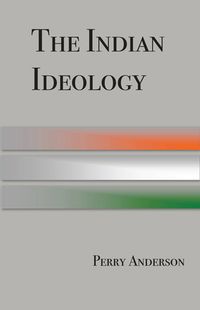
This, then, is the vantage point of Marxist historian Perry Anderson’s magnificent and lucid new work, The Indian Ideology. What does the title refer to? In his own words, it ‘is another way of describing what is more popularly known as “The Idea of India”, which celebrates the democratic stability, multi-cultural unity, and impartial secularity of the Indian state as a national miracle.’ Anderson offers a critique of this idea.
Nationalism in India arose in the 19th century. A native elite, responding to British colonialism, began articulating a consciousness based on a new idea of India. Until then, despite civilizational continuities, the Subcontinent had no sense of itself as ‘India’, no national feeling based on political unity or a shared identity. Rival political units and ethnic groups abounded, divided by language, faith, caste, geography, history, and more. There was no historical awareness of the ancient empires of Mauryas or Guptas, or that the Buddha was Indian. This and much more of the Indian past would emerge via European scholarship, profoundly shaping ‘Hinduism’ and Hindu self-knowledge. Anderson surveys the rise of Indian nationalism and offers sharp vignettes of the minds and matters that drove Gandhi, Jinnah, Nehru, Bose, Ambedkar, Mountbatten and others. His analysis of the forces that led to Partition is astute and provocative. He assesses the performance of the independent nation-state and subjects Indian intellectuals to a withering critique for what he diagnoses as their comfort with ‘the Indian ideology’. Though not without shortcomings, Anderson has given us a masterwork of critical synthesis — trenchant, original, and bold — that should fuel discussion and debate for years ahead.
§
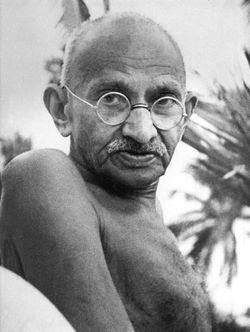
‘He was a first-class organiser and fundraiser … who rebuilt Congress from top to bottom … [Secondly,] though temperamentally in many ways an autocrat, politically he did not care about power in itself, and was an excellent mediator between different figures and groups both within Congress and among its variegated social supports. Finally, though no great orator, he was an exceptionally quick and fluent communicator … To these political gifts were added personal qualities of a ready warmth, impish wit and iron will. It is no surprise that so magnetic a force would attract such passionate admiration, at the time and since.’
Gandhi’s success however came at a huge cost, writes Anderson, mostly due to his religiosity. To him ‘religion mattered more than politics’, more so even than to Ayatollah Khomeini. Anderson presents a fresh portrait of Gandhi, including the peculiar grab-bag of Hindu beliefs, inflected with Christian ones, that he embraced. These would also inspire his odd ideas about sexuality and abstinence that have caused much head-scratching ever since. Would it were that his faith had played out only in the bedroom. Instead, it was part of a worldview that despised the social changes wrought by modernity — machines, railways, hospitals, and modern education — and defended all manner of atavisms. To ‘real intellectual exchange he was a stranger’ and ‘rarely disavowed directly anything significant he had once said or written’. Gandhi, Anderson continues, had ‘limited knowledge of, or interest in, the outside world’, as evident in his extreme misreading of Hitler. Floods and earthquakes were punishments for human failings. Allergic to socialism, his political ideal was a nebulous Ram Rajya.
While Gandhi despised untouchability and even campaigned against it, he naively held that ‘the caste system is not based on inequality’, that its discrimination and hierarchy was an aberration that ought to be fixed by transforming minds while preserving castes. ‘I do not believe in caste in the modern sense’, he wrote in 1933. ‘It is an excrescence and a handicap on progress.’ But the ‘spirit behind caste is not one of arrogant superiority’ and it is really ‘the best possible adjustment of social stability and progress’ since the ‘beauty of the caste system is that it does not base itself upon distinctions of wealth possessions’, as class-based systems in the West did. He held that the ‘hereditary principle [of caste] is an eternal principle. To change it is to create disorder.’ Gandhi even believed that Hinduism had a built-in mechanism for social justice since misbehaving Brahmins would be demoted in the next life. Over time, faced by Ambedkar’s attacks, he would tone down his views. Anderson observes that Gandhi knew little about Islam and warned his son to never marry a Muslim for it was against dharma. He claimed to revere the cow, reflexively imagined India as a Hindu nation, and was really a ‘Hindu revivalist’.
The basic facts here are not new; what is striking is Anderson’s choice of material and the narrative he weaves out of it. One tragic impact of Gandhi’s takeover of Congress, writes Anderson, was that he ‘injected a massive dose of religion — mythology, symbology, theology — into the national movement.’ Despite his sincere belief in the parity of all religions, Gandhi’s was inevitably a Hindu imaginarium. This increased the popular appeal of Congress to Hindus but also sowed the seeds of Muslim alienation in Congress, culminating eventually in Partition. Behind the rhetoric, only three percent of Congress members were Muslims in the 1930s, when a quarter of the population was Muslim. Gandhi’s beliefs inspired his ‘thoroughly regressive’ Khilafat campaign, opposed by secular-minded Muslims like Jinnah.
Gandhi’s Hindu sensibility also led him to sabotage the British agreement to a separate electorate for the Untouchables, championed by Ambedkar. The Untouchables’ leader, Anderson writes, was ‘intellectually head and shoulders above most of the Congress leaders’ and held that ‘No matter what the Hindus say, Hinduism is a menace to liberty, equality and fraternity’. Gandhi saw things differently. For him, tackling untouchability did not merit a fast unto death, but blocking political approaches to empowering the Untouchables did. After all, Anderson observes,
‘If Untouchables were to be treated as external to the Hindu community, it would be confirmation that caste was indeed, as its critics had always maintained, a vile system of discrimination … and since Hinduism was founded on caste, it would stand condemned with caste. To reclaim the Untouchables for Hinduism was an ideological imperative for the reputation of the religion itself. But it was also politically vital, since if they were subtracted from the Hindu bloc in India, its predominance over the Muslim community would be weakened. There were ‘mathematical’ considerations to bear in mind, as Gandhi’s secretary delicately reported his leader’s thinking on the matter. Most menacing of all, Gandhi confided to a colleague, might not Untouchables, accorded separate identity, then gang up with ‘Muslim hooligans and kill caste Hindus’?’
More contentiously, Anderson argues that ‘contrary to legend, [Gandhi’s] attitude to violence had always been — and would remain — contingent and ambivalent.’ Nor did he have much success with Satyagraha, or non-violent resistance, for ‘each time Gandhi had tried it, the British had seen it off.’ Anderson claims that success in the nationalist struggle came not from the mass mobilization of Satyagraha, but from Gandhi’s rebuilding of Congress, its rise as a popular political force, and the steady expansion of the electoral machinery after 1909.
But even if Anderson is right, surely Gandhi’s Satyagraha amplified the success of the struggle by raising mass consciousness. Moreover, was non-violence still not preferable to violent resistance? Anderson seems unconvinced. He admires the secular-leftist leader Bose, his ‘fearless militancy and commanding intellectual gifts’, his commitment to inter-communal alliances, and criticizes Gandhi’s undemocratic eviction of him from the Congress. In Anderson’s view, the violence that Satyagraha ‘spared the British was decanted among compatriots’, only to show itself later in communalism and Partition. This argument might be more persuasive if it weren’t truly an imponderable. Anderson claims that Gandhi’s infusion of Congress with Hindu religiosity — of which Satyagraha was a part — ‘was the origin of the political process that would eventually lead to partition.’ But did Gandhi’s compatriots see Satyagraha as a part of Hindu religiosity? We know that it was adopted and practiced to good effect by oppressed populations of many non-Hindu nations, and even by the Pashtun Muslim leader Khan Abdul Ghaffar Khan, aka the ‘Frontier Gandhi’. Martin Luther King, Jr. was influenced by it, noting that ‘The ultimate weakness of violence is that it is a descending spiral, begetting the very thing it seeks to destroy. Instead of diminishing evil, it multiplies it.’ It is plausible, however, that in much of India and especially in Congress, Satyagraha, simply by its association with Gandhi, was seen as part of the Hindu political matrix that was alienating and sometimes even threatening to non-Hindus. But what if Gandhi had not transformed Congress in such a way? Anderson writes,
‘… the question remains whether even without him, the logic of mass organisation in populations as steeped in the supernatural as those of South Asia would not have transformed Congress into the Hindu party it became. For everywhere in the region, political awakening was intertwined with religious revival.’
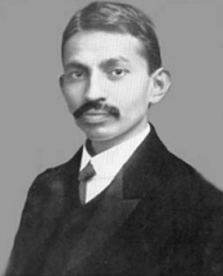
Some defenders of Gandhi have argued that his views on caste too evolved late in his life. By the 1940s, they claim, Gandhi not only saw inter-religious marriage as ‘a welcome event’, he also advocated, in historian Mark Lindley’s words, ‘intermarriage between Brahmins and Untouchables in order to dismantle the caste system “root and branch.”’ ‘When all become casteless,’ Gandhi wrote, ‘monopoly of occupations would go.’ The earlier Gandhi did not say such things but instances of such views are few in number and it is hard to assess to what extent they reveal a genuinely progressive turn in his vision.
Gandhi is therefore rightly criticized for his long-held views on caste, because even if he had begun to think differently late in his life, it seems too little, too late. By then his approach to caste had caused enough damage already, not the least by thwarting Ambedkar. His writings defending the varna order are too numerous to whitewash. In 1922, Gandhi wrote, ‘The caste system is a natural order of society.’ In 1933, at age 64, he wrote that ‘the caste system has a scientific basis. Reason does not revolt against it … Caste creates a social and moral restraint—I can find no reason for its abolition. To abolish caste is to demolish Hinduism.’ The law of varna, he wrote in 1934, ‘has universal application. The world may ignore it today but it will have to accept it in the time to come.’ The scholar Braj Ranjan Mani has argued that anti-caste radicals like ‘Ambedkar and Periyar saw Gandhi as an orthodox moralist whose pacifism actually enhanced his authoritarianism, and whose renunciations rid none of his desire to control and coerce the traditionally subjugated. Gandhi’s defense of caste and Brahmanism under the cover of spiritual-cultural nationalism was the secret of his popularity among the elite intelligentsia.’
Gandhi’s voluminous writings, and the open book that his life was, continue to both provoke and resist a definitive assessment. Nonetheless, Anderson’s bracing analysis of Gandhi’s impact on the nationalist struggle is a singular achievement. It strikes hard at hagiographies of the Father of the Nation and raises unsettling questions about the nation he helped shape (more on that in Part 2), which in turn shaped him and continues to define his legacy today.
________________________________
Part 2 focuses on the causes of Partition, Nehru, the Indian nation-state, and some undersides of the Idea of India. The essays in The Indian Ideology are also online (one, two, three).
The review appeared as “No Saints or Miracles“ in the Himal Southasian print quarterly 'Are we sure about India?' (January 2013), and is reproduced with permission. This online version (updated, about 5 percent larger) first appeared on 3QD.
More writing by Namit Arora?
________________________________