
| ABOUT US | ARCHIVES | LINKS | RSS FEED | MONDAYS | |

3quarksdaily

An Eclectic Digest of Science, Art and Literature

« Fragmentary Notes from the United Nations | Main | Per Petterson »

December 04, 2012

No Artificial Fires: The Poetry of Zbigniew Herbert

Bilal Tanweer in Poetry, etc.:
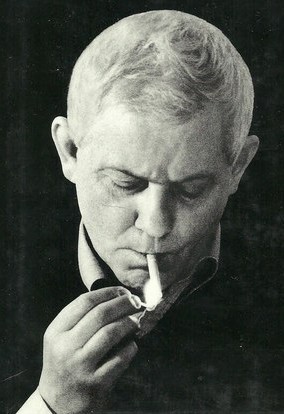
ScreenHunter_56 Dec. 04 14.10How to describe the poetry of the Polish poet Zbigniew Herbert, who Seamus Heaney described as “a poet of exemplary ethical and artistic integrity in world literature in the 20th and 21st century… a poet whose work fulfills the classical expectation that great literature will delight and instruct,” and who Robert Hass referred to as “one of the most influential European poets of the last half-century, and perhaps—even more than his [Nobel Prize winning] contemporaries Czeslaw Milosz and Wislawa Szymborska—the defining Polish poet of the post-war years,” and about whom Stephen Dobyns wrote in the New York Times claiming: “In a just world Mr. Herbert would have received the Nobel Prize long ago”?

I first encountered Zbigniew Herbert in a volume called Mr. Cogito and I experienced that rare exhilaration of encountering something wise, beautiful and unlike I had read before. It was a detached poetic voice that was also contemplative and humorous and deeply serious and yet playful all at the same time, and its sparse and precise language moved delightfully between thought and image. By the time I went through the collection, the marginalia of my copy were all exclamatory points and Wow’s of varying lengths and slants. Many of these poems have since become my ports of refuge, and one The Envoy of Mr. Cogito has grown into an anthem. However, on that first reading I dwelled longest on a much simpler poem where Herbert leads a kind of existential meditation stamped with his trademark humor:

Mr. Cogito Meditates on Suffering

All attempts to remove
the so-called cup of bitterness—
by reflection 
frenzied actions on behalf of homeless cats 
deep breathing
religion—
failed

one must consent
gently bend the head
not wring the hands
make use of the suffering gently moderately
like an artificial limb
without false shame
but also without unnecessary pride 

do not brandish the stump
over the heads of others
don’t knock with the white cane
against the windows of the well-fed

drink the essence of bitter herbs
but not to the dregs
leave carefully 
a few sips for the future

accept
but simultaneously
isolate within yourself
and if it is possible
create from the matter of suffering
a thing or a person

play
with it
of course
play 
entertain it
very cautiously
like a sick child
forcing at last
with silly tricks
a faint
smile

More here.

Posted by S. Abbas Raza at 08:11 AM | Permalink

Comments

> Mr. Cogito Meditates on Suffering

I think this poem could be made more fun. As Groovy programmers well know, Groovy has syntax for specifying closures without parentheses. I believe you can write a Groovy program that will compile without errors and run correctly with the exact text of this poem. Imagine that!

Also, my six year old niece writes stuff like this. Imagine that too.

Posted by: Anand Manikutty | Dec 6, 2012 11:47:48 PM

Post a comment


Subscribe to this blog's feed  

PayAnywhere with iphone credit card swiper

Android Tablet

Bluetooth Headset

2013 New Style Dresses

Compare Car Rental Prices

DHgate.com Wholesale

3QD on Facebook

3QD on Kindle

3QD by Daily Email

Receive all blogposts at the same time every day.

Enter your Email:


Preview 3QD Email

3QD on Twitter

Miscellany

Lijit Search

AddThis Social Bookmark Button

Add to Google

Recent Comments

LWR on POETRY IN TRANSLATION: CORDOBA

Rashid on Aftermath: Pakistan Elections 2013

Yoann on The Bystander Effect in Medical Care. Why Do I Have So Many Doctors Not Taking Care of Me?

Dave Ranning on Aftermath: Pakistan Elections 2013

sadhana on Aftermath: Pakistan Elections 2013

Carol Westbrook on The Bystander Effect in Medical Care. Why Do I Have So Many Doctors Not Taking Care of Me?

Ken Bryant on Aftermath: Pakistan Elections 2013

Umer Vakil on POETRY IN TRANSLATION: CORDOBA

Kabir on Aftermath: Pakistan Elections 2013

Nina on White Indians

Nina on White Indians

Dave Ranning on If Only We Had A Leader Like Chavez, Who Solved Real Problems -- Instead Of Debating Fake Ones Like The Deficit

Mohammed Hassanali on Aftermath: Pakistan Elections 2013

musafir on Aftermath: Pakistan Elections 2013

Maniza on Aftermath: Pakistan Elections 2013

Ellen Perry on The Bystander Effect in Medical Care. Why Do I Have So Many Doctors Not Taking Care of Me?

waqnis on The Bystander Effect in Medical Care. Why Do I Have So Many Doctors Not Taking Care of Me?

Norman Costa on The Bystander Effect in Medical Care. Why Do I Have So Many Doctors Not Taking Care of Me?

Hannah Carlton on POETRY IN TRANSLATION: CORDOBA

Joe on Digging Up Bones or, The Labyrinths beneath Our Feet

JonJ on The Beautiful German Language

cpfaff on Passionate About The Actor's Art: an interview with Michael Howard

Sumiran on Sunday Poem

Ethan on Getting Smarter

Pacificklaus on NORTH KOREA’S NERVE WAR

Acclaim For 3QD


"I couldn't tear myself away from 3 Quarks Daily, to the point of neglecting my work. Congratulations on this superb site."—Steven Pinker, Johnstone Professor of Psychology, Harvard University.

"I have placed 3 Quarks Daily at the head of my list of web bookmarks."—Richard Dawkins, Charles Simonyi Professor of the Public Understanding of Science at Oxford University.

"Just wanted you to know I’m one of many who reads and enjoys 3 Quarks....almost daily."—David Byrne, musician, former lead-singer of the Talking Heads, artist, intellectual.

Read more here.

The 3QD Prizes

Subscribe to this blog's feed