
| ABOUT US | ARCHIVES | LINKS | RSS FEED | MONDAYS | |

3quarksdaily

An Eclectic Digest of Science, Art and Literature

« 10 myths about the Connecticut shootings | Main | Innovation Crisis or Financial Crisis? »

December 19, 2012

Begging to Differ

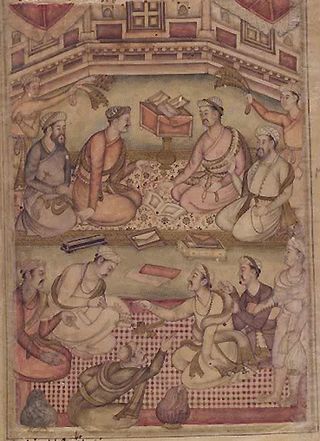
Mughal43

Catherine Z. Elgin in The Philosophers' Magazine (image from Wikimedia commons):

Disagreement abounds. People disagree about everything from sports and politics to science and child rearing. When disagreements stem from the manifest ignorance, bias, or stupidity of one of the disputants, they are epistemologically benign. That someone who clearly does not know what he is talking about disagrees with you gives you no reason to rethink your position. But some disagreements are more worrisome. Equally intelligent, knowledgeable, thoughtful and open-minded people often disagree. Let us call such parties intellectual equals. Should disagreements among intellectual equals give us pause?

Epistemologists disagree. Conciliatory thinkers such as Hilary Kornblith hold that it should. If Fred recognises George as his intellectual equal, he has no basis for thinking that his opinion is better than George’s (or that George’s is better than his). So when they disagree, conciliationists maintain, both should suspend judgement. Advocates of resoluteness such as Thomas Kelly recommend holding fast. If intellectual equals who disagree are always required to suspend judgement, scepticism looms. Given the range of topics on which we disagree with our intellectual equals, we know very little. Resoluteness is permissible, they maintain, because everyone makes mistakes. It is open to Fred to think that where they disagree, George must be mistaken. He is then within his rights to dismiss George’s opinion. Unfortunately, George can think the same about Fred. Resoluteness fosters dogmatism; we are always entitled to dismiss the opinions of intellectual equals who disagree with us by assuming they have made a mistake. Neither scepticism nor dogmatism is an attractive option. A third alternative is that disagreement among intellectual equals provides some reason to rethink one’s position but does not require revising or repudiating it. In that case, parties could reasonably agree to disagree. The challenge is to make room for this position.

Posted by Robin Varghese at 07:27 AM | Permalink

Comments

" Equally intelligent, knowledgeable, thoughtful and open-minded people often disagree. Let us call such parties intellectual equals."

This is pure hubris. Disagreements are rarely "intellectual". They are usually a result of different interests and values. Which is why only arrogant elitists believe they can dismiss the arguments of people they perceive as less than their "intellectual equals".

Posted by: Ross Williams | Dec 19, 2012 10:37:51 AM

Post a comment


Subscribe to this blog's feed  

PayAnywhere with iphone credit card swiper

Android Tablet

Bluetooth Headset

2013 New Style Dresses

Compare Car Rental Prices

DHgate.com Wholesale

3QD on Facebook

3QD on Kindle

3QD by Daily Email

Receive all blogposts at the same time every day.

Enter your Email:


Preview 3QD Email

3QD on Twitter

Miscellany

Lijit Search

AddThis Social Bookmark Button

Add to Google

Recent Comments

omar on Race Is Not Biology

omar on Race Is Not Biology

Dredd on Race Is Not Biology

Dredd on Race Is Not Biology

allsmiles on A Mother, a Son and a Wife

sverson on Race Is Not Biology

carlos on Daniel Dennett's seven tools for thinking

araldo on Race Is Not Biology

jo smith on Daniel Dennett's seven tools for thinking

Louise Gordon on Why race as a biological construct matters

Louise Gordon on Race Is Not Biology

Dave on Race Is Not Biology

Bill on Daniel Dennett's seven tools for thinking

Boursin on Why Rational People Buy Into Conspiracy Theories

Usha Alexander on Race Is Not Biology

Abbas Raza on Daniel Dennett's seven tools for thinking

X on Race Is Not Biology

Usha Alexander on Race Is Not Biology

jo smith on Mohsin Hamid: 'Islam is not a monolith'

araldo on Mohsin Hamid: 'Islam is not a monolith'

Dr. X, Ph.D. on Race Is Not Biology

jo smith on Physicists Create Quantum Link Between Photons That Don't Exist at the Same Time

jo smith on Mohsin Hamid: 'Islam is not a monolith'

omar on Why race as a biological construct matters

Dr. Smith on Race Is Not Biology

Acclaim For 3QD


"I couldn't tear myself away from 3 Quarks Daily, to the point of neglecting my work. Congratulations on this superb site."—Steven Pinker, Johnstone Professor of Psychology, Harvard University.

"I have placed 3 Quarks Daily at the head of my list of web bookmarks."—Richard Dawkins, Charles Simonyi Professor of the Public Understanding of Science at Oxford University.

"Just wanted you to know I’m one of many who reads and enjoys 3 Quarks....almost daily."—David Byrne, musician, former lead-singer of the Talking Heads, artist, intellectual.

Read more here.

The 3QD Prizes

Subscribe to this blog's feed