From The New York Times:
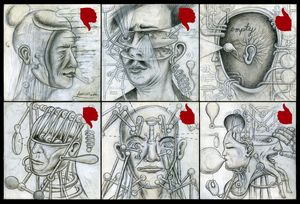 This weekend the Board of Trustees of the American Psychiatric Association will vote on whether to adopt a new diagnostic system for some of the most serious, and striking, syndromes in medicine: personality disorders. Personality disorders occupy a troublesome niche in psychiatry. The 10 recognized syndromes are fairly well represented on the self-help shelves of bookstores and include such well-known types as narcissistic personality disorder, avoidant personality disorder, as well as dependent and histrionic personalities. But when full-blown, the disorders are difficult to characterize and treat, and doctors seldom do careful evaluations, missing or downplaying behavior patterns that underlie problems like depression and anxiety in millions of people. The new proposal — part of the psychiatric association’s effort of many years to update its influential diagnostic manual — is intended to clarify these diagnoses and better integrate them into clinical practice, to extend and improve treatment. But the effort has run into so much opposition that it will probably be relegated to the back of the manual, if it’s allowed in at all. Dr. David J. Kupfer, a professor of psychiatry at the University of Pittsburgh and chairman of the task force updating the manual, would not speculate on which way the vote might go: “All I can say is that personality disorders were one of the first things we tackled, but that doesn’t make it the easiest.” The entire exercise has forced psychiatrists to confront one of the field’s most elementary, yet still unresolved, questions: What, exactly, is a personality problem?
Habits of Thought
It wasn’t supposed to be this difficult. Personality problems aren’t exactly new or hidden. They play out in Greek mythology, from Narcissus to the sadistic Ares. They percolate through biblical stories of madmen, compulsives and charismatics. They are writ large across the 20th century, with its rogues’ gallery of vainglorious, murderous dictators. Yet it turns out that producing precise, lasting definitions of extreme behavior patterns is exhausting work. It took more than a decade of observing patients before the German psychiatrist Emil Kraepelin could draw a clear line between psychotic disorders, like schizophrenia, and mood problems, like depression or bipolar disorder.
More here.
