
| ABOUT US | ARCHIVES | LINKS | RSS FEED | MONDAYS | |

3quarksdaily

An Eclectic Digest of Science, Art and Literature

« A Pair of MIT Scientists Try to Transform Nuclear Power | Main | Egypt's New Constitution »

November 30, 2012

The Salman Rushdie Case

Heller_1-122012_jpg_470x634_q85

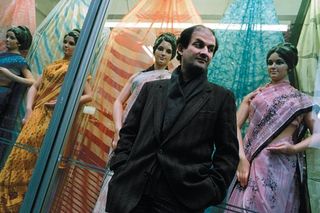
Zoë Heller reviews Salman Rushdie's Joseph Anton: A Memoir, in the NYRB:

When Anis Rushdie read his son’s novel Midnight’s Children for the first time in 1980, he became convinced that Ahmed Sinai, the drunken father in the book, was a satirical portrait of himself. A family row ensued. Rushdie fils did not deny that Sinai was based on his father—“In my young, pissed-off way,” he would later tellThe Paris Review, “I responded that I’d left all the nasty stuff out”—but he objected to his father’s wounded reaction and thought it revealed a crude understanding of how novels worked. “My father had studied literature at Cambridge so I expected him to have a sophisticated response to the book, but the person who did was my mother…. She understood it at once as fiction.”

The position that Rushdie took during this literary-domestic spat uncannily prefigured the position he would take nine years later, when confronted by the wrath of another, more punishing patriarch. On February 15, 1989, a day after the Ayatollah Khomeini had issued a fatwa condemning him to death for his authorship of The Satanic Verses, Rushdie appeared on British television and announced that he wished his book had been “more critical” of Islam. As he reports in Joseph Anton—a memoir he has chosen to write in a de Gaulle–like third person—his principal emotion at the time was one of bafflement:

When he was first accused of being offensive, he was genuinely perplexed. He thought he had made an artistic engagement with the phenomenon of revelation; an engagement from the point of view of an unbeliever, certainly, but a proper one nonetheless. How could that be thought offensive? The thin-skinned years of rage- defined identity politics that followed taught him, and everyone else, the answer to that question.

Given how often Rushdie has been accused of writing The Satanic Verses with the express purpose of making trouble, it is understandable that he should wish to highlight the unexpected—the unprecedented—nature of the events that followed the novel’s publication. Even so, his retrospective account of himself as a bookish innocent, bewildered by the world’s coarse intrusion into the literary sphere, seems a little over-egged. By this point in his career, Rushdie, who had already been sued by Indira Gandhi for libelous statements in Midnight’s Children and had already seen his third novel banned in Pakistan, was better qualified than most to appreciate literature’s capacity for eliciting hostile, nonliterary responses.

Posted by Robin Varghese at 05:25 PM | Permalink

Comments

Gee. She did him in.

Posted by: Elatia Harris | Nov 30, 2012 8:17:51 PM

Post a comment


Subscribe to this blog's feed  

PayAnywhere with iphone credit card swiper

Android Tablet

Bluetooth Headset

2013 New Style Dresses

Compare Car Rental Prices

DHgate.com Wholesale

3QD on Facebook

3QD on Kindle

3QD by Daily Email

Receive all blogposts at the same time every day.

Enter your Email:


Preview 3QD Email

3QD on Twitter

Miscellany

Lijit Search

AddThis Social Bookmark Button

Add to Google

Recent Comments

Joss on Tuesday Poem

LWR on POETRY IN TRANSLATION: CORDOBA

Rashid on Aftermath: Pakistan Elections 2013

Yoann on The Bystander Effect in Medical Care. Why Do I Have So Many Doctors Not Taking Care of Me?

Dave Ranning on Aftermath: Pakistan Elections 2013

sadhana on Aftermath: Pakistan Elections 2013

Carol Westbrook on The Bystander Effect in Medical Care. Why Do I Have So Many Doctors Not Taking Care of Me?

Ken Bryant on Aftermath: Pakistan Elections 2013

Umer Vakil on POETRY IN TRANSLATION: CORDOBA

Kabir on Aftermath: Pakistan Elections 2013

Nina on White Indians

Nina on White Indians

Dave Ranning on If Only We Had A Leader Like Chavez, Who Solved Real Problems -- Instead Of Debating Fake Ones Like The Deficit

Mohammed Hassanali on Aftermath: Pakistan Elections 2013

musafir on Aftermath: Pakistan Elections 2013

Maniza on Aftermath: Pakistan Elections 2013

Ellen Perry on The Bystander Effect in Medical Care. Why Do I Have So Many Doctors Not Taking Care of Me?

waqnis on The Bystander Effect in Medical Care. Why Do I Have So Many Doctors Not Taking Care of Me?

Norman Costa on The Bystander Effect in Medical Care. Why Do I Have So Many Doctors Not Taking Care of Me?

Hannah Carlton on POETRY IN TRANSLATION: CORDOBA

Joe on Digging Up Bones or, The Labyrinths beneath Our Feet

JonJ on The Beautiful German Language

cpfaff on Passionate About The Actor's Art: an interview with Michael Howard

Sumiran on Sunday Poem

Ethan on Getting Smarter

Acclaim For 3QD


"I couldn't tear myself away from 3 Quarks Daily, to the point of neglecting my work. Congratulations on this superb site."—Steven Pinker, Johnstone Professor of Psychology, Harvard University.

"I have placed 3 Quarks Daily at the head of my list of web bookmarks."—Richard Dawkins, Charles Simonyi Professor of the Public Understanding of Science at Oxford University.

"Just wanted you to know I’m one of many who reads and enjoys 3 Quarks....almost daily."—David Byrne, musician, former lead-singer of the Talking Heads, artist, intellectual.

Read more here.

The 3QD Prizes

Subscribe to this blog's feed