
November 24, 2012
The Noble and the Base: Poland and the Holocaust
John Connelly in The Nation:
Earlier this year, while conferring a posthumous Presidential Medal of Freedom on the Polish hero Jan Karski, Barack Obama inadvertently touched off the greatest crisis in US-Polish relations in recent memory. The man he honored had served as a courier for the Polish resistance against Hitler, and in 1942 Karski traveled across occupied Europe to tell Western leaders about the Nazi war crimes being committed in Poland, including the Holocaust. Karski had been sent on this secret mission, Obama explained, after fellow underground fighters had told him that “Jews were being murdered on a massive scale and smuggled him into the Warsaw Ghetto and a Polish death camp to see for himself.” It was late evening in Warsaw when Obama spoke, but within minutes Polish officials were demanding an apology for his use of the phrase “Polish death camp,” which they thought scandalous.
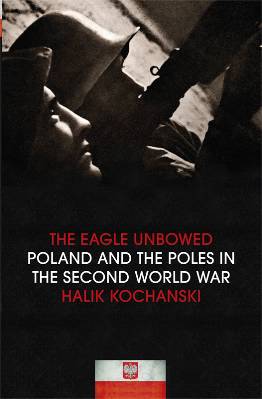
Even those well-versed in European history must wonder why. After all, the media routinely speak of “French camps” from which Jews were sent to their deaths, and the phrase doesn’t draw similar ire from the French government. On the contrary, in July the French president himself, François Hollande, began a widely covered speech on the seventieth anniversary of the roundup of Jews at Vélodrome d’Hiver by stating, “We’ve gathered this morning to remember the horror of a crime, express the sorrow of those who experienced the tragedy…and therefore France’s responsibility.” Why are Poles so sensitive on the matter of Polish camps? Readers of Halik Kochanski’s new book, The Eagle Unbowed, will ask the opposite question: How could a famously well-educated person such as Barack Obama be so insensitive regarding the simple facts about Poland, the first country to stand up to Hitler?
Here’s one undisputed, essential fact: after the Nazis and their Soviet allies overran Poland in September 1939, they did not permit the Poles to form a new national government. The Soviets made the eastern Polish territories into western Soviet republics; the Germans annexed the western Polish territories into the Reich and made central Poland a “General Government” that they ruled directly. This arrangement was radically different from those in Nazi-occupied France, Denmark or Slovakia, which were ruled by collaborationist regimes. The French camps, then, really were French—that is, operated by French collaborators (a fact stressed by Hollande in his July speech). In Poland the death camps were German, like most other institutions.
Posted by Robin Varghese at 11:17 AM | Permalink


Comments
Of course its pure nonsense to believe that Obama authored this speech. Presidents have speech writers who do that. And its not really surprising that someone educated in the United States would lack a basic knowledge of the history of World War II on the Eastern Front.
Posted by: Ross Williams | Nov 24, 2012 12:56:21 PM
While it's indisputable that Poland ceased to exist as a formal political entity after the German and Soviet invasions, that was not recognised by any government not allied with the Axis powers, at least. On paper, therefore, Poland still existed as a state under foreign occupation. France, too, was shrunk to the area controlled by the Vichy regime, let's not forget.
What is more significant, though, is the level of civilian collaboration with the German occupiers, in identifying and detaining (even murdering) Jews and Gypsies, not to mention other groups of people targetted by the SS and Gestapo. The French could not claim to be as embarrassed by their citizens' enthusiasm for genocide, as the Poles should be.
So, perhaps the US President's speechwriter understood more than has been given credit for.
Posted by: Rob Allen | Nov 24, 2012 3:18:53 PM
Ross Williams should read The Nation essay. The quote gives a misleading impression of the rest of the essay, which makes clear Polish complicity in the mass murder of Jews.
Posted by: Mitchell Freedman | Nov 24, 2012 5:52:19 PM
I've read that there were 6 million people killed (or who died from deprivation) in Poland during World War II. Half of them were Jews, and half were not (meaning they were probably Catholics). So why is it that the history of World War II condemns Poland as an entity, condemns the Polish people as a group, for the actions of the fascists? It's never seemed fair to me. Why aren't reparations paid to the non-Jewish Polish people who were killed?
Unfortunately the answer is that the history of World War II was written in a way to simplify it by demonizing a few individuals, and zeroing in on one group of victims, the Jews. Most Americans would tell you that World War II was caused by Hitler, because he hated Jews. How many people died in World War II: 6 million Jews. That's what most people understand, and it is inaccurate.
World War II occurred because Wall Street and the bankers plundered the economies of the world, stole everything, and plunged the world into a depression. The U.S. refused to indict, prosecute, imprison the Wall Street thieves and seize their assets. People were left with nothing but despair because their governments refused to help. This created the soil in which fascism grew. But-for the crimes of Wall Street, Hitler would never have been anything more than a clown in a beer hall.
It was between 60 and 80 million people who died during World War II, but most of those people are ignored because they don't fit within the simplistic narrative that was promoted by the rich and powerful.
The failure to honestly report on the causes and victims of World War II allowed the same group of criminals to do it once again, our most recent Wall Street pillaging. Ask the people in Greece how fascism grows, because we have the exact same situation today, and the U.S. government again refuses to prosecute the Wall Street criminals.
3 million Polish non-Jewish victims of fascism must be acknowledged, their deaths mourned, their lives respected. It serves no purpose to label an entire population as evil because a few people were. We should expect more from historians than just the blanket emotional repetition of hateful and innacurate claims.
Posted by: NABNYC | Nov 24, 2012 7:57:12 PM
@NABNYC
"The failure to honestly report on the causes and victims of World War II allowed the same group of criminals to do it once again, our most recent Wall Street pillaging. Ask the people in Greece how fascism grows, because we have the exact same situation today, and the U.S. government again refuses to prosecute the Wall Street criminals."
*****
Late President Calvin Coolidge is the author of the statement "the business of America is business".
Almost one hundred years later, that still holds true. If anything, globalization has made American corporations more greedy and unethical. Overt use of force to aid American business entities has ceased; so called "Banana Republics" have become almost extinct. But the basics
of American foreign policy remain unchanged. The Military Industrial Complex is alive and well. Lobbyists are thriving.
And, yes, the captains of Wall Street remain untouchable.
Posted by: waqnis | Nov 24, 2012 10:56:19 PM
Oh my goodness! WW2 happened because of the Treaty of Versailles, far more than from the Great Depression that followed the Wall Street Crash. Other countries in Europe suffered in other ways, too, some of which were associated with the Depression, but others suffered because of different reasons, such as Britain did because of its adherence to the Gold Standard for too long. Fascism didn't arise in Italy or Spain because of the Depression, it arose from other sources. The Nazi Party rose to power in Germany because of a fear of Bolshevism, the destruction of savings caused by hyper-inflation arising from war reparations and out of hatred for the perceived betrayal of Germany in the 1918 surrender, in which prominent Jews were unfairly implicated.
Posted by: Rob Allen | Nov 25, 2012 7:45:01 AM
The Holocaust and the existence of death camps in Poland (and not in other country) was based on the Polish antisemitism many centuries old: more or less, the Nazi extermination politics were based on the sentiments of the autochton population towards Jews and changed from country to country. This is the explanation why the Jews of Bulgaria survived and the Jews of Saloniki or the Jews of Poland didn't survive.
Many died by the hand of Nazi extermination machine; however only the Jews(6 millions) and Rroma (Gypsies about 5-600 thousands) were killed because their nationality.
Some of the comments are wild imaginings with conspiratorial sounds of Islamic and neo-Left fascism and would make me laugh (as "Wall Street and the bankers ")if the subject was not so serious...
However even those comments of historical revisionist have value: they remind us, the Jews, that antisemitism continues in the hate of Israel, of the Jews and that the danger is not over.
Posted by: mirel | Nov 25, 2012 8:11:58 AM
"The Holocaust made matters even more complicated. Polish Jews accounted for over half of all the victims of the Holocaust and the death camps were established on Polish soil. Yet Poles were themselves victims of German barbarity; after the Jews and the Roma (Gypsies) the Poles were the most tormented national group. Millions of Poles were murdered by the Nazis during WWII.
The Poles were also witnesses to the destruction of the Jews. Most were passive witness who did nothing to aid their neighbors nor did they assist the Germans in destroying them. But by remaining passive (it is arguable) they took on a kind of bystander guilt and complicity.
A minority of Poles co-operated with the Germans by turning in Jews who were in hiding to get rewards of money or goods. A different minority became the so-called Righteous Gentiles who risked their own lives to save Jews. A majority of the Righteous Gentiles honored at Yad Vashem are Poles.
Jewish Holocaust survivors grew up in Poland in the 1920's and 1930's and survived in Poland of the 1940's. Their memories in the present are based on what were current events back then. Their experience of Poland ended when they left the country; and most either never returned after WWII or left after the massacre of 42 Jews in Kielce by a Polish mob in 1946. Poland was a very anti-Semitic society in the years just before and after WWII.
During the War Jews were appalled by the lack of aid they received from their neighbors and what they took to be avariciousness as some Poles usurped Jewish property now suddenly become available. The small number of Poles who preyed on Jews by turning them in for rewards made every Pole a risk to Jewish confidence. Jewish partisans were attacked and killed by Polish right wing nationalist groups who instead of making common cause against the Germans regarded the Jews as their enemies also.
It is hard to know how many Poles had sympathy for their Jewish neighbors but were paralyzed into inaction by fear. Yet incidents described above were frequent enough that it was a common Jewish perception of Polish attitudes that they were either indifferent to Jewish suffering or positively glad that the Jews were being removed."
http://www.holocaustsurvivors.org/data.show.php?di=record&da=encyclopedia&ke=107
Posted by: mirel | Nov 25, 2012 11:55:03 AM
"The Holocaust and the existence of death camps in Poland (and not in other country) was based on the Polish antisemitism many centuries old" - that is the most ridiculous statement I have ever read. Clearly mirel could use some history lessons...
Posted by: lirel | Nov 26, 2012 7:54:06 PM
Obama was not so wrong; the death camps in Poland were German death camps but planted on the soil of the extreme antisemitism of Poland.
"Sometime in the late 1950’s, a pair of Jewish newlyweds walked arm-in-arm down the streets of Lodz. Like all surviving Polish Jews of their generation, the two had lived through the Holocaust against enormous odds, making the joy of that moment all the more poignant. “Look at them,” a well-dressed passer-by suddenly sneered, loud enough for them to hear. “It’s like they’re in Tel Aviv.” To them, his message was clear: Jews had no business living in Poland, let alone being happy there."
...
One might have thought that if anything could have cured Poland of its anti-Semitism, it was World War II. Polish Jews and Christians were bonded, as never before, by unimaginable suffering at the hands of a common foe. One might also have thought there’d have been pity for the Jewish survivors, most of whom had lost nearly everything: their homes, their youth, their hope, their entire families. Besides, there were so few of them left to hate: only 200,000 or so in a population of 20 million.
Instead, returning Polish Jews encountered an anti-Semitism of terrible fury and brutality. Small wonder, then, that nearly as soon as they set foot on Polish soil, most fled all over again. Many went westward, to a place that, oddly enough, had suddenly become an oasis of tranquillity and safety by comparison: Germany. Far from being celebrated, those Poles who had sheltered Jews during the war — and there were many — begged them to say nothing, lest their neighbors deride them as “Jew lovers,” or beat them, or break into their homes (searching for the money the Jews had surely left behind) or kill them.
Polish attitudes toward the Germans remain understandably bitter. During his trip to Poland this May, when he visited Auschwitz, the German-born Pope Benedict XVI took care to speak mostly in Italian. But as Gross reminds us, in at least one respect many Poles applauded Hitler: just as he offered a final solution to Germany’s Jewish problem, he was taking care of Poland’s, too. Nazi policies toward the Jews, the legendary underground Polish diplomat Jan Karski reported to his government-in-exile in London in 1940, formed “a sort of narrow bridge where the Germans and a large part of Polish society meet in harmony.”
It wasn’t only Karski saying so. Eyewitnesses in the Warsaw ghetto saw Poles watching approvingly or even helping out, acting as spotters as German soldiers shot Jews. Polish girls were overheard joking, “Come, look, how cutlets from Jews are frying,” as the ghetto burned. Nazi accounts of Judenjagd, or “Jew hunts,” detailed how Poles pitched in to find any stray Jews the Germans somehow managed to miss. As the deportations proceeded, and practically before the trains had left for Chelmno or Belzec or Treblinka, Poles gathered on the outskirts of towns, waiting to plunder Jewish property or move into Jewish homes. And while the Nazis killed millions of Jews, Poles killed thousands — most famously, as Gross related in “Neighbors” (2001), a book that caused an uproar in Poland, 1,600 of them in the town of Jebwabne in July 1941 — crimes little noted at the time nor since remembered in Polish history books.
With the war over, and to tumultuous applause, a thousand delegates of the Polish Peasants Party actually passed a resolution thanking Hitler for annihilating Polish Jewry and urging that those he’d missed be expelled. Indeed, the mopping up soon began. Returning to their villages and towns, Jews were routinely greeted with remarks like “So, ____? You are still alive.” Their efforts to retrieve property were futile — and, sometimes, fatal. Some Jews met their end on trains — not cattle cars this time, but passenger trains, from which they were thrown off. If the trains weren’t moving fast enough, they were beaten to death."
more on
http://www.nytimes.com/2006/07/23/books/review/23margolick.html?pagewanted=all
Posted by: mirel | Nov 27, 2012 8:20:15 AM
A response to that over the top polonophobic review posted by mirel.....
http://fear.piastinstitute.org/index.php?option=com_content&task=view&id=68&Itemid=57
Posted by: Expatinvader | Dec 4, 2012 12:49:30 AM
Post a comment