
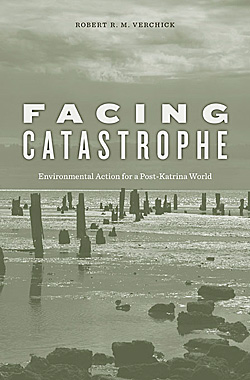
Rob Verchick, over at the Harvard University Press blog:
Reagan’s approach to market solutions is grounded in an intellectual movement called neoliberalism, a revived form of traditional liberalism that champions free markets and individual liberty in an economy gone global. As geographer David Harvey puts it, “[n]eoliberalism is in the first instance a theory of political economic practices that proposes that human well-being can best be advanced by liberating individual entrepreneurial freedoms and skills within an institutional framework characterized by strong private property rights, free markets and free trade.” Some may believe that neoliberalism as a guiding principle is waning in the Obama administration. This is not entirely so. While it is true that President Obama and, perhaps, the public have embraced a more optimistic view of government and its role in American life, current economic forces will ensure that American law and international law continue to follow a market approach to solving big problems. Thus the goal, from a disaster justice perspective, is not to reverse the market approach (as it can’t be done) but to make space within the neoliberal framework for a vocabulary of justice. In this area, the Obama administration may prove a helpful ally.
From the neoliberal model, three relevant corollaries follow. First, neoliberal policy seeks the efficient allocation of resources. “Efficient,” here means optimizing aggregate social welfare in a context of limited political and material resources. “Efficient” does not always mean “fair,” and for this reason free-market ideology is sometimes described as “amoral.” Second, free markets are much better at allocating resources than are governments or other organized institutions. This is what Reagan meant by “Government is the problem.” Third, neoliberalism promotes an ethic—some would say “virtue”—of self-sufficiency and the stoic acceptance of unfortunate consequences. Individuals are expected to assume the risk of participating in the market, and to adapt quickly to changing landscapes. “Instances of inequality and glaring social injustice,” in this view, “are morally acceptable, at least to the degree in which they could be seen as the result of freely made decisions.” Indeed, as neoliberal philosopher Robert Nozick has argued, efforts to redistribute wealth in order to rehabilitate economic losers creates its own injustice by treating affluent individuals as a “means” to enhance the “ends” of those who are less affluent.
The market approach poses a problem for advocates of disaster justice for a couple of reasons. First, protection from disaster requires infrastructure, and infrastructure, because its benefits are shared, is hard to fund through private means. Second, justice (in the sense I use the term) requires attention to distributional outcome, and that value is not recognized in a purely market approach. The market approach has been especially hard on urban areas, where reliance on infrastructure is high and diversity is great.