
| ABOUT US | ARCHIVES | LINKS | RSS FEED | MONDAYS | |

3quarksdaily

An Eclectic Digest of Science, Art and Literature

« Thank you Vasili Arkhipov, the man who stopped nuclear war | Main | Sexual assault essay raises questions about anonymity, invention »

November 07, 2012

A Tale of Tales

Michael Bérubé in American Scientist:
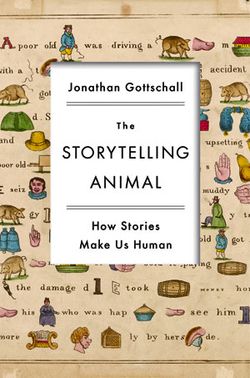
Gottschall_storytelling_animalOnce upon a time there was a group of literary critics who got very excited about neuroscience. They especially liked what neuroscience seemed to be able to offer their field: a good, hard-science foundation for the importance of their work. For the neuroscientists were telling people that Homo sapiens sapiens is hardwired for storytelling. And these scientists weren’t telling just-so stories, either; they had clear evidence that human brains universally make up narratives, ranging from religions to sports to memoirs to dreams to delusions to conspiracy theories, and they could even point to the specific areas of the brain that light up when certain stories are told. Now, thought the literary critics, we can finally live happily ever after. And Steven Pinker will be our friend!

The only problem was that it wasn’t clear what neuroscience could offer the study of literature other than the claim that humans are hardwired for storytelling. It didn’t seem to have anything very interesting to say about specific stories, nor did it evince any great interest in getting into the textual details of those stories—or the various interpretive disputes about those stories—that make up so much of the work of literary criticism. In On the Origin of Stories (2009), which I covered in an earlier review for American Scientist, Brian Boyd tried to make neuroscience the basis for the study of literature, and although his account of neuroscience was compelling, he couldn’t come up with anything to say about literary works other than that their creators devised various storytelling techniques to hold our attention. And as Laurent Dubrueil wrote in an essay in Diacritics, Boyd “seemingly believe[s] language to be a diabolical invention of ‘Theory,’” which, Boyd complained, “cuts literature off from life by emphasizing human thought and ideas as the product of only language, convention, and ideology.” Unfortunately for this branch of literary criticism, it turns out to be very difficult to talk or write about extralinguistic matters.

More here.

Posted by S. Abbas Raza at 04:13 AM | Permalink

Comments

For comparison take the neurological correlates of consciousness: would knowing the chemical ingredients elucidate consciousness for those (namely humans) who have a first hand acquaintance.
To speculate: in Aristotelian terms the neurological cause of story telling may prove scant on form or content- it might merely account for why it is rather than what or how it is; but this latter point is a bit shakier

Posted by: Howard | Nov 7, 2012 3:44:51 PM

Howard, along the lines of your reflections, you may want to peruse António Damasio’s book The Feeling of What Happens: Body and Emotion in the Making of Consciousness.

Posted by: Félix E. F. Larocca, MD | Nov 7, 2012 7:23:56 PM

Thanks I'll have a look

Posted by: Howard Berman | Nov 7, 2012 10:08:34 PM

Post a comment


Subscribe to this blog's feed  

PayAnywhere with iphone credit card swiper

Android Tablet

Bluetooth Headset

2013 New Style Dresses

Compare Car Rental Prices

DHgate.com Wholesale

3QD on Facebook

3QD on Kindle

3QD by Daily Email

Receive all blogposts at the same time every day.

Enter your Email:


Preview 3QD Email

3QD on Twitter

Miscellany

Lijit Search

AddThis Social Bookmark Button

Add to Google

Recent Comments

Louise Gordon on The need for critical science journalism

Stuart Mathieson on REFLECTIONS ON WOOLWICH

Kai Matthews on The Moral Status of Rocks

Norman Costa on Dear Guardian: You’ve Been Played

Dave Ranning on REFLECTIONS ON WOOLWICH

Joel Grant on Why Rational People Buy Into Conspiracy Theories

musafir on REFLECTIONS ON WOOLWICH

Norman Costa on Race Is Not Biology

Geoff on REFLECTIONS ON WOOLWICH

Kai Matthews on Why Rational People Buy Into Conspiracy Theories

fallensparks on REFLECTIONS ON WOOLWICH

jon s on Race Is Not Biology

musafir on REFLECTIONS ON WOOLWICH

musafir on Faith Healing

Dave Ranning on REFLECTIONS ON WOOLWICH

Geoff on REFLECTIONS ON WOOLWICH

Luke Lea on Race Is Not Biology

fallensparks on REFLECTIONS ON WOOLWICH

Luke Lea on Race Is Not Biology

jo smith on REFLECTIONS ON WOOLWICH

jo smith on Guy de Maupassant

Geoff on Jeremy Scahill & Noam Chomsky on Secret U.S. Dirty Wars From Yemen to Pakistan to Laos

Jim on Friday Poem

JF on REFLECTIONS ON WOOLWICH

Jesse on REFLECTIONS ON WOOLWICH

Acclaim For 3QD


"I couldn't tear myself away from 3 Quarks Daily, to the point of neglecting my work. Congratulations on this superb site."—Steven Pinker, Johnstone Professor of Psychology, Harvard University.

"I have placed 3 Quarks Daily at the head of my list of web bookmarks."—Richard Dawkins, Charles Simonyi Professor of the Public Understanding of Science at Oxford University.

"Just wanted you to know I’m one of many who reads and enjoys 3 Quarks....almost daily."—David Byrne, musician, former lead-singer of the Talking Heads, artist, intellectual.

Read more here.

The 3QD Prizes

Subscribe to this blog's feed