
| ABOUT US | ARCHIVES | LINKS | RSS FEED | MONDAYS | |

3quarksdaily

An Eclectic Digest of Science, Art and Literature

« What Can You Really Know? Another Round of Physicists vs. Philosophers | Main | BRAINS PLUS BRAWN »

October 28, 2012

Remembering Sri Lanka’s Killing Fields

F9e0ff509445c7a6c436c137d24dbe24.portrait.jpg

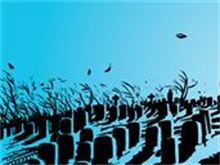
Gareth Evans in Project Syndicate (illustration by Dean Rohrer):

Three years ago, in the bloody endgame of the Sri Lankan government’s war against the separatist Liberation Tigers of Tamil Eelam, some 300,000 civilians became trapped between the advancing army and the last LTTE fighters in what has been called “the cage” – a tiny strip of land, not much larger than New York City’s Central Park, between sea and lagoon in the northeast of the country.

With both sides showing neither restraint nor compassion, at least 10,000 civilians – possibly as many as 40,000 – died in the carnage that followed, as a result of indiscriminate army shelling, rebel gunfire, and denial of food and medical supplies.

The lack of outrage mainly reflects the Sri Lankan government’s success in embedding in the minds of policymakers and publics an alternative narrative that had extraordinary worldwide resonance in the aftermath of the terrorist attacks of September 11, 2001. What occurred in the cage, according to this narrative, was the long-overdue defeat, by wholly necessary and defensible means, of a murderous terrorist insurrection that had threatened the country’s very existence.

The other key reason behind the world’s silence is that the Sri Lankan government was relentless in banning independent observers – media, NGOs, or diplomats – from witnessing or reporting on its actions. And this problem was compounded by the timidity of in-country United Nations officials in communicating such information as they had.

President Mahinda Rajapaksa’s government claimed throughout, and still does, that it maintained a “zero civilian casualties” policy. Officials argued that no heavy artillery fire was ever directed at civilians or hospitals, that any collateral injury to civilians was minimal, and that they fully respected international law, including the proscription against execution of captured prisoners.

But that narrative is now being picked apart in a series of recent publications, notably the report last year of a UN Panel of Experts, and in two new books: UN official Gordon Weiss’s relentlessly analytical The Cage: The Fight for Sri Lanka and the Last Days of the Tamil Tigers, and BBC journalist Frances Harrison’s harrowingly anecdotal Still Counting the Dead: Survivors of Sri Lanka’s Hidden War.

Posted by Robin Varghese at 04:35 PM | Permalink

Comments

Post a comment


Subscribe to this blog's feed  

PayAnywhere with iphone credit card swiper

Android Tablet

Bluetooth Headset

2013 New Style Dresses

Compare Car Rental Prices

DHgate.com Wholesale

3QD on Facebook

3QD on Kindle

3QD by Daily Email

Receive all blogposts at the same time every day.

Enter your Email:


Preview 3QD Email

3QD on Twitter

Miscellany

Lijit Search

AddThis Social Bookmark Button

Add to Google

Recent Comments

Dr. Smith on Race Is Not Biology

Sundar on Daniel Dennett's seven tools for thinking

Sundar on Daniel Dennett's seven tools for thinking

Sundar on Why race as a biological construct matters

Sundar on Race Is Not Biology

Joel Grant on Why Rational People Buy Into Conspiracy Theories

khaled on Evolution shapes new rules for ant behavior

musafir on Mohsin Hamid: 'Islam is not a monolith'

araldo on Mohsin Hamid: 'Islam is not a monolith'

JM on Physicists Create Quantum Link Between Photons That Don't Exist at the Same Time

SteveRR on Daniel Dennett's seven tools for thinking

jo smith on Mohsin Hamid: 'Islam is not a monolith'

Grace on Daniel Dennett's seven tools for thinking

Elatia Harris on Daniel Dennett's seven tools for thinking

Abbas Raza on Daniel Dennett's seven tools for thinking

Jonathan on Daniel Dennett's seven tools for thinking

Bill on Daniel Dennett's seven tools for thinking

Louise Gordon on The need for critical science journalism

omar on Mohsin Hamid: 'Islam is not a monolith'

Jonathan on Daniel Dennett's seven tools for thinking

Bill on Daniel Dennett's seven tools for thinking

jo smith on Mohsin Hamid: 'Islam is not a monolith'

carlos on Daniel Dennett's seven tools for thinking

freddie on Daniel Dennett's seven tools for thinking

Eli on "Everybody Hurts" by Sachal Studios, Lahore, Pakistan

Acclaim For 3QD


"I couldn't tear myself away from 3 Quarks Daily, to the point of neglecting my work. Congratulations on this superb site."—Steven Pinker, Johnstone Professor of Psychology, Harvard University.

"I have placed 3 Quarks Daily at the head of my list of web bookmarks."—Richard Dawkins, Charles Simonyi Professor of the Public Understanding of Science at Oxford University.

"Just wanted you to know I’m one of many who reads and enjoys 3 Quarks....almost daily."—David Byrne, musician, former lead-singer of the Talking Heads, artist, intellectual.

Read more here.

The 3QD Prizes

Subscribe to this blog's feed