
“No one is so stubborn and dangerous as the beneficiaries of a fallen idea –
they defend not the idea, but their bare life and the loot.”
~Sándor Márai
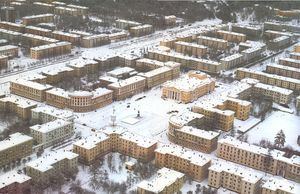
Originating in the late 1930s under Stalin’s direction, these cities bore all the hubristic hallmarks of an authoritarian command-and-control regime, including a unrepentantly narrow raison d'être and an utter disregard for geography. Known as ZATO cities (for “zakrytye administrativno-territorial'nye obrazovaniia,” or “closed administrative-territorial formations”), the sensitivity of their mission furthermore prevented them from even being placed on maps. A logical corollary to this is, if you don’t want to place something on a map, you probably aren’t keen give it a memorable name, either. At first, these cities were named in relation to the nearest, recognized city, and hyphenated with the approximate distance in kilometers. I must admit, given the nuclear remit of about ten of these cities, that there is something deliciously evocative about such a nomenclature – as if one was listing the known element and its artificially fabricated, enriched but less stable isotope. However, even this nomenclature proved a bit too explicit for the comfort of the Soviet authorities:
Thus, the All-Russian Scientific and Research Institute of Experimental Physics (VNIIEF) was initially known as Arzamas-60, a postal code designation to show that it was 60 km from the city of Arzamas. But the “60” was considered too sensitive, and the number was changed to “16.” In 1947 the entire city of Sarov (Arzamas-16) disappeared from all official Russian maps and statistical documents. The facility has also been known Moscow-300, the town of Kremlev, and Arzamas-75. Zlatoust-20 is probably the same as Zlatoust-36, and Kurchatov-21, Moscow-21, Moscow-400 and Semipalatinsk-121 are almost certainly the same as Semipalatinsk-16.
This points to another difficulty intrinsic to the ZATO archipelago – how many of them are there? Even today, it is difficult to say with any degree of certainty. Estimates tend to cluster around 40, but, somewhat confusingly, “in addition, there are thought to be at least 15 ZATO in existence that cannot be accounted for.”

An ambiguous ontological status isn’t the only privilege of the ZATO archipelago, either. In their Soviet heyday, these cities concentrated tens of thousands of the most advanced scientists and engineers in self-sufficient urbanizations loosely modeled on the factory town template. To compensate for the stresses of performing highly surveilled work in a remote location to which few had access, ZATO workers tended to be better paid than their counterparts who worked in more prosaic locations. Also, all financing for ZATO cities was administered directly through the federal budget. While this fact may seem dry and unimportant at first blush, it had tremendous consequences as the Soviet Union transitioned into post-Communist Russia.
In order to understand why this matters, consider the traits that make cities such successful and enduring forms of human organization. Perhaps prime among these is resilience – the ability for a built environment to absorb social, economic or even physical shocks. Cities that exhibit resilience can readily reinvent themselves, mostly by being able to draw on diverse array of economic activities and the ability to attract new ideas and workers. In a somewhat simplistic sense, this is why New York rebounded from its near-death experience, whereas Detroit has not. A town founded on mineral wealth will prosper until there is no more commodity, no more buyers or, less frequently, it is a victim of its own success.
To borrow from Charles Perrow’s work on complexity, organizations and catastrophic accidents, one might say that the Soviet Union, as a command economy, exhibited interactive complexity and tight coupling, two essential traits needed to produce what Perrow calls “normal accidents” (interestingly, Perrow’s work included a seminal study on the 1979 failure of the nuclear reactor on Three Mile Island). Interactive complexity means that several adverse events will combine to create unforeseeable outcomes, while tight coupling implies that components of a system have immediate and major impacts one each other, thereby greatly increasing the chances of cascading failure.
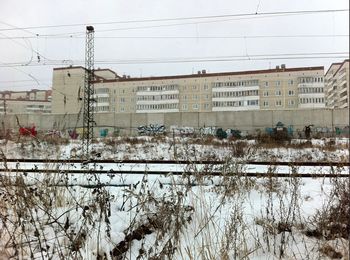
Now, in an open environment people would search for jobs elsewhere and one would soon enough end up with an abandoned city. However, one needed not only permission to enter a ZATO city, but also to leave one. And it is one thing to step all over a bunch of school teachers or steelworkers, but it is entirely another to provoke the intellectual elite who are charged with building and maintaining your nuclear arsenal – it has been estimated that, by the late 1980s, around 150,000 people worked in the ten ZATO cities responsible for uranium/plutonium enrichment and nuclear weapons manufacture. Unsurprisingly, the misery caused by, in some cases, a 50% cut in federal subsidies, led to fears in Moscow and Washington that disgruntled or simply desperate employees would engage in what has been marvelously termed “nuclear entrepreneurship”. In 1996, then-CIA DirectorJohn Deutch provided testimony before the Senate Permanent Investigations Subcommittee discussing that “there have been documented cases in which factory workers have attempted to sell materials taken from the factory. With so many unpaid workers needing to find money somehow, this black market will continue to be a problem. There have been hundreds of known cases of nuclear smuggling in the 1990s.”
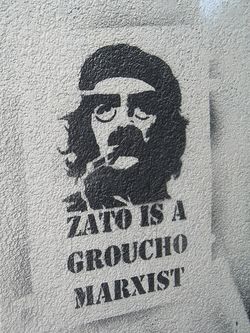
But instead of repeating the standard list of institutional failures to create employment, I would return to why the ZATOs failed to become cities in the first place. That is, if the ZATOs are not going away, then what can be done to make them more dynamic, economically feasible places? There are interesting and unpredictable obstacles here. For example, while the lack of openness and access is certainly partly responsible for the lack of economic activity,
the popularity of the nuclear cities and of the ZATOs in general has been attributed to the perception that they experience fewer crime and drug problems and better quality housing, schools, and public services. According to Russian officials, in 1995, 95 percent of those living in the nuclear cities voted against opening them” (Weiner, p120
Nevertheless, some ZATOs have sought to open their boundaries, but with the proviso that they would retain Russian federal funding. The problem is that no one seems to know if the mayors have the authority to do this, or, as an article in Russian Journal opined, who in the federal government possesses the mandate to liaise with the cities:
“Nobody knows how many of these cities there are, and the people who do know won’t tell you,” said an expert on the Russian military who asked not to be named. “I don’t even think there’s anyone in the government who is in charge of all of this. It’s all a remnant of the Soviet Union that was supposed to disappear but didn’t.”
Which brings me to another crucial point: closed cities are also, like anything else, a cultural phenomenon; specifically, they are manifestations of the Russian temperament. So it should not come as a surprise that the declaration of existing cities as suddenly restricted should occur in the service of other agendas. The same Russian Journal article goes on to describe that:
On Oct. 30 [2001], when Prime Minister Mikhail Kasyanov signed Decree No. 755, essentially closing [nickel mining town] Norilsk and a handful of its northern Siberian neighbors off to foreigners, the number of people living in Russia’s restricted zones may have grown to as many as 2 million…And although Decree No. 755 limits access for all foreigners bar none, the rules will be waived for visitors “from further abroad,” especially Norilsk Nickel’s foreign investors.
“In other words, this has nothing to do with secrecy or security,” said Vladimir Oivin, deputy director of the Glasnost Foundation. “It is supported by neither strategic nor tactical needs. It is simply an ill-though-out policy, just like the way [Mayor Yury] Luzhkov tries to limit foreigners in Moscow.”
Of course, Norilsk will not be disappearing off the world’s maps any time soon, especially with Google Earth around. However, I doubt that this will make much of a difference. As the last passage illustrates, closed cities are merely another tool for the exercise of power, and as such will remain part of the Russian landscape for some time to come.