
| ABOUT US | ARCHIVES | LINKS | RSS FEED | MONDAYS | |

3quarksdaily

An Eclectic Digest of Science, Art and Literature

« Shulamith Firestone, 1945-2012 | Main | Occupy Wall Street, Flash Movements, and American Politics »

August 31, 2012

The Last Word

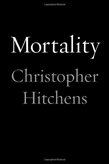
Cover00Jeff Sharlet on Christopher Hitchens's Mortality (via Corey Robin), in Bookforum:

In the book’s best essay, a literal consideration of “freedom of speech” following the partial loss of his voice—“like a silly cat that had abruptly lost its meow”—Hitchens writes of the “awful fact” that friends are coerced by cancer into listening to his attempts at communication “sympathetically.” And yet Hitchens had always been a sentimentalist despite himself—a quality that is no small part of his popularity with readers who think themselves too reasonable for emotional appeals. Hitchens’s sentimentalism, in fact, allowed him at his best to detect the false sweetening of public ideas—and that is also the case here, in the more private world of Tumortown. His most sustained argument is with Nietzsche’s oft-quoted maxim on being made stronger by that which doesn’t kill you, but the sharpest rebuke of Mortality is reserved for Pausch’s enormously popular farewell video made before his own death from cancer, a catalogue of clichés “so sugary you may need an insulin shot to withstand it.” Hitchens proposes the criminalization of such saccharine: “It ought to be an offense to be excruciating and unfunny in circumstances where your audience is almost morally obliged to enthuse.”

Of course, that’s also the dilemma of Mortality. “My grandmother was diagnosed with terminal melanoma of the G-spot,” he writes, mimicking the cancer tales imposed on him by ostensible well-wishers, “but she hung in there . . . and the last postcard we had was from her at the top of Mount Everest.” Funny, sort of, but more like stand-up shtick than the wit that made Hitchens famous. His arguments with the pious, too, have been whittled down, but not sharpened, by suffering. Prayer is silly, he proposes, because if god (no capitalization here) is in fact almighty, he is “enjoined or thanked to do what he was going to do anyway.” Noting the Jewish woman’s prayer thanking god “for creating her ‘as she is,’” he observes that for a true divine “the achievement would seem rather a slight one.”

One needn’t be religious to grasp that Hitchens is bickering with a straw man’s notion of prayer (or, as the case may be, a straw woman’s), a crudely utilitarian conception of the appeal to divine power that seems pointedly deaf to the nuances of meaning contained within even the most rote devotions. Almost all prayer contains at least the bones of a story about how the prayerful supplicant understands suffering—“or misunderstands,” one can imagine one of Hitchens’s own devotees quipping. Perhaps; but the distinction misses a larger truth to which Hitchens himself returns again and again throughout Mortality: To understand suffering is not to master it, or to defeat it. Whether one understands chemotherapy or not makes it no more or less painful.

Posted by Robin Varghese at 09:44 AM | Permalink

Comments

All emotional catharsis is therapeutic and all understanding of what ails the body and mind allows us some measure of control over our dreads and fears.
Thus if death is stage five in the cancer ward, writing about it gives us a sense of immortality...
Moving.
Thanks for posting while reminding us of the finality (or is it futility?) of life.

Posted by: Félix E. F. Larocca, MD | Aug 31, 2012 6:47:04 PM

Post a comment


Subscribe to this blog's feed  

PayAnywhere with iphone credit card swiper

Android Tablet

Bluetooth Headset

2013 New Style Dresses

Compare Car Rental Prices

DHgate.com Wholesale

3QD on Facebook

3QD on Kindle

3QD by Daily Email

Receive all blogposts at the same time every day.

Enter your Email:


Preview 3QD Email

3QD on Twitter

Miscellany

Lijit Search

AddThis Social Bookmark Button

Add to Google

Recent Comments

Stuart Mathieson on REFLECTIONS ON WOOLWICH

Kai Matthews on The Moral Status of Rocks

Norman Costa on Dear Guardian: You’ve Been Played

Dave Ranning on REFLECTIONS ON WOOLWICH

Joel Grant on Why Rational People Buy Into Conspiracy Theories

musafir on REFLECTIONS ON WOOLWICH

Norman Costa on Race Is Not Biology

Geoff on REFLECTIONS ON WOOLWICH

Kai Matthews on Why Rational People Buy Into Conspiracy Theories

fallensparks on REFLECTIONS ON WOOLWICH

jon s on Race Is Not Biology

musafir on REFLECTIONS ON WOOLWICH

musafir on Faith Healing

Dave Ranning on REFLECTIONS ON WOOLWICH

Geoff on REFLECTIONS ON WOOLWICH

Luke Lea on Race Is Not Biology

fallensparks on REFLECTIONS ON WOOLWICH

Luke Lea on Race Is Not Biology

jo smith on REFLECTIONS ON WOOLWICH

jo smith on Guy de Maupassant

Geoff on Jeremy Scahill & Noam Chomsky on Secret U.S. Dirty Wars From Yemen to Pakistan to Laos

Jim on Friday Poem

JF on REFLECTIONS ON WOOLWICH

Jesse on REFLECTIONS ON WOOLWICH

Kenan Malik on REFLECTIONS ON WOOLWICH

Acclaim For 3QD


"I couldn't tear myself away from 3 Quarks Daily, to the point of neglecting my work. Congratulations on this superb site."—Steven Pinker, Johnstone Professor of Psychology, Harvard University.

"I have placed 3 Quarks Daily at the head of my list of web bookmarks."—Richard Dawkins, Charles Simonyi Professor of the Public Understanding of Science at Oxford University.

"Just wanted you to know I’m one of many who reads and enjoys 3 Quarks....almost daily."—David Byrne, musician, former lead-singer of the Talking Heads, artist, intellectual.

Read more here.

The 3QD Prizes

Subscribe to this blog's feed