
August 26, 2012
A Portrait of the Economy
Brian Hayes in American Scientist:
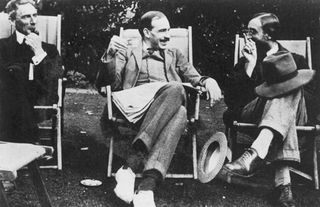
Histories of economics tend to start with Adam Smith and his Wealth of Nations, but Sylvia Nasar leads off with Charles Dickens and A Christmas Carol. It’s an unusual choice, but an effective and appropriate introduction to the story she wants to tell in Grand Pursuit: The Story of Economic Genius. Dickens shows us the redemption of Ebenezer Scrooge—his conversion from pinchpenny to beneficent bon vivant. Nasar aims to redeem economics from its intellectual roots as a science of scarcity and avarice and present it as a tool for improving the human condition.
Nasar is the author of A Beautiful Mind, a biography of the brilliant but troubled mathematician John Nash. Biography, rather than economics, is the true genre of this new book as well. Economic theories and principles are sketched when necessary, but economists’ lives are rendered in full color and lavish detail.
The book’s longest chapter is given to Beatrice Webb and, by extension, her husband Sidney Webb, the founders of the London School of Economics. We follow the wealthy young Beatrice from Gloucester to London for her coming out; we learn about her long and futile infatuation with Joseph Chamberlain (father of Neville) and her sparring matches with philosopher and evolutionist Herbert Spencer at the family dinner table; there’s a bit of upstairs–downstairs drama when Beatrice becomes close with a servant, Martha Jackson, whom she later learns is actually a poor relation.
More here.
Posted by S. Abbas Raza at 11:29 PM | Permalink


Comments
I have been putting off reading this book for a while, but this review has piqued my curiosity. Why is the longest chapter devoted to Stalinists Sidney and Beatrice Webb? Who knows.
Important quote from book (too often forgotten in hand wringing about the economy):
"Economic calamities—financial panics, hyperinflations, depressions, social conflicts and wars—have always triggered crises of confidence, but they have not come close to wiping out the cumulative gains in average living standards. . . . Since World War II, history has been dominated by the escape of more and more of the world’s population from abject poverty. . . .
Remarkably, even the Great Recession of 2008 to 2009, the most severe economic crisis since the 1930s, did not reverse the prior gains in productivity and income."
Posted by: Sundar | Aug 27, 2012 8:29:41 AM
Post a comment