July 08, 2012
The everyday denial of climate change
Kari Marie Norgaard in Bulletin of the Atomic Scientists:
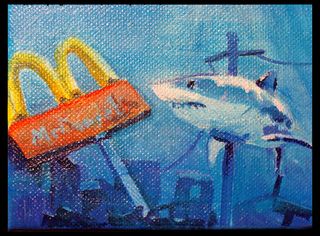
For nearly three decades, natural and physical scientists have provided increasingly clear and dire assessments of the alteration in the biophysical world. Yet despite these urgent warnings, human social and political response to ecological degradation remains wholly inadequate. While apathy in the United States is particularly notable, this gap between the severity of the problem and its lack of public salience is visible in most Western nations. As scientific evidence for climate change pours in, public urgency and even interest in the issue fails to correspond. What can explain the mismatch between scientific information and public concern? Are people just uninformed? Are they inherently greedy and selfish? These are the questions that chart the course of my work, which concerns not the outright rejection of science by climate skeptics, but the more pervasive and common problem of how and why most people who say they are concerned about climate change nevertheless manage to ignore it.
More here.

Posted by S. Abbas Raza at 09:45 AM | Permalink


Comments
Some of the climate catastrophes of late may be changing the public perception that GW is a far-off in the future concern.
Posted by: Dredd | Jul 8, 2012 12:02:26 PM
Part of the problem may lie in the dire nature of the warnings themselves. When faced with such catastrophic visions of the future, people tend to throw their hands up in the air and do nothing. We're not talking about cleaning up the local park here after all. Therefore, discussions of global warming need to be more constructive, more realistic, and less hectoring.
Posted by: Al | Jul 8, 2012 12:16:19 PM
I don't see where the average person had a say in the nuclear armaments discussion.
That particular problem seemed to have been on its way towards solution until the current developments in Iran and North Korea. Hopefully these are just speed bumps along the way toward true nuclear non-proliferation.
I don't see where the average person will have much to say with regard to the climate change issue.
If there is such a thing as peak oil, then over time the price of fuel will escalate. This will get people to economize on their fuel usage and have an overall dampening effect on production and consumption.
Some islands and coastlines might get submerged in the interim. Those folks will have to move. Some species might go extinct, but if we keep enough DNA around we may be able to regrow them in the lab in the future when the climate turns around.
Meanwhile people are still dying in senseless wars, suffering as refugees or minority populations within oppressive countries, and desperately trying to find work during a worldwide economic crisis brought on by the people we supposedly elected to maintain our security.
If we create some sort of carbon trading scheme it will most certainly be turned into an economy-busting haven for speculators.
If we tack on energy taxes it will dampen an already weak economy and siphon away more money to be wastefully spent on boondoggle "green" projects by bought-and-paid for politicians and their lobbyist johns.
The market is not a perfect thing, but the alternatives that have been proposed so far reek of insider trading and cronyism of the worst kind.
Posted by: DAS | Jul 9, 2012 1:56:51 AM
Not some species will go extinct, but a large fraction, unprecedented since the demise of the dinosaurs. And it's impossible to "regrow" a species with its DNA only.
The situation is more dire than most people realize.
Posted by: Klausi | Jul 9, 2012 5:13:39 AM
Klausi,
Yes, we are in "The Sixth Mass Extinction", as scientists call it.
We have been losing about 200 species a day for a long time now.
The future of catastrophe arrived some years ago.
Posted by: Dredd | Jul 9, 2012 10:18:47 AM
@DAS - "The market is not a perfect thing, but the alternatives that have been proposed so far reek of insider trading and cronyism of the worst kind."
Why do you believe the status quo is better?
One of the largest roadblocks we face is the belief that doing nothing, is somehow less risky than doing something, and the way things have been done in the past, is always better than any changes that may be made. It is a massive assumption, that I find hard to understand.
Posted by: addicted | Jul 10, 2012 9:24:40 AM
al-I'd like to think we're adult enough to handle the truth as it is without softening it up.
Posted by: Ray Butlers | Jul 15, 2012 4:17:34 PM
Post a comment