
| ABOUT US | ARCHIVES | LINKS | RSS FEED | MONDAYS | |

3quarksdaily

An Eclectic Digest of Science, Art and Literature

« The Beatles Complete On Ukulele | Main | Race, IQ, and Wealth: What the Facts Tell Us About a Taboo Subject »

July 28, 2012

After Nehru

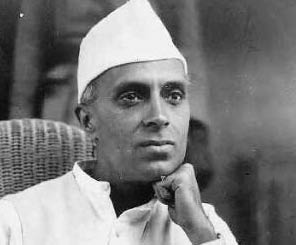
NehruPerry Anderson in the LRB:

All liberal democracies are significantly less liberal, and considerably less democratic, than they fancy themselves to be. That does not cancel them as a category. There is no reason to judge India by a higher standard than is complacently accepted in older and richer versions. The explanation of democratic stability in a society that is so much poorer and more populous is only to a secondary extent to be found in institutional restrictions common enough in the species. It lies in a far larger enabling condition. To see what this might be, a truly distinguishing feature of Indian democracy – one that sets it apart from any other society in the world – needs be considered. In India alone, the poor form not just the overwhelming majority of the electorate, but vote in larger numbers than the better-off. Everywhere else, without exception, the ratio of electoral participation is the reverse – nowhere more so, of course, than in the Land of the Free. Even in Brazil, the other large tropical democracy, where – unlike in India – voting is technically compulsory, the index of ballots cast falls as income and literacy decline.

Why then has the sheer pressure of the famished masses, who apparently hold an electoral whip-hand, not exploded in demands for social reparation incompatible with the capitalist framework of this – as of every other – liberal democracy? Certainly not because Congress ever made much effort to meet even quite modest requirements of social equality or justice. The record of Nehru’s regime, whose priorities were industrial development and military spending, was barren of any such impulse. No land reform worthy of mention was attempted. No income tax was introduced until 1961. Primary education was grossly neglected. As a party, Congress was controlled by a coalition of rich farmers, traders and urban professionals, in which the weight of the agrarian bosses was greatest, and its policies reflected the interests of these groups, unconcerned with the fate of the poor. But they suffered no electoral retribution for this. Why not?

The answer lies, and has always lain, in what also sets India apart from any other country in the world, the historic peculiarities of its system of social stratification. Structurally, by reason of their smaller numbers and greater resources, virtually all ruling classes enjoy an advantage over the ruled in their capacity for collective action. Their internal lines of communication are more compact; their wealth offers an all-purpose medium of power, convertible into any number of forms of domination; their intelligence systems scan the political landscape from a greater height. More numerous and more dispersed, less equipped materially, less armed culturally, subordinate classes always tend, in the sociologist Michael Mann’s phrase, to be ‘organisationally outflanked’ by those above them. Nowhere has this condition been more extreme than in India.

Posted by Robin Varghese at 08:28 PM | Permalink

Comments

actually thru the 1950s (under nehru) india's defence spending was generally below 1% of gdp and rose only after China's aggression in 1962 and then the highest was around 4% of gdp in the 60s and 70s, lower both in per capita terms and % of gdp than our neighbours and lower than most other powers and this continues with defence spending being under 2.5% gdp even now

Posted by: buntyj | Jul 29, 2012 9:40:23 AM

ps- land reforms were started by nehru in 50s, indeed a problem has been thereafter in india of small land holdings discouraging high productivity (and thus more often than not leading to subsistence farming) but creating over time a rural middling class thats one of the backbones today of india's polity and economy

Posted by: buntyj | Jul 30, 2012 12:41:30 AM

Post a comment


Subscribe to this blog's feed  

PayAnywhere with iphone credit card swiper

Android Tablet

Bluetooth Headset

2013 New Style Dresses

Compare Car Rental Prices

DHgate.com Wholesale

3QD on Facebook

3QD on Kindle

3QD by Daily Email

Receive all blogposts at the same time every day.

Enter your Email:


Preview 3QD Email

3QD on Twitter

Miscellany

Lijit Search

AddThis Social Bookmark Button

Add to Google

Recent Comments

Richard H. Randall on Obama must Make Fighting Climate Change National Project, or Die the death of a thousand Scandals

seth edenbaum on The First New Atheist? Kierkegaard

waqnis on Mortify Our Wolves

nogodrod on KFC smugglers bring buckets of chicken through Gaza tunnels

waqnis on Here’s how to change the world

Fernando on Mortify Our Wolves

seth edenbaum on The case against empathy

Dredd on Mortify Our Wolves

Max on Here’s how to change the world

Rohana on Mortify Our Wolves

Raza Husain on If Only We Had A Leader Like Chavez, Who Solved Real Problems -- Instead Of Debating Fake Ones Like The Deficit

mirel on If Only We Had A Leader Like Chavez, Who Solved Real Problems -- Instead Of Debating Fake Ones Like The Deficit

araldo on Here’s how to change the world

Elatia Harris on Here’s how to change the world

Sundar on Here’s how to change the world

araldo on Here’s how to change the world

prasad on Here’s how to change the world

araldo on Thursday Poem

Raza Husain on Here’s how to change the world

prasad on Here’s how to change the world

Raza Husain on Here’s how to change the world

prasad on Here’s how to change the world

Jim Sanders on the hudson review

Ian Kaplan on Stephen Wolfram: Dropping In on Gottfried Leibniz

Sundar on Here’s how to change the world

Acclaim For 3QD


"I couldn't tear myself away from 3 Quarks Daily, to the point of neglecting my work. Congratulations on this superb site."—Steven Pinker, Johnstone Professor of Psychology, Harvard University.

"I have placed 3 Quarks Daily at the head of my list of web bookmarks."—Richard Dawkins, Charles Simonyi Professor of the Public Understanding of Science at Oxford University.

"Just wanted you to know I’m one of many who reads and enjoys 3 Quarks....almost daily."—David Byrne, musician, former lead-singer of the Talking Heads, artist, intellectual.

Read more here.

The 3QD Prizes

Subscribe to this blog's feed