
| ABOUT US | ARCHIVES | LINKS | RSS FEED | MONDAYS | |

3quarksdaily

An Eclectic Digest of Science, Art and Literature

« The genome that keeps on giving | Main | Reality Hunger: On Lena Dunham's "Girls" »

May 31, 2012

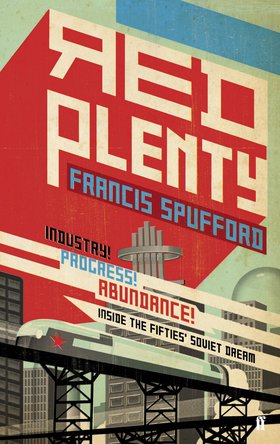
Red Plenty Seminar

Book_red_plenty_jpg_280x450_q85Crooked Timber is hosting a seminar on Francis Spufford’s novel about the socialist calculation debate, Red Plenty, with posts by Carl Caldwell, Antoaneta Dimitrova, Felix Gilman, Kim Stanley Robinson, George Scialabba, Cosma Shalizi, and Rich Yeselson. (Cosma's Yakov Smirnoff-titled entry, "In Soviet Union, Optimization Problem Solves You," made me laugh out loud.) Antoaneta Dimitrova:

Red Plenty is a book for social scientists in more ways than one. First because it draws on history and uses a great amount of documentary material, economic and social history of the Soviet Union to tell the story of the communist dream of abundance for all. And second, and perhaps more important, because its evidence driven narrative aims to answer several typical social science questions, especially for a social scientists interested in communism’s rise and fall. How could the Soviet planning economy be so successful in producing serious economic growth in the 1950s and 1960s, how could the Soviet system produce the science and innovation that led to space exploration and many other scientific achievements? And why did it then fail to continue doing so, to keep the pace of economic growth and scientific discovery?

Among Spufford’s many achievements in this book is that he provides some direct and some indirect answers to these questions. Even though he leads us to the answers by telling the stories of characters that are convincing and fully capable of engaging the reader’s interest in their destiny, he manages somehow to explore mechanisms that are structural and not personal. Despite the attention for Khrushchev and other historical figures from the Soviet Union, the personal vignettes are embedded in a narrative in which science, even more so than the idea of plenty – is the hero. This is perhaps best represented in by the prominent and fairly convincing character and the fate of the mathematician and economist Kantorovich. Other Red Plenty characters remain, as the planner Maksim Mokhov, ‘a confabulated embodiment of (the) institution’ (p. 395).

In contrast to many other books written about the Soviet period and especially about Stalinism, Spufford’s account is not emotional, grim and dramatic, does not aim to show the suffering of ordinary people or their disillusionment with the system as has already been done with unrivalled mastery by the classical works of Solzhenitsyn, Pasternak or Bulgakov, to name but a few. Instead, he shows the various characters influenced not so much by the cruel decisions, but by the dreams of the communist leaders. The leaders who, in accordance with Marxist dogma, pretended (Stalin) or hoped (Khrushchev) that they were social scientists and in Spufford’s interpretation harbored dreams of achieving abundance for all – Red Plenty.

Posted by Robin Varghese at 08:21 AM | Permalink

Comments

Post a comment


Subscribe to this blog's feed  

PayAnywhere with iphone credit card swiper

Android Tablet

Bluetooth Headset

2013 New Style Dresses

Compare Car Rental Prices

DHgate.com Wholesale

3QD on Facebook

3QD on Kindle

3QD by Daily Email

Receive all blogposts at the same time every day.

Enter your Email:


Preview 3QD Email

3QD on Twitter

Miscellany

Lijit Search

AddThis Social Bookmark Button

Add to Google

Recent Comments

Louise Gordon on Why race as a biological construct matters

Louise Gordon on The stories of two Palestinian villages: From Al-Araqib to Susiya

musafir on a pretty funny book

freddie on The stories of two Palestinian villages: From Al-Araqib to Susiya

freddie on The stories of two Palestinian villages: From Al-Araqib to Susiya

Junaida on Tuesday Poem

rafiq on Tuesday Poem

Raza Husain on the culture animal

Nebor on Tuesday Poem

Eleutheria on I am dust and ashes and full of sin

carlos on I am dust and ashes and full of sin

Joe on the culture animal

Sundar on the culture animal

Eleutheria on Positive Failure - a review of "The Power" by Rhonda Byrne

Eleutheria on Positive Failure - a review of "The Power" by Rhonda Byrne

Matt on The Science Mystique

Eleutheria on Why is Europe so Messed Up? An Illuminating History

Eleutheria on I am dust and ashes and full of sin

Elatia Harris on I am dust and ashes and full of sin

PeteChapman on I am dust and ashes and full of sin

Raza Husain on the culture animal

Jacky Corey on The Bystander Effect in Medical Care. Why Do I Have So Many Doctors Not Taking Care of Me?

Chris on Positive Failure - a review of "The Power" by Rhonda Byrne

DAS on Why is Europe so Messed Up? An Illuminating History

DAS on Is the Brain No Different From a Light Switch? The Uncomfortable Ideas of the Philosopher Daniel Dennett

Acclaim For 3QD


"I couldn't tear myself away from 3 Quarks Daily, to the point of neglecting my work. Congratulations on this superb site."—Steven Pinker, Johnstone Professor of Psychology, Harvard University.

"I have placed 3 Quarks Daily at the head of my list of web bookmarks."—Richard Dawkins, Charles Simonyi Professor of the Public Understanding of Science at Oxford University.

"Just wanted you to know I’m one of many who reads and enjoys 3 Quarks....almost daily."—David Byrne, musician, former lead-singer of the Talking Heads, artist, intellectual.

Read more here.

The 3QD Prizes

Subscribe to this blog's feed