
DESTRUCTION OF HOME: Destruction is woven into the tapestry of the universe. Entropy, omeleteer of structured things, wields its indefatigable spatula. This is Entropy’s world we are living in – a world where things fly apart. This is a world where a toppled vase disintegrates into shards upon a polished floor, and where carnage cannot be made whole. A world where neither the King’s horses nor his men, can reconstitute that incautious ovum, Humpty Dumpty; a world where tender reverential hearts break, where young flesh bruises, where desire detumesces in the embers of fulfillment, where love itself withers on the vine, where old age trellises the skin, where bright hopes atomize, and where the mortuary awaits us all, sepulchral door swinging wide – candles lit, lambent and serene, within.

HOME IN BORN IN MOTION: Leaving home is a violent act, because walking is a violent act. Walking violates a stationary calm and announces, “this place does not satisfy my needs anymore”, or, “having served its purpose once, this place now bores me”. Walking derives, anciently, phylogenetically, from motile carnivory. It is rooted in impatience – the primordial impatience with waiting for morsels to waft on by. Motility is an ancestral condition. Life was born on the move. Flagellated, ciliated – gliding, and lashing – permanently unsatisfied and desirous. Motility is the characteristic act of animality. In their evolutionary procession, animals squirmed, wriggled, pulsated, swam, slithered, and later, lurched, crawled, leapt, hopped, flapped, flew, swarmed, brachiated, knuckle-shuffled and then most recently arose and walked away. Not the chosen option: repose is abandoned. A singular spot is forsaken. Beasts leave home to prowl and stalk, to kill and dine. Pursuing other options, bathed in the sunlight, were animals enduring cousins in the kingdom of plants. Left behind also: sessile brothers, animals hedging their bets by fiercely equipping with lures and tackle and macerating jaws.
Animals depart with teeth set in hungry mouths and they nibble on the world as they encounter it. The engulfing stoma of the ambulator, first and center of its anatomical toolkit, is nestled among the cranial sense organs. The arms and legs that flail behind are mere propellers towards the cosmic dining table. The frenetic peristalsis of the torso squeezes out the ejecta in our wake and makes room for new cargo. Most movement is ecology, and most ecology is trophic ecology. Ingestion is a fundamental act.
Leaving home, then, like all motion, is born in violence, and even the tenderest departure – where lovers weep, say, and their fingers entwine like tendrils before they fall away – recapitulates one of life's fateful decisions. Walking away, besides, is irrevocable. Walking away is rejection, is abandonment. Leaving home is the act that annihilates the home. There is no returning – as surely as this world spins, there is no returning to the same place. A voyage home treads on a mutinous soil – the earth beneath each footfall bears the pliant step with a secret and glorious knowledge that it has not remained the same; it is not the crumb it was when it was forsaken: its clod is more compacted, is minutely shifted, is brought into a new relationship with the microbes that embrace it, the roots that penetrate deep within it. The very land where once one's feet were firmly, though fleetingly, planted has mutated. And the abandoned, they themselves, are changed. Even when embracing you, the land and the people sow murder in their hearts.
NEVER LEAVING HOME: This happened once: a childhood friend dropped her pet hamster on a tiled floor when it was a week old. It survived but as it matured it embarked upon its journeys in progressively enlarging circles. It would set out ambling from a center where it had been placed, and would get further (though never far) with each new expedition. It would then list off, gimping to the left, and circumscribe a circle, as if tethered to home. This centripetal Odysseus spent its voyaging hours within sight of a very close shore. It died only yards from the scene of its pediatric accident.
A few years before this, as a five year old, I had fallen haplessly from a low front wall outside the family home and crashed heavily headfirst upon the footpath. I had been painting the wall laboriously with water – a fool's task. The footpath, uneven, crenellated, home to tricycles in summer, a skating rink in winter, was an unkempt moss-encrusted flag of concrete beyond the pale of the garden. Later when I knew what such things were, I spotted a liverwort residing in a crack on this pavement. And once I saw a frog (one that I had raised from a tadpole taken from a ferric pond in the Dublin Mountains) emerge from the garden and leap from this path, into the street. It looked up at me, and we seemed to dialogue – a hazy amphibious thing this communion – before an oncoming car made short and just about audible work of it. At the time of my falling, my mother was attending to painting the garden gate – black at the margins, radiating spokes of white. She scooped up my little injured body and scurried with me into the neighbors' kitchen. The neighbor was a nurse. I see and hear this memory – a small boy delicately consumed by mother and nurse. They both use kitchen utensils – a forehead patiently prodded, the bruised flesh daintily lingered upon, the head detained for cleaning under a running tap, red streamers of very dilute blood draining, the forks chittering upon the bone, and tiny detonations of stone heard on the enamel of the sink as they fetched the earth out of me. Most pebbles were retrieved, but I retain the residuals, and I am a marvel, a carnival curiosity at large: the boy with rocks in his head.
Learning of the damaged hamster, which had survived and seemed unblemished in youth only to have his injury curtail the migrations of his adult life, cast a shadow upon my mind. Teaming with fears and inchoate apprehensions, home to the full roster of Catholic demons and bugaboos, my reason (one that could manufacture ghostly apparitions on the ceilings of a dim-lit church, and demons from garments placed at night upon the back of a chair) feared for myself a similar ontogeny. A member of a migratory species – the Irishman, I would be tethered to home – an excursion here and there perhaps but always close to shore.
DIFFICULT RETURNS: A thousand of miles away from Dublin, in a research station in Costa Rica, a Japanese anthropologist and I – an Irish ecologist – sat in the station's dining hall. It was shortly after the birth of my second son who had been encumbered with the name Oisín Odysseus, reflecting the migratory Irish and Greek tendencies of his parents. The caterwauling of howler monkey’s announced the onset of the afternoon rains, and we exchanged these folk stories.
I offered this one:
After being vanquished at the battle of Gabhra, several of the legendary warriors of the Fianna were hunting together along the shore of Lough Lena. The company saw a beautiful woman galloping upon the waves towards them. Niamh of the Golden Hair chooses Oisín, the bardic son of Finn, as a husband. Oisín, enchanted, mounts the horse and she carries him back across the waves to Tir na nÓg, the Land of Perpetual Youth. Oisín meets there with many adventures. Alas, there is no paradise conceivable that maintains our attention eternally, so after the passage of time he expresses a desire to visit home. Seeing his sorrow and pointing out that many centuries had passed since he came, Niamh relents and lends him her horse to return to Ireland. She instructs him that he must not dismount the horse and that he should return when he understands that what she tells him is true. He rides off across the foamy waves. He sees for himself the truth that everything is changed – his family and his friends are long dead. He turns the horse to return to his bride. As he does so he notices an elderly woman struggling with a cord of wood. Bending down from his saddle to assist her with this task he falls off the horse to the ground. Back on native soil he ages all of those years that he has magically evaded.
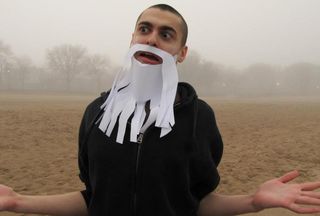
My colleague shares the following:
Urashima rescues a turtle from the taunting of children. The rescued turtle turns out to be Oto, the beautiful daughter of the God of the Sea. He marries her and they return to the palace beneath the waves. Time passes by and though Urashima loves his wife he dreams of his parents, and frets that they will die alone. The princess learns of his sadness and bids him return home. On parting she gives him a gift, wrapped in a beautiful lacquered box, though she instructs him that it is a gift better left uninspected. If he should open it he will never be able to return to her. Urashima returns home, and discovers that the three years spent beneath the waves were in fact three centuries, and that he has become a legend, and his people long dead. He has no instructions on how to return to his bride, and thinking that the gift may contain these vital instructions he unwraps the gift. A mist arises from the box and he hears the voice of his beloved receding. Urashima aged three centuries in an instant.
Are there lessons to be learned from the stories of Oisín and Urishima?
Two island nations, one clear message: returning home after a foreign sojourn is difficult. In both of these stories the young men are lured away by a princess – the thrall of tupping royalty must be universal. They return – no doubt the prospect of recounting their feats abroad is integral to home’s gravitational pull. However, nothing is as it was before. In the case of Oisín the people are of a diminished stature compared to former times, and alas for both travelers their families are now dead. Yes, you may leave, but do not expect home to remain unchanged. When the migrant returns it is not just he who instantaneously ages: he must witness the tumult of change in his native land telescoped into the moments of the return. In the earliest version of the Oisín story that had been narrated to us at National School we learned that after toppling from Niamh’s magical horse Oisín withered and was turned to dust. In this more emphatic version a return is thus precluded.
THE PRODIGAL RETURNS: The week after his return the Prodigal Son remembers why it was he left. His friends, those coarse bumpkins who so recently munched upon the sizzling flesh of a fatted calf, tell their same old jokes. They are as hopelessly myopic – as uncosmopolitan – as they were before. They nudge and wink in a way that irritates him who has now seen more of the world. What use have they for tales of his hardship in places they have barely heard of? They want to hear about the girls he's been with, for is it not for such exotic dalliances, such debaucheries that once he claimed he was leaving. But that is not what he wants to talk of now – he is different in a way he cannot seem to state. The father, all bearhugs and solicitude but days ago, is once again a sullen autocrat. He cannot resist reminding the Prodigal that an inheritance was squandered. He queries him on his skill with swine. And his brother, who has taken the week to cool off, now sees his own glory-days on the rise. The Prodigal Son, whose prodigious heart-swell and homesickness had him walking home, will soon leave again. Perhaps it is best that he does for the world has transformed and he has transformed, and he had no home to come back to. His father and his brother have a home, but it is a different one than he used to share with them. The Prodigal is homeless for walking away is the act of violence that annihilates the home.
Picture of Oisín Odysseus Pavlogianis Heneghan costumed as Oisín son of Fionn and Sadbh by Sarah Horwitz.
Follow me on Twitter @DublinSoil for 140 character updates on my columns. Links to previous 3QD columns here.