
| ABOUT US | ARCHIVES | LINKS | RSS FEED | MONDAYS | |

3quarksdaily

An Eclectic Digest of Science, Art and Literature

« What It Cost Eight Women Writers To Make It In New York | Main | See the beauties and the beasts that live under the sea »

April 18, 2012

Causal Machines

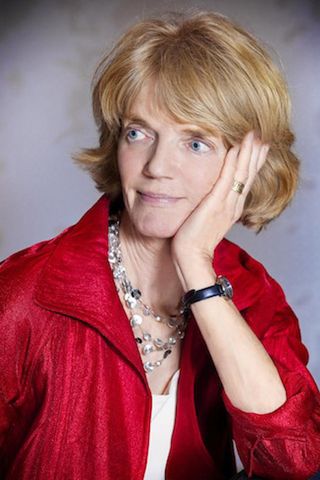
PatriciachurchlandRichard Marshall interviews Patricia Churchland in 3AM Magazine:

3:AM: Your approach to philosophy may strike some as being not really philosophical. This is because you place neuroscience at the heart of your approach. Can you say something about why you think this approach has caused some people to worry that it undermines the claims of philosophical enquiry proper and how you respond?

PC: Philosophical enquiry proper - mmmmmm is that the sort of thing Aristotle and Hume were doing, or the sort of thing that Kripke and Gettier were doing? Let me sound curmudgeonly for a moment: if I want to know how people use words, I will go to sociolinguists, who actually do science to try to find those things out. If I want to know how we learn and remember and represent the world, I will go to psychology and neuroscience. If I want to know where values come from, I will go to evolutionary biology and neuroscience and psychology, just as Aristotle and Hume would have, were they alive.

Theorizing is of course essential to make progress in understanding, but theorizing in the absence of knowing available relevant facts is not very productive. Given how long philosophers have been at conceptual analysis (I mean the 20th century stuff), and how many have been doing it, what can we say are the two most important concept results of all that effort? By ‘important’ here, let’s mean ‘has a significant impact outside philosophy on how people understand something’. Otherwise, as Feyerabend said, we are just talking to ourselves; taking in each other’s laundry. Incidentally, the analytic claim that knowledge is “true justified belief” does not accord with how ordinary people in fact use the word “know”. So whose concept is being analyzed? When philosophers try to understand consciousness, much of what they claim is not conceptual analysis at all, though it may be shopped under that description. Actually, they are really offering a theory about the nature of consciousness. When that theory is isolated from known facts, it is likely not to be productive.

Posted by Robin Varghese at 10:50 PM | Permalink

Comments

Post a comment


Subscribe to this blog's feed  

PayAnywhere with iphone credit card swiper

Android Tablet

Bluetooth Headset

2013 New Style Dresses

Compare Car Rental Prices

DHgate.com Wholesale

3QD on Facebook

3QD on Kindle

3QD by Daily Email

Receive all blogposts at the same time every day.

Enter your Email:


Preview 3QD Email

3QD on Twitter

Miscellany

Lijit Search

AddThis Social Bookmark Button

Add to Google

Recent Comments

carlos on Daniel Dennett's seven tools for thinking

freddie on Daniel Dennett's seven tools for thinking

Eli on "Everybody Hurts" by Sachal Studios, Lahore, Pakistan

Jalees Rehman on The need for critical science journalism

Dredd on Why Rational People Buy Into Conspiracy Theories

Dredd on Why Rational People Buy Into Conspiracy Theories

Scrutineer on Why race as a biological construct matters

prasad on the culture animal

Mitt Romney's Dog on Why race as a biological construct matters

Elatia Harris on The Moral Status of Rocks

prasad on The Moral Status of Rocks

Raza Husain on The Moral Status of Rocks

Fred on Unknown Mathematician Proves Elusive Property of Prime Numbers

Joel Grant on Why Rational People Buy Into Conspiracy Theories

Tomboktu on Why is Europe so Messed Up? An Illuminating History

Joe on Why Rational People Buy Into Conspiracy Theories

Jalees Rehman on The Science Mystique

Dredd on The Moral Status of Rocks

sjg on Why Rational People Buy Into Conspiracy Theories

Dredd on Why Rational People Buy Into Conspiracy Theories

Ken Pidcock on The need for critical science journalism

Louise Gordon on Why race as a biological construct matters

Louise Gordon on The stories of two Palestinian villages: From Al-Araqib to Susiya

musafir on a pretty funny book

freddie on The stories of two Palestinian villages: From Al-Araqib to Susiya

Acclaim For 3QD


"I couldn't tear myself away from 3 Quarks Daily, to the point of neglecting my work. Congratulations on this superb site."—Steven Pinker, Johnstone Professor of Psychology, Harvard University.

"I have placed 3 Quarks Daily at the head of my list of web bookmarks."—Richard Dawkins, Charles Simonyi Professor of the Public Understanding of Science at Oxford University.

"Just wanted you to know I’m one of many who reads and enjoys 3 Quarks....almost daily."—David Byrne, musician, former lead-singer of the Talking Heads, artist, intellectual.

Read more here.

The 3QD Prizes

Subscribe to this blog's feed