
| ABOUT US | ARCHIVES | LINKS | RSS FEED | MONDAYS | |

3quarksdaily

An Eclectic Digest of Science, Art and Literature

« Most Holy Metaphor | Main | Just how big are porn sites? »

April 09, 2012

A response to Jerry Coyne

by Quinn O'Neill

Last Monday I posted a piece that compared two approaches to protecting the science curriculum from corruption by creationists. The first entailed promoting debate, providing facts and arguments, and appealing to reason, and the second, ridiculing and mocking religious people's beliefs in face-to-face interaction. For many moral people, the less hurtful choice is intuitive, but I argued for the more civil option based on its better evidentiary support and its less risky nature.

At the Reason Rally held last month in Washington, DC, Richard Dawkins advocated displays of contempt and ridicule for religion. It isn’t clear exactly what he had in mind. When he said “Mock them! Ridicule them! In public!” maybe he meant “Question them! Challenge them! Where appropriate!” As far as the effects of his actions are concerned, however, what he meant is less important than how it's received and put into practice. With the recent passing of an anti-evolution bill in Tennessee and Dawkins's association with Darwinism, I questioned what effects his increasingly hostile anti-theism might have on public attitudes toward evolution and anti-evolution bills.
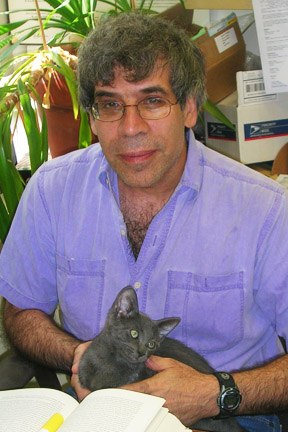
Jerry_Coyne,_American_professor_of_biology_at_the_University_of_ChicagoJerry Coyne at his blog Why Evolution is True responded to my piece. Coyne begins by defending Dawkins’s remarks, insisting that he meant for us to mock religious people’s ideas and not the people themselves. Coyne considers the distinction between people and their ideas to be important, but apparently only when it comes to theists. He accuses me of “dissing Dawkins” when I question his advocacy for contempt and ridicule.

If Coyne objects to ridiculing people, it didn’t stop him from portraying Robert Wright as an annoying and humorless “faitheist” in his response to Wright’s piece in The Atlantic. Coyne wrote:

"And it doesn’t help that he seems to totally lack a sense of humor. Once Wright sat next to me at a meeting in Mexico, determined to get me to admit that I had unfairly maligned him in my review of his book, The Evolution of God. I was so shaken by his relentlessness that I approached Dan Dennett afterwards and asked him for a hug."

Coyne, who’s traumatized by insistent, yet undoubtedly civil, criticism of his own ideas nevertheless defends ridicule and mockery when dealing with religious people. I haven’t read Wright’s book, so I can’t comment on the accusation that Coyne misrepresented his views, but I will say that he misrepresented mine. He writes:

"If Quinn wouldn’t mind, I’d love her to give evidence for her statement that criticizing religious views is much less effective than coddling the faithful in bringing acceptance of evolution."

I’d like Coyne to provide some evidence that I said this.

I chose my words carefully. When I said ridicule, I didn’t mean critiquing or challenging people’s viewpoints, as Coyne would have readers believe. And there’s a difference between saying there’s better evidence for the effectiveness of a given approach and saying there’s evidence that the approach is more effective. My argument was the former.

Rather than address my arguments, Coyne distorted my position and rationalized ridicule with a trove of anecdotes that mostly don’t support his case. I made it clear that I consider Dawkins’ book The God Delusion to constitute an appeal to reason more so than an example of ridicule. I think its persuasive power lies in the logic of its arguments. I’ve counted the conversion stories of “converts corner”, which most commonly credit The God Delusion, as evidence in support of my position:

"Whether we’re talking about religion or acceptance of evolution, I think both the influence of The God Delusion and the success of Coyne’s class provide some pretty convincing evidence that facts and arguments, appeals to reason, and debate can change people’s minds."

Coyne accuses me of ignoring these conversion stories. He complains:

“I keep pointing people to Dawkins’s “Converts corner,” in which people testify to a Dawkins-induced conversion, and accommodationists keep ignoring it, saying that it’s only anecdotal evidence.”

It is only anecdotal evidence, but I counted it anyway.

He refuses to consider the possibility that some people may have accepted evolution based on their realization that it’s compatible with their faith. He says “I haven’t seen a single anecdote in which an evolution-denier finally accepted evolution after an accommodationist convinced them that Jesus and Darwin were friends.” That’s probably because he hasn't looked. Curious, I typed “I used to be a creationist” into my handy google search bar and spent a few minutes sifting through what came up. I found too many examples to reproduce here, but here’s an exerpt from the blog Forty-Two:

“I’m still a Christian, but I can no longer accept the Creationist claims. I owe this change-of mind to two books: Language of God by Francis S. Collins and Only a Theory by Kenneth R. Miller. These books showed me that one can believe in Evolution, and still be a Christian. For anyone on the fence, these are great books to start with...”

One commenter at the website RationalSkepticism.org described how his views changed gradually over time:

“I used to be a creationist, then I was an intelligent design/old earth creationist, then I was a day age gap theorist with some evolutionary concepts, then I finally understood what evolution was and then I became an evolutionist. But did this affect the way I viewed God? Nope.”

Coyne reminds us that religious beliefs are the most common reason for rejection of evolution, but forgets that most people who accept evolution hold religious beliefs. There are more than twice as many Americans who accept a theistic version of evolution than an atheistic one. Theistic evolution may not be fully scientific, but its proponents aren’t threatening the science curriculum. But I digress.

I’m not advocating accommodationism, as Coyne claims. I don’t believe that science and religion, as worldviews, are compatible and I don’t believe that evolution is logically compatible with theism. However, if the aim is to ensure that evolution is taught effectively in schools, telling people that it contradicts their entire belief system is a tactical blunder. Acknowledging this is just honest.

Evolution education is vital to many things that most of us value, regardless of our views on religion. The biological sciences have enriched our lives through advances in agriculture and medicine and they depend heavily on an understanding of evolution. Major science organizations consider evolution to be a fundamental, unifying concept that ties together much of biology. As the oft-quoted Theodosius Dobzhansky put it “nothing in biology makes sense except in the light of evolution”. Maybe the compatibility or incompatibility of evolution and theism isn’t our only useful talking point.

Coyne says:

"Quinn doesn’t realize that the goal of people like Dawkins, P. Z. Myers, and myself is not simply to get students to accept evolution. It’s to weaken those forms of uncritical thought, born of superstitition, dogma, and revelation, that create many worse harms than teaching creationism in the public schools."

Actually I do realize this. I wrote in my last post that "I doubt that keeping creationism out of the science curriculum is [Dawkins's] primary objective. He seems to be more concerned with eradicating religion." My goal isn't simply to get students to accept evolution either, it's also to promote critical thinking. The best way to do this, in my opinion, is through education.

Science education is a vital force in teaching people how to think scientifically, how to evaluate information from different sources, weigh evidence, and make informed decisions. These skills are critical not only to understanding science, but to making sense of issues like climate change and vaccination, which shouldn't be controversial, even in the public sphere. Formal education, when it’s done well, is a potent antidote to irrational and anti-science thinking because of its organized, systematic nature and it’s ability to hone reasoning skills during formative years.

Science education holds the only real hope that the next generation will be able to solve some of the serious problems facing us. Our survival has never depended on science and technology more, and with fundamentalists waging sustained attacks on a cornerstone of science education, it’s disappointing and somewhat ironic that some of reason’s most passionate champions endorse a risky tactic with weak evidentiary support.

In my last post, I proposed a way of addressing creationism without teaching it. This would involve creating a booklet that would contain an evolution vs creationism debate, deconstructions of common evolutionary misconceptions, and a brief section on the nature of science. As I wrote,

"I would have copies in science classrooms and school libraries. Teachers could mention the resource to students and encourage them to read it but still refrain from discussing religion in the classroom. It would be a supplemental curriculum resource not intended to replace coverage of evolution in the curriculum."

Coyne gives various reasons why it wouldn’t work. He says “It wouldn’t work without a monitor to guide discussion” and he asks “Do we really want to waste time in biology classes with a long segment on intelligent design?” My intention is to reduce or eliminate discussion of creationism in class.

Berkman and Plutzer reported in Science last year that 60% of high school biology teachers are neither strong advocates for evolution nor endorsers of unscientific alternatives. Their data showed that these teachers want to avoid controversy, and the proposed resource might help them do this. Teachers could explain to students “We’re going to stick to evolution in class as the curriculum dictates. There’s a resource in the library that you can read if you’re interested in other perspectives.” It could also contain suggestions for further reading, including books and websites. Coyne mentions some that would be great, like TalkOrigins.

Ideally, I’d like to see the kind of debate that Coyne did in his class (described previously) replicated in pre-college level classrooms, but this would require skilled instructors who have a solid grasp of evolution and who are well versed in creationist arguments. Though there are many excellent teachers, the sort that this exercise calls for may be in short supply. What I’m proposing is, I think, as close as we could come without actually opening the door to discussion of creationism (or ID) in classrooms.

Participating in a debate would probably be more effective, but even watching or reading one can have an impact. A good example is the Intelligence Squared debate on the motion “the Catholic Church is a force for good in the world”. Though a few of the 2100+ audience members had a chance to ask questions, most were merely spectators. Still, more than a third were swayed against the motion.

There are currently good resources available to supplement evolution education, but I think what I proposed would have a few advantages. A debate with strong representation for each side seems fairer than referring students to resources that offer only a scientific perspective on creationist claims. Additionally, the participation or endorsement of a major science organization might lend the resource credibility and improve its reception.

I previously suggested that representation from the Discovery Institute might work for the anti-evolution side of the debate. Coyne makes the very good point that ID is only one aspect of creationism and there are many varieties. I don’t know how the best representative might be decided, but I’m not sure how important this is either. Perhaps having some creationist students’ views represented would be better than not addressing any.

What I’ve proposed is quite modest. From the perspective of those endorsing ridicule as a tactic, it might seem pretty tame. Less aggressive ambassadors of evolution might see the resource as something they could recommend to creationist friends or colleagues. Some groups, like the NCSE, which have been fighting demands to “teach the controversy” for a while, may see it as a bold move. It's just an idea, but with anti-evolution bills still popping up 87 years after the Scopes trial, maybe it’s time to try something new.

Photo of Jerry Coyne from Wikipedia.

Posted by Quinn O'Neill at 12:45 AM | Permalink

Comments

I’m not advocating accommodationism, as Coyne claims. I don’t believe that science and religion, as worldviews, are compatible and I don’t believe that evolution is logically compatible with theism. However, if the aim is to ensure that evolution is taught effectively in schools, telling people that it contradicts their entire belief system is a tactical blunder. Acknowledging this is just honest.
I'm sorry, but you're contradicting yourself. Accomodation isn't something you believe, it's something you do.

By the way, if you'll go back and read the transcript, you'll see that Dawkins's "mock them" comments were directed specifically to religious nonbelievers, who are unlikely to be creationist.

Posted by: Ken Pidcock | Apr 9, 2012 7:49:17 AM

Quoted from www.contrarianisms.com by professor E. J. Hoffman: CREATION BY EVOLUTION AND THE ARTIFICES OF KNOWLEDGE

E. J. Hoffman


“This matter of creation from the ultimately unknown and unknowable – or call it from the void, from nothing or nothingness – is the Achilles heel within science. That called Darwinian evolution – or natural selection, or survival of the fittest – is merely word play in the futile attempt to explain the unexplainable, and undemonstrable, no matter what the state of mind, whether described as rational or irrational or somewhere in-between. The alternative is to invoke religious or metaphysical interpretations, which do not require (scientific) explanation – whether the invocaters seem rational, irrational, or somewhere in-between. Furthermore, in the circuitry of the brain and nervous system there are, as Damasio has explained, a large number of specifics that “can be determined only by the activity of the living organism itself, as it develops and continuously changes throughout its life span.” This is where indoctrination (or propagandizing) of humankind comes into play, as per the ongoing game called politics -- including that in science and religion -- which may defined as the art of getting one’s way…”
“Another famous French scientist, a bio-physicist named Lecomte du Noüy, had some similar words to say about the dilemmas encountered in his book Human Destiny. (Nobel Prize winner physicist Robert A. Millikan described it as “A book of such fundamental grasp and insight as cannot be expected to appear more that one or twice in a century.”) After bringing up the idea of probability, du Noüy makes the following statement (du Noüy, Human Destiny, p. 36):

Either we have absolute confidence in our science and in the mathematical or other reasonings which enable us to give a satisfactory explanation of the phenomena surrounding us – in which case we are forced to recognizes that certain fundamental problems escape us and that their explanation amounts to admitting a miracle – or else we doubt the universality of our science and the possibility of explaining all natural phenomena by chance alone; and we fall back on a miracle or a hyperscientific intervention.

Du Noüy further states that in both cases, “it is totally impossible to account scientifically for all phenomena pertaining to Life, its development and progressive evolution, and that, unless the foundations of modern science are overthrown, they are unexplainable.” In comment, italics are hereby added to the term “progressive evolution,” for this seems to more closely encapsulate the idea of change – from some given starting point, or point of departure…”
“In a way, the fetish of evolutionism in its several manifestations can be regarded as the embodiment of today's society -- and a source for society's problems. As may be indicated, another name for it is intellectualism, which may be called humankind's new religion, it's graven image. It is the litmus test that separates the intellectually anointed from the unwashed. In biblical metaphor, the actors and high-pundits of the media, along with school and university faculties, constitute the priesthood; their flock of sheep are those who passively take it all in -- apparently a working majority. Again, they all can’t know why they believe, but they know they’d better. Are these distinguished correspondents ignorami or what, or is ignorance bliss?...”
“In turn, as to experimental verification, neither are the physical, chemical, or biological sciences immune. In fact, rigorously speaking, as has been previously indicated, for a subject to be called “science,” the experiments or observations must be repeatable and the data reproducible (Juenger, The Failure of Technology, pp. 109-110.). This excludes much of the speculations about historical or prehistorical origins, processes, and happenings -- the concerns for example of geology, paleontology, and cosmology. While we may repeat an observation in the here and now, the projection to events in past and future times is only inference -- the proposed mechanics of evolutionism being a prime example. In other words, our inferences may be challenged, with demands made for substantiation by actual experimental observation -- a rigor that sometimes goes under the name of “cladistics.” (Or, “I’m from Missouri, so show me!”)”…


Posted by: WJAbbe | Apr 9, 2012 9:40:40 AM

The old adage, or whatever it is besides old, is "pick your battles."

The import of that adage is that there is only so much energy to be used in battles, and it is all needed to do science anyway.

Some of the largest battles have been among Darwinist and non-Darwinist evolutionary scientists.

There were some very low points in those battles, and I fear that a battle between dogmatic scientists and dogmatic religionists will reach new lows.

So will evolutionary science, which is at the edge of some very great discoveries at this time.

Don't waste energy.

Posted by: Dredd | Apr 9, 2012 10:19:20 AM

Too many celebrity atheists like Dawkins, Coyne, Hitchens, and Maher, while being right on the basic facts, still push their own brand of snide dogma. I can't help but think that a big reason for this is not their atheism, but that their atheism has helped turn them into celebrities. As an atheist myself, I'm fairly disgusted by such attitudes.

Kudos to O'Neill you for standing up to a dogmatic, celebrity, bully within our own ranks, so to speak. It's easy to be intimidated by those with more fame and power. I'm glad you didn't back down, particularly since you're quite obviously right about the point in question, as you've so eloquently proven now, not once but twice.

Posted by: Akim Reinhardt | Apr 9, 2012 12:11:14 PM

@Akim Reinhardt: I ask that you indulge a question: Have you ever, even if only as a child, tried to believe? You've no obligation to answer, of course.

Posted by: Ken Pidcock | Apr 9, 2012 7:30:13 PM

The problem - and the reason for Coyne's (merited) assertion of "coddling" - is that the proposed "debates" are premised upon:

- "leading" creationists being amenable to reasoned argument, which - simply put - they aren't;

- the "debate" between evolution and creationism being one of two valid contending theories, instead of what most charitably can be described as two entirely different worldviews, one based in faith and the other based in reasoned analysis of objective evidence;

- Dawkins and co are, to be sure, obnoxious. But their audiences - unlike the children confronted by "teach the controversy" or "just a theory" in school or elsewhere - are big enough to advocate for and decide about their own beliefs; and

- while it's probably true that there are former creationists who have been won over by reasoned argument, the tenor of creationist advocacy does not admit of that.

The more basic problem is that this post, and its precursor, are based on a false opposition: one must either "ridicule" the faithful or one must engage with them respectfully through reasoned debate. It is, of course, spurious to suggest that these
are the only choices: what is wrong with saying, as per Gould:

- creationism, as a faith-based point, is a private conviction;

- as a doctrine grounded in subjective and non-falsifiable belief, it has no place in any evidence-based and/or secular educational environment; and

- evolution, by contrast, is an evidence-based and falsifiable theory that is fundamental to our understanding of the world and must be taught; but

- parents, religious leaders and others can happily advocate for their beliefs, provided that it is recognised that that is what they are.

Posted by: max | Apr 9, 2012 9:50:15 PM

@Ken Pidock:

Actually, I was raised to believe, and did in fact believe through my teen years. In my family practice was very irregular, but faith was real.

I did not actually want to stop believing. I was very faithful. But despite this, I did stop believing in a slow transitional process from about age 19-25.

May I ask why you ask?

Posted by: Akim Reinhardt | Apr 10, 2012 11:25:55 AM

If we are talking about strategies (rather than just tactics) for getting stronger support for evolution, then maybe the answer is just reordering the teaching of science subjects.

The first subject should be astronomy, taught as it is now understood, rather than as a history of science overturning old prejudices. There are very few arguments against the universe being billions of years old; people are just not that emotionally invested in distant nebulae and gas giants.

When I was taught mechanics we did not spend a minute discussing how it was once thought that F = mv (rather than ma). Why should astronomy be taught as a series of "Ha Ha's" those idiots thought the Earth was flat or that everything revolved around the Earth?

(Talk about teaching the controversy!)

Then geology completely devoid of any talk about fossils. Just the rocks. Once again it can be shown that the earth is itself billions of years old.

Then comes biology. Can it really be true that some proposed creator just allowed the Earth to float around in space for billions of years, a dead rock with a thin layer of water and ice, until deciding just a few thousand years ago to sprinkle in a bit of life?

As in any proper bullfight you need to send in the picadores and the banderilleros before you send in the matador.

Posted by: DAS | Apr 10, 2012 12:14:29 PM

DAS ,you have hit the nail on the head .
Who was it who claimed that those who believe in religion need a skyhook (an unimaginable device ) whereas human research is able to further our understanding of ourselves and of all that it is necessary to know to live ethical moral lives?
The Golden Rule for nowadays ?

Posted by: DrBinks | Apr 10, 2012 1:17:20 PM

"Who was it who claimed that those who believe in religion need a skyhook"

Dennett. You also need a skyhook to get something from nothing, so Religion and Science are neck and neck.

"human research is able to further our understanding of ourselves and of all that it is necessary to know to live ethical moral lives?"

Umm. Well, so it is asserted, anyway. As long as free-will, or something like it, can be solved for.

Posted by: Carlos | Apr 10, 2012 1:52:54 PM

Carlos,yes Dennett it was who came up with the skyhook. Thank you for jogging my ailing memory . Tell me why you can equate religion and science .
Pie in the sky is nothing like reality.Sure I can imagine unicorns but I am not able to bring them into the real world without distorting reality.
You are right about freewill .It allows us to play mayhem in our unequal world where power corrupts and absolute power corrupts absolutely as Acton wittily said. I did say I thought a Golden Rule would help in a very diverse world where ideal behaviour is still hard to find after many thousands of years of seeking it .
It has to evolve eventually or we will continue to have to put up with Politicians and Popes and Prigs Prats and Prudes Monarchs and Military and many other tiresome people.
Yes I exaggerate the hype but it wasn't my idea to turn an idea into a circus or a horserace .

Posted by: DrBinks | Apr 10, 2012 3:38:22 PM

@Akim Reinhardt:

May I ask why you ask?
I had a notion that attitude toward the neoatheists might be influenced by personal religious experience, with those most sympathetic being more likely to have been raised in religious families. Obviously, you don't fit the thesis.

My experience is similar to yours, except that my parents were observant Christians when I was growing up. I let go of faith reluctantly and, in fact, years later, worshiped as a nonbeliever for some twenty years until conscience got the better of me.

Posted by: Ken Pidcock | Apr 11, 2012 7:12:53 AM

DrBinks

"Tell me why you can equate religion and science"

Only in the *how it all got started* sense. Both seem to require a miracle, either in (in the case of religion) a prime mover, or (in the case of science) an uncaused eternal existence or a prime movement without a first cause.

"Pie in the sky is nothing like reality.Sure I can imagine unicorns but I am not able to bring them into the real world without distorting reality."

The existence of Unicorns and floating pies is assured in the multiverse.

" it wasn't my idea to turn an idea into a circus or a horserace"

Agreed. You can't be blamed.

Posted by: Carlos | Apr 11, 2012 8:47:02 AM

"I don’t believe that science and religion, as worldviews, are compatible and I don’t believe that evolution is logically compatible with theism."

That sentence includes some pretty broad terms. I grant you that a religious sect which demands that its followers believe the earth to have been created in October 4004 BC is not likely to be pleased by the findings of geology, or biology, or astronomy. But what about a religion like Confucianism, which, to the extent that it represents a worldview, does so not by preaching doctrines but by guiding its followers through ceremonies and structuring their social relations? Where is the faith/ reason battle there?

To the extent that "religion" is a meaningful category, I suspect that its defining features have far less to do with the belief systems that many religions have than with the social bonding that they all promise. I'm inclined to agree with James P Carse, longtime professor of religious studies at New York University, who in his 2009 book THE RELIGIOUS CASE AGAINST BELIEF argues not only that religious can get along perfectly well without having belief systems attached, but that their belief systems often keep religions from achieving their real value, which is their ability to bind people together into communities that endure for many generations.

Professor Carse's argument may seem odd, but if we draw an analogy with science I think we can see more clearly what he's driving at. The point of science isn't to uphold certain doctrines or theories, but to challenge all doctrines and theories with evidence and logic. A scientist who would rather defend a pet theory than face the facts that cast that theory in doubt isn't making the most of science. Likewise, religious believers who wage holy war in the name of militant ignorance in order to protect a cherished belief aren't breathing life into the past and binding the present to the future; they are condemning past and present to the contempt of the future.

So "religion" is a problem. "Theism" is a problem, too. So far as I can tell from the Oxford English Dictionary, "theism" was first coined in 1678 by Ralph Cudworth as a contrary to "deism." While deists affirmed the existence of some sort of god but denied that the god they believed in had communicated directly with the world, Cudworth wanted a word to name persons who, like himself, believed in divine revelation. Later it was used as we would now use "monotheism," and presented as a contrary to "polytheism" and "atheism." Nowadays "theism" sometimes embraces polytheism and deism, and is defined in smaller dictionaries as "belief in a deity, or deities, as opposed to atheism."

Does this attitude actually exist? Is there, anywhere in the world, anyone who, as a matter of pure intellect, simply believes that there is at least one deity in existence? I suspect not. On the contrary, it seems likely that every person who would sincerely agree to such a proposition would also be a supporter of some particular religion, and of various other ideas and practices that come bundled with that religion.

However, let us assume, for the moment, that there is some point in talking about "theism" and "theists" in the very broad sense of agreement with the proposition that at least one deity exists. Is it true that this proposition is not "logically compatible with" evolution? Surely not. An ancient Greek like Hesiod would fervently agree that at least one deity exists; however, in his THEOGONY, Hesiod describes the origin of the physical world as a spontaneous process that predated the birth of any gods, and frames the origins of the gods within the processes of nature. It is admittedly unlikely that science will show Hesiod's claims to be factually sound. However, they are not only logically compatible with evolution, but are in the strictest sense of the words a story about evolution.

What about monotheism? Is it logically inconsistent to say, on the one hand, that a single personal God created the world and rules over it, and on the other hand to say that life as we know it is the result of an evolutionary process. I don't presume to know why you think that these ideas are logically incompatible, but I can think of some other people who hold them to be so. What I say next is directed at them, not at you.

In the early modern era, the idea took hold that the physical world operates like a machine. It came to be widely expected that, given adequate knowledge, it would always be possible to predict what output would result from any given input. In time, this idea became so familiar that it was fashionable to claim that reason could function only if events in the world were all predetermined.

When determinism of this sort reigned supreme and nature appeared to be a grand machine, theologians often described God as a grand machinist. For thinkers like Jean Calvin or William Paley, reason demanded determinism and so faith demanded a God whose plans were complete before the creation of the universe and were bound to be realized in every detail. For people still invested in these theologies, evolutionary theory is profoundly disquieting, since it suggests a world in which events not only need not be predetermined to be described rationally, but in which many events may be in principle impossible to predict. Obviously, quantum mechanics is a problem for them as well.

Is an unpredictable world logically incompatible with monotheism? It seems not. Not only was the idea of a universe that operated like a machine as alien to the ancient Hebrews as it was to everyone else before modernity, but the idea of a God who has nothing to learn from nature is absent from the record of their religious ideas preserved in scripture. At several points in the Hebrew scriptures God changes his mind in response to appeals from the prophets and patriarchs. Evidently these men, members of nature as they are, have told God something he did not know. As a result of what he learned from them, God alters his plans. These passages were a scandal in the early modern era, but they don't seem to have bothered the Jews before the West had its encounter with mechanistic determinism. Now that evolutionary theory and quantum mechanics have shown that reason can get along quite well without determinism, why should the idea of a God who can learn from the world and change his mind as a result of that learning bother any believer?

Posted by: Acilius | Apr 11, 2012 1:45:14 PM

Dear Carlos
You could be right in what you are writing here .
I put the alternative idea for reasons that I have been thinking about for a long time.
Every so often something that is said or written seems to me to be so apt that I am wanting to support it and the penultimate paragraph by Das seemed to me just such a point . I brought in Dennett because he seems to prefer stuff that can be verified by observation and experimentation rather than stuff that results from hearsay or reported history that can easly be fabricated by people wishing to further a cult.I respect your point of view and I know well that the Big bang won't be fully understood in our lifetime so Carlos "you pays your money and you makes your choice " as the Fairground Barkers used to say !

Posted by: DrBinks | Apr 11, 2012 6:41:27 PM

@Ken Pidcock

A couple of questions for you:

When you meet someone who claims to be religious, how to you establish that they’re not genuine?

If you were designing a campaign to promote acceptance of evolution, do you think it would be a good idea to emphasize the incompatibility of evolution and theism?

Posted by: Quinn O'Neill | Apr 11, 2012 9:51:26 PM

@WJAbbe

A few points to consider:

The theory of evolution provides an explanation for the diversification of life after it emerged. It doesn't comment on the origin of life or the origin of the universe. There are other theories and models that propose explanations for those events.

Understanding the nature of science should stop us short of placing "absolute confidence in our science". There are some things that science has pretty well nailed down but there's a lot that's speculative and even wrong. Carl Sagan said it well:

There are many hypotheses in science which are wrong. That's perfectly all right; they're the aperture to finding out what's right. Science is a self-correcting process. To be accepted, new ideas must survive the most rigorous standards of evidence and scrutiny.
Being wrong sometimes is part of the process. That said, some ideas have survived scientific scrutiny and can be accepted with considerable confidence. We can be confident that we evolved from earlier life forms just as we can be confident that the sun is at the center of the solar system. Further investigation isn't likely to change scientific thinking on these points.

"In fact, rigorously speaking, as has been previously indicated, for a subject to be called 'science,' the experiments or observations must be repeatable and the data reproducible"
This isn't true. Science can also involve inductive reasoning and inference. Sometimes it's about piecing together available evidence like clues at a crime scene. We can't go back in time and observe a crime and we can't reproduce it, but based on evidence and using tools of forensic science, like fingerprint and DNA analysis, we can often be pretty sure of what happened.

In some circles, science gets labelled as "a way of knowing" but it's really a lot more than that. It's also "a way of making stuff that works" and it serves this purpose with an unparalleled track record. It flies planes, it treats disease, and it's dramatically improved the length and quality of our lives. It doesn't generate absolute truths but it does give us lots of good reasons to trust it over alternatives.

There are certainly things that science can’t presently explain, but resorting to nonscientific methods isn’t the only alternative. We can also accept that we don’t know everything.

Posted by: Quinn O'Neill | Apr 11, 2012 11:48:22 PM

@Max:

What I proposed is not premised on any of the points you mention. I agree that "leading" creationists probably wouldn’t be swayed by the debate and that evolution and creationism are not "two valid contending theories". I proposed the debate and the described resource based on evidence that debate and appeals to reason have an impact. I pointed to the success of Coyne's class, anecdotal evidence crediting various books (mainly The God Delusion), and the impact of Intelligence Squared debates, as evidence.

Additionally, Steven Verhey, in 2005, reported success with an approach similar to Coyne's. He modified an intro biology course to engage with creationist arguments and used an intelligent-design oriented book in seminar discussions. Compared to sections of the same course that only addressed evolution, the modified version produced a greater increase in students' acceptance of evolution.

There’s also some evidence for the effectiveness of addressing misconceptions about evolution and the nature of science. One study looked at the effects of brief web based tutorials designed to address such misconceptions on the attitudes of pre-service teachers. The tutorials induced a small but significant increase in acceptance of evolution.

You write:

Dawkins and co are, to be sure, obnoxious. But their audiences - unlike the children confronted by "teach the controversy" or "just a theory" in school or elsewhere - are big enough to advocate for and decide about their own beliefs
I had high schoolers in mind for my proposed resource, but children begin to use logic and reasoning skills much earlier than this. I think it’s important to address creationist claims early because many students are being exposed to them anyway, in church and at home.
The more basic problem is that this post, and its precursor, are based on a false opposition: one must either "ridicule" the faithful or one must engage with them respectfully through reasoned debate.
I compared ridicule and appeals to reason, as tactics, but I’m not suggesting that these are the only options. The alternative that you suggest is pretty much the approach that’s been taken so far. In response to repeated attacks on the curriculum, the defense has been “creationism isn’t science and therefore has no place in science classes”. This strikes me as a reasonable stance in many ways, but the anti-evolution bills keep coming. Maybe more could be done to address the problem before it ends up in the hands of courts and state legislatures.

Posted by: Quinn O'Neill | Apr 12, 2012 12:47:06 AM

While grateful for the further engagement, it still seems that the premise of the "debate" model is that creationism will be weighed and - by inference - found wanting, and then the "anti-evolution bills" will stop. Can I suggest two short, empirical points in response:

- first, we are dealing with change (and challenge) to longheld societal and religious beliefs. Consider how few generations we have had with generally available post-primary schooling or, more specifically, how exceptional, in historical terms, it is that non-specialists can be expected to know of and to some degree understand evolution, or DNA, or whatever. The (unsuccessful) Scopes trial took place in a context of minimal general scientific understanding; the (completely successful) Dover trial, by contrast, took place in a context of far more widespread knowledge. This change has not been swift, and it has yet to become comprehensive. But it is continuing.

- second, the "anti-evolution bills" are not, I suggest, a consequence of insufficient attention to evolution. These are - just like, say, flag-burning a decade or so ago, or birtherism, or home-schooling - marginally consequential issues calculated to secure the support of highly political active (if not especially well-informed) niche constituencies, with the money and logistical support that they can bring to political candidates. This is not to say that such bills are harmless - but they are a consequence of a disfunctional political discourse that rewards peddling this nonsense over, say, doing something about runaway deficits or crumbling infrastructure or growing social disparity. Why not try instead to promote real, and informed, and potentially constructive debate over these more consequential matters?

Posted by: max | Apr 13, 2012 6:32:03 AM

Post a comment


Subscribe to this blog's feed  

PayAnywhere with iphone credit card swiper

Android Tablet

Bluetooth Headset

2013 New Style Dresses

Compare Car Rental Prices

DHgate.com Wholesale

3QD on Facebook

3QD on Kindle

3QD by Daily Email

Receive all blogposts at the same time every day.

Enter your Email:


Preview 3QD Email

3QD on Twitter

Miscellany

Lijit Search

AddThis Social Bookmark Button

Add to Google

Recent Comments

Usha Alexander on Race Is Not Biology

jo smith on Mohsin Hamid: 'Islam is not a monolith'

araldo on Mohsin Hamid: 'Islam is not a monolith'

Dr. X, Ph.D. on Race Is Not Biology

jo smith on Physicists Create Quantum Link Between Photons That Don't Exist at the Same Time

jo smith on Mohsin Hamid: 'Islam is not a monolith'

Dr. Smith on Race Is Not Biology

Sundar on Daniel Dennett's seven tools for thinking

Sundar on Daniel Dennett's seven tools for thinking

Sundar on Why race as a biological construct matters

Sundar on Race Is Not Biology

Joel Grant on Why Rational People Buy Into Conspiracy Theories

khaled on Evolution shapes new rules for ant behavior

musafir on Mohsin Hamid: 'Islam is not a monolith'

araldo on Mohsin Hamid: 'Islam is not a monolith'

JM on Physicists Create Quantum Link Between Photons That Don't Exist at the Same Time

SteveRR on Daniel Dennett's seven tools for thinking

jo smith on Mohsin Hamid: 'Islam is not a monolith'

Grace on Daniel Dennett's seven tools for thinking

Elatia Harris on Daniel Dennett's seven tools for thinking

Abbas Raza on Daniel Dennett's seven tools for thinking

Jonathan on Daniel Dennett's seven tools for thinking

Bill on Daniel Dennett's seven tools for thinking

Louise Gordon on The need for critical science journalism

omar on Mohsin Hamid: 'Islam is not a monolith'

Acclaim For 3QD


"I couldn't tear myself away from 3 Quarks Daily, to the point of neglecting my work. Congratulations on this superb site."—Steven Pinker, Johnstone Professor of Psychology, Harvard University.

"I have placed 3 Quarks Daily at the head of my list of web bookmarks."—Richard Dawkins, Charles Simonyi Professor of the Public Understanding of Science at Oxford University.

"Just wanted you to know I’m one of many who reads and enjoys 3 Quarks....almost daily."—David Byrne, musician, former lead-singer of the Talking Heads, artist, intellectual.

Read more here.

The 3QD Prizes

Subscribe to this blog's feed