
| ABOUT US | ARCHIVES | LINKS | RSS FEED | MONDAYS | |

3quarksdaily

An Eclectic Digest of Science, Art and Literature

« A Short Course in Thinking About Thinking | Main | proust's mom »

March 27, 2012

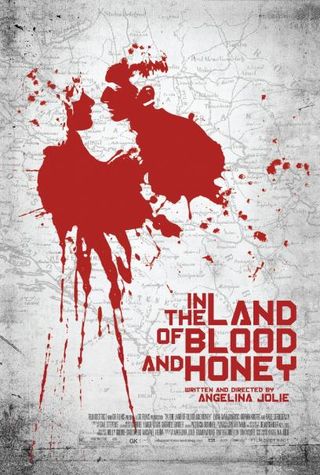
In the Land of Blood and Honey

In_the_Land_of_Blood_and_Honey_5Srecko Horvat on Angelina Jolie's new film In the Land of Blood and Honey about an affair between a Serb and Muslim during the Balkan war, in Eurozine (Warning: the article contains spoilers):

The movie tells the story of Danijel, a soldier fighting for the Bosnian Serbs, and Ajla, a Bosnian Muslim who was involved with him before the war and is now a captive in the concentration camp he oversees. It's a bad repetition of the same good old story depicted most recently in The Reader (Stephen Daldry, 2008), and unforgettably in The Night Porter (Liliana Cavani, 1974). In short, it's a story about the perpetrator and the victim and a reversal of these perspectives as the story goes on. On the one hand you have a war criminal (a concentration camp guard in The Reader, the former SS officer in The Night Porter, the Serbian officer in Jolie's movie), on the other hand you have the victim (the boy who read to the concentration camp guard, the concentration camp survivor, the innocent Muslim woman in the Bosnian war). What all three films have in common is a fatal love affair between a criminal and an innocent victim, the only difference being that, in The Reader, the boy finds out eight years later, when as a law student, he observes a trial of several women (including his former lover) accused of letting 300 Jewish women die in a burning church.

Common to all these films is also that the roles become less and less clear as the story develops. The best example is The Night Porter, where thirteen years after the concentration camp, Lucia meets Maximillian again, who is now working at a Vienna hotel; instead of exposing him, she falls back into their sadomasochistic relationship. The relationship is what Primo Levi – remembering the case of the Sonderkommando, the "special units" of camp inmates in charge of bringing their neighbours to the gas chambers – calls the "gray zone", the zone in which the "long chain of conjunction between victim and executioner" comes loose. Or, as Giorgo Agamben puts it in his Remnants of Auschwitz, "where the oppressed becomes oppressor and the executioner in turn appears as victim. A gray, incessant alchemy in which good and evil and, along with them, all the metals of traditional ethics reach their point of fusion".[2]

The best expression of this new terra ethica was articulated by Michael in Bernhard Schlink's novel The Reader, on which the film was based: "I wanted simultaneously to understand Hanna's crime and to condemn it. But it was too terrible for that. When I tried to understand it, I had the feeling I was failing to condemn it as it must be condemned. When I condemned it as it must be condemned, there was no room for understanding. But even as I wanted to understand Hanna, failing to understand her meant betraying her all over again. I could not resolve this. I wanted to pose myself both tasks – understanding and condemnation. But it was impossible to do both."[3] In other words, when we try to understand the crime, then we stop condemning it; and when we condemn, then we stop understanding it.

So, what is missing in Jolie's movie?

Posted by Robin Varghese at 04:29 PM | Permalink

Comments

I have read good things about this movie, and plan to see it.

Posted by: Dredd | Mar 27, 2012 7:56:12 PM

Post a comment


Subscribe to this blog's feed  

PayAnywhere with iphone credit card swiper

Android Tablet

Bluetooth Headset

2013 New Style Dresses

Compare Car Rental Prices

DHgate.com Wholesale

3QD on Facebook

3QD on Kindle

3QD by Daily Email

Receive all blogposts at the same time every day.

Enter your Email:


Preview 3QD Email

3QD on Twitter

Miscellany

Lijit Search

AddThis Social Bookmark Button

Add to Google

Recent Comments

Louise Gordon on Why race as a biological construct matters

Louise Gordon on The stories of two Palestinian villages: From Al-Araqib to Susiya

musafir on a pretty funny book

freddie on The stories of two Palestinian villages: From Al-Araqib to Susiya

freddie on The stories of two Palestinian villages: From Al-Araqib to Susiya

Junaida on Tuesday Poem

rafiq on Tuesday Poem

Raza Husain on the culture animal

Nebor on Tuesday Poem

Eleutheria on I am dust and ashes and full of sin

carlos on I am dust and ashes and full of sin

Joe on the culture animal

Sundar on the culture animal

Eleutheria on Positive Failure - a review of "The Power" by Rhonda Byrne

Eleutheria on Positive Failure - a review of "The Power" by Rhonda Byrne

Matt on The Science Mystique

Eleutheria on Why is Europe so Messed Up? An Illuminating History

Eleutheria on I am dust and ashes and full of sin

Elatia Harris on I am dust and ashes and full of sin

PeteChapman on I am dust and ashes and full of sin

Raza Husain on the culture animal

Jacky Corey on The Bystander Effect in Medical Care. Why Do I Have So Many Doctors Not Taking Care of Me?

Chris on Positive Failure - a review of "The Power" by Rhonda Byrne

DAS on Why is Europe so Messed Up? An Illuminating History

DAS on Is the Brain No Different From a Light Switch? The Uncomfortable Ideas of the Philosopher Daniel Dennett

Acclaim For 3QD


"I couldn't tear myself away from 3 Quarks Daily, to the point of neglecting my work. Congratulations on this superb site."—Steven Pinker, Johnstone Professor of Psychology, Harvard University.

"I have placed 3 Quarks Daily at the head of my list of web bookmarks."—Richard Dawkins, Charles Simonyi Professor of the Public Understanding of Science at Oxford University.

"Just wanted you to know I’m one of many who reads and enjoys 3 Quarks....almost daily."—David Byrne, musician, former lead-singer of the Talking Heads, artist, intellectual.

Read more here.

The 3QD Prizes

Subscribe to this blog's feed