
| ABOUT US | ARCHIVES | LINKS | RSS FEED | MONDAYS | |

3quarksdaily

An Eclectic Digest of Science, Art and Literature

« After The Event | Main | The Capacity-Output Cross, Part II »

March 04, 2012

Army of Eun

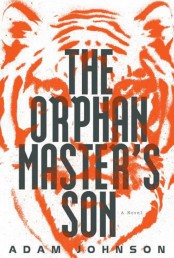
Essays_northkorea_book-cover-174x258M. Francis Wolff reviews Adam Johnson’s The Orphan Master’s Son, in The New Inquiry:

Adam Johnson’s latest novel, The Orphan Master’s Son, is one of those rare works of high ambition that follow through on all of its promises. Set in the Democratic People’s Republic of Korea, it examines both the Orwellian horrors of life in the DPRK and the voyeurism of Western media. North Korea is a two-way mirror, a country in lockdown; we can see in, but they can’t see out. North Koreans’ isolation and reliance on shameless state propaganda for any understanding of the outside world, or even of their own country, create a culture of such outlandish misinformation that the Western media and its audience often respond with laughter. Incredulous, horrified, uncontrollable laughter, more indicative of disturbance and fear than amusement. As outsiders, spectators, we have no way to connect: There is either the black humor of a country where Kim Il-Sung created the world and Kim Jong-il controls the weather, or the tragedy of unrelenting state-perpetrated murders, where almost 1 percent of the population are sent to die in concentration camps. We see a case study in mass manipulation, or a crowd of faceless victims. Neither is conducive to true understanding.

All the more credit to Adam Johnson, then, for even attempting to set a novel in the DPRK. The Orphan Master’s Son is Johnson’s third work — he has published a book of short stories, Emporium, and a novel, Parasites Like Us — and he appears to be in his natural element of black dystopian humor. Johnson’s great strength lies in the bait-and-switch: He lures his readers in with comedy and then overwhelms us with the tragedy that underscores every joke. He makes unexamined caricatures human again. His novel is essential reading for its cynical, media-swamped audience; it is one of those rare vindications of fiction’s potential, its power to humanize the Other and light the way of empathy and understanding.

It is important to note that this is not A Day In The Life of Ivan Denisovich; Johnson does not confine himself to grim realism, but instead races through North Korea at a breakneck speed, like a crazed tourist guide who won’t let you out of the car. His North Korean everyman, Jun Do (consideration of the similarities to the appellation “John Doe” is encouraged but not required) is propelled through a dizzying array of settings and identities, from North Korea to Texas, from an orphan to a state-manufactured national treasure. Our hero’s childhood is dispensed of in 10 pages. His entry into the army and training as a tunnel fighter occupies one paragraph, after which point he emerges, blinking in the light of day, to fulfill his duties as our unwitting guide to North Korea. Nor does The Orphan Master’s Son attempt to describe a representative sample of North Korean daily life; there is something else going on here.

Posted by Robin Varghese at 07:20 PM | Permalink

Comments

Post a comment


Subscribe to this blog's feed  

PayAnywhere with iphone credit card swiper

Android Tablet

Bluetooth Headset

2013 New Style Dresses

Compare Car Rental Prices

DHgate.com Wholesale

3QD on Facebook

3QD on Kindle

3QD by Daily Email

Receive all blogposts at the same time every day.

Enter your Email:


Preview 3QD Email

3QD on Twitter

Miscellany

Lijit Search

AddThis Social Bookmark Button

Add to Google

Recent Comments

Rashid on Aftermath: Pakistan Elections 2013

Yoann on The Bystander Effect in Medical Care. Why Do I Have So Many Doctors Not Taking Care of Me?

Dave Ranning on Aftermath: Pakistan Elections 2013

sadhana on Aftermath: Pakistan Elections 2013

Carol Westbrook on The Bystander Effect in Medical Care. Why Do I Have So Many Doctors Not Taking Care of Me?

Ken Bryant on Aftermath: Pakistan Elections 2013

Umer Vakil on POETRY IN TRANSLATION: CORDOBA

Kabir on Aftermath: Pakistan Elections 2013

Nina on White Indians

Nina on White Indians

Dave Ranning on If Only We Had A Leader Like Chavez, Who Solved Real Problems -- Instead Of Debating Fake Ones Like The Deficit

Mohammed Hassanali on Aftermath: Pakistan Elections 2013

musafir on Aftermath: Pakistan Elections 2013

Maniza on Aftermath: Pakistan Elections 2013

Ellen Perry on The Bystander Effect in Medical Care. Why Do I Have So Many Doctors Not Taking Care of Me?

waqnis on The Bystander Effect in Medical Care. Why Do I Have So Many Doctors Not Taking Care of Me?

Norman Costa on The Bystander Effect in Medical Care. Why Do I Have So Many Doctors Not Taking Care of Me?

Hannah Carlton on POETRY IN TRANSLATION: CORDOBA

Joe on Digging Up Bones or, The Labyrinths beneath Our Feet

JonJ on The Beautiful German Language

cpfaff on Passionate About The Actor's Art: an interview with Michael Howard

Sumiran on Sunday Poem

Ethan on Getting Smarter

Pacificklaus on NORTH KOREA’S NERVE WAR

Félix E. F. Larocca, MD on POETRY IN TRANSLATION: CORDOBA

Acclaim For 3QD


"I couldn't tear myself away from 3 Quarks Daily, to the point of neglecting my work. Congratulations on this superb site."—Steven Pinker, Johnstone Professor of Psychology, Harvard University.

"I have placed 3 Quarks Daily at the head of my list of web bookmarks."—Richard Dawkins, Charles Simonyi Professor of the Public Understanding of Science at Oxford University.

"Just wanted you to know I’m one of many who reads and enjoys 3 Quarks....almost daily."—David Byrne, musician, former lead-singer of the Talking Heads, artist, intellectual.

Read more here.

The 3QD Prizes

Subscribe to this blog's feed