
| ABOUT US | ARCHIVES | LINKS | RSS FEED | MONDAYS | |

3quarksdaily

An Eclectic Digest of Science, Art and Literature

« The Control Revolution And Its Discontents | Main | Debate the Usefulness of Election Models »

March 31, 2012

Arguing Science as Faith

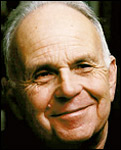
Stanley fish professor bloggerFirst, Stanley Fish over at the NYT's Opionator:

... [Chris] Hayes...posed the following question [to Richard Dawkins and Steven Pinker]: If you hold to the general skepticism that informs scientific inquiry — that is, if you refuse either to anoint a viewpoint in advance because it is widely held or to send viewpoints away because they are regarded as fanciful or preposterous — how do you respond to global-warming deniers or Holocaust deniers or creationists when they invoke the same principle of open inquiry to argue that they should be given a fair hearing and be represented in departments of history, biology and environmental science? What do you do, Hayes asked, when, in an act of jujitsu, the enemies of liberal, scientific skepticism wield it as a weapon against its adherents?

Dawkins and Pinker replied that you ask them to show you their evidence — the basis of their claim to be taken seriously — and then you show them yours, and you contrast the precious few facts they have with the enormous body of data collected and vetted by credentialed scholars and published in the discipline’s leading journals. Point, game, match.

Not quite. Pushed by Hayes, who had observed that when we accept the conclusions of scientific investigation we necessarily do so on trust (how many of us have done or could replicate the experiments?) and are thus not so different from religious believers, Dawkins and Pinker asserted that the trust we place in scientific researchers, as opposed to religious pronouncements, has been earned by their record of achievement and by the public rigor of their procedures. In short, our trust is justified, theirs is blind.

It was at this point that Dawkins said something amazing, although neither he nor anyone else picked up on it. He said: in the arena of science you can invoke Professor So-and-So’s study published in 2008, “you can actually cite chapter and verse.”

Jerry Coyne responds to Fish:

Fish’s big mistake: the reasons undergirding that belief are not that we can engage in a lot of philosophical pilpul to justify using reason and evidence to find out stuff about the universe. Rather, the reasons are that it works: we actually can understand the universe using reason and evidence, and we know that because that method has helped us build computers and airplanes, go to the moon, cure diseases, improve crops, and so on. All of us agree on these results. We simply don’t need a philosophical justification, and I scorn philosophers who equate religion and science because we don’t produce one. Religion doesn’t lead to any greater understanding of reality. Indeed, they can’t even demonstrate to everyone’s satisfaction that a deity exists at all! The unanimity around evidence that antibiotics curse infections, that the earth goes around the sun, and that water has two hydrogen atoms and one oxygen atom, is not matched by any unamity of the faithful about what kind of deity there is, what he/she/it is like, or how he/she/it operates. In what way has religion, which indeed aims to give us “understanding” has really produced any understanding? Fish goes on:

People like Dawkins and Pinker do not survey the world in a manner free of assumptions about what it is like and then, from that (impossible) disinterested position, pick out the set of reasons that will be adequate to its description. They begin with the assumption (an act of faith) that the world is an object capable of being described by methods unattached to any imputation of deity, and they then develop procedures (tests, experiments, the compilation of databases, etc.) that yield results, and they call those results reasons for concluding this or that. And they are reasons, but only within the assumptions that both generate them and give them point.

Yes, but we get results that all sane people agree on, and that actually help us get further results that help us solve problems and figure out why things are they way they are. Note how weaselly Fish is here by using the word “act of faith” to apply to both science and religion. Yes, it was originally an act of faith to assume that there was an external reality that could be comprehended by naturalistic processes, but it is no longer an act of faith: it is an act of confidence.


Posted by Robin Varghese at 04:45 PM | Permalink

Comments

"...we actually can understand the universe using reason and evidence, and we know that because that method has helped us build computers and airplanes, go to the moon, cure diseases, improve crops, and so on."

In my opinion such reasoning in support of science and against God is poor and proves  nothing. If for a moment we assume God created the universe, then it can be argued that he set the ball rolling for life to evolve and man to emerge with the reasoning ability to discover the laws of nature and ability to build things for his benefit without further intervention.

The key and only argument that can be made against God  is that the burden of proving his existence lies with his believers, not with his deniers and they have failed to do so. This begs the question whether believers are bound to prove anything as rationalists are and if Knowledge is based on rational systems, belief systems or both and does it matter as long some utility is served by either. 

Posted by: Raza | Apr 1, 2012 1:12:59 AM

Scientists and Believers are populations NOT individual. "My grandmother does not understand quantum theory - she believes without proof." is a statement about an individual within a population and not the whole population. The fact is, I can set down with my grandmother and, as a member of the science-understanding population in the upper quartile I can move my grandmother to a higher quartile OR become a resource for understanding. "I don't understand neurophysiology but my grandson the neurophysiologist can -- here is his email address." works for all members of the science-leaning population. "I don't believe in the holy trinity and several alleged experts cannot explain it." is a statement about the religious population as observed directly from a large population of believers. Further, I am not restricted to talking about the populations in general -- I can talk about the populations from a set of observable facts.

Posted by: kirk | Apr 1, 2012 9:47:16 AM

A prayer!

O Jesus, our Lord and saviour, please let this inspid, confused, meaningless, uninformed question die. May those who spread confusion by "answering" the question drag its flaming remains down into the pits of hell forever. Amen.

Posted by: Joe | Apr 1, 2012 11:51:13 AM

Jinasena, 8th century:

Some foolish men declare that Creator made the world. The doctrine that the world was created is ill-advised, and should be rejected. If god created the world, where was he before creation? If you say he was transcendent then, and needed no support, where is he now? No single being had the skill to make the world - for how can an immaterial god create that which is material? How could god have made the world without any raw material? If you say he made this first, and then the world, you are face with an endless regression. If you declare that the raw material arose naturally you fall into another fallacy, for the whole universe might thus have been its own creator, and have risen equally naturally. If god created the world by an act of will, without any raw material, then it is just his will made nothing else and who will believe this silly stuff? If he is ever perfect, and complete, how could the will to create have arisen in him? If, on the other hand, he is not perfect, he could no more create the universe than a potter could. If he is formless, actionless, and all-embracing, how could he have created the world? Such a soul, devoid of all modality, would have no desire to create anything. If you say that he created to no purpose, because it was his nature to do so then god is pointless. If he created in some kind of sport, it was the sport of a foolish child, leading to trouble. If he created out of love for living things and need of them he made the world; why did he not make creation wholly blissful, free from misfortune? Thus the doctrine that the world was created by god makes no sense at all.

Posted by: Sam | Apr 1, 2012 12:29:53 PM

By focusing on the way in which science and religion are different in effect, Jerry Coyne seems to miss Fish's main point. Fish argues that religion and science each carry a set of normative attitudes (how things ought to be, what counts as 'true,' etc), which religion is totally up-front about, but which science tries to rationalize away. The consequence of this bad faith is not, as Coyne seems to assume, that science is demoted to the level of mere superstition, but that the left's purportedly descriptive claims will always fall on ears that listen but, of necessity, cannot hear.

Posted by: Achitophel | Apr 1, 2012 3:28:56 PM

Interesting exchange in the 'Opinionator' and excellent comments, particularly by Azra and Sam.

I think that one of the things we fail to understand, in our limitless arrogance as a species, is that we see the world and explore it through sensory organs, and a 'big' brain, which shapes what is sought out for study and how we interpret information: ie, through pairs of eyes, ears, arms, legs, etc.

What's more, we tend to forget that a good deal of incoming sensory information is sorted and saved, or chucked, in pre-cortical / pre-cognitive brain stem structures. We also do not take into account environmental influences such as parasites, and other, which have the capacity modify our perceptions and behavior.

It's difficult to argue that what we observe is 'objective' in the sense of 'universal': that's where contemporary science gets into deep trouble.

Unfortunately, we've entered an era in which science itself has become a quasi religion, wherein researchers comfort themselves with the application of 'strict standards', peer review and, increasingly, gauge success based on profitable commercial applications.

Gone are the days when scientists and philosophers had the freedom to speculate and use their imaginations, in the manner of Schrödinger, among many others.

Science, in my view, is an endlessly fascinating form of story-telling, in which significant features of species-specific self-portraiture are to be found.

What could be more rivetting than a physicist ['friend' of Dawkins, by the way] who gives a lengthy talk in which he claims that the universe is flat and that it was created 'out of nothing'?!

Anyone prepared to provide scientific evidence to the contrary?
.

Posted by: Dana | Apr 2, 2012 6:27:20 PM

Post a comment


Subscribe to this blog's feed  

PayAnywhere with iphone credit card swiper

Android Tablet

Bluetooth Headset

2013 New Style Dresses

Compare Car Rental Prices

DHgate.com Wholesale

3QD on Facebook

3QD on Kindle

3QD by Daily Email

Receive all blogposts at the same time every day.

Enter your Email:


Preview 3QD Email

3QD on Twitter

Miscellany

Lijit Search

AddThis Social Bookmark Button

Add to Google

Recent Comments

Joel Grant on Why Rational People Buy Into Conspiracy Theories

musafir on REFLECTIONS ON WOOLWICH

Norman Costa on Race Is Not Biology

Geoff on REFLECTIONS ON WOOLWICH

Kai Matthews on Why Rational People Buy Into Conspiracy Theories

fallensparks on REFLECTIONS ON WOOLWICH

jon s on Race Is Not Biology

musafir on REFLECTIONS ON WOOLWICH

musafir on Faith Healing

Dave Ranning on REFLECTIONS ON WOOLWICH

Geoff on REFLECTIONS ON WOOLWICH

Luke Lea on Race Is Not Biology

fallensparks on REFLECTIONS ON WOOLWICH

Luke Lea on Race Is Not Biology

jo smith on REFLECTIONS ON WOOLWICH

jo smith on Guy de Maupassant

Geoff on Jeremy Scahill & Noam Chomsky on Secret U.S. Dirty Wars From Yemen to Pakistan to Laos

Jim on Friday Poem

JF on REFLECTIONS ON WOOLWICH

Jesse on REFLECTIONS ON WOOLWICH

Kenan Malik on REFLECTIONS ON WOOLWICH

Pierre on REFLECTIONS ON WOOLWICH

chris on Race Is Not Biology

Dave Ranning on REFLECTIONS ON WOOLWICH

Sumiran on Friday Poem

Acclaim For 3QD


"I couldn't tear myself away from 3 Quarks Daily, to the point of neglecting my work. Congratulations on this superb site."—Steven Pinker, Johnstone Professor of Psychology, Harvard University.

"I have placed 3 Quarks Daily at the head of my list of web bookmarks."—Richard Dawkins, Charles Simonyi Professor of the Public Understanding of Science at Oxford University.

"Just wanted you to know I’m one of many who reads and enjoys 3 Quarks....almost daily."—David Byrne, musician, former lead-singer of the Talking Heads, artist, intellectual.

Read more here.

The 3QD Prizes

Subscribe to this blog's feed