
by Kevin S. Baldwin
There is nothing quite like a serious illness or injury to focus one's mind on what is truly important. I recently injured my back (probably from lifting my 6 year old off the floor where he had fallen asleep). I do this about once a year, usually by forgetting to bend at the knees when lifting something. I bent my knees this time, but I guess it wasn't enough. I don't recall a pull or a pop, but over the next few days, things slowly deteriorated. I went from taking 2 Ibuprofen at a time to 4 at a time, and even that didn't help like it usually does.
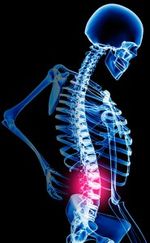
Eventually, while climbing stairs, a turn on a landing threw my back into such spasms that I collapsed. Sweat began pouring off my face and I felt extremely nauseous. This was terra incognita for me. Had I ruptured a disc? (I guess I've been pretty lucky so far. I am pushing 50 yet have suffered no broken bones, major accidents, or diseases. I think I took a single Tylenol after my wisdom teeth were pulled). Suddenly, I was helpless and in agonizing pain.
Pain is one of these enigmatic aspects of existence. It serves a purpose, but there can be too much of a good thing. Pain and swelling keep you from moving or using an injured area so it can heal. Of course, a lot of pain is uncomfortable and has a way of consuming most or all of your mental bandwidth. People who are born without pain receptors tend to live short lives because of all the injuries they suffer without realizing it.
I remained crumpled on the landing while pondering my next move. Not enough room to stretch out: I would have to stand up. After several attempts that ended when my lower back locked-up, I finally convinced myself to work through that pain and made it back to being vertical. Standing was actually fairly comfortable as long as I didn't move. But I couldn't be stranded on the landing for the rest of the day. I ended up sitting down on the stairs and pushing myself up backwards one step at a time. I grabbed the handrails at the top of the stairs and managed to pull myself up and drag myself to the bedroom to lie down.
I've always been intrigued how this kind of personal suffering tends to result in an almost obligatory internal monologue of “what have I done to deserve this?” and “what do I need to do to get it to stop?” In the absence of any kind of scientific understanding, I could see how demons, evil spirits, or other supernatural agents could easily be assigned blame. Given how social we humans are it isn't too difficult to see why some could ascribe social significance to injuries and illness. Karma seems all too real at these times and I began cataloguing any people I could have possibly wronged recently or any situations that I could have handled better.
In my new state, the simplest tasks required huge applications of will and planning. How to now get in the bed? How to move once in the bed? If I lay flat on my back, the pain was substantial but manageable. Any attempt to shift position resulted in complete lock-up, as if my lower lower back were hooked up to an electric power source. A beached whale probably had more grace and flexibility. Something as routine as getting up and going to the bathroom took on a whole new meaning. I lost my appetite and even suppressed thirst because initiating the inevitable trip to the john was so unpleasant. Not good.
What followed was the longest night ever. Unable to sleep and unable to move: All I could do was think about pain. I began to understand why addiction to painkillers was so common. I even managed to feel some empathy towards Rush Limbaugh. I often think of the repetitive motion injuries that workers in the local slaughter-house must endure working 8 hour shifts at high intensity. What about others who suffer chronic, severe pain? The depression and suicidal ideations they deal with suddenly made much more sense. Not that they didn't before, but it is one thing to think about or understand pain abstractly, but it is another to actually experience it directly. No wonder some people are so crabby. I gained new respect for people I knew who suffered from various maladies but didn't let it get to them.
By morning, things had not improved: Every movement was by necessity very deliberate and minimal, as if I had discovered a kind of Zen kinesiology. My wife insisted on driving me to the doctor's office. We took the minivan, because I wasn't sure I could lower myself into or extricate myself from our sedan. She commented that I moved like a 90 year old. I certainly felt decades older. Is this what I had to look forward to? The handholds placed throughout the van and office took on a new significance and utility. Ramps looked much more inviting than stairs.
The doctor's exam revealed a muscle strain but, thankfully, no obvious damage to the intervertebral discs. She prescribed a muscle relaxant and a pain killer. I thanked her deeply and repeatedly, went to the pharmacy, and very quickly began feeling better. I had dodged a bullet.
To what extent has minimization of risk, and our understanding of pain and illness and the ability to mitigate their effects dulled us to the central realities of existence and rendered us immune to the suffering of others? Physical anthropologists tell us the patterns and frequencies of bone fractures and other injuries in early humans resemble those of modern-day rodeo riders. Just about everybody was hurt or hurting. There was a universality or democracy of suffering. Before antibiotics, infections were frequently equal opportunity. Calvin Coolidge lost his son to sepsis resulting from a blister on his foot. It is unimaginable today that a president's child would die of anything short of the most aggressive cancer. Would the 1% be a little more concerned about the rest of us if they spent a few sleepless nights in agony? Would some serious discomfort or illness prompt the deficit super committee to quit posturing and compromise? I don't really want to wish infirmity on anybody, but perhaps some good can come from it.
The whole experience was supremely humbling. It stripped me bare. Possessions and ambitions suddenly didn't matter any more. I just wanted to feel better, get back to my life and family, and try to be better at what I do in the time I have left on this planet. Fortunately, I am able to (for now). And for that, this Thanksgiving weekend took on a special meaning.