
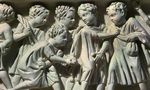
There is remarkably little good poetry about very small children. Maybe it’s the lack of sleep that does it; for the first few months it’s hard to remember to put out the bins, let alone write poems. Perhaps the first writer to make a serious attempt to evoke the world of earliest childhood was the Latin poet Statius, a contemporary of the Roman emperor Domitian (ad 81–96). In one of his most remarkable poems, Statius describes taking a newborn baby boy in his arms, “as he demanded the novel air with trembling wails”. Bit by bit, he learned to interpret the child’s inarticulate complaints and to soothe his “hidden wounds” (vulnera caeca). Later still, once the baby had learned to crawl, Statius would pick him up and kiss him, until bit by bit, cradled in the poet’s arms, he would drop off to sleep. Statius’s name was the toddler’s first word, and Statius’s face served as “his first plaything”. How many other poets, in any language, have described the experience of having their face yanked around by a fascinated baby? It comes, then, as a rude shock to discover that the baby was not Statius’s son, but his slave. “He was not of my stock, nor did he carry my name or features; I was not his father . . . . I was not one to love some chatterbox plaything bought from an Egyptian slave-ship – no, he was mine, my own.” This little boy was a verna, “house-reared”, the child of two of Statius’s own household slaves.
more from Peter Thonemann at the TLS here.