
October 18, 2011
Economic Theory in a Dynamic Economic World
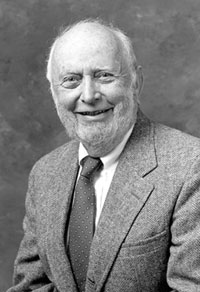
Douglass C. North in Business Economics:
FORMAL ECONOMIC theory has become increasingly mathematical, elegant, and precise. It also increasingly has failed to confront the economic problems of societies. Economics, in consequence, is slowly and painfully moving away from the formal mathematical models built around a frictionless, static conceptual structure. Frank Hahn, one of the pioneers of general equilibrium theory expressed it succinctly:
"...there will be an increasing realization by theorists that radical changes in questions and methods are required if we are to deliver, not practical, but theoretically useful results." (Hahn, 1991, 47)
It is not as clear where economics is going. But the direction is suggested by two glaring shortcomings of neoclassical theory: it is a frictionless theory inn world in which the frictions are where the action is, and it is static in a world in which dynamic change is going on at an unprecedented rate. Remedying these defects requires that economics builds on its strengths, modifies the unrealistic assumptions that made it frictionless, and incorporates time into the analysis to confront the issues of economic change.
Posted by Robin Varghese at 05:15 PM | Permalink


Comments
Very simple. Get back to the basics. Start thinking wholistically, start with the liberty of the human at the centre.
Posted by: Sanjeev Sabhlok | Oct 18, 2011 5:20:56 PM
This is a very interesting attempt to further the debate on the appropriate restructuring of economics using economic history, and much better insights into the mental models used by individuals and groups. But unless I missed something, Douglas has completely missed the growing constraints of resource depletion. It is as if he is a Cartesian dualist with all the problems of the material world ignored and only the mental counts. We are not in such a world and the issues of resource depletion are not simply those of externalities, or mental models, so his attempt will ultimately not help. Substitution and efficiency are not enough to resolve resource depletion; we actually need to think about stable state economics, not in the sense of stasis but dynamic flat lining. Herman Daly has interesting things to say in this area.
Posted by: Eds | Oct 19, 2011 11:12:38 AM
Post a comment