
by Scott F. Aikin and Robert B. Talisse
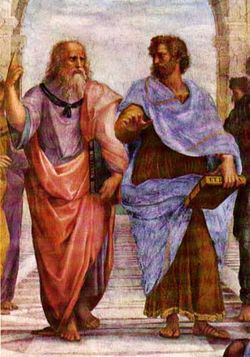
Some demur. They contend that the only great philosophers are those who get things right; consequently, they hold that being wrong on the big questions disqualifies a philosopher for greatness. Those who take this position tend see another philosopher as getting things right only when that philosopher agrees with their own views. They thus recognize no opponent to their views as being philosophically great. How convenient.
It is, of course, an error not to recognize that there are varieties of intelligent challenges and alternatives to even the best philosophical views. For every great philosophical idea, there is usually a great philosophical opponent. An education in philosophy is comprised not only of knowing those alternatives, but of acquiring the skill of navigating the tensions between views, and of seeing that there can be philosophical value in error. To see philosophical greatness as consistent with demonstrable error is the mark of philosophical maturity.
Richard Gale’s recent book, John Dewey’s Quest for Unity (Prometheus, 2010), is a model of this kind of maturity. We’ve separately reviewed the book elsewhere (Aikin HERE, Talisse forthcoming HERE), and though we’ve disagreed with some of Gale’s substantive contentions, we hold his book to embody the ethic of critical respect essential to philosophy done well.
Gale opens his book with unrestrained admiration for John Dewey the man and his philosophical program. Dewey, he says, “was not just a great American philosopher. . . he was a great American hero as well” (9). Then Gale contends that “In a more enlightened society than ours, John Dewey would be among Mattel’s best-selling action figures, coming complete with moustache. . . and a beat up old typewriter” (9). Gale favorably compares Dewey to the Milesian physicists, John the Baptist, Prometheus the Titan, and even Elvis Presley. These are all ringing endorsements of Dewey’s character, vision, and commitment.
But then Gale launches into a series of critical arguments. He charges Dewey’s ethics with “moral idiocy” (69), and he compares Dewey’s public philosophy with the sales pitch of a “Madison Avenue huckster” (84). He argues that the core Deweyan view of event ontology suffers from an obvious logical “howler” (121), and he accuses Dewey’s scientific program in philosophy as “fake empiricism” (168). With admirers like these, who needs critics?
On the face of it, this seems strange. Is Gale being two-faced? Are his expressions of admiration disingenuous? Is there a conflict, a contradiction, here? We think not. In philosophy, precise arguments, acceptable premises, and plausible conclusions are good and desirable. We want the truth, and we want it in the right way. But one also needs vision and aspiration. Philosophers need problems worth solving, conceptual irritations, tough questions about the intelligibility of it all (or at least of a good bit of it all). Being captivated by a philosophical task is the first part; the other work– the philosophy– comes later.
Gale identifies Dewey’s problem with what he colorfully calls the “Humpty Dumpty Intuition”: If reality is analyzed as being comprised of discrete elements, it does not form a unity, and as a consequence, it is impossible to see it as a coherent whole (23). According to Gale, Dewey was stricken by the worry that once reality is broken down into distinct parts, it can’t put it back together again. The key, then, is to not disturb the unity. One must not let Humpty Dumpty fall in the first place. One must maintain reality’s simple intelligibility.
Gale identifies the trouble not in the aspiration, but in Dewey’s attempts to achieve it. Because his goal is the unity of all, Dewey must synthesize things that just don’t go together. In aesthetics, he must unify the ineffable private experiences of the beautiful with the public criteria for articulable good. In epistemology, he must unify the demand for inquiry in all aspects of human life with the fact that there are things you shouldn’t want to know. In ethics, the objective is to synthesize all of one’s goals despite the fact that many of those goals essentially conflict (according to Gale, Dewey’s own life was marred by a conflict between love and marriage). Most generally, Dewey’s philosophy attempts to bring the methods of natural science and empirical verification under the broader mystical vision of the unity of all. But in the end, empiricism is inconsistent with mysticism.
The result, according to Gale, that Dewey’s systematic philosophy is “a house divided against itself” (206). Yet Gale sees that the crucial task for those who read great philosophers is that of grasping the aspiration behind the philosophical program. According to Gale, Dewey’s philosophy is driven by a felt need to preserve unity while giving multiplicity its due. There is a kind of heroism in Dewey’s endeavor, even if, in the end, he fails. Having the insight to grasp a deep and foreboding philosophical problem, and fortitude to devote one’s life to addressing it unflinchingly is a mark of philosophical greatness. It is a mark of intellectual respect to subject the efforts of great philosophers to unrelenting criticism. By doing so, we do our part in enabling the next attempt.