
By Ryan Sayre
I really can’t think of a better example of what we might call an anthropological ethos of urgency than a 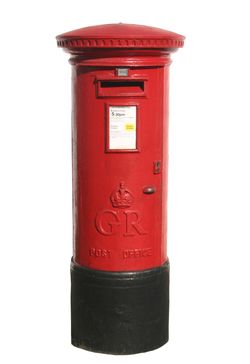
“I remember asking another Japanese reporter how he managed to file his stories. “I send many by post,“ he said. “Mine are not urgent news stories.“ As he talked, he pointed to a letterbox outside the Aletti Hotel, which, he told me, he always used. A sticker, in French, on the box, read: “Do not post letters here. Owing to the circumstances, collections have been discontinued since February 12.“ We were in May.
The anthropologist offering this anecdote gives it as a brief interlude of humor, a gentle ribbing of the journalistic field, a little snatch of good-humored racism. I wonder, however, whether, just for shits and giggles, we might hold our laughter for a moment and try taking the Japanese reporter at his word? What I mean is, let's just assume for a moment that he means what he says about the non-urgency of his dispatches. Let’s assume he parles French like a Bonaparte, has a semiotician’s eye for signage, and makes use of this out-of-service postbox for no reason other than that it strikes him as the most suitable place to store observations on a situation too liquid to be touched in the immediate present. The postbox in which our reporter stuffs his dispatches is a kind of time capsule, yes, but rather than the tin boxes we buried as children that wait idly for the arrival of some pre-established future date, these dispatches are attentively listening, devoting themselves to the moment when the ping of empty copper shell casings gives over to the jingle of a mailman’s steel keyring.
A few months back I was chatting with two friends, one a fellow anthropology PhD candidate, the other a journalist for a major American newspaper. The anthropologist was talking about how difficult it was for her to turn a blind eye to some pretty exciting things happening in the news regarding her field of study. She was in the final stages of writing her dissertation and yes, the two of us agreed, she must resist the temptation to follow the story as it unfolds. If the journalist wasn’t scandalized, then she was baffled by our blatant disregard for the 'big' story. How could we be so woefully dismissive of the present? For better or worse, we explained, anthropology is always behind the curve. Perhaps we made some kind of case for the merits of dragging our fieldwork data around with us for four, five, or six years until it is published in book or article form. We might have argued that anthropology’s commitment to the human condition requires necessarily, if also tragically, a forfeiting of its stake in the present. Maybe we said something cumbersomely anthropological, like that our discipline's understanding of urgency has less concern for specific predicaments than it does for the urgency of the predicament of specificity. I don’t quite remember how we justified our position, but I do recall that I left thinking the more appropriate anthropological stance would have been to refrain from jumping so readily to anthropology’s defense, and to instead jot down notes on my journalist friend's misgivings about our repudiation of the present – notes which i would then place in a self-addressed envelope and slip casually into a nearby postbox.
The Japanese journalist in Algeria, after getting fired from his newspaper for inactivity, likely retired to a small office in a university anthropology department where he had ample time to work out urgency at his own slow pace. His newspaper, down one journalist, surely had no trouble finding within the ranks of anthropology a scholar ready and willing to send speedy dispatches on the liquid present he encountered in the field. The question, in the end, concerns less the merits and demerits of anthropological time, of journalist time, or even of the politics of urgency itself. What the wartime postbox offers us is a small chance to consider an empty mid-afternoon street corner in a time of war and the hollow unremarkable pop made by a bullet as it snaps and then whizzes past.