
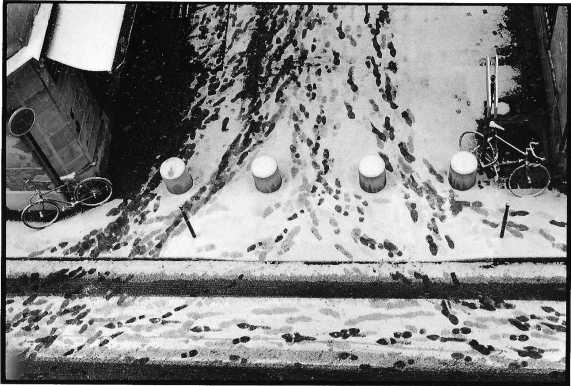
View from Marais Window: Footprints in the Snow, 2005, copyright Alison Harris
by Elatia Harris
In 1986, San Francisco-born David Downie, a scholar and multilingual translator, moved to Paris, into a real garret — a maid's room, in fact — to write himself into another way of life. Fresh from Milan, his marriage to a Milanese finished, he was still young enough for years more of getting it right. A quarter century later, his authority on matters Parisian is acknowledged by Jan Morris, Diane Johnson, and Mavis Gallant, to name only a few illustrious admirers.
To the intense delight of his readers, Paris, Paris: A Journey Into the City of Light, was reissued last April. Another book, Quiet Corners of Rome, came out in May. Rome is a noisy place, but David Downie and his wife, the photographer Alison Harris, rearrange that for us. Alison's ravishing photos of Paris and Rome are taken from these two books, and from an archive of images not otherwise available.
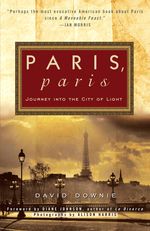
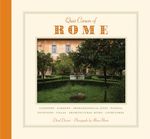
A noted cookbook author, David is said — though not by himself — to be an amazing cook. His knowledge of Mediterranean foodways has long been a tremendous resource for me, most notably in these pages, when I researched the death-struggle between T. melanosporum and T. brumale — two truffles, one a glory of France, the other a highly competitive tuberous Anti-Christ. Readers of food studies journals such as Gastronomica and The Art of Eating will recognize David as the trilingual interviewer who gets to all the best sources, taking great care, even, with the names of truffling pigs. To talk with an author who has two new books out is to reach him at a particularly exciting time, but I hoped, as well, to talk about what led up to those books — about 25 years of living in Paris and traveling, with journalism, fiction, cookbooks, books about wine, about trekking and making pilgrimages fueling that life.
Elatia Harris: David, you’ve referred to yourself as an accidental Parisian, but the story of how you got to Paris seems so…fated. Do you ever feel that way about it?
David Downie: As a skeptic, someone who's so skeptical he's skeptical of skepticism, I have a deal of trouble with such inquiries.
Put it this way. By the time I lammed out of Italy on a night train from Milan, I'd realized many things. My mother is Italian, I lived in Italy as a boy, loved Italian food and culture and the language, of course, but — I wasn't really Italian after all. To reach that state of enlightenment, I had to live in Italy as an adult, and perhaps I had also to marry that volcanic Italian woman, and be immersed in an Italian family, to learn that I am not that Italian boy who loved Rome and Venice so much. By the time I moved into my maid's room in Paris — the famous unheated, 7th-floor, walk-up — I had a feeling that the umbilical cord to Italy had been severed. And I knew I was as American as apple pie.
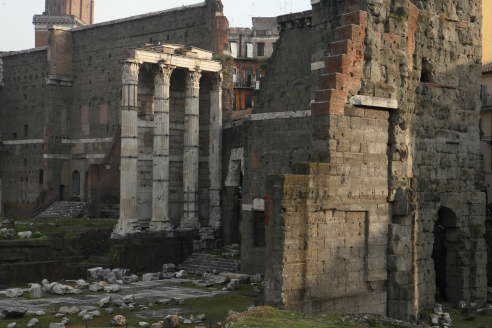
Market of Trajan, Edge of Monti, copyright Alison Harris
EH: “Not that Italian after all” – ahem! You speak for many who have had the fantasy they could be Italian enough, I think. In Rome I met Muriel Spark. Even with a staggering career and people who were in awe of her, she said living in Italy, yet not being Italian, meant being very much an outsider at times of great loneliness or need.
DD: Muriel got so many things right, and was so terribly talented…
EH: Oh, yes. She got to me that evening, and I don’t mean as a literary superstar. But Paris is a different matter – who doesn’t think they could take Paris? What in particular was calling your name there?
DD: It was going to be good for writing.
EH: And being as American as apple pie in Paris sounds like a writer's pedigree with some cred. But what sealed the deal?
DD: A dramatic meeting that was in fact an innocent encounter at a tea party held the day after my birthday, 24 years ago. I don't even like tea — it gives me hives.
EH: This is fateful already. What were you drinking?
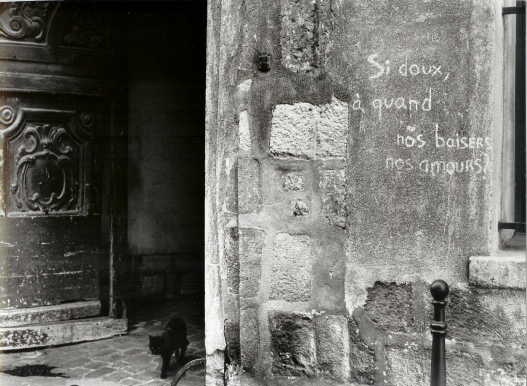
Si doux, a quand…, copyright Alison Harris
DD: Whisky or wine. Alison showed up unexpectedly. Her childhood friend was the best friend of a friend of mine's girlfriend… It really could not have been planned. We discovered immediately that we had Rome in common: she lived there for 6 years as a child, and returned to study art history. She was still spending several months a year in Italy. So we spoke the same three languages, and had read many of the same books. And I started to think I might lend her some books…
EH: Okay, that was it for you! And Paris was good for writing. It's mythic, to me, that you just went there and made all that work. Is a writer as much of a natural outsider in Paris as elsewhere?
DD: Many are terribly social. I won't compile a list, but of those I know, Diane Johnson is totally social. Mavis Gallant, though she has always lived alone and is portrayed as a loner, is actually an extremely sociable woman. She and I have had many conversations about this topic. She told me, long ago, that she purposely sought out people of all kinds. As I have done. But I've wound up an outsider. The job of writing imposes long periods of solitude upon the writer, whether the writer desires that or not.
EH: And you assented to that…
DD: In my case it was a vocation. Since an early age I have had a calling to write. Like many writers, I fear this. Mavis Gallant also told me, long ago, she was afraid she had the vocation but not the talent. In her case, that's clearly not an issue. She's a truly great writer.
EH: Amen! Readers of your books will discover something unusual from them — that you found out what you know from walking literally everywhere. It’s the real act of immersion in any place one may go, I believe.
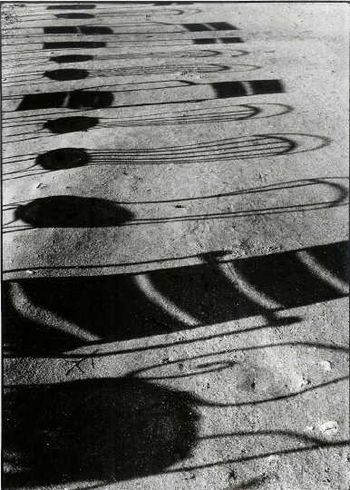
Luxemburg Gardens, Shadow of Chairs, 1994, copyright Alison Harris
DD: Yes, readers do discover much about me and about my writing by “walking” with me into my experiences. It's not the perfect technique for expressing my feelings, but it can be effective. I was just in Chartres, by the way, and had that wonderful sensation of slowly approaching the cathedral on foot, and, from miles away, seeing those amazing towers shooting skywards.
EH: I wish I had taken a couple of days to walk to Chartres. I can’t think what I was doing that got in the way of that. Probably eating. A recent project for you was to walk the Way of St. James. Was slowing down time one of the things you had in mind when you did that?
DD: Yes, the slowing of time, the disappearance of time, is what pilgrimage is all about. That and fatigue and being in constant contact with the ground. Your feet seem to merge with the soil at times. Sometimes you think you can't move. Sometimes you feel like you're flying. But you're always aware of your physical presence as a human — an animal — and as an element in the landscape.
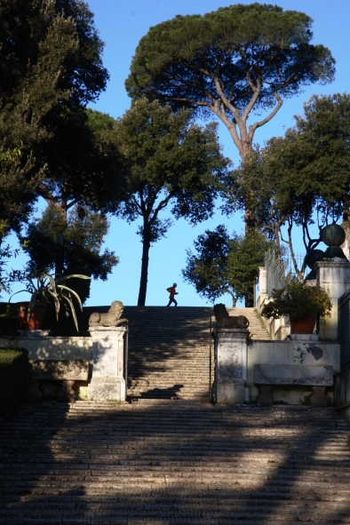
Villa Doria, copyright Alison Harris
EH: Tell me a little about how the idea of Quiet Corners of Rome occurred to you. It's a highly counter-intuitive take on Rome, if you ask me.
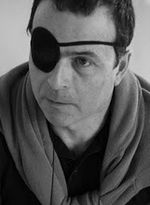
DD: Actually it's perfectly intuitive if you have good hearing, or are hypersensitive to noise, crowds, traffic, pollution, as I am. Ever since I went blind in one eye — suddenly, overnight — I have become unbearably sensitive to sound, light, crowds… My childhood love for noise morphed into a horror of airborne filth and ear-torturing vibrations. I wondered how Romans could stand the noise–it's been a noisy place for millennia. And while researching Cooking the Roman Way and, especially, Food Wine Rome, we came upon many quiet islands. So we decided to make an archipelago of silence, joining those islands.
EH: It was an aural hush you had in mind, then. Not just a mood.
DD: And a practical matter. I had been asked some years ago to translate Quiet Corners of Paris, by Jean-Christophe Napias, into English. I did. It has been a big seller. My publisher asked if I would write Quiet Corners of Rome. A real challenge, and I rose to it. Alison was very intrepid. She found many of these quiet corners herself. Photographers are like cats. They're fearless and curious.
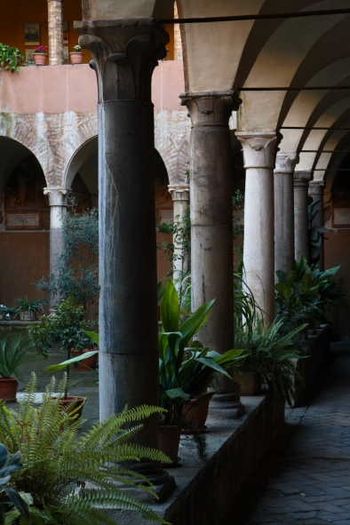
Sant' Onofrio al Gianicolo, Cloister, copyright Alison Harris
EH: The deep shadows in her Roman photos make you think everything is quiet and cool for you. Sometimes you can see in the far distance the city is racketing away, with shimmer signaling noise and heat — but you are in shade, near water, or cloistered. Or it's an unusual time of day, that plays up very restful geometries.
I want also to ask about your treks in the countryside. Both of you walk everywhere there too, when so many know a place only from biking or motoring.
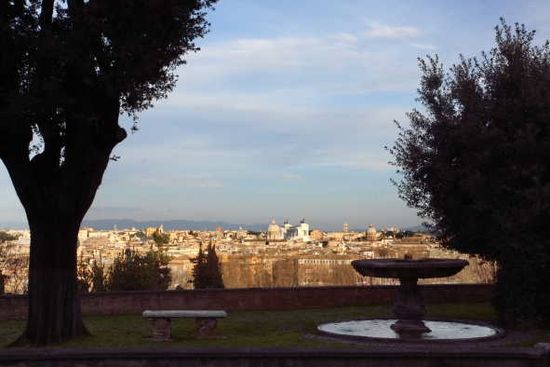
Sant' Onofrio al Gianicolo, View, copyright Alison Harris
DD: Part of walking a place — or walking from place to place — is about personal ownership. That might sound ridiculous.
EH: Not to me. Robert Byron or Freya Stark would agree, I believe. The hugely physical relationship they had with every place they traveled is how they owned that place.
DD: Until I've paced out a walk, until I've gotten into the landscape or cityscape, I can't know it. After 25 years in France, I still have to hoof it around to get what's going on. This must be some extremely primitive reaction to the external world, something that wells up in my caveman soul. Driving or biking or taking trains or planes – that just doesn't do it for me.
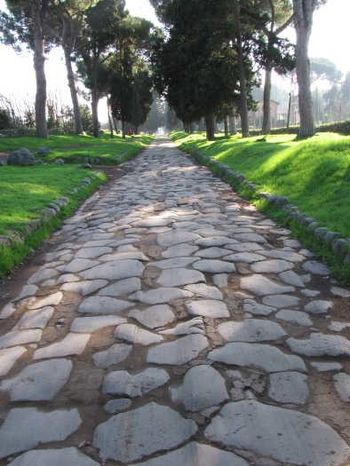
Via Appia Antica, copyrght Alison Harris
EH: I know that Alison and you walked 750 miles across France on the Way of St. James. Um, my God. I've read that while there are famous starting points to this pilgrimage, it's quite normal for a pilgrim just to slip out of his own house and…get going. What’s the title of the book?
DD: Hit the Road Jacques. I hope my publisher will take it, but it doesn't fit into any of the usual pigeonholes. I'm an atheist and we hiked on pilgrimage routes. The book is about France but it's also about me, just as Paris, Paris is about the city and me. But I'm not the protagonist. And it's not confessional in a marketable way.
EH: Mm, if that's reverse psychology, you’re making me want to read it. You write so many kinds of books. What’s the secret?
DD: I once asked a famous pizza-maker in Naples what the secret was. He said the secret is there is no secret. Good ingredients, good tools — a real pizza oven — and lots of hard work and patience. It's the same thing with books, particularly those that lead readers to real places.
EH: Since Paris is a real place one might wish never to change, I’m wondering — how did you arrive at your non-sentimentalist view of it? That would be personally very difficult for me. I had a rough time with even something as beautiful as the Louvre Pyramid literally cropping up. But you have the appreciation of history and the relish for the coming thing. Is it just the way you are? Or is it conscious?
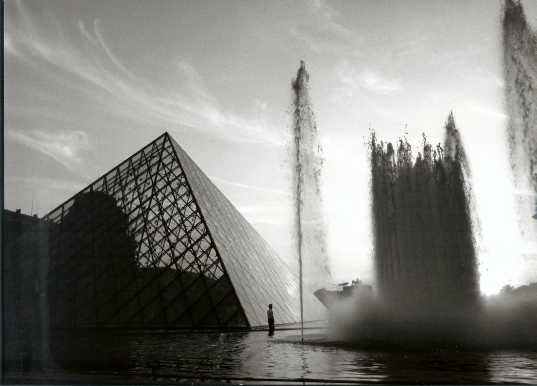
Louvre Pyramid, Light and Shadow with a Figure, 1989, copyright Alison Harris
DD: A very perceptive query. It’s both the way I am and a decision I made. Funnily, in California they think of me as the dark one with the irony problem. In France they think of me as a sunny Californian… If only both sides knew, neither is right, and both are right.
EH: Maybe sentimentalists want it like it was when they were young. I’d rather be me, as I am now, but Paris should somehow stay like it was.
DD: I too suffer from seeing the decline of many, many things in Paris, from the quality of exchanges with people, to the food, the bistros, health care, and more. But in my office I display a poster showing many species of dinosaur, and when I start to feel homicidal or depressed about unwanted change, I look at the poster and smile. A walk in the cemetery also does the trick. So I make a conscious effort to be philosophical. I'm an adept of Figaro, as noted many times. My dear old dad, who was one of the world's finest men, no joke, used to quip “Relax and enjoy yourself, things will get worse!”
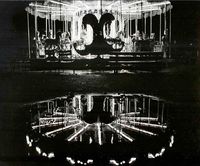
Reflection of Merry-go-Round, Tuileries, 1999, copyright Alison Harris
LINKS
David Downie Sites
http://www.davidddownie.com/ Author site
http://parisparistours.blogspot.com/ Paris, Paris Tours site
http://blog.davidddownie.com/2010/11/paris-paris-tours.html Blog (politics, culture, trekking, food, wine)
Alison Harris Photography Site
David Downie's Author Page at Amazon.com
Paris, Paris and Quiet Corners of Rome at Amazon.com
David Downie's recent article on Chartres Catherdral in the San Francisco Chronicle
http://www.sfgate.com/cgi-bin/article.cgi?f=/c/a/2011/07/10/TRG11K2ISE.DTL
Bibliography