
August 29, 2011
LEGOS and the Changing Face of American Higher Education
On Thursday I will put a summer of research and writing behind me and return to my professorial duties in the classroom. When I do, I will greet a fresh crop of college students, as I have done every year since 1999.
I often get asked if I notice any difference, if students have gotten “better” or “worse” over the years since I first began teaching. The question itself can often be a bit loaded; the person posing it may be expecting me to confirm their suspicions. The truth, however, is a little more complex, which is why I often answer: “Both.” It seems to me that as time goes by, the students entering my classroom, on the whole, are getting better at some things and worse at others.
My home institution, Towson University in suburban Baltimore, is a good place to observe such trends and vacillations among American college students. Originally founded as the Maryland state normal college for training K-12 teachers, it first opened in 1866 with eleven students in a Red Man’s social club in downtown Baltimore. It has since grown into a full fledged university, its ongoing expansion reflected in its name changes over the years: Maryland State Normal School (1866); Towson State Teacher’s College (1935); Towson State College (1963); Towson State University (1976); Towson University (1997).
While TU still produces more teachers than any other institution in the state, the College of Education is now just one among eight colleges at the university, including the College of Liberal Arts where I am based as a tenured member of the History Department. Currently the second largest school in Maryland with a total student population of about 22,000, only the flagship campus at College Park is larger. I sometimes joke to people from outside the state that Towson University is the biggest school no one’s ever heard of.
Anywhere from 200-250 of these students (mostly undergraduates) will filter through my classes in a given academic year. In upper division classes, a majority of them will be History majors. But in the introductory surveys, which I teach 2-3 sections of per year, very few of them are History majors because those courses meet a university general education requirement that all students must fulfill.
In my experience with the thousands of Towson students I’ve taught and advised during my ten years there, I find that they generally spread the full gamut when it comes to issues like talent, preparation, and work habits. I have no graduate Teaching Assistants at my disposal, and so I personally run every discussion in which they partake and grade every piece of material (all of which are written assignments) that they submit. My grades often approximate a bell curve, though not because I grade on one, but because that’s just the way things tend to sort themselves out at a place like Towson.
In other words, Towson University offers a reasonable cross-section of Northeastern American college students. And so when someone asks me about whether students are getting better or worse, I feel reasonably comfortable saying “both.”
One area in which I find students have improved

I attribute that to their having grown up with the internet. They simply write a lot more than prior generations of students. And certainly all of them, just like all of us, have had that unpleasant experience of sending an email or text that was meant to be ironic or sarcastic but is taken the wrong way, or for some other reason there is a fundamental miscommunication with you and the reader and difficulties ensue. It can be a painful lesson in the need to write clearly and the importance of knowing your audience, and a lot of them have already learned it by the time they get to my class.
Another way in which they’re better is that they are, for lack of a better word, far more post-modern than earlier generations of students. They did not grow up in Cold War America, with its emphasis on rigid categories or its harsh and sometimes moralistic critiques (or dogmatic defenses) of the fringe. And in addition to a post-Cold War America, they also grew up in a post-Civil Rights America, a place where bigotry, while it still certainly exists, is no longer openly acceptable in the popular culture, while diversity is a nearly universally lauded world view.
In short, they don’t remember the 1980s. Actually, most of them weren’t even born yet. Thursday’s new freshman will have entered this world in 1993. So they don’t even really remember the 1990s. They’ll claim to remember 9-11. They almost have to since it is the seminal event in defining post-Cold War America. But the truth is, all they’ll really have is the foggy memories of an 8-year old.
The result is that today’s students ar

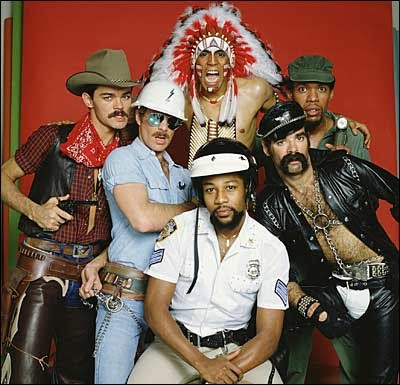
Simply put, they’re much more open minded than my generation was at their age. Disco or Rock n Roll? Many of them instinctively recognize that kind of nonsense for the false dichotomy that it really is. Why on earth should one feel compelled to choose? The notion that either genre represents some murky value system that demands our loyalty is ridiculous, and they would have no compunction about liking The Village People and Led Zeppelin.
Personally, I’ll take “Macho Man” over “Stairway to Heaven” any day.
But recent students also have their weaknesses and blind spots. And one of the they ways in which they can frustrate faculty and undermine their own performance and development has to do with LEGOS.
Yes, LEGOS, that classic toy of colorful, plastic, interlocking blocks invented by a Danish carpenter.
The carpenter in question, one Ole Kirk Christiansen (1891-1958), named his invention for the Danish phrase leg godt, meaning “play well.” And indeed, I and millions of other children of the Baby Boom and Generation X eras played well with them, along with their earlier American counterparts: Lincoln Logs (invented by Frank Lloyd Wright’s son) and Tinker Toys (from the same company that brought you the Erector Set).
Legos, Lincoln Logs, Tinker Toys and the like were all early 20th century versions of classically minimalist children’s toys. Featuring new colors, shapes, and materials made possible by the industrial revolution, they were not complex. They were just a just slightly more sophisticated version of simplicity.
But not anymore. Now LEGOS come with specific plans and goals. LEGOS have transformed into pre-determined set pieces. Some of them are crass cross-promotional tie-ins with other child-oriented, entertainment business brands such as Star Wars, Harry Potter, Indiana Jones, and Sponge Bob Square Pants. Others are more generic in their design. But make no mistake. The family-owned LEGO Group of Billund, Denmark is no longer offering the world a simple, inexpensive toy with which children might challenge themselves by finding creative ways to “play well.” Instead it is pushing pricier set-pieces in which children are given clear directions.
Here are your instructions. Do it this way. Here is your goal. Achieve what has been carefully laid out for you. Your success or failure will be defined by these very clear and rigid parameters.
And this prescribed version of LEGOS, metaphorically speaking, has been very detrimental to the newer generation of college students. Growing up in a highly structured world of play-dates, organized activities, and adult-monitored “fun,” on the whole they thrive in an environment that presents them with detailed directions and clearly stated, narrowly defined goals.
What they tend to lack is creativity and initiative.
In college this often translates into a generation of students who want the answers but are less interested in asking questions. But it’s not just about grades. Of course most students have always wanted to do well, the system has often emphasized correct answers, and so many students have always placed a premium on them. Rather, the issue is that many students do not trust the educational process unless it is clearly delineated and points directly to the A+ at the end of the rainbow.
If the process is more open, then they are often confused and worried. If they are challenged to forge their own path, to find their own answers, or

In the end, it seems to me, the reason they do not trust an abstract process of education is because they do not trust themselves. They have not been given ample opportunity to find things on their own. They haven’t spent enough time discovering, wondering, and inventing. Instead, too often they have been given detailed blueprints about what their LEGO world should look like.
As a Historian, this is very troubling. History is a field that straddles the Social Sciences and the Humanities. Abstraction is a big part of what we do. And in a discipline with ever-expanding borders, and source material (or “data”) that is at once horribly inadequate yet far too voluminous to use comprehensively, initiative and self-direction are at a premium.
If you’re going to write a 25 page research paper, it really would be for the best if you picked your own topic, found and selected your own sources, constructed your own narrative, and drew your own conclusions. Yes, of course the professor is here to help, and rightly so. But the professor’s job in that situation is not to pick a topic and sources for you, but rather to guide you in a more subtle way.
We can talk about why you have more short blocks than long ones, what the blue blocks might mean as opposed to the red ones, and interesting places where you might find some other blocks that may prove helpful. But in the end, I can’t tell you what to build. Hell, I can’t even give you detailed directions on how to build it, only general ones. You have to do that for yourself.
Self-Determination is an odd little concept, and whatever it is, certainly some people have more of it than others. But that’s one of the reasons why parents send their kids to college. Lest we forget, two-thirds of Americans do not have a college degree. Higher education is still a sign of privilege and opportunity to some degree, pun intended. It’s the chance to take the blo

Come Thursday, I will begin the 15 week-long process, conducted twice yearly, in which I try to drive that home to my students. Along the way I will show them some things that other people have built. And then I will pour a bunch of strange new blocks onto the floor, in the form of lectures and assigned readings, and ask them to build something relevant through discussions, exams, and papers.
The opportunity is theirs to pursue as they see fit.
Posted by Akim Reinhardt at 12:30 AM | Permalink


Comments
Nicely done. I've had nearly identical thoughts as I've watched my kids assemble legos by following the instructions. With encouragement, I've gotten them to try stuff on their own, but it isn't quite the same. The beauty of the old legos was that they demanded abstraction.
I have similar thoughts when I compare digital and analogue clocks. What kinds of cognitive abilities are lost by not having to recognize the numbers on the face of a clock as representing both hours and five minute increments?
Posted by: Kevin Baldwin | Aug 29, 2011 10:57:42 AM
Interesting point on the clocks. I recently saw a 24 hour analog clock for the first time and it really threw me. It was 6PM, but my mind wanted to believe it was saying 9PM based on the position of the hands. I had to stare at it for a few moments before my mind could adjust.
Posted by: Akim Reinhardt | Aug 29, 2011 11:14:11 AM
I'm wondering, how do you think the fact that kids are "more post-modern" and less likely to "force a square peg into a round hole" is related to their unwillingness to build on their own, if it is related?
It's pretty easy to find a variety of arguments that certain constraints are necessary to foster creativity (e.g. that it's easier to tell something is "poetry" if you're limited to iambic pentameter or sonnet form) and/or that it's easier to develop something original if you feel confident that you can pigeon-hole whatever you came up with. Ignoring the reactionary extremes that some people take this idea to, it does seem plausible to me that the cost of training people to be willing to accept "this is a good thing" is additional training in how to identify when a maybe-thing is a thing, and perhaps it's even necessary that some of that take place in college.
I also wonder how the fashions these days about praise, correction, and self-esteem factor in to all this. I volunteer as a tutor for high school students and have only had sporadic experience in classrooms, so I can't tell if the prevalent fears about students being over-taught to think of themselves as smart/good/praiseworthy is well-founded or not. But I do see, anecdotally, students unwilling to take risks and be wrong. It does seem to me that a necessary ingredient in a world order when it's much less likely that you can pre-judge what will be crap and what won't be, when you won't really know crap until you see it and maybe get a little feedback on it, that you have to be willing to make mistakes and to hear "your X is bad" without hearing "all your work is bad" or "you are bad". I think it's universally, in all societies at all times, hard to be wrong, but I'm wondering if, in your experience, the current educational system is making the current crop of students even less willing to be wrong, and how that plays into the controversy over teaching self-esteem, if at all.
Posted by: Nada | Aug 29, 2011 1:20:18 PM
they do not trust themselves. They have not been given ample opportunity to find things on their own.
Most of them will have grown up without the opportunity that at one time practically defined American childhood: long days spent in unsupervised, self-directed imaginative play, according to narratives they invent for themselves, with found props.
Tom and Huck had no play-dates, no music lessons, no soccer practice: only the woods and fields and streams of Missouri, and the unsupervised companionship of the other local children.
Posted by: joel hanes | Aug 29, 2011 2:03:03 PM
Nada: It's a great question. A colleague of mine thinks the internet age is a big part of it. I think suburbanization also plays a major role. The emphasis on self-esteem is also a relatively new phenomenon that I think plays a huge role in this.
Joel: I couldn't agree more. I think kids really need unsupervised time to do whatever they want so they can learn to be creative thinkers. But as you point out, that's disappearing. I don't think it's an overstatement to call that tragic.
Posted by: Akim Reinhardt | Aug 29, 2011 2:07:10 PM
This free play is disappearing because we're actually scared to death of it. Letting your kids roam freely outdoors, or even around the neighborhood presents an element of risk. What if they get lost? What if they injure themselves, get into a fight, or god forbid, abducted by a stranger? It seems like these fears have become hyper-magnified in today's parents to the extent that they want to supervise their kids 24/7.
I think it's part and parcel of the self-esteem thing, which is just the emotional part of wanting to protect your kids. And heck, what kind of monster wouldn't want to protect their children? But I think it can be taken too far, and perhaps it's resulted in what we're seeing: a coddled generation who know safety and structure with less creativity, and who have great self-esteem despite not having yet done much to deserve it.
Posted by: Nate | Aug 29, 2011 5:49:26 PM
Not having kids myself, I wasn't sure but I suspected that such fears were part of it. I'm very sympathetic, though I'm also very critical of the current culture's emphasis on creating fear. Certainly fear machine was in hyper-drive during the recent hurricane here on the East coast.
I also wonder to what extent the geography of suburbia is a part of it, with nuclear families in isolation from each other.
Posted by: Akim Reinhardt | Aug 29, 2011 6:40:31 PM
Are you sure you're right about Lego? The sets from the 70s and 80s had instructions for the thing pictured on the box, which would be a big "set piece" for a bigger set. Maybe it would also have instructions for another thing you could build with the same pieces. Are they different today?
This didn't necessarily stop one from free creative building, especially after acquiring sets over the years and keeping all the pieces in one place.
Posted by: Sagredo | Aug 29, 2011 10:29:35 PM
This is my favorite Lego creation:
The Brick Testament
Posted by: Louise Gordon | Aug 29, 2011 11:54:22 PM
Louie: I'm a huge fan of the Brick Testement and tried to find a way to work it into the pice, but alas, came up empty. Glad you mentioned it.
Posted by: Akim Reinhardt | Aug 30, 2011 8:36:40 AM
I live in a seaside town looking onto the English Channel. There a a few 'Hucks' still in existence - young lads aged about 11 to 14 on bikes down at the beach unaccompagnied and pretty much having a grand time in the water and on the rocks. I imagine they terrify themselves every now and then. I might be doing them a disservice but I doubt they are all heading for further education. The majority of young people here will be finding safety in group identity, be it cultural or interest based.
I would agree with your article that it is a sadness to see those attending further education to have been so goal based in their childhood that they are sparse on abstract and creative thinking. It would be good to see what the 'Hucks' would do in further education and what the 'Surburbans' would make of an unstructured day in the water and on the rocks- probably too late by the age of 18!
Posted by: Judith Anketell | Aug 30, 2011 10:33:38 AM
Really great piece.
Is it just me, or do we never see plastic model-plane kits any more?
It looks like LEGO sorta took over that market -- the "putting-together-something-like-it-looks-on-the-box" -- but simplified it kinda like IKEA simplifies the DIY carpentry process (okay, kinda).
Back in the day, LEGO box covers were more like sketches: not branded models from movies etc., but examples of environments. Back in the day, that challenged you: "Oh, I'm gonna make something that's ten times as cool as what's on the box." The LEGO blocks themselves also seemed to be divided in a particular ratio, such as 3/4 general pieces and 1/4 highly specialized pieces. I wonder what the ratio is today.
Posted by: David | Aug 30, 2011 11:02:07 AM
Yeah, they seem to have very savvily usurped the toy model market. It seems they have some really specialized pieces now in addition to the basic blocks.
Posted by: Akim Reinhardt | Aug 30, 2011 12:08:38 PM
Oh, and Louise, sorry for the typo above where I called you Louie by accident. Maybe Louie CK is starting to have an untoward influence on me.
Posted by: Akim Reinhardt | Aug 30, 2011 12:15:20 PM
I think one element that reinforces the current state of isolation is television. It is especially insidious because it tends to reinforce fear in the process. As an older parent, I have marveled at attitudes found in younger parents I've met, whose chief connection to their world is through television news, who have no relationships even with their neighbors. They express fear that the world is a very dangerous place, and believe with all their hearts that to leave their children to explore on their own is a form of despicable irresponsibility. I keep thinking, "Go meet your neighbors!" Making connections is one way of dispelling both the fear and the isolation.
In certain ways, the public school system exacerbates the problem with its artificial and hierarchical environment, its once-removed manner of knowing the world (even right outside our front doors) through books, computers and videos, and by confining students to same-age groups. Perhaps it is even a phenomenon related to the dynamics of biodiversity. Students come to be dependent on a closed, well-defined and predictable set of factors in order to operate, because this is the model through which we teach them from kindergarten up. I find it an incredibly inflexible system, that faces the same dilemmas that any ecological homogeneity would--a strange form of starvation. We have got to mix it up, lest we lose our survival advantages to a very narrow niche, indeed.
Posted by: lambness | Aug 30, 2011 1:09:16 PM
Lambness, I couldn't agree more.
Posted by: Akim Reinhardt | Aug 30, 2011 1:19:27 PM
That's OK, Akim. I added this to comments on the Orion article about school. I thought you might like it:
Ken Robinson
Posted by: Louise Gordon | Aug 30, 2011 11:01:26 PM
I think I have to disagree about LEGOs. I have three little boys, and two of them are absolute LEGO fiends, so I've had plenty of chances to watch this up close.
Yes, the LEGO market is now dominated by things that you build according to instructions: Star Wars, robots, submarines, what have you. And yes, those instructions are rigid and end with clearly defined "correct" products that match the picture on the box.
But *the process of LEGO play does not end there*. Quite the opposite! Putting together the picture-on-the-box construction is just the beginning. Within a day or two -- a couple of weeks at most -- the LEGO creation gets broken down into its component parts. And these join the sea of LEGO pieces in the big LEGO box. And from this sea arise endless bizarre new creations: spaceships with robot arms, dinosaur-bionicles, wheeled crabs, race cars with insect antennae, sharks with frickin' laser beams. I'm likely to be greeted at breakfast with something inspired by last night's Mythbusters or a particularly gripping episode of Ben Ten: Alien Force.
There are aspects of this that are, from a parent's point of view, suboptimal -- most notably the endless struggle to keep the LEGO pieces from escaping out of the box and getting scattered all over the house, most particularly in places where an inattentive adult can step on them barefoot. But in terms of creative play, I have trouble seeing how this is greatly inferior to the LEGOs of yesteryear.
And speaking of yesteryear, I think your timing is off. LEGO hasn't meant "bunch of similar bricks and simple pieces" since around 1980 or so. LEGO construction sets with specialized pieces and instructions date back to the 1970s -- google "LEGO Space" and "LEGO Castle" -- and really took off in the 1980s. The modern era didn't begin until 1999, with the advent of the insanely popular LEGO Star Wars, but by that time the company's strategy had already been centered around specialized kits for over fifteen years.
Doug M.
Posted by: Doug M. | Aug 31, 2011 6:12:18 AM
Doug:
I'm smiling as I read about your kids creating dinosaur-bionicles, etc. That's fantastic.
As far as the details of the exact timing on complex set pieces and whatnot, I'll just hide behind the poetic license of LEGOS as metaphor; after all, I'm not literally citing LEGOS as the cause of the issues I'm talking about, just using it as a colorful, memory-lad rhetorical device. But thanks for the comment, I enjoyed it quite a bit.
Posted by: Akim Reinhardt | Aug 31, 2011 10:15:46 AM
I'm proud to say that the Lego-builder responsible for this huge walker and this tiny biped walker is my friend and college lab parter, Porgy --- uh, I mean Kevin Clague.
Shoes for industry!
Posted by: joel hanes | Sep 1, 2011 3:25:22 AM
Joel, that is fantastic!
Posted by: Akim Reinhardt | Sep 1, 2011 9:15:50 AM
Akim, every year at the end of August I post the annual Beloit College Mind-Set List over at our blog. We always have some fun with the insight that it gives into the minds of the incoming freshman class of the new academic year. This year I am posting your essay instead.
As usual I enjoyed your commentary.
Posted by: Ruchira | Sep 1, 2011 9:56:18 AM
Ruchira:
Thanks very much. That's quite the compliment.
Posted by: Akim Reinhardt | Sep 1, 2011 10:03:50 AM
It's the difference between Captain Kirk and Captain Picard
Posted by: Howard | Sep 8, 2011 4:43:25 PM
Post a comment