From PhysOrg:
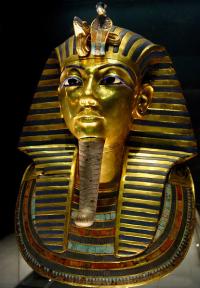 According to a group of geneticists in Switzerland from iGENEA, the DNA genealogy center, as many as half of all European men and 70 percent of British men share the same DNA as the Egyptian Pharaoh Tutankhamun, or King Tut. For a film created for the Discovery Channel, scientists worked to reconstruct the DNA of the young male King, his father Akhenaten and his grandfather Amenhotep III. They discovered that King Tut had a DNA profile that belongs to a group called haplogroup R1b1a2. This group can be found in over 50 percent of European men and shows the researchers that there is a common ancestor. This genetic profile group is also found in 70 percent of Spanish males and 60 percent of French males however, it is only present in less than one percent of men in modern-day Egyptian men.
The R1b1a2 DNA haplogroup is believed to have originated in the Black Sea region some 9500 years ago and spread to Europe with the spread of agriculture in 7000BC. Researchers are unsure as to how and when the group first came to Egypt. They believe the reasoning the R1b1a2 haplogroup is rarely found in modern-day Egypt is due partially to European immigration throughout the last 2000 years.
More here.
