
| ABOUT US | ARCHIVES | LINKS | RSS FEED | MONDAYS | |

3quarksdaily

An Eclectic Digest of Science, Art and Literature

« Monday Poem | Main | Pakistani Military Still Cultivates Militant Groups, a Former Fighter Says »

July 04, 2011

Must I Be Free?

by Akim Reinhardt

July 4th was the nation’s first secular holiday.  In fact, Americans began informally commemorating their independence from Great Britain on that date even before they were independent.  On July 4, 1777, there was a thirteen-gun salute in Philadelphia to mark the day.  The next year, General George Washington celebrated by issuing his men a double ration of rum.  In 1779, Massachusetts led the way in making the date an official state holiday, and others soon followed.  In 1785, the town of Bristol, Rhode Island held a parade, a tradition it has continued ever since, making it the longest running July 4th celebration in America.
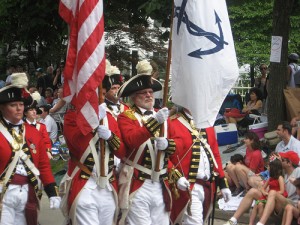
Bristol July 4th parade As the 19th century unfolded, the United States went through a startling transformation, and as the nation changed, so too would the meaning of July 4th for many people.  The relatively small and highly agricultural nation began to urbanize, industrialize, and expand at an astounding rate.  The changes came fast, were highly jarring, and the federal government was still quite small and weak.  Consequently, economic development was largely unregulated and things simply ran amok. 

By mid-century, the United States was beginning to look like a third world country in many respects.  Cities in particular were teeming with squalor, as each day overcrowded slums became home to more people and animals than anyone had thought possible.  In the warmer months, streets were filled with pedestrians, push carts, children, rooting pigs, stray dogs, and the bloated and rotting corpses of overworked horses who had pulled their last load.  In the evenings they were joined by many neighborhood residents who were fleeing the heat of their un-air conditioned homes.

Jobs were the main draw for the millions of immigrants, both foreign and domestic, who flooded the cities.  The Industrial Revolution created jobs by the thousands, but more and more openings were for semi-skilled and even unskilled manual laborers.  Electricity was still in the offing, so many people not only worked beside animals, but also worked liked them.  Factories chewed up workers and spit them out at an alarming rate.  To look back at some of the statistics today is to be shocked.


In 1890, the average American worker clocked in for 10 hours per day, 6 days per week, with few if any breaks, and no sick days or paid vacations.  Of course that was just the average.  Steelworkers, for example, typically worked more than 63 hours/week.  But beyond the seemingly endless parade of mind-numbing labor, there was also real danger at hand.
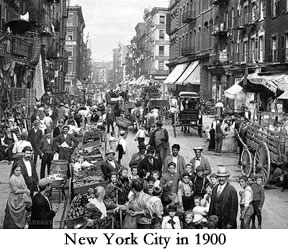
NYC 1900

On average 35,000 American workers died on the job each year from 1880-1900, while another 536,000 were seriously injured.  From 1905-1920, not a year went by when at least 2,000 coal miners didn't perish in the mines.  The textile industry, which relied mostly on female labor, was so dangerous that its manufacturing epicenter in Lowell, MA had one of the highest death rates in the nation during parts of the 19th century.  Railroad work was particularly perilous.  In 1901, 1 out of every 399 railroad workers was killed on the job, and 1/26 was seriously injured.  For operating train men specifically, the figures were 1/137 and 1/11.

Such staggering figures are made possible by the tally of daily tragedies, the kind to which a society becomes numb.  However, the steady toll of fatalities and maiming was also punctuated my the occasional catastrophe.  In 1909, 180 men died in a coal mine explosion in Cherry, Illinois.  In 1911, 146 women and girls either burned alive or leapt to their deaths during a fire at the Triangle Shirtwaist Company in New York City.  In 1917, 164 copper miners were incinerated in a conflagration at the North Butte Spectacular Mine in Montana.

Amid long hours, low pay, backbreaking work, and ever present risk to life and limb, there were no national holidays, and most states only recognized two: Christmas and July 4th.  They were both unpaid.  For many Americans then, Independence Day was a cherished respite from the grind of daily labor.

Congress did not make July 4th an official national holiday until after the Civil War.  In 1870, it enshrined the date as an unpaid day off for all federal employees.  A free day’s pay would not arrive with it until 1938 when many private sector workers began to get the day off with pay during this era as unions rose in number and strength and demanded such things for their members.
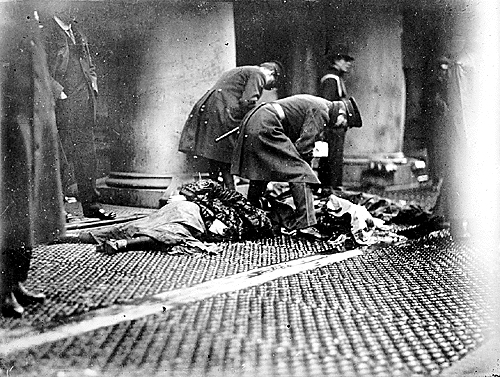
Triangle Shirtwaist Fire victims Today of course city streets are no longer littered with the carcasses of draft animals, and for most people Independence Day is just one of many days they get off with pay.  Meanings change over time and now in the popular culture the holiday is associated with summer getaways, fireworks, baseball games, barbeques and John Phillip Sousa’s “Stars and Stripes Forever.”  Sousa wrote the song in 1896, amid the hyper-nationalism of that decade, which is perfectly illustrated by his self-styled military attire, which looks rather ludicrous to the modern eye.  This is also about the same time that the term “Independence Day” began to gain in popularity.  Though the holiday was always predicated on a celebration of American independence, the new term reflected an emphasis on national strength and power in an era of unapologetic jingoism.

As I’ve written elsewhere, I have never been one to make a show out of patriotism.  It makes me uneasy.  And much of that attitude I inherited from my father, which is perhaps ironic because in many ways he fits the profile of someone who would be likely to beat his chest while waving a flag.

My father was born and spent his childhood in Catawba County, North Carolina.  His Great Aunt Maude (his father’s father’s sister) once composed a family history that traces our American roots back to the early 1700s.  I’ve not read Maude’s book, but as a professional historian I have little reason to doubt that it is typical of the kind of family hagiography that is popular among many Americans, so I take stories of our ancient American genesis with several grains of salt.  But then again, many of the German-named families in that part of the state really are descended from 18th century immigrants who originally settled in Pennsylvania before heading south. 

In the end, the details matter little.  On a daily basis I am confronted with the reality that the mists of time are thick enough to border on the opaque.  And in any event, when one’s self-perception is shrouded in history, it need not be real in order to be effective.  We are what we believe, and the truth is where you find it.
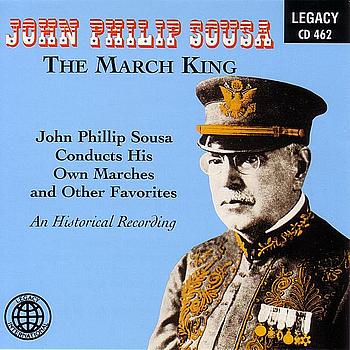
Sousa For my father, reality is streaked with a deep pride that comes from many generations of living in, believing in, and fighting and dying for the United States of America.  What that has instilled within him is a quiet confidence about the nation, as opposed to an insecurity that needs to frequently and publicly assert itself.

My father never came right out and said it, but through his actions and comportment, I came to understand that he does not put too much stock in the symbolism of patriotism.  Despite this, he is a deeply patriotic person.  His is the kind of patriotism that is handed down from generation to generation, a deep and abiding faith in the American people that has been nurtured by a long lineage within it rapacious borders.           

My father believes that faith is more important than words, and that a few select actions count a lot, while most don’t matter at all.  I agree with him.

Sometimes I don’t stand during the national anthem at baseball games.  I often do not remove my cap, and almost never place my hand over my heart.  Why?  Because deep down I believe that group-think is antithetical to freedom.  Because if 35,000 people are all doing the same thing, I’m inclined NOT to do it.  Because who the fuck are you to tell me when or how I have to express my patriotism?

You’re an American.  And so am I.  Neither one of us any better or any worse than the other, each of us citizens, equal before the laws of the land, witnesses and participants in this grand and ongoing experiment, 235 yeas and counting.

Anyway, freedom isn’t about fitting in.  It’s actually about the opposite of that.
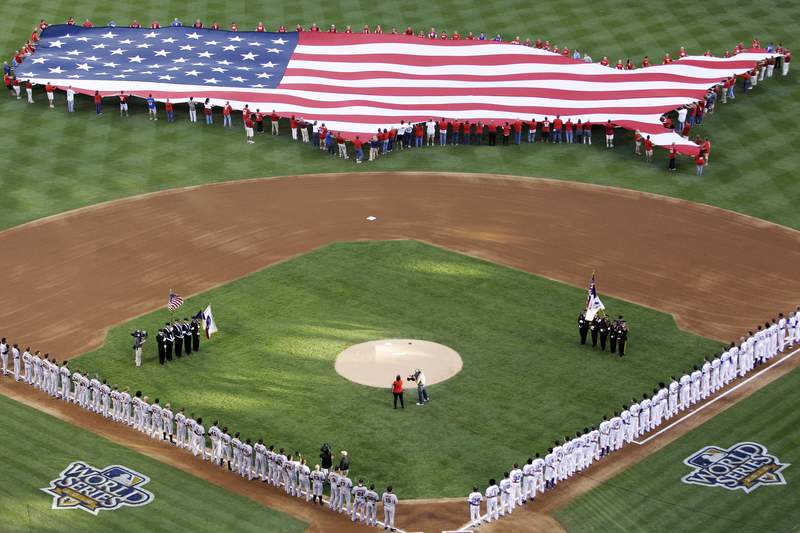
2010 World Series Standing and taking your hat off during the anthem does not in fact make you patriotic.  It just makes you someone who stands and takes your hat off during the anthem.  To me, all the action really means is that you’re simply fitting in.

I’m not the kind of person to be overly concerned about fitting in.  I think too much of it is bad for the soul.
                                   
It’s easy to express your patriotism by taking off your hat during the anthem at a baseball game.  It’s often a little bit harder to do so in an important and meaningful way, like by saying No to a bad war or taking an unpopular stance because you believe it is in your nation’s best interest. 

Some people scoff at the de-nationalizing of certain holidays like July 4th.  Some people are genuinely upset that the focus gets put on flipping burgers and shooting bottle rockets instead of a reverence for the nation.  I have no problem with it.  In fact, in some ways I think it’s for the best.  Because while the nation can be a good thing, nationalism cane be a very bad thing.

Patriotism is very powerful and dangerous.  It needs to be handled responsibly.  If someone is apt to be thoughtless about it, quite frankly I’d rather they didn’t bother.

And besides, if a hardworking person wants to simply treat The Fourth as a day off, then that’s alright with me.  After all, it’s been a cherished American tradition for well over a century now.  Hell, it even sounds downright patriotic.  And perhaps the ultimate act of patriotism on this day is to decide for yourself what July 4th actually means and how to express it. 

So whether you're a fellow American, aspiring to be one, or just have an independent streak you'd like to nurture, happy holiday everyone.

Posted by Akim Reinhardt at 12:25 AM | Permalink

Comments

A good article - makes some very good points.

Mind you, not everyone who reads 3QD is an American!

Which prompts the the thought:it would be good if Americans realised that USA is an important, but not the only, country in the world.

As a Brit I have similar feelings to Akim's about MY country.

But what do I want to feel really proud? Social justice in my own land.

Posted by: Chris | Jul 4, 2011 8:34:17 AM

Akim:

Dead on. Thank you for this. It's worth all the July 4th homilies put together and thrust down our throats by jingoistic "patriots."

Trust no loudmouth patriot -- they're probably trying to con you into something.

P.S. Love the stuff about your Dad.

Posted by: Evert Cilliers | Jul 4, 2011 10:08:49 AM

Professor E James Anthony, arguably one of the most outstanding child psychiatrists in the world, used to remark (in his beautiful English accent) 'but you ought to realize, many good Americans are foreigners in this country of ours...'

I can atest to that

Happy 4th of July to all!

Posted by: Felix E F Larocca MD | Jul 4, 2011 12:34:58 PM

"So whether you're a fellow American, aspiring to be one, or just have an independent streak you'd like to nurture, happy holiday everyone."

So even if you're not an American, in which case, shock of shocks, you don't have a national holiday today, the writer of this piece would like you to have a happy holiday anyway. And then the commenter above would like to wish a "Happy 4th of July to all!"

This is really weird. I'm well acquainted with American parochialism, but still, I'm sorry, I can't get past the bizarre cognitive disconnect here. Isn't this blog supposed to be somewhat learned? I mean, why on earth do you sincerely believe that people not in the USA (we exist) should enjoy your American holiday? Do you honestly think that non-Americans the world over are focused on your holiday?

Seriously, this is weird. Sometimes I don't think I'll ever really understand Americans.

Posted by: Angler | Jul 4, 2011 12:53:51 PM

Interesting: I forgot to mention the thundering irony that this is a piece that actually rails against excessive patriotism even in the midst of the galling assumption that non-Americans with independent streaks must necessarily wish to celebrate the USA's national holiday.

Again, this is truly weird.

Posted by: Angler | Jul 4, 2011 12:57:31 PM

Chris: Yes, I thought about taking the line out about Americans because of 3QD's international readership, but in the end I decided to leave it in and frame it in a way that was clear.

Angler: Yes, you may not understand Americans, though my concurrence is meant neither as an insult or a compliment. That you did not understand what I was trying to say, however, is completely my fault. As the author, I must take ultimate responsibility.

To set the record straight, while I opine in the piece on the ways in which Americans do or do not celebrate it July 4th, I was NOT trying to say everyone needs to celebrate the anniversary of U.S. independence. Nor is it a cognitive disconnect. The closing statement which you quote was my way of wishing my fellow Americans a happy holiday and everyone else a good day. Hope that clarifies.

Posted by: Akim Reinhardt | Jul 4, 2011 1:15:49 PM

Happy holiday to you, Akim... and to your cat! Be sure to repost this article on Labor Day.

Posted by: Ruchira | Jul 4, 2011 4:18:40 PM

Thanks Ruchira. All the best to you as well.

Posted by: Akim Reinhardt | Jul 4, 2011 4:22:12 PM

To honor them we should ask and answer the question independence from what? because they listed "the what" on the declaration itself.

Posted by: Dredd | Jul 4, 2011 7:17:09 PM

oops: Independence From What?

Posted by: Dredd | Jul 4, 2011 7:18:29 PM

@Angler: My non-American friends lined up on twitter this morning to wish me a happy fourth. I received greetings from Ireland, India, Pakistan, and Singapore (via the Czech Republic). I wished them a happy fourth right back! I think Akim's closing comments was more about camaraderie and friendship than anything else.

Posted by: Historianess | Jul 4, 2011 7:59:38 PM

Well said! Thanks for capturing in words my sentiments about American patriotism. Happy July 4th to all!

Posted by: Jeff Unruh | Jul 4, 2011 8:36:47 PM

Akim,

There are legions of thoughtless people. If they decide to stand up during the anthem, take off their hats, and put them over their hearts just to go along or so as not to seem unpatriotic, then so be it.

You are obviously a thoughtful person who has put some thought specifically into the symbolism of the anthem in regard to our nation's history. Not standing, not taking off your hat, and not putting your hand over your heart is just being churlish.

And what kind of a professional historian doesn't want to look at source material handed to him on a platter, especially a family history, however suspect the source? Or is still motivated to study history even though he believes that time makes most things opaque?

Are historians just supposed to make things up as they go along? Many have.

Posted by: DAS | Jul 5, 2011 12:16:17 AM

@Historianness: Do you bid your friends of many countries good wishes on their national holidays? And: You wished them a "happy fourth"? Wow. Just...wow. What on earth is an American thinking when he or she wishes other people a "happy fourth"? I get that from business associates in the USA, too.

Honestly, I get grokk the thought processes at work here. You, an American, say to your Czech friend in Singapore..."happy fourth of July!"

I can't understand this mentality. I mean, it's obviously parochialism, but it seems like parochialism gone a little mad. It seems a bit idiotic, if truth be told.

Posted by: Angler | Jul 5, 2011 1:21:13 AM

I "can't" grokk it, I should say.

Posted by: Angler | Jul 5, 2011 1:21:50 AM

But Angler, he didn't wish everyone a happy fourth. He said "So whether you're a fellow American, aspiring to be one, or just have an independent streak you'd like to nurture, happy holiday everyone." And the last part about the independent streak was just a humorous reference to the subject of his article, I don't think he's really suggesting that any non-American with an independent streak would actually care about the holiday. And I think it's pretty reasonable to wish a happy 4th to people aspiring to be Americans in the future.

But seriously, I don't see what the big deal is about wishing people a happy holiday even if it's a holiday they don't separate. Would you get equally worked up if a Muslim writing about Ramadan closed with "happy Ramadan to all!", or a Buddhist wished everyone a happy Bodhi day? I mean it's just wishing people happiness on a day that's significant to you, not literally assuming that everyone would naturally want to celebrate the same holiday too, which would be pretty parochial. But give the writer a little more credit than that, I think it takes a pretty uncharitable reading to interpret it that way.

Posted by: Jesse M. | Jul 5, 2011 1:56:46 AM

" I mean it's just wishing people happiness on a day that's significant to you..."

It's bizarre, is what it is. When people wish you a happy birthday, do you wish them happy birthday right back?

That's weird, okay? Maybe you Americans do that (do you???), but really, c'mon...happy birthday to you, too?

In spite of my several posts on this page, I don't spend all day every day ruminating on how tedious American parochialism is. But what on earth is a writer for 3quarksdaily thinking when he says "You’re an American. And so am I"? What kind of writer addresses the world with such a statement? Or, alternatively, what kind of person writing for 3quarksdaily breezily dismisses 140 million anglophones outside of the USA with such a declaration?

Ach...whatever. Carry on. We're all Americans. Now pass the cheese whiz so I can make this Big Mac taste right.

Posted by: Angler | Jul 5, 2011 3:24:10 AM

@ Angler: It's clear (to me, at least) from reading your comments--and the responses to them--that the problem lies not with any American parochialism, but rather with your own. Your focus on the author's closing statement is petty and narrow in the extreme... and, we can only conclude, colored by your obviously unfavorable opinions of Americans in general.

Frankly, I find that far more bizarre than wishing a good day to the rest of the world on the occasion of a national holiday.

Posted by: Shoe | Jul 5, 2011 10:03:59 AM

Thank you to everyone for all the thoughtful comments. It does mean a lot to know that people read the article and care enough to respond.

@Dredd: Thanks for the link, I like the piece.

@DAS: I haven't eschewed my great aunt's book, I simply don't have access to it. Perhaps I should have clarified.
As far as when I don't take my hat off or stand, I don't do it antagonistically; I remain quiet and respectful so that others may express themselves as they see fit because it would be wrong to assume that all 40,000 of them are acting thoughtlessly.
These are the kinds of things that should have been in the article, but things were a bit rushed this time around.

@Angler and all those who are defending me against him: Sigh . . . Even my clarification might not have been particularly clear. I'll be as direct as possible now.
I was NOT wishing everyone in the world a Happy Fourth of July literally speaking. Yes, the last sentence in part can be read as wishing my fellow Americans a Happy Fourth. But the line about anyone with "an independent streak they'd like to nurture" was a shorthanded way of saying, "if you're not American but agree with the basic sentiments I've laid forth (pun!) in this essay, then I'd like to wish you well and encourage you to challenge dogmatic and paradoxical doctrines about freedom."

And in that spirit, let me take the liberty (another pun!) of wishing everyone in the world a Happy July Fifth!

Posted by: Akim Reinhardt | Jul 5, 2011 10:30:08 AM

Angler:
"It's bizarre, is what it is. When people wish you a happy birthday, do you wish them happy birthday right back?"

No, because a birthday is specifically a celebration for your benefit, unlike a regular holiday. What do you think of my (better) analogy of a Muslim wishing the world happy Ramadan, or a Buddhist wishing the world happy Bodhi day?

Also, for some reason you focused on my second paragraph saying "well, it isn't really *that* weird to wish everyone a happy holiday even if they don't celebrate it" and ignored the main point in my first paragraph, which is that Akim didn't actually do that! He just said happy fourth of July to Americans or people "aspiring to be" Americans, and then made a little joke about also also extending the happy holiday to anyone with an "independent streak" which you are clearly taking way too literally (perhaps because interpreting it in a thuddingly literal fashion fits in with some preexisting narrative in your mind about Americans being parochial).

Posted by: Jesse M. | Jul 5, 2011 11:11:37 AM

Just looked back in, and I can't help myself, it's like poking at a sore with a stick.

@Shoe: You don't find American parochialism bizarre, but rather, the idea that I might have an unfavourable opinion of Americans in general strikes you as bizarre?

I...just can't believe this. You're winding me up, surely. If I were a writer I'd be afraid to put this into a novel for fear of being called out for caricature.

@Akim: Look, it's clear you honestly cannot see why it's extremely peculiar to anyone outside of your borders that your piece is on 3quarksdaily and not in the [insert small American town] Daily Beagle. "You're an American. So am I" is just weird when you're talking to Australians or South Africans or any of the other 140 million anglophones who might be potential readers of this site. Okay? It's plain weird. If the 300 million in the USA trump the 140 million elsewhere, fine, but...isn't 3quarksdaily supposed to be just a teensy bit different than the [insert small American town] Daily Beagle?

Of course, if you wrote it on this site with nary a thought for those 140 million, well...what's a synonym for parochialism?

@Jesse M: I approach your question with trepidation, because you seem to play fast and loose with how analogies can be used. So let's see: if I were in Cambodia and wished the Buddhists there a Happy Ramadan, why yes, I think they would find it strange. You wouldn't? Really? Do halal shopkeepers in London or Toronto wish obvious non-Muslims a happy Ramadan? Never heard it. Does my step-sister-in-law, a European-background Muslim convert married to a Pakistani (it's a complicated family), wish the Christians and atheists among the rest of us "Happy Ramadan!"? No. It would be strange.

I'm still trying to understand how you wouldn't find that strange. The only possible answer I can think of starts with a "p" and ends with "arochialism."

One more thing before I try to get some work done: The author wrote "You're an American. So am I." And you're seriously accusing me of having a preexisting narrative about parochial Americans?

Are we in bizzaroland now?

Posted by: Angler | Jul 5, 2011 3:21:47 PM

I wrote the phrase "You're an American. So am I," while describing my attendance of professional baseball games in the United States and the rituals that accompany the playing of the American national anthem at them. In other words, the phrase that you find so offensive and have quoted repeatedly was not directed at you or any other 3QD reader for that matter. It is directed towards my fellow baseball game patrons within the context of discussing what goes on at those games and how it relates to ideas of nationalism and freedom. Of course the vast majority of of people at U.S. baseball games are Americans, and virtually all of the ones who give me dirty looks if I do not stand are.

In other words, your grievance is based on a misreading of the text. Perhaps that is my fault for not being a clearer writer. Either way, it is what it is.

Posted by: Akim Reinhardt | Jul 5, 2011 3:38:03 PM

Angler: "I approach your question with trepidation, because you seem to play fast and loose with how analogies can be used."

How so? Analogies can be used any way you like, but some analogies are more closely analogous to the situation they are meant to be an analogy for than others. I just pointed out one specific way in which my analogy was closer to the situation of wishing people a happy July 4th in an article than your analogy of the birthday.

"So let's see: if I were in Cambodia and wished the Buddhists there a Happy Ramadan, why yes, I think they would find it strange."

Again not as closely analogous as my example, because there you are wishing happy Ramadan to a specific group that you know don't celebrate it, whereas I said Would you get equally worked up if a Muslim writing about Ramadan closed with "happy Ramadan to all!". So you can see I was talking about a general wish to all readers of an article (many if not most of whom would presumably be Muslim themselves) which is obviously closer to the the situation with Akim's article (even though he *didn't* actually wish a happy 4th to all...this is all a sidetrack about my point that even though he didn't in fact do this as you accused him of doing, I think it wouldn't be such a big cause for alarm if he *had* done it). If I specify more clearly that the analogy I'm thinking of is that of a Muslim wishing a happy Ramadan to everyone in an article about Ramadan written to a general audience containing a high percentage of Muslims, would you still consider this just as objectionable and weird as you apparently consider it for an American writer to wish everyone a happy 4th?

And I didn't catch before that you weren't just focused on the wishing people a happy 4th thing, you were also objecting to the phrase "You're an American. So am I." But again I think you are reading things in an uncharitable way, as Akim says it's reasonably clear from the context that this is an imaginary dialogue he's having with the other people standing for the national anthem at a baseball game (since it immediately follows the comments "Because if 35,000 people are all doing the same thing, I’m inclined NOT to do it. Because who the fuck are you to tell me when or how I have to express my patriotism?")

Posted by: Jesse M. | Jul 5, 2011 4:23:48 PM

Angler has demonstrated that being an "anglophone" does not necessarily mean that you understand the English language. The only parochialism I have seen so far is from him, on behalf of the 140 million non-American English speakers, most of whom he presumes wouldn't give a s--t about the 300 million self important Americans wishing each other a Happy 4th of July and having the temerity to wish the same for non-Americans. Akim, the 3 QD American in particular, should have known better that it is really insulting to wish others a Happy Holiday while writing about the same holiday. As Jesse M. explains clearly, that is not weird at all.

Angler should include another 200 or so million anglophones in the Indian subcontinent some of whom also read this blog regularly. Perhaps now that the opposing sides are numerically balanced, they can all sneer at the parochial Americans for being so clueless (and friendly!).

On a different note, if I were to launch a newspaper in a small American town, I would probably prefer to name it The Daily Bugle rather than The Daily Beagle although I love dogs almost as much as I do cats.

Posted by: Ruchira | Jul 5, 2011 7:50:12 PM

Watching the argument about whether and how to "wish" someone a happy holiday has been as amusing as watching a couple of male cats go at it in a burlap sack.

For what it's worth, I thought the article was thoughtful and interesting. Well done Akim. I look forward to reading more of your stuff in the future! If I have one suggestion: do not feed the trolls....it'll suck up your life and take precious time from writing your next article!

Posted by: Bill | Jul 6, 2011 3:51:55 AM

Thanks all for the kind words and I'm glad you enjoyed the piece. See you next month and hopefully at my blog <http://ThePublicProfessor.com> before then.

Posted by: Akim Reinhardt | Jul 6, 2011 9:55:40 AM

Post a comment


Subscribe to this blog's feed  

PayAnywhere with iphone credit card swiper

Android Tablet

Bluetooth Headset

2013 New Style Dresses

Compare Car Rental Prices

DHgate.com Wholesale

3QD on Facebook

3QD on Kindle

3QD by Daily Email

Receive all blogposts at the same time every day.

Enter your Email:


Preview 3QD Email

3QD on Twitter

Miscellany

Lijit Search

AddThis Social Bookmark Button

Add to Google

Recent Comments

seth edenbaum on The First New Atheist? Kierkegaard

waqnis on Mortify Our Wolves

nogodrod on KFC smugglers bring buckets of chicken through Gaza tunnels

waqnis on Here’s how to change the world

Fernando on Mortify Our Wolves

seth edenbaum on The case against empathy

Dredd on Mortify Our Wolves

Max on Here’s how to change the world

Rohana on Mortify Our Wolves

Raza Husain on If Only We Had A Leader Like Chavez, Who Solved Real Problems -- Instead Of Debating Fake Ones Like The Deficit

mirel on If Only We Had A Leader Like Chavez, Who Solved Real Problems -- Instead Of Debating Fake Ones Like The Deficit

araldo on Here’s how to change the world

Elatia Harris on Here’s how to change the world

Sundar on Here’s how to change the world

araldo on Here’s how to change the world

prasad on Here’s how to change the world

araldo on Thursday Poem

Raza Husain on Here’s how to change the world

prasad on Here’s how to change the world

Raza Husain on Here’s how to change the world

prasad on Here’s how to change the world

Jim Sanders on the hudson review

Ian Kaplan on Stephen Wolfram: Dropping In on Gottfried Leibniz

Sundar on Here’s how to change the world

sjg on The First New Atheist? Kierkegaard

Acclaim For 3QD


"I couldn't tear myself away from 3 Quarks Daily, to the point of neglecting my work. Congratulations on this superb site."—Steven Pinker, Johnstone Professor of Psychology, Harvard University.

"I have placed 3 Quarks Daily at the head of my list of web bookmarks."—Richard Dawkins, Charles Simonyi Professor of the Public Understanding of Science at Oxford University.

"Just wanted you to know I’m one of many who reads and enjoys 3 Quarks....almost daily."—David Byrne, musician, former lead-singer of the Talking Heads, artist, intellectual.

Read more here.

The 3QD Prizes

Subscribe to this blog's feed